Roger J. Wendell
Defending 3.8 Billion Years of Organic EvolutionSM

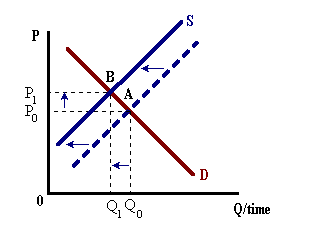
By the second decade of the second millennium it became abundantly clear that Capitalism, despite its many flaws, had brought a better life to more people on the planet than any other system. Socialist countries, the COVID shut-downs, and the mayhem and destruction brought on by Antifa, BLM, the "Occupy" campaign, "Pride" marches, anti-Trump protests, attacs on ICE, and dozens of other leftist movements were not able to destroy capitalism despite their most "heroic" efforts...
- Roger J. Wendell
Golen, Colorado - January 2026

|
Click Here for the U.S. Debt Clock... |
|
|
Click Here for more information on the concentration of wealth and power... |
|
|
Click Here for information on capitalism - Its Triumphs and its Failures... |
|
|
Click Here for free copy of Henry Hazlitt's Economics in One Lesson... |
We should all know the causes and consequences of economic phenomena!

"Whether one is a conservative or a radical, a protectionist or a free trader, a cosmopolitan or a nationalist,
a churchman or a heathen, it is useful to know the causes and consequences of economic phenomena."
- George J. Stigler
Can a collapse of global civilization be avoided?
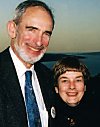
Paul R. Ehrlich and Anne H. Ehrlich
Proceedings of the Royal Society (January 9, 2013)"One might think that the mathematics of compound interest would have convinced everyone long ago that growth of an industrialized economy at 3.5 per cent annually cannot long continue. Unfortunately, most 'educated' people are immersed in a culture that does not recognize that, in the real world, a short history (a few centuries) of exponential growth does not imply a long future of such growth."
Webmaster's Note: I had the pleasure of interviewing Dr. Ehrlich about this topic on my radio show at KGNU in 2013!
Chilean Economist Manfred Max-Neef
Almost everything. We are simply, dramatically stupid. We act systematically against the evidences we have. We know everything that should not be done, there's nobody that doesn't know that. Particularly the big politicians know exactly what should not be done yet they do it. After what happened since October, 2008 , I mean elementary, you would say well now they're going to change, I mean they see that the model is not working, the model is even poisonous, dramatically poisonous. And what is the result and what happened at the last meeting of the European Union? They are more fundamentalist now than before. So, the only thing you know, that you can be sure of is that the next crisis is coming and it will be twice as much as this one and for that one there won't be enough money anymore. So that will be it. And that is the consequence of systematical human stupidity.
Amy Goodman: So, to avoid another catastrophe collision, if you were in charge, what would you say has to happen?
First of all, we need cultural economists again who know the history, where they come from, how the ideas originated, who did what, and so on and so on.
Second, an economics now that understands itself very clearly as a subsystem of a larger system that is finite, the biosphere. Hence economic growth as an impossibility. And third, a system that understands that it cannot function without the series of ecosystems. And economists know nothing about ecosystems, they don't know nothing about thermodynamics, they know nothing about biodiversity or anything - I mean they are totally ignorant in that respect. And I don't see what harm it would do for an economists to know if the bees would disappear he would disappear as well because there wouldn't be food anymore. But he doesn't know that, that we depend absolutely from nature but for these economists we have nature is a subsystem of the economy. I mean it's absolutely crazy.
And then in addition, you know, bring consumption closer to production. I live in the south of Chile, the deep south. And that area is a fantastic area in milk products and what have you, top, technologically, like the maximum. And I was, a few months ago, in a hotel in the south for breakfast and these little butter things, get butter from New Zealand. I mean, if that isn't crazy you know? Why, because economists don't know how to calculate really costs. To bring butter from 20,000 kilometres to a place where you make the best butter, under the argument that it was cheaper is a colossal stupidity. Because they don't take into consideration what is the impact of 20,000 kilometres of transport, what is the impact on the environment of that transportation. And another thing, because it's subsidized, it's clearly a case in which the prices never tell the truth, it's all tricks, and those tricks do colossal harm. And if you bring consumption closer to production you will eat better, you will have better food, you will know where it comes from, and you may even know the person who produces it. You humanize this thing but the way the economists practice today is totally dehumanizing.
2008 Stock Market Crash:
"Whether you're a stock broker or Joe Six-pack, if you have a 401(k), a mutual fund or a college savings plan, tumbling stock markets and sagging home prices mean you've lost a whole lot of the money that was right there on your account statements just a few months ago.
"But if you no longer have that money, who does? The fat cats on Wall Street? Some oil baron in Saudi Arabia? The government of China?
"Or is it just - gone?
"If you're looking to track down your missing money - figure out who has it now, maybe ask to have it back - you might be disappointed to learn that is was never really money in the first place.
"Robert Shiller, an economist at Yale, puts it bluntly: The notion that you lose a pile of money whenever the stock market tanks is a 'fallacy.' He says the price of a stock has never been the same thing as money - it's simply the 'best guess' of what the stock is worth.
"'It's in people's minds,' Shiller explains. 'We're just recording a measure of what people think the stock market is worth. What the people who are willing to trade today - who are very, very few people - are actually trading at. So we're just extrapolating that and thinking, well, maybe that's what everyone thinks it's worth.'
"Shiller uses the example of an appraiser who values a house at $350,000, a week after saying it was worth $400,000.
'In a sense, $50,000 just disappeared when he said that,' he said. 'But it's all in the mind.'"
Fresh Air Guest Host Dave Davies
"Economist Robert Reich argues that the economy isn't going to get moving again until we address a fundamental problem: the growing concentration of wealth and income among the richest Americans. He explains his fears for America's economic recovery in Aftershock: The Next Economy and America's Future."
RR: Well, thank you Dave.
DD:You opened your book with a story of a man, I never heard of, who served in the Roosevelt administration, Marriner Eccles, am I pronouncing that right?
RR: It's Marriner Eccles. [ek-uhlz]
DD:Yes, tell us who he was and how he got involved in the New Deal.
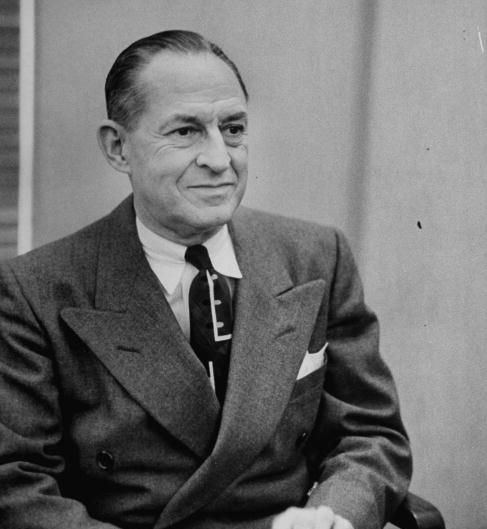
RR:I found that he, actually, foreshadowed much of the New Deal. He testified before Congress in 1933, even before FDR took over, and came up with a lot of the ideas that actually shaped the New Deal. More interestingly, Marriner Eccles became, from 1934 to 1948, the Federal Reserve Chair. He ushered many of the reforms, monetary, and financial reforms, and economic policy making reforms, through the New Deal, and his name now adorns the Federal Reserve building in Washington DC, it is the Marriner Eccles building.
DD: But his origin was not as a government bureaucrat he was a capitalist.
RR: Oh, he was not only a capitalist, he was one of the preeminent industrialists and financiers west of the Rocky Mountains. Up until 1933 he built a financial empire. And he was such a preeminent industrial and financial character, that when the Depression hit, when the crash occurred in 1929, and then the following years nothing seemed to work, Marriner Eccles had a crisis in confidence, he suddenly doubted that his assumptions about capitalism were correct. You might say that he had an Alan Greenspan moment.
He began to think in very different terms about what the economy needed. I found him fascinating, Dave, because Marriner Eccles, when he pondered what the cause of the Great Depression was, he said that it was ultimately that the middle class no longer had the purchasing power they needed to keep the economy going because in the 1920s so much of the income and wealth of America had gone to the very top, leaving the middle class behind. That is, the only way the middle class in America could keep on spending, in the 1920s, was by going deeper and deeper and deeper into debt. And meanwhile, the top one percent, that had accumulated so much of the national income and wealth, they turned around and speculated in stock, and also in commodities and in real-estate. And those two bubbles, that debt bubble, from the middle class, and that huge speculative bubble, from all of that money concentrated at the top, essentially both bubbles burst, yielding the Great Depression.
And what interested me is the parallel, or the potential parallel, between all of that and what we experienced recently. And then I looked at the research and was amazed to discover there were two years, in the twentieth century, in which income concentrated to such an extent it actually centralized a great deal of the nation's income right at the top. One year was 2007, when the richest Americans took home, or got I should say, about 23 and a half percent of total income, and the other year was 1928.
DD: This is interesting, you have this man who made a fortune in industry, and when the Depression first hits he believes, as many did, that it was a necessary correction, that once all the speculation and debt were washed out of the economy it would revive. But, when it didn't, he concluded, as you say you have, that it was this concentration of income among the extremely wealthy that had really robbed the middle class of the spending power that it needed to purchase the goods and services. You broaden that argument and tell us that there are three pretty clear periods of the American industrial economy which had different trends in terms of concentrations of wealth and income. Very concentrated right before the crash, and then, tell us what happened after that, and bring us up to date.
RR: Well, it was almost like a very big pendulum that swings back and forth, you had from about the 1880s up until 1928, you had the pendulum moving in one direction, a huge concentration of income and wealth, in the United States, brought out largely because of that huge mass production system that Henry Ford pioneered but Ford was but one member of that gigantic mass production system. And, that system generated an extraordinary amount of profit and productivity, the economy expanded, but it centralized a lot of wealth and income in the hands of a relatively few industrials. And so, by the time 1928 came along, most middle class Americans just didn't have enough money to keep the economy going without themselves going deep into debt which was not sustainable.
And then you had a reversal of the pendulum. Franklin D. Roosevelt didn't know exactly what he was doing, he experimented in many directions. But, in 1935, he legalized the creation of unions. Organized labor was really not legal before 1935. He made collective bargaining a protected activity. He also founded social security, a minimum wage, a 40 hour work week with time and a half for overtime. In other words, all sorts of reorganizations of the economy that had the effect of spreading whatever prosperity there was. That, combined with World War II, which demanded that nearly everybody in America go to work, even though it generated a huge debt at the end of World War II, that huge mobilization of people, combined with a reorganization of the economy under the New Deal, created a postwar economy and 30 years of what I call the Great Prosperity.
DD: And during that period what happened to distribution of income, you said it was highly concentrated at the top, one percent getting something like 20 percent of the income right before the crash. How did it differ in this period of postwar America.
RR: The top one percent had over 23 percent of the income just before the Great Crash. And then the pendulum reversed, partly because of Franklin D. Roosevelt's reorganization of the economy, including labor unions and many other innovations, the entire economy was so fundamentally restructured, that by the late 70s, instead of the top one percent taking home over 23 percent of national income, the top one percent by the late 1970s was getting about nine percent of total national income. You see, it was a fundamentally more equal society in terms of the shares of income. The middle class had enough of the gains from growth, from economic growth, to turn around and buy what the great American labor force was capable of producing.
DD: So, then in 1980 things change, right?
RR: Yes, things begin to change, actually they begin to change before 1980. New technologies, cargo ships, container ships, satellite communications technologies. And then eventually the computer and internet all enabled the production process to be parceled out around the world to wherever people could do things most cheaply, but also automated many routine jobs. You know we used to have bank tellers, and telephone operators, service station attendants, even that old assembly line was very labor intensive. You go into factories today and you see numerically controlled machine tools and robots, and you see a relatively few technicians handling all of that. So automation, part of that huge technological wave that begins in the late 70s and 80s, also, along with globalization, does change the way income is allocated. It certainly has an effect on jobs. But, the most profound effect is on the allocation of income. If you are very well educated and very well connected, if you're at the right place at the right time. If you are in finance, particularly, or if you are a CEO, if you're a top executive of a big company, you're doing marvelously well. By the first decade of this century you are really raking in a substantial percentage of national income, and also national wealth. But everybody else is not doing nearly that well.
DD: You're argument in this book is not just that the stagnation of middle class incomes, and concentration of income among the wealthy, is unfair, it's not just that it's unfair, but that it is debilitating for the economy, that we're not going to get a real recovery until we reverse this trend. Why?
RR: That's right, because you see, the vast middle class, the working class, really are the ones who are going to spend most of their income, if not all of their income. And, if most of the American economic gain goes to the top, if the top are taking home almost a quarter of all income that is generated in society, the vast middle class just doesn't have the purchasing power. They can't go deeper and deeper into debt, they can't work longer hours, they've exhausted all of their coping mechanisms. And meanwhile people at the top are taking home so much that they are almost inevitably going to speculate in stocks, or in commodities, or in whatever the current speculative vehicles are going to be. Which causes the economy to become unstable anyway. And that combination of a kind of unsustainable debt loads for the middle class, in fact now the middle class can't even go back into debt, there's not nearly enough demand for all the goods and services the American economy could produce, and can produce, at full employment. Coupled with a lot of speculation, and also much of the income of the very wealthy goes around the world to wherever it can get the highest return. All of that means that this recovery is going to be experiencing a kind of anemic, unusually anemic recovery. It's not even a recovery for most people. In fact you tell people that the National Bureau of Economic Research has decided that we've had a recovery since June of '09 and what you get derisive laughter.
Commentary: We owe oldest Americans an apology
Story Highlights
"What makes matters far worse is that all this wildly reckless lending has been in the service of a suburban sprawl-building juggernaut that will itself represent another layer of grotesque liability for the United States. The crash of the house-selling bubble, based on absurd asset inflation for things built badly in the wrong places, is coinciding exactly with a permanent oil crisis that will only exacerbate the locational disadvantages of houses built in the newest and furthest suburbs."
"Income and educational inequality are clearly at the heart of the food gap. IF there is a gap that is more responsible for the food gap than any other, it is this country's glaring disparity between the haves and the have-nots. Economic inequality has been increasing in the United States for more than thirty years. According to the New York Times, 'The top 0.1 percent of earners - that's one out of every 1,000 families - made 6.8 percent of the nation's pretax income in 2004, up from 4.7 percent a decade earlier and about 2 percent in the '60s and '70s.'" - p. 179
The American Dream (a parable)
"Not very long," answered the Greek.
"But then, why didn't you stay out longer and catch more?" asked the American.
The Greek explained that his small catch was sufficient to meet his needs and those of his family.
The American asked, "But what do you do with the rest of your time?"
"I sleep late, fish a little, play with my children, and take a siesta with my wife. In the evenings I go into the village to see my friends, dance a little, play the bouzouki, and sing a few songs. I have a full life."
The American interrupted, "I have an MBA from Harvard and I can help you.
"How long would that take?" asked the Greek.
"Twenty, perhaps twenty-five years," replied the American.
"And after that? Afterwards?"
"That's when it gets really interesting," answered the American, laughing. "Millions? Really? And after that?" "After that you'll be able to retire, live in a tiny village near the coast, sleep late, play with your grandchildren, catch a few fish, take a siesta with your wife, and spend your evenings singing, dancing and playing the bouzouki with your friends."
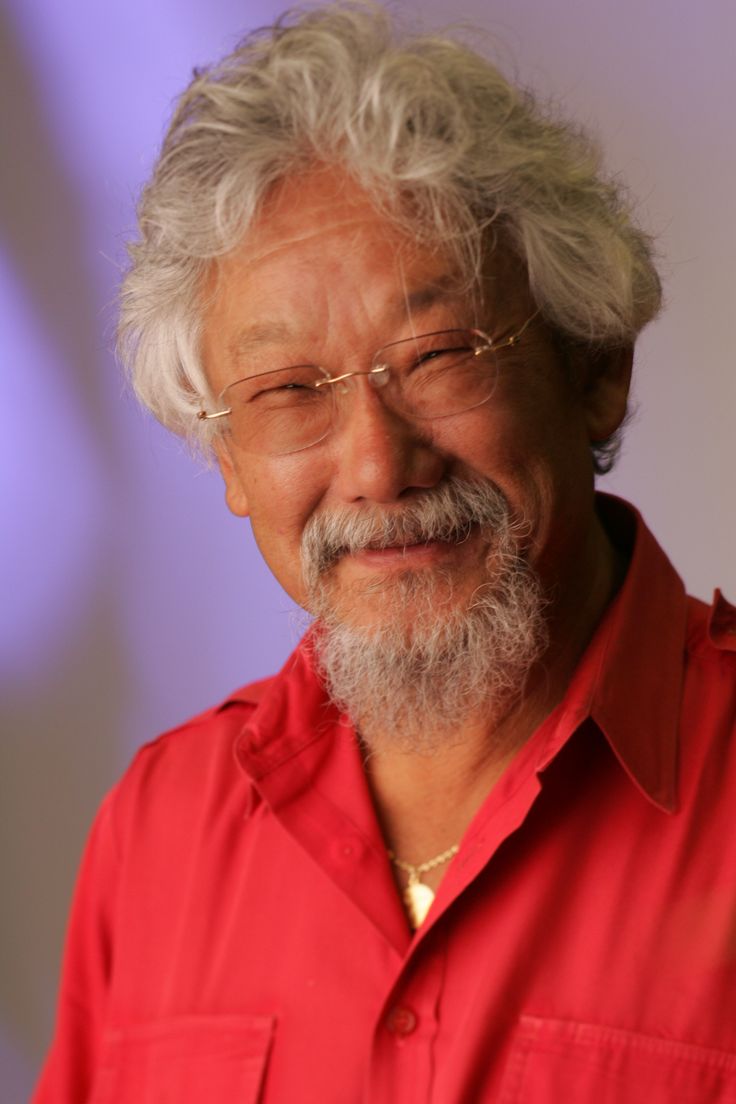
"The economists say: If you clear-cut the forest, take the money and put it in the bank, you could make 6 or 7 percent. If you clear-cut the forests and put it into Malaysia or Papua New Guinea, you could make 30 or 40 percent. So, who cares whether you keep the forest? Cut it down, put the money somewhere else! When those forests are gone, put it in fish; when the fish are gone, put it in computers. Money doesn't stand for anything, and money now grows faster than the real world.
"Economics is so fundamentally disconnected from the real world, it is destructive. If you take an introductory course in economics, the professor in the first lecture will show a slide of the economy, and it looks very impressive - you know, raw materials, extraction process, manufacturer, wholesale, retail, with arrows going back and forth. And they try and impress you because they think, (they know damn well that economics is not a science), but they're trying to fool us into thinking that it's a real science. It's not.
"Economics is a set of values that they then try to use mathematical equations and all that stuff and pretend that it's a science. But, if you ask the economist; 'In that equation, where do you put the ozone layer? Where do you put the deep underground aquifers of fossil water? Where do you put topsoil or biodiversity?' Their answer is 'Oh, those are externalities!' Well, then you might as well be on Mars. That economy's not based in anything like the real world. It's life, the web of life, that filters water in the hydrologic cycle. It's microorganisms in the soil that create the soil we can grow our food in. Nature performs all kinds of services. Insects fertilize all of the flowering plants. These services are vital to the health of the planet. Economists call these 'externalities.' That's NUTS."
- Geneticist David Suzuki
As transcribed (by me!) off of Amy Goodman's
Democracy Now, Wednesday morning, September 22, 2010
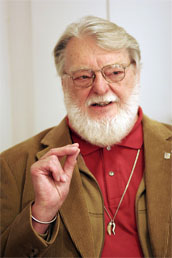
I understood poverty because I was there. I lived with them, I ate with them, I slept with them, you know, etc. And then you begin to learn that in that environment there are different values, different principles compared to where else you are coming, and that you can learn an enormous amount of fantastic things among poverty. What I have learned from the poor is much more than I have learned in the universities. But very few people have that experience, you see, they look at it from the outside, instead of living it from the inside. And you learn extraordinary things. The first thing, you know, that people who want to work, in order to work on poverty, don't know, is that in poverty there is an enormous creativity - you cannot be an idiot if you want to survive. Every minute you have to be thinking, what next, what do I do now, what trick can I do here, what's this, that, that, that, so your creativity is constant. In addition it is combined with networks of cooperation, mutual aid, all sorts of extraordinary things which you no longer find in our dominant society which is individualist, greedy , egoistical, etc. - it's just the opposite that you find there. And it's sometimes so shocking that you might find people much happier in poverty than people what you would find in your own environment. Which also means that poverty isn't just a question of money - it's a much more complex thing.
Amy Goodman: What do you think we need to change?
www.FoxNews.com - October 11, 2008
"Trillions in stock market value - gone. Trillions in retirement savings - gone. A huge chunk of the money you paid for your house, the money you're saving for college, the money your boss needs to make payroll - gone, gone, gone.
September 29, 2010 (transcribed by Me!)
DD: Well Robert Reich welcome back to Fresh Air.
by Bob Greene
CNN Contributor
03-15-2009
"Think of the disdain they must feel for the Wall Street titans who have hurt them. When they hear about a brokerage executive who spends $1,400 on a wastebasket, their first thought undoubtedly is not that the man has taken advantage of his shareholders, or of the federal government. Their first thought -- remember, these men and women were children of the Depression -- is that the man must be a fool, a complete and utter sucker, to pay someone $1,400 for such an item. If you grew up having nothing, your contempt for such an idiotic expenditure is just about absolute. And you wonder about a society in which a person who would spend money that way is expected to prudently handle the money of others."
- Plutarch
- Economist Kenneth Boulding
"Economics deals with society's fundamental problems; it concerns everyone and belongs to all. It is the main and proper study of every citizen."
- John Kenneth Galbraith - Economist
"The inevitable tendency in capitalism is the accumulation of wealth. According to its own laws, capital always moves to where it can generate the greatest profit, never the greatest good. Why does everyone know the saying, "The rich get richer, and the poor get poorer?" Because it's true."
in the Colorado Daily, page 6, June 8-9, 1994
"Why aren't these the best of times? We live in a country of enormous abundance, but we're working longer, commuting farther, and we have ever less time to spend with family and friends. Our economy, while indulging those on top, seems to require a permanent sublcass of hardcore poor. We consume the Earth's resources endlessly but joylessly. Something is out of whack, and everyone knows it."
"Part of America's current prosperity is based not on genuine gains in income, nor on high productivity growth, but on borrowing from the future. The words of Ludwig von Mises, an Austrian economist of the early 20th century, nicely sum up the illusion: 'It may sometimes be expedient for a man to heat the stove with his furniture. But he should not delude himself by believing that he has discovered a wonderful new method of heating his premises.'"
The Economist January 14th 2006, p. 15
"What for? 'In anticipation of future needs, in order to provide for
the continued industrial and population growth of the Southwest.' And
in such an answer we see that it's only the old numbers game again,
the monomania of small and very simple minds in the grip of an obsession.
They cannot see that growth for the sake of growth is a cancerous madness,
that Phoenix and Albuquerque will not be better cities to live in when
their populations are doubled again and again. They would never understand
that an economic system which can only expand or expire must be false
to all that is human."
in Desert Solitaire, pp. 144-145
"I suppose the expectation (or hope) is that the quasi-mythical 'plunge protection team' -- a 'working group' of federal reserve officials and bankers -- will jump in and administer some soothing pepto-bismol, but frankly I don't see how that's possible this time. The poison at the bottom is a fetid mass of 'non-performing' mortgages, billions upon billions of loans that strapped borrowers are not paying back, loans which, in the meantime, have been rolled over, rebundled into jive 'securities' (ha!) and sold, and rolled over again and used as 'leverage' for massive exotic bets and bloated arbitrages involving mere abstract figments of electronic digital pulses completely removed from any reality-based productive investment activity."
Singing the Vegetable Opera - March 5, 2007
"But it is important that we challenge those who argue that the free enterprise system provides greater freedom than other ways of life. In actuality what it does is to substitute one set of constraints on the individual for another. In preindustrial society, the constraints were those of tradition, religion, and family; under the free enterprise system, the constraints are those established by the market. Thus, in our society an individual must obtain an education, must move to where work is available, and must compete vigorously to be successful, while in traditional society an individual had to fulfill traditional obligations to family and community in order to enjoy the respect of others."
Muddling Toward Frugality p. 129
"One key observation is that the US economy is dependent on the availability of cheap, plentiful oil and anatural gas to a greater extent than any other country. Once oil and gas become expensive (as they already have) anbd in ever-shorter supply (a matter of one or two years at most), economic growth will stop and teh economy will collapse. The term 'collapse' as I try to use it here has been given a precise meaning by John Michael Greer's theory of catabolic collapse in his 200t book How Civilizations Fall: A Theory of Catabolic Collapse. Under this theory, collapse can be caculated to occur when 'production fails to meet maintenance requrements for existing capital.'"
Reinventing Collapse The Soviet Example and American Prospects
pp. 12-13 (from his 2008 unproofed galley)
"The hunger problem was best summed up in a 1974 report issued by the Senate Select Committee on Nutrition, co-chaired by Senators George McGovern and Robert Dole, a bipartisan team who continue to work to end hunger and poor nutrition. The report stated that the fundamental issue facing the hunger 'is not [so much] the mechanics of the food assistance programs as it is the fact of persistent poverty, and the continued tolerance in this country of a starkly inequitable distribution of income. In a nation ... in which 40 million people remain poor or near poor, more than a food stamp or child-feeding program is at issue.'" - p. 10
Closing the Food Gap (Resetting the Table in the Land of Plenty)
"...perpetual population growth does not make America richer. As America paves over its farms and wetlands, as it pollutes its air and water, as it degrades the quality of its schools, as it increases the cost of housing, as it ... Well, you name it. Ultimately, America's population growth is a good investment for only a few. Meanwhile, it makes most Americans economically poorer."
A boat docked in a tiny Greek village. An American tourist complimented the Greek fisherman on the quality of his fish and asked how long it took him to catch them.
You should start by fishing longer every day. You can then sell the extra fish you catch. With the revenue, you can buy a bigger boat. With the extra money the larger boat will bring, you can buy a second one and a third one and so on until you have an entire fleet of trawlers. Instead of selling your fish to a middleman, you can negotiate directly with the processing plants and maybe even open your own plant. You can then leave this little village and move to Athens, Los Angeles, or even New York City! From there you can direct your huge enterprise."
When your business gets really big, you can start selling stocks and make millions!"
Surprising Motivation

by Daniel Pink http://www.wimp.com/surprisingmotivation/
(from a study conducted by economists from Carnegie Mellon, MIT, and
the University of Chicago that was financed by the Federal Reserve Bank)
A lot of us learned in economics that the higher the reward the better the performance.
This study reached a conclusion that says once you go above rudimentary cognitive skill, it's the other way around!
- As long as task involved used only mechanical skill bonuses worked as expected (Higher the Pay, the Better the Performance)
- Once the task called for even rudimentary cognitive skill, a larger reward led to poorer performance
- This has been replicated over, and over, and over again by psychologists, sociologists, and economists
- For simple, straight forward tasks, those kinds of incentives, "If you do this, you'll get that" - they're great
- For tasks that are algorithmic set of rules where you just have to follow along to get a right answer, "if then rewards," "Carrot and Stick" - outstanding
- But When the task gets more complicated, when it requires some conceptual creative thinking, those kinds of motivators demonstrably don't work
- Fact: Money is a motivator at work but in a slightly strange way. If you don't pay people enough they wont be motivated. What's curious is there's another paradox here which is that the best use of money as a motivator is to pay people enough to take the issue of money off the table.
- Pay people enough so that they're not thinking about money, they're thinking about the work
- Three factors lead to better performance and personal satisfaction:
- Autonomy - our desire to be self directed, to direct our own lives (traditional notions of management run afoul of this - management is great if you want compliance but, if you want engagement, which is what we want in the workforce today as people are doing more complicated, sophisticated things self direction is better)
- Mastery - the urge to get better at stuff - we like to get better at stuff. This is why people play musical instruments on the weekends. You have all these people who are acting in ways that seem irrational, economically. They play musical instruments on weekends, why? It's not going to make them any money, why are they doing it? Because it's fun, 'cuz you get better at it and that's satisfying.
- Purpose - What you see, more and more, is the rise of the "purpose" motive. More and more organizations want to have some kind of transcendent purpose - partly because it makes coming to work better, partly because that's the way to get better talent.
- When the profit motive becomes unmoored from the purpose motive, bad things happen. Bad things ethically, sometimes. But also bad things just like not good stuff, like crappie products, like lame services, like uninspiring places to work. That when the profit motive is paramount, or when it becomes completely unhitched from the purpose motive people don't do great things. More and more organizations are realizing this and sort of disturbing the categories between what's profit and what's purpose.
- If we start treating people like people and not assuming that they're simply horses - you know, slower, smaller, better smelling horses. If we get past this kind of ideology of carrots and sticks and look at the science I think we can actually build organizations and work lives that make us better off but I also think they have the promise to make our world just a little bit better.
Examples: Apple, Apache, Atlassian, Linux, Skype, Wikipedia
Some Definitions:
*OPEC, The Organisation of Petroleum Exporting Countries, is a cartel that was set up in 1960 that wrought havoc in industrialised countries during the 1970s and early 1980s by forcing up oil prices. (those prices quadrupled during 1973-74)
- Net Present Value (NPV) (sometimes referred to as net present worth, NPW) is a mostly a finance term but always of interest to me, personally, in an economic sense! NPV Applies to a series of cash flows occurring at different times. The present value of a cash flow depends on the interval of time between now and the cash flow. It also depends on the discount rate. NPV accounts for the time value of money. It provides a method for evaluating and comparing capital projects or financial products with cash flows spread over time, as in loans, investments, payouts from insurance contracts plus many other applications.
- An Oligopoly occurs when a few firms dominate a market. Often they can behave together as if they were a single monopoly, perhaps by forming a cartel (for example, OPEC*). Or they may collude informally, by preferring gentle non-price competition to a price war.
- The Opportunity Cost of an activity or option is the loss of value or benefit that would be incurred (the cost) by engaging in that activity or choosing that option, versus/relative to engaging in the alternative activity or choosing the alternative option that would offer the highest return in value or benefit (the best forgone opportunity). For example, the opportunity cost of choosing to train as a lawyer is not merely the tuition fees, price of books, and so on, but also the fact that you are no longer able to spend your time holding down a salaried job or developing your skills as a skier. These lost opportunities may represent a significant loss of utility. Going for a walk may appear to cost nothing, until you consider the opportunity forgone to use that time earning money. Everything you do has an opportunity cost. Economics is primarily about the efficient use of scarce resources, and the notion of opportunity cost plays a crucial part in ensuring that resources are indeed being used efficiently.
- A Shadow Price is a monetary value assigned to currently unknowable or difficult-to-calculate costs in the absence of correct market prices. It is based on the willingness to pay principle – the most accurate measure of the value of a good or service is what people are willing to give up in order to get it. A shadow price is often calculated based on certain assumptions, and so it is subjective and somewhat inaccurate
- Shrinkflation is the process of items shrinking in size or quantity, or even sometimes reformulating or reducing quality while their prices remain the same or increase. The word is a portmanteau of the words shrink and inflation. Shrinkflation allows companies to increase their operating margin and profitability by reducing costs whilst maintaining sales volume, and is often used as an alternative to raising prices in line with inflation. Consumer protection groups are critical of the practice. First usage of the term has been attributed to both Pippa Malmgren and Brian Domitrovic.
- Stagflation (aslo known as recession-inflation) is a situation in which the inflation rate is high, the economic growth rate slows, and unemployment remains steadily high. It presents a dilemma for economic policy, since actions intended to lower inflation may exacerbate unemployment.The term is a portmanteau of stagnation and inflation, and is generally attributed to Iain Macleod, a British Conservative Party politician who became Chancellor of the Exchequer in 1970. Macleod used the word in a 1965 speech to Parliament during a period of simultaneously high inflation and unemployment in the United Kingdom
Links:
|
|
 Back to Roger J. Wendell's Home Page...

Abbey |
About |
Blog |
Contacting
Me |
Copyright |
Disclaimer |
Donate |
Guest
Book |
Home |
Links |
Site
Index |
Solutions |
Terms,
Conditions
and
Fair
Use |
What's
Changed
or
New?
Copyright
© 1955 -