Roger J. Wendell
Defending 3.8 Billion Years of Organic EvolutionSM


|
Books Roger's Recommended Reading! |
Note: I do NOT recommend Nook, Kindle, or any "eBooks" at this time of life (late 2011)! The technology is still "iffy" (I hear countless stories from readers who have screen "Lockups" and freezes or the OCR quality of the written material is extremely poor with punctuation, letters, and numbers being intermittently exchanged, etc.). More importantly, the prices charged for eBooks, over the past few years, have been outrageously high and unacceptable - sometimes readers are charged nearly the same amount as those who have purchased the paper or hardback versions. Nope, now is not the time to spend your hard-earned money on an overpriced, poorly engineered eBook - stick with paper* and you'll be a whole lot better off! As a longtime environmentalist I'm always reluctant to advocate the use of paper, or any product that requires the use of transportation and packaging. Nevertheless, for now eBooks are way too expensive and experimental for us regular folks to have to endure. Plus, MOST importantly, how can the wonderful look, feel, and smell(!) of a book in your own hands ever be replaced by some electronic device??!! |
| * The library, yard sales, or small shops where you can swap books is a fantastic alternative to overpriced eBooks and expensive hardback editions! |
|
"The more that you read, the more things you will know. The more that you learn, the more places you'll go." - Dr. Seuss |

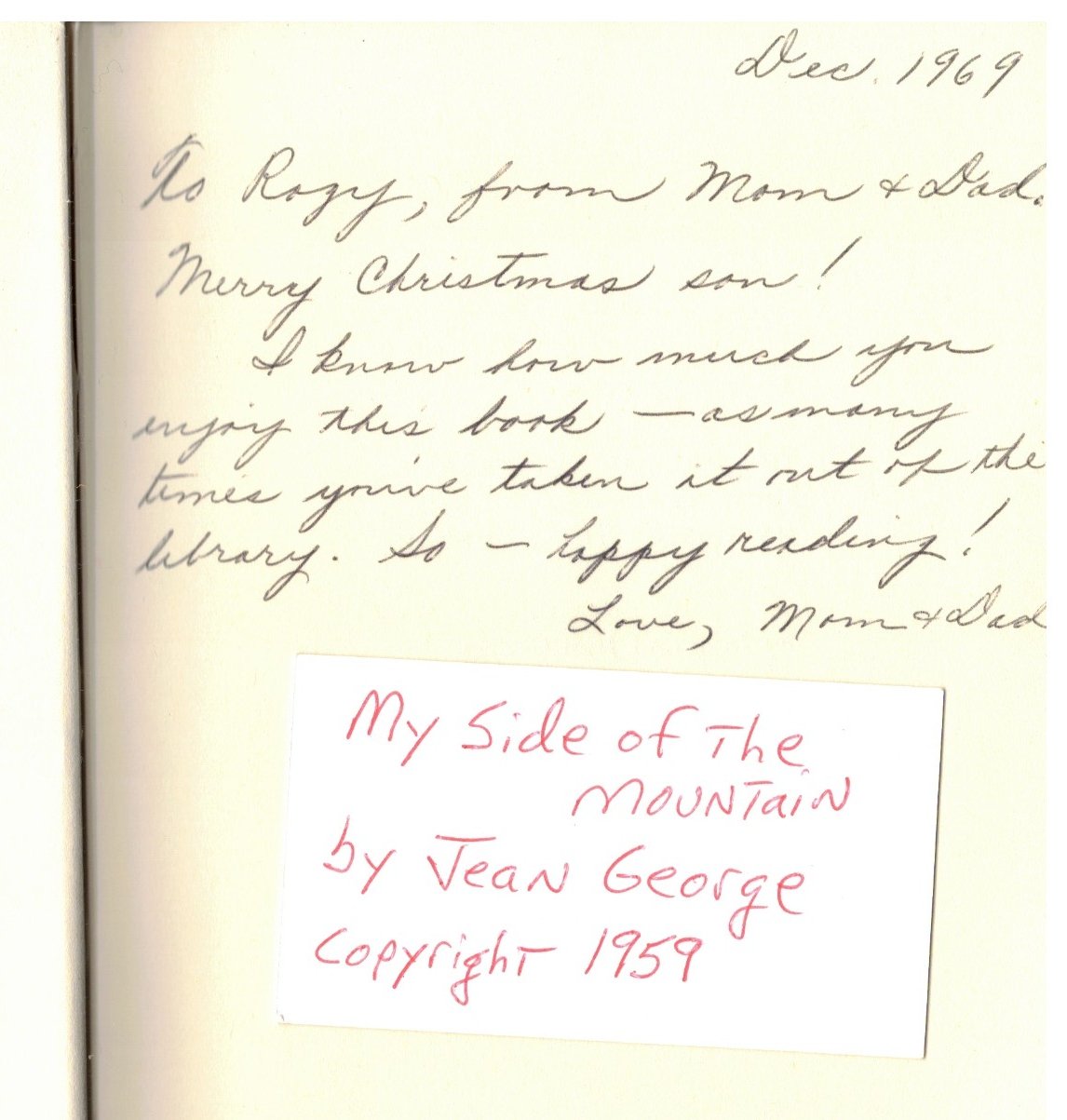
I estimate that by age 50 I had read about 500 books, not counting required reading for school and college. Not many, by some standards, but a lot for a person who was busy raising a family, earning a living, climbing, volunteering as an environmental activist and producing radio interviews.It was sometime around age 12 or 13 that I started reading outdoors and adventure books. The ones I remember best, 35 years later as I make this entry(!) were Stars, Mosquitoes and Crocodiles (The American Travels of Alexander Von Humboldt, edited by Millicent E. Selsam), Lost in the Jungle (Paul Du Chaillu's 1902 classic), Jack London's Call of the Wild and To Build a Fire, and My Side of the Mountain by Jean George (I must have read George's book at least a half dozen times!). Also, sometime around then, I read Flowers for Algernon (by Daniel Keyes), George Orwell's 1984 and Animal Farm, and Lord of the Flies (William Golding) - but, admittedly, these last three were probably inspired by school projects, etc.
During my teens, and early 20s, I read mostly Science Fiction (Isaac Azimov's I, Robot and the Foundation series, Ray Bradbury's The Martian Chronicles and Fahrenheit 451, Arthur C. Clarke's 2001: A Space Odyssey, Robert Heinlein's Stranger in a Strange Land and The Moon Is a Harsh Mistress, Larry Niven's Ringworld, Frank Herbert's Dune, etc.) and a lot of stuff on nature (Henry David Thoreau) or hiking (Colin Fletcher's 1,000 Mile Summer, The Complete Walker, and The Man Who Walked Through Time). It was also during that period that my tastes turned toward work like Joseph Heller's Catch 22, Abbey Hoffman's Steal this Book, and Robert Shrader's Electronic Communication (at the time I was preparing myself for the amateur radio Extra class examination and various FCC commercial licenses...).
From 1981 through about 2006 I actually kept a relatively accurate list of many of the books I had read during that period (age 25 through 50). I know that there probably isn't anything more boring than reviewing somebody else's reading list but maybe parts of mine might prove interesting or useful, however, posted here mostly to remind me as I get older!
Some of what I've listed below, like the Odyssey or Wuthering Heights and other classics, were repeats from my youth that I thought I'd read again for a better appreciation. Other selections, like the Hitler and Turner Diaries stuff were brief studies in evil that fall under the Chinese saying of "Know your enemy..." Still others, like the "get-rich-quick" selections were either related to youthful greed or somehow associated with my college business classes - very boring but still read in total in the interests of "science." And, as I suggested earlier, I had the pleasure (and privilege!) of interviewing various authors for my radio program - the vast majority of those readings were pure joy and I am very lucky to have spent time with such fine writers!
Offensive Books?

In a May, 2023 interview with BBC, film legend Tom Hanks said he doesn't want the overlords of PC culture to tell him what he should be offended by.
"I'm of the opinion that we're all grown-ups here. And we understand the time and the place and when these things were written. And it's not very hard at all to say: that doesn't quite fly right now, does it?'" Hanks said. "Let's have faith in our own sensibilities here, instead of having somebody decide what we may or may not be offended by.
"Let me decide what I am offended by and what I'm not offended by," he declared. "I would be against reading any book from any era that says 'abridged due to modern sensitivities.'"
Buying Books

"I have turned my entire attention to Greek. The first thing I shall do, as soon as
the money arrives, is to buy some Greek authors; after that, I shall buy clothes."
[Variant translation: "When I get a little money I buy books; and if any is left I buy food and clothes"]
- Desiderius Erasmus Roterodamus (aka Erasmus of Rotterdam)
"I am always glad when any of my books can be put into an inexpensive edition, becaue I like to think that
any people who might wish to read them can do so. Surely books ought to be within the reach of everybody."
- Pearl S. Buck after the title page in the 69th printing of, The Good Earth
Writer urges Internet junkies to 'switch off' and think
Breitbart, May 30, 2011
"Like tens of millions of others, US technology writer Nicholas Carr found the lure of the worldwide web hard to resist -- until he noticed it was getting harder and harder to concentrate. He set out his concerns in a celebrated essay headlined 'Is Google making us stupid?'" "And his latest book 'The Shallows' explores in depth what he fears the Internet is doing to our brains." "'The seductions of technology are hard to resist,' Carr acknowledges in that book, which has sold an estimated 50,000 hardback copies in the United States alone. But he thinks it's time to start trying."
"In a speech at last week's Seoul Digital Forum and an interview with AFP, Carr restated his concerns that IT is affecting the way people think and feel and even the physical make-up of their brains."
"While the Internet has enormous benefits in delivering incredible amounts of information at incredible speed, it's also a distracting and interruption-rich environment. "
"Carr said it encourages quick shifts in focus -- and discourages sustained attention and the ability to think deeply and creatively about one topic and to challenge conventional wisdom."
"Popularity-driven search engines, in one of the ironies of an information-rich Internet, worsen the problem by leading everyone to the same sources, he said.""Social networks, while pleasurable and fun, increase distractedness by bombarding users with brief bits of information."
"'We take in so much information so quickly that we are in a constant state of cognitive overload,' Carr argued."
"'Multitasking erodes cognitive control. We lose our ability to say that this is important, this is unimportant. All we want is new information.'"
"In contrast, when readers open a printed book, 'there's nothing else going on except words on a page, no distractions. It helps train us to be deep thinkers.'"

|
Special List:
Books that I highly recommend! |
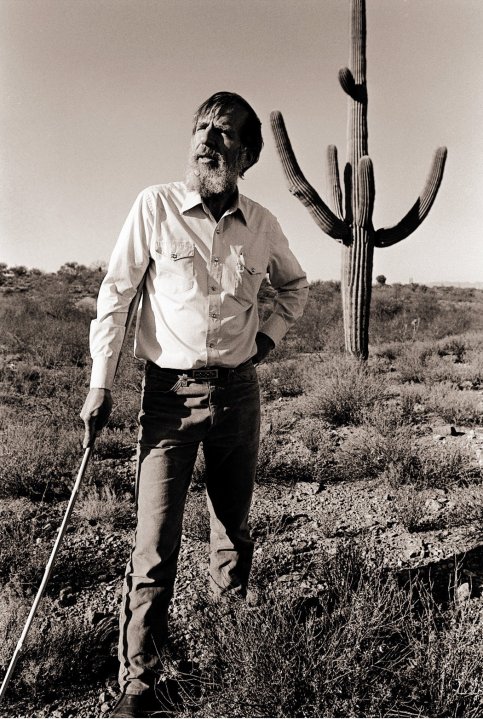
My favorite book, ever, remains Edward Abbey's Desert Solitaire! His best Friend, Doug Peacock, wrote this on page 33 in Walking it Off (above);
- Biophilia by Edward O. Wilson
- Brief History of Time, A by Stephen W. Hawking
- Beyond Backpacking by Ray Jardine
- Cracks Unlimited A climbing Guide to Vedauwoo by Layne Kopischka
- Deep Ecology (Living as if Nature Mattered) by Bill Devall and George Sessions
- Desert Solitaire by Edward Abbey
- Hawaii by James A. Michener
- Long Emergency, The (Surviving the End of Oil, Climate Change, and Other Converging Catastrophes of the Twenty-First Century) by James Howard Kunstler
- Monkey Wrench Gang, The by Edward Abbey
- My Side of the Mountain by Jean George (I read it a number of times up to age 14 in 1969...)
- Unix in a Nutshell by Arnold Robins
- Unix Power Tools by Shelley Powers, Jerry Peek, Tim O'Reilly & Mike Loukides
- Walden by Henry David Thoreau
- Walking it Off (A Veteran's Chronicle of War and Wilderness) by Doug Peacock
"Desert Solitaire was something larger than just a book about the desert. It was about the power of the land, of human connections to the earth, an idea of freedom. Ed's book was a call to arms."
|
|
Quarter Century Snapshot:
Here's a list of most of books I read, for recreational purposes, over a 25 year period. Prior to that it hadn't occurred to me to write down or record anything I was reading. After that period I was either too busy, or too lazy, to continue the recordkeeping... |
- Krushchev Remembers by Edward Crankshaw, Bantam Books, Inc. 1971, 703 Pages - October 1981
- The Poverty of Power (Energy and the Economic Crisis) by Barry Commoner, Alfred A. Knopf, New York 1976, 314 pages - October 1981
- The Dragons of Eden (Speculations on the evolution of Human Intelligence) by Carl Sagan, Ballantine Books, New York 1977, 271 pages - October 1981
- The Greek Way by Edith Hamilton, Avon Books, New York, NY 1930, 256 pages - November 1981
- The Best and the Brightest by David Halberstam, Fawcett Publications, Inc. Greenwich, Conn. 1972, 831 pages - December 1981
- Space Hawk, Inc. by Ron Goulart, Dawn Books, New York, NY 1974, 160 pages - January 1982
- Subliminal Seduction by Wilson Bryan Key, Signet, Englewood Cliffs, New Jersey 1974, 205 pages - February 1982
- Media Sexploitation by Wilson Bryan Key, Signet, Englewood Cliffs, New Jersey 1977, 234 pages - February 1982
- The Hidden Persuaders by Vance Packard, Pocket Books, New York, NY 1957, 1980, 288 pages - February 1982
- The Enemy (What Every American Should Know About Imperialism) by Felix Greene, Random House, New York, NY 1971, 391 pages - March 1982
- Broca's Brain (Reflections on the Romance of Science) by Carl Sagan, Ballantine Books, New York, NY 1979, 398 pages - March 1982
- Looking Backward by Edward Bellamy (Original 1888) Signet, New York, Ny 1960, 222 pages - April 1982
- The American Labor Movement by Leon Litwack, Prentice-Hall, Inc. Englewood Cliffs, NJ 1962, 176 pages - May 1982
- The Fast Track to Success by L. Perry Wilbur, Prentice-Hall, Inc. Engleood Cliffs, NJ 1982, 170 pages - June 1982
- Atlas Shrugged by Ayn Rand, Signet Books, New York, NY, 1963, 1,084 pages - July 1982
- How to Make a Quick Fortune: New Ways to Build Wealth Fast by Tyler G. Hicks, Parker Publishing Company, Inc. West Nyack, NY, 1981, 284 pages - July 1982
- How to Acquire the Power of Financial Independence by Andrew James McLean, JWP Development, Culver City, California 1978, 149 pages - July 1982
- The Panda's Thumb (More Reflections in Natural History) by Stephen Jay Gould, Norton & Company, Inc. New York, NY 1980. 343 pages - July 1982
- Discourse on Colonialism by Aimé Césaire, Modern Reader, New York, NY 1955, 79 pages - July 1982
- The Life and Death of Nazi Germany by Robert Goldston, Fawcett Books, New York, NY 1967, 222 pages - August 1982
- Building a Mail Order Business (A complete Manual for Success) by William A. Cohen, John Wiley & sons, New York 1982, 442 pages - August 1982
- How You Too Can Make at Least $1 Million (but probably much more) in the Mail-Order Business by Gerardo Joffe, Advance Books, San Francisco, Ca 1979, 370 pages - August 1982
- Crime and Punishment by Fyodor Dostoyevsky, translated by Sidney Monas, Signet Books, New York, NY 1968 (written between 1864 - 1866), 542 pages - September 1982
- Ever Since Darwin by Stephen Jay Gould, W.W. Norton & Company, Inc. New York, NY 1977, 285 pages - October 1982
- The Communist Manifesto by Karl Marx & Friedrich Engels [Originally Written in 1848] prepared by Francis B. Randell. Washington Squire Press, New York, NY 1964, 143 pages - October 1982
- The Colorado Municipal Election Code, Mary Estill Buchanon, Secretary of State, Denver, CO 1981, 49 pages - October 1982
- Home Rule Charter, City of Aurora, Colorado, 25 April 1961, 53 pages - October 1982
- The Essential Marx (The Non-Economic Writings) by Saul K. Padover, The American Library, Inc. New York, NY 1978 438 pages - November 1982
- The Way of Zen by Alan W. Watts, Vintage Books, New York, NY 1957, 236 pages - November 1982
- The Dancing WuLi Masters (An Overview of the New Physics) by Gary Zukav, William Morrow and Company, Inc., New York 1979, 352 pages - December 1982
- The Right Stuff by Tom Wolfe, McGraw-Hill, New York 1979, 436 pages - December 1982
- Papillon by Henri Charrière, Pocket Books, New York, NY 1971, 458 pages - January 1983
- A Few Minutes With Andy Rooney by Andrew A. Rooney, Warner Books, New York, NY 1981, 322 pages - January 1983
- Gandhi - A Memoir by William L. Shirer, Pocket Books, New York, NY 1979, 265 pages - January 1983
- The Conscious Brain by Steven Rose, Vintage Books, New York, NY 1976, 446 pages - January 1983
- Hitler A Study in Tyrany by Alan Bullock, Harper & Row, Publishers, New York, NY 1971, 489 pages - March 1983
- The Cosmic Code (Quantum Physics as the Language of Nature) by Heinz R. Pagels, Bantam Books, New York, NY 1982, 333 pages - March 1983
- Deathworld by Harry Harrison, Nelson Doubleday, Inc, Garden City, NY 1960, 147 pages - March 1983
- The Autobiography of Benjamin Franklin by Lewis Leary, Collier Books, New York, NY 1962 (written 1771 -1790), 160 pages - May 1983
- George Washington (Man and Monument) by Marcus Cunliffe, Mentor Books, New York 1958, 192 pages - June 1983
- Electronic Communication (4th Edition) by Rober L. Shrader, McGraw-Hill, USA 1980, 801 pages - June 1983
- Understanding the Futures Markets, Commodity Research Bureau, Inc. Commodity Research Publications Co., Jersey City, N.J. 1982, 40 pages - June 1983
- The First Three Minutes (A modern view of the origin of the universe) by Steven Weinberg, Bantam New Age books, New York, NY 1977, 177 pages - July 1983
- The World of Carbon by Isaac Asimov, Collier Books, New York 1979, 158 pages - August 1983
- The Fountainhead by Ayn Rand, Signet (The new American Library) New York, NY 1943, 695 pages - August 1983
- Other Worlds (Space, Superspace and the Quantum Universe) by Paul Davies, Simon and Schuster, New York, NY 1980, 207 pages - September 1983
- Mein Kampf by Adolf Hitler, translated by Ralph Manheim. Written in 1924 Landsberg AM Lech Fortress Prison, Germany. Houghton Mifflin Company, Boston, 1971, 694 pages - December 1983
- Space by James A. Michener, Fawcett Crest Books, New York 1982, 808 pages - January 1984
- Fossils for Amateurs (A Handbook for Collectors) by Russell P. MacFall and Jay C. Wollin - Ban Nostrand Reinhold Company, New York, NY 1983, 374 pages - February 1984
- A Field Guide to the Stars and Planets by Donald H. Menzel and Jay M. Pasachoff - Houghton Mifflin Company, Boston, Massachusetts 1983, 473 pages - March 1984
- Einstein for Beginners by Joe Schwartz and Michael McGuinness, Pantheon Books, New York 1979, 173 pages - March 1984
- The Search for Extraterrestrial Intelligence prepared by NASA, Dover Publications, Inc. New York 1979, 176 pages - April 1984
- Jews, God and History by Max I. Dimont, Signet, New York, NY, 1962, 472 pages - May 1984
- Cosmic Dawn (The Origins of Matter and Life) by Eric Chaisson, Berkley Books, New York, NY, 1981, 302 pages - May 1984
- Space, Time, and Gravity by Robert M. Wald, The University of Chicago Press, Chicago, Ill, 1977, 131 pages - June 1984
- The ABC of Relativity by Bertrand Russell, A Mentor Book, New York, NY 1956, 144 pages - June 1984
- The Journals of Lewis and Clark selections by John Bakeless, Mentor, New York 1964, 384 pages - August 1984
- Infinity and the Mind by Rudy Rucker, Bantam Books, New York, New York 1982, 366 pages - October 1984
- 2010: Odyssey Two by Arthur C. Clarke, Ballantine Books, New York, NY 1982 (I read 2001 as a teenager), 335 pages - October 1984
- Desert Solitaire (A Season in the Wilderness) by Edward Abbey, Ballantine Books, New York 1968, 303 pages - October 1984
- In Search of Schrödinger's Cat (Quantum Physics and Reality) by John Gribbin, Bantam Books, New York 1984, 302 pages - November 1984
- Red Giants and White Dwarfs by Robert Jastrow, Wrner Books, New York, NY 1979, 275 pages - November 1984
- Air Traffic Controller (ARCO Test Tutor) by James W. Morrison, Arco Publishing Inc, New York 1981 [I read this countless times before becoming an ATC so I felt it was best to finally record it...], 496 pages - December 1984
- The Minervan Experiment (Inherit the Stars, the Gentle Giants of Ganymeade, Giant's Star) by James P. Hogan, Random House, New York, 1981, 728 pages - February 1985
- Hen's Teeth and Horse's Toes (Further Reflections in Natural History) by Stephen Jay Gould, W. W. Norton & Company, New York, NY 1983, 413 pages - March 1985
- Paleontology and Paleoenvironments Edited by Brian J. Skinner, William Kaufmann, Inc. Los Altos, California 1981, 206 pages - April 1985
- In Suspect Terrain by John McPhee, Farrar, Straus & Giroux, New York 1982, 209 pages - April 1985
- Iron Coffins (A personal account of the German U-Boat battles of World War II) by Herbert A. Werner, Paperback Library, New York, NY 1969, 431 pages - May 1985
- Inside the Company: CIA Diary by Philip Agee, Stonehill Publishing Co., New York, NY 1975, 660 pages - May 1985
- Walden Two by B. F. Skinner, The Macmillan Company, New York, New York 1948, 320 pages - June 1985
- Secrecy And Democracy (The CIA Transition) by Admiral Stansfield Turner; Houghton Mifflin Company, Boston 1985, 304 pages - June 1985
- Roadside Geology of Colorado by Halka Chronic, Mountain Press Publishing Co, Missoula 1980, 322 pages - July 1985
- The Pritikin Promise: 28 Days to a Longer, Healthier Life by Nathan Pritikin, Simon and Schuster, New York, New York 1983, 516 pages - July 1985
- The Man Who Walked Through Time by Colin Fletcher, Vintage Books, New York, 1967, 239 pages - August 1985
- People of the Lake (Mankind & Its Beginnings) by Richard E. Leaky and Roger Lewin. Avon Books, New York, New York 1978, 252 pages - September 1985
- Eat to Win (The Sports Nutrition Bible) by Doctor Rober Haas, Signet, New York, N.Y. 1983, 365 pages - October 1985
- Down The River by Edward Abbey, E.P. Dutton, New York, New York, 1982, 242 pages - October 1985
- Understanding Solid-State Electronics 3rd Edition by Radio Shack/Texas Instruments, Ft Worth, Texas 1978, 272 pages - December 1985
- COSMOS by Carl Sagan, Random House, New York 1980, 365 pages - December 1985
- Observer's Guide to Halley's Comet by James Muirden, Arco Publishing, Inc. New York 1985, 74 Pages - December 1985 (My wife, kids and I all were able to view the comet in 1986...)
- Stephen Hawking's Universe (An Introduction to the Most Remarkable Scientist of our Time) by John Boslough, William Morrow and Company, Inc, New York, Ny 1985, 158 pages - January 1986
- Maps And Dreams by Hugh Brody, Pantheon Books, New York 1981, 297 pages - April 1986
- Grand Canyon Treks by Harvey Butchart, La Siesta Press, Glendale, California 1976, 72 pages - May 1986
- NOVA, Adventures In Science by WGBH Educational Foundation, Addison-Wesley Publishing Company, America 1983, 288 pages - June 1986
- The Enchanted Loom (Mind in the Universe) by Robert Jastrow, Simon and Schuster, New York 1983, 183 pages - June 1986
- Beyond The Wall (Essays from the Outside) by Edward Abbey, Holt, Reinehart and Winston, New York 1971 - 1984, 203 pages - July 1986
- The Monkey Wrench Gang by Edward Abbey, Avon Books, New York, New York 1975, 387 pages - July 1986
- Utilitarianism by John Stuart Mill, Edited by Oskar Piest, Bobbs-Merrill Company, Inc, Indianapolis, Indiana 1957 (1861), 79 pages - July 1986
- Coming Into The Country by John McPhee, Farrar, Straus & Giroux, Inc, New York, NY (Bantam 1985), 417 pages - October 1986
- Keeping Bees by John Vivian, Williamson Publishing, Charlotte, Vermont 1986, 238 pages - October 1986
- The Journey Home (Some Words in Defense of the American West) by Edward Abbey, E.P. Dutton, New York 1977, 242 pages - October 1986
- Abbey's Road by Edward Abbey, E.P. Dutton, New York 1979, 198 pages - November 1986
- Canyon Country Prehistoric Indians Their Cultures, Ruins, Artifacts and Rock Art by F. A. Barnes and Michaelene Pendleton, Wasatch Publishers, Inc., Salt Lake City, Utah 1979, 256 pages - December 1986
- Never Cry Wolf by Farley Mowat, Bantam Books, New York, 9th Printing, 1984, 164 pages - December 1986
- QRP Notebook by Doug DeMaw (W1FB) published by the American Radio Relay league, Newington, Connecticut 1986, 77 pages - February 1987
- A Sand County Almanac by Aldo Leopold with essays on conservation from Round River, Oxford University Press, New York, Ballantine Books, 1966, 295 Pages - February 1987
- Good News by Edward Abbey, E.P. Dutton, New York 1980, 242 Pages - March 1987
- The Solace of Open Spaces by Gretel Ehrlich, Penguin Books, Harrisonburg, Virginia 1985, 131 Pages - March 1987
- Contact by Carl Sagan, Pocket Books, New York 1985, 434 Pages - March 1987
- Inidans of the Plains by Robert H. Lowie, Bison Books, University of Nebraska Press 1954, 1982, 222 Pages - April 1987
- The Snow Leopard by Peter Matthiessen, The Viking Press, New York, 298 Pages - May 1987
- Arctic Dreams (Imagination And Desire In A Northern Landscape) by Barry Lopez, Bantam Books, New York, 417 Pages May 1987
- The Flamingo's Smile Reflections In Natural History by Stephen Jay Gould, W. W. Norton & Company, New York 1985, 476 Pages - June 1987
- In Search of the Big Bang Quantum Physics and Cosmology by John Gribbin, Bantam Books, New York 1986, 413 Pages - July 1987
- Fire On The Mountain a Novel by Edward Abbey, University of New Mexico Press, Albuquerque, 222 Pages - August 1987
- The Exploration of the Colorado River and its Canyons (formerly titled: Canyons of the Colorado) by Major John W. Powell, Dover Publications, Inc. 1961 (First published in 1895 by Flood & Vincent), 400 Pages - August 1987
- Adrift (76 days lost at sea) by Steven Callahan, Ballantine Books, New York 1986, 344 pages - September 1987
- Walking Softly in the Wilderness (The Sierra Club Guide to Backpacking) by John Hart, Sierra Club Books, San Francisco, California, 500 pages - October 1987
- A Whale For The Killing by Farley Mowat, Bantam Books, New York 1972, 213 pages - October 1987
- Basin and Range by John McPhee, Farrar, Straus & Giroux, New York 1980, 215 pages - October 1987
- ECODEFENSE: A Field Guide to Monkeywrenching Second Edition, Edited by Dave Foreman and Bill Haywood, Ned Ludd Books, Tucson, Arizona 1987, 311 pages - November 1987
- Silent Spring By Rachel Carson (25th Aniversary Edition) Houghton Mifflin Company, Boston 1987 (Original 1962), 368 pages - November 1987
- The Mountains of California by John Muir, Ten Speed Press, Berkeley, California (Facsimile of original 1894 edition), 389 Pages - December 1987
- The Thousand Mile Summer by Colin Fletcher, Vintage Books, New York 1964, 232 Pages - January 1988
- The Egyptians by Cyril Aldred, Thames and Hudson, London 1961 (1987), 216 Pages - February 1988
- One Life at a Time, Please by Edward Abbey, Henry Holt and Company, New York 1978 - 1988, 225 pages - February 1988
- Timberline (Mountain and Arctic Forest Frontiers) by Stephen F. Arno and Ramona P. Hammerly, The Mountainers, Seattle, Washington 1984, 304 pages - May 1988
- Of Mice and Men by John Steinbeck, Penguin Books, New York, 1987 (Also, this book contains Cannery Row which I read as a teenager...) 1937 wat the year it was published, 107 pages - May 1988
- The Grizzly by Enos A. Mills (The Classic Portrait of a Magnificent Animal), Comstock Editions, Inc, Sausalito, California, Copyright 1919, 182 pages - May 1988
- A View of the Mountains by William Morris Gibson, Ballantine Books, New York, Copyright 1983, 239 Pages - June 1988
- Words for the Wild (The Sierra Club Trailside Reader) edited by Ann Ronald, Sierra Club Books, San Francisco 1987 copyright, 365 pages - July 1988
- The Old Man and The Sea by Ernest Hemingway, Macmillan Publishing Company, New York, Copyright 1980 (1952 original), 127 pages - July 1988
- Deep Ecology (Living as if Nature Mattered) by Bill Devall and George Sessions, Published by Gibbs M. Smith, Inc, Layton, Utah, Copyright 1985, 267 pages - July 1988
- Civil Disobedience (formerly "Resistance to Civil Government") by Henry David Thoreau 1849. (I read some of Thoreau's work when I was a teenager), this particular copy was edited by Carl Bode and appears to be complete. Penguin books, New York "The Portable Thoreau" copyright 1947, 28 pages (of 698) - July 1988
- The Cossacks/Happy Ever After/The Death of Ivan Ilyich by Count Leo Nikolayevich Tolstoy (1828-1920) translated by Rosemary Edmonds, Penguin Inc. New York, Copyright 1960, 334 pages - August 1988
- Learning to Rock Climb by Michael Loughman, Sierra Club Books, San Francisco, California, Copyright 1981, 141 pages - September 1988
- Medieval Europe (A Short History) by Charles Warren Hollister, Fifth Edition, Copyright 1964, Alfred A. Knopf, New York, 384 pages - October 1988
- Basic Rockcraft by Royal Robbins, Copyright 1971, La Siesta Press, Glendale, California 1985, 71 pages - October 1988
- Advanced Rockcraft by Royal Robbins, Copyright 1973, La Siesta Press, Glendale, California 1985, 96 pages - October 1988
- Practice Climbing by Larry Griffin, Copyright 1973, Pronto Print, Englewood, Colorado, 16 pages - October 1988
- Kabloona by Gontran De Poncins in collaboration with Lewis Galantiére, copyright 1941, Time-Life Books, Inc., Alexandria, Virginia, reprinted 1980, 322 pages - October 1988
- Desert Notes (Reflections in the eye of a Raven) by Barry Holstun Lopez, Copyright 1976, Avon Books, New York, NY 1981, 78 pages - October 1988
- Passport to Survival by Esther Dickey, Bookcraft Publishers, Salt Lake City, Utah. Copyright 1969, 18th Printing, 1975, Revised Edition, 180 pages - November 1988
- The Art of Loving by Erich Fromm, Bantam Books, Inc., New York, New York, Copyright 1956, 24th printing, 118 pages - November 1988
- The Fool's Progress (An Honest Novel) by Edward Abbey, Copyright 1988, Henry Holt and Company, New York, 485 pages - November 1988
- The Vikings (The Background to a fierce and fascinating civilization) by Johannes Brønsted, translated by Kalle Skov, Copyright 1960, Penguin Books, Ltd, Hardmondsworth, Middlesex, England, 347 pages - December 1988
- Project: Readiness (a guide to family emergency preparedness) by Louise E. Nelson, Copyright 1974, Horizon Publishers, Bountiful, Utah, 270 pages - December 1988
- The Colon Health Handbook (New Health Through Colon Rejuvination) Eleventh Revised Edition by Robert Gray, Copyright 1980 to 1986, Emerald Publishing, Reno, Nevada, 77 pages - December 1988
- The Heart of Man (Its Genius for Good and Evil) by Erich Fromm, Copyright 1964, Harper & Row Publishers, New York, New York, 160 pages - December 1988
- River Notes (The Dance of Herons) by Barry Holstun Lopez, Copyright 1979, Avon Books, New York, New York, 81 pages - December 1988
- The Deltoid Pumpkin Seed by John McPhee, Copyright 1973, Farrar, Straus & Giroux/New York, 184 pages - January 1989
- The Brave Cowboy by Edward Abbey (A novel[An Old Tale in a New Time]) Afterword by Neal E. Lambert, Copyright 1956, 8th Printing 1987, University of New Mexico Press, Albuquerque, 285 pages - January 1989
- The Last Temptation of Christ by Nikos Kazantzakis, Translated from the Greek by P.A. Bien, Copyright 1960, Simon & Schuster Inc., New York, New York, 506 pages - March 1989
- The Catcher in the Rye by J. D. Salinger, Copyright 1945, Bantam Books, New York, 214 pages - March 1989
- Muddling Towards Frugality (A Blueprint for Survival in the 1980s) by Warren A. Johnson, Copyright 1978, Shambhala Publications, Inc., Boulder, Colorado, 252 pages - April 1989
- The Second Penguin Krishnamurti Reader Edited by Mary Lutyens, J. Krishnamurti, Copyright 1970, Viking Penguin Inc, New York, NY, 317 pages - May 1989
- The Brothers Karamazov by Fyodor Dostoyevsky, Unabridged, translated by Constance Garnett, Edited by Manuel Komroff, 1957 (The book was originally published in 1881, a year befor Dostoyevsky's Death). A Signet Classic by New American Library, New York, 703 Pages - July 1989
- Thinking Like A Mountain (Towards a Council of All Beings) by John Seed, Joanna Macy, Pat Fleming, Arne Naess. Copyright 1988 by John Seed. New Society Publishers, Philadelphia, PA, 122 Pages - July 1989
- History of QRP in the U.S. 1924-1960 by Adrian Weiss, WØRSP, Milliwatt Books, Vermillion, South Dakota, Copyright 1987, 200 Pages - August 1989
- An Urchin In The Storm (Essays about Books and Ideas) by Stephen Jay Gould, Copyright 1987, W.W. Norton & Company, Inc. New York, NY, 255 Pages - August 1989
- Tortilla Flat by John Steinbeck, Copyright 1935, Viking Penguin Inc., New York, New York, 207 Pages - September 1989
- Siddhartha by Hermann Hesse (Translated by Hilda Rosner), Copyright 1951, originally written in 1922, Bantam Books, New York, 152 Pages - September 1989
- Anarchism (Political Innocence or Social Violence?) by James D. Forman, Copyright 1975, Published by Dell Publishing Co., Inc., New York, NY, 144 Pages - October 1989
- The Elements of Style Third Edition by William Strunk Jr., with Revisions by E. B. White. MacMillan Publishing, New York, Copyright 1959, 1972, 72 Pages - October 1989
- Resist Much, Obey Little (Some Notes on Edward Abbey) Edited by James Hepworth and Gregory McNamee, Copyright 1985, Dream Garden Press, Salt Lake City, Utah, 127 Pages - October 1989
- Wuthering Heights by Emily Brontë (First Published in 1847, a year before her death at 30), Edited by V.S. Pritchett, Copyright 1956, Houghton Mifflin Company, Boston, 287 Pages - December 1989
- The Trial by Franz Kafka (1883-1924) Copyright 1937, Vintage Books Edition, February 1969, New York, Definitive Edition, Translated from the German by Willa and Edwin Muir with additional materials translated by E.M.Butler. This edition contains more than 10,000 words, some of which had been omitted but included here by Max Brod, Kafka's closest friend. 340 pages - January 1990
- Hayduke Lives! A Novel By Edward Abbey, Copyright 1990 by his Estate, Little, Brown and Company, Boston, Toronto, London, 308 Pages - January 1990
- The Limits of the City by Murray Bookchin, Copyright 1974, Harper & Row, Publishers, New York, 148 Pages - January 1990
- Waiting For Godot by Samuel Beckett, Copyright 1954, (A Tragicomedy in Two Acts), Grove Press, New York 60 Pages (multiply by two to total 120) - February 1990
- Johnathan Livingston Seagull a story, by Richard D. Bach, Copyright 1970, Avon Books, New York, 127 pages - February 1990
- Zen and the Art of Motorcycle Maintenance (an Inquiry into Values) by Robert M. Pirsig, Copyright 1974 and 1984, Bantam Books, New York, 380 pages - February 1990
- Utopia by Sir Thomas More (written in 1516), Translated with an introduction by Paul Turner, Copyright 1965, Reprinted 1986, Penguin Books, New York, 154 pages - March 1990
- Communism From Marx's Manifesto to 20th-Century Reality, by James D. Forman, Copyright 1972, Dell Publishing Co, New York - October 1976, 158 pages - March 1990
- The Tao of Physics by Fritjof Capra, Copyright 1975, (An Exploration of the Parallels Between Modern Physics and Eastern Mysticism), Bantam Books, New York, 332 Pages - April 1990
- Sundancers and River Demons (Essays on Landscape and Ritual) by Conger Beasley, Jr., Copyright 1990, The University of Arkansas Press, Fayetteville (personally signed copy!), 229 Pages - April 1990
- Crossing Open Ground by Barry Holstun Lopez, Copyright 1978 to 1988, Vintage Books, New York, 208 pages - April 1990
- Thus Spoke Zarathustra by Friedrich Wilhelm Nietzche (1885). Complete Text found in "The Portable Nietzche", edited and translated by Walter Kaufmann, 1982, The Viking Press, New York, 336 pages devoted to Thus Spoked Zarathustra, all Four Parts - June 1990
- Drive It Forever by Robert Sikorsky, 1989 (Your Key to Long Automobile Life) McGraw-Hill Publishing Company New York, 212 pages - June 1990
- The McDougall Program (Twelve Days to Dynamic Health) by John A. McDougall, M.D., NAL Books (Penguin), New York, Ny, 436 pages - July 1990
- The Teachings of Don Juan: A Yaqui Way of Knowledge by Carlos Castaneda, Copyright 1968, Pocket Books, New York, 256 pages - August 1990
- Steppenwolf by Herman Hesse, 1929, Copyright 1963, Bantam Books, New York, 248 pages - August 1990
- Western Political Philosophers (Plato, Aristotle, Aquinas, Machiavelli, Hobbes, Locke, Rousseau, Burke, Hegel, Marx, Mill) Edited by Maurice Cranston, 1964, Capricorn Books, New York, 124 pages - September 1990
- The Odyssey, Homer, translated by E. V. Rieu, copyright 1946, Penguin Books, England, 365 pages - October 1990
- The Sea-Wolf, The Law of Life, The One Thousand Dozen, All Gold Canyon, Moon-Face - selected stories by Jack London, Afterword by Franklin Walker, First Printing 1964, Nal Penguin, Inc. New York, 348 Pages - October 1990
- Encounters With the Archdruid by John McPhee. Copyright 1971, The Noonday Press, New York, 245 Pages - October 1990
- Who Dies? (An Investigation of Conscious Living and conscious Dying) by Stephen Levine, copyright 1982, Anchor books, Garden City, New York, 317 Pages - October 1990
- Winter Count (Tales of Myth and Memory) by Barry Holstun Lopez, copyright 1976, 1980, 1981, Avon Books, New York, 112 Pages - October 1990
- Wonderful Life "(The Burgess Shales and the Nature of History)" by Stephen Jay Gould, copyright 1989, W. W. Norton & Company, New York, 347 Pages - November 1990
- Think On These Things Krishnamurti, Edited by D. Rajagopal, Copyright 1964, Harper & Row, Publishers, New York, 258 pages - November 1990
- Pilgrim At Tinker Creek by Annie Dillard, Copyright 1974, Harper & Row, Publishers, New York, 271 pages - November 1990
- A Separate Reality (Further Conversations With don Juan) by Carlos Castaneda, Copyright 1971, Washington Square Press, Pocket Books, New York, 263 pages - December 1990
- Chop Wood Carry Water (A Guide to Finding Spiritual Fulfillment in Everyday Life), by Rick Fields, with Peggy Taylor, Rex Weyler, and Rick Ingrasci, Copyright 1984, Jeremy P. Tarcher, Inc., Los Angeles [I met Fields at a National Western Stock Show parade protest on January 8, 1990], 287 pages - December 1990
- Journey To Ixtlan (The Lessons of Don Juan) by Carlos Castaneda, Copyright 1972, Pocket Books, New York, 268 pages - January 1991
- Truth And Actuality Jiddu Krishnamurti, Copyright 1977, Harper & Row, Publishers, San Francisco, 171 pages - January 1991
- A Voice Crying In the Wilderness (Vox Clamantis in Deserto) Notes from a Secret Journel by Edward Abbey, copyright 1989, St. Martin's Press, New York, 112 pages - January 1991
- The One Minute Manager (The Quickest Way to Increase Your Own Prosperity) Kenneth Blanchard, PH.D. & Spencer Johnson, M.D. Copyright 1982, Berkley Books, New York, 111 pages - January 1991
- Zen Mind, Beginner's Mind by Shunryu Suzuki, first edition 1970, Published by Weatherhill, Inc., New York, 138 pages - February 1991
- The Power of Your Plate by Neal D. Barnard, M.D., Copyright 1990, Book Publishing Company, Summertown, Tennessee, 240 pages - February 1991
- Black Sun by Edward Abbey (Tribute by Charles Bowden), Copyright 1971, Capra Press, Santa Barbara, California, 168 pages - March 1991
- Zen in the Art of Archery by Eugen Herrigel with an introduction by D.T. Suzuki, translated by R.F.C. Hull, copyright 1953, Vintage Books, New York, 81 pages - March 1991
- War at Home (Covert Action Against U.S. Activists and What we can do About it) by Brian Glick, Copyright 1989, South End Press, Boston, Ma, 92 pages - April 1991
- The Clan of the Cave Bear by Jean M. Auel, copyright 1980, Bantam Books, New York, 495 pages - May 1991
- The 1991 What Color is Your Parachute? by Richard Nelson Bolles, Copyright 1991, (A Practical Manual for Job-Hunters & Career Changers), Ten Speed Press, Berkeley, California, 425 pages - May 1991
- Fasting and Man's Correct Diet by R. B. Pearson (Construction Engineer), Copyright 1921, Health Reseach, Mokelumne Hill, California 95245 (P.O.B. 70), 153 pages - May 1991
- Confessions of an Eco-Warrior by Dave Foreman, Copyright 1991, Harmony Books, New York, 228 pages - May 1991
- Confessions of a Kamikaze Cowboy (A true story of Discovery, Acting, Health, Illness, Recovery, and Life) by Dirk Benedict, Copyright 1991, Avery Publishing Group, Inc., Garden City Park, New York, 208 pages - June 1991
- A Modern Day Yankee in a Connecticut Court (And other essays on science) by Alan Lightman, Copyright 1984, 85 1986, Penguin Books, new York, 183 pages - June 1991
- Tales of Power by Carlos Castaneda, Copyright 1974, Pocket Books, New York, 295 pages - June 1991
- The Wilderness World of John Muir Edited by Edwin Way Teale, Copyright 1954, Houghton Mifflin Company, Boston, 332 pages - June 1991
- Nazism (The ideology of the Third Reich and its leader), by James D. Forman, copyright 1978, New York, Dell Publishing, 171 pages - June 1991
- Be Here Now by Dr. Richard Alpert, Ph.D into Baba Ram Dass, Lama Foundation, 1971, Year of the Earth Monkey, Hanuman Foundation. 13th printing 1990, Crown Publishing, New York, Over 267 strangely numbered pages - July 1991
- Your Erroneous Zones by Dr. Wayne W. Dyer, Copyright 1976, Avon Books, New York, 253 pages - August 1991
- Everett Ruess - A Vagabond For Beauty by W. L. Rusho, copyright 1983, Peregrine Smith Books, Salt Lake City, Utah, 228 pages - August 1991
- The Book (on the Taboo Against Knowing Who You Are) by Alan Wilson Watts, Copyright 1966, Vintage Books, New York, 163 pages - August 1991
- Goodbye to a River (A farewell canoe trip down the Brazos River in Texas, before it was dammed and changed forever) by John Graves, copyright 1960, A sierra Club/Ballantine Book, New York, 307 pages - August 1991
- Zen Flesh, Zen Bones (A collection of Zen and Pre-Zen Writings), compiled by Paul Reps, Anchor Books, New York, 1989 edition, 175 pages - September 1991
- The Prince by Niccolo Machiavelli 1517, Introduction by Christian Gauss, translation by Luigi Ricci, revised by F.R.P. Vincent, Mentor Books, New York, 1980, 127 pages - September 1991
- Wind in the Rock (The Canyonland of Southeastern Utah) by Ann H. Zwinger, Copyright 1978, The University of Arizona Press, 258 pages - October 1991
- Fasting Can Save Your Life by Herbert M. Shelton, Copyright 1964, Natural Hygiene Press, Bridgeport, CT, 195 pages - November 1991
- The Second Ring of Power by Carlos Castaneda, Copyright 1977, Simon and Schuster, New York, 316 pages - December 1991
- The Lazy Man's Guide to Enlightenment by Thaddeus Golas, Copyright 1971, Seed Center, Palo Alto, California, 80 pages - December 1991
- The Spirit of Zen (A way of life, work and art in the Far East) by Alan W. Watts, Copyright 1958, Grove Press, Inc, New York, 128 pages - January 1992
- Black Elk Speaks (Being the Life Story of a Holy Man of the Oglala Sioux) as told through John G. Neihardt, Copyright 1932, University of Nebraska Press, Lincoln and London, 298 pages - February 1992
- Odyssey (Pepsi to Apple... The Journey of A Marketing Impresario) by John Sculley with John A. Byrne. Copyright 1987, Harper & Row, Publishers, New York, 450 pages - March 1992
- Iacocca (An Autobiography) by Lee Iacocca with William Novak. Copyright 1984, Bantam Books, New York, 365 pages - March 1992
- KRISHNAMURTI: THE YEARS OF AWAKENING (The illuminating Biography of the Early Years of an Enigmatic and Extraordinary Spiritual Leader) by Mary Lutyens, Copyright 1975, Avon Books, New York, New York, 355 pages - March 1992
- DEATH (His The essence of Alan Watts; book 4) by Alan Wilson Watts, Copyright 1975, Celestial Arts, Millbrae, California, 63 pages - March 1992
- MEDITATION (How to do it) by Alan Wilson Watts, Copyright 1974, Pyramid Communications, Inc., New York, NY, 63 pages - March 1992
- TAO TEH CHING Lao Tzu, translated by John C. H. Wu, Copyright 1961, Shambhala Pocket Classics, Boston, 1990, 115 pages - May 1992
- Meditations (J. Krishnamurti), Copyright 1979 by Krishnamurti Foundation, Shambhala Publications, Inc, Boston, 1991, 89 pages - May 1992
- PLATO/THE LAST DAYS OF SOCRATES Euthyphro, The Apology, Crito, Phaedo, Translated and with an Introduction by Hugh Tredennick. Copyright 1954, Penguin Books, Middlesex, England, 199 pages - June 1992
- Way of the Peaceful Warrior (A Book that Changes Lives) by Dan Millman Copyright 1980, H.J. Kramer, Inc., Tiburon, California, 210 pages - July 1992
- Life was Never Meant to be a Struggle by Stuart Wilde, Copyright 1987, White Dove International, Inc., Taos, New Mexico, 49 pages - July 1992
- The Eagle's Gift by Carlos Castaneda, Copyright 1981, Pocket Books, New York, 314 pages - August 1992
- The Hindu Yogi Practical Water Cure (As Practiced in India and Other Oriental Countries) by Yogi Ramacharaka, Copyright 1937, 1909, The Yogi Publication Society, Chicago, U.S.A., 123 pages - August 1992
- How Poetry Works by Philip Davies Roberts, Copyright 1986, Penguin Books, New York, 304 pages - January 1993
- Human Society in Ethics and Politics by Bertrand Russell, Copyright 1952, Mentor Books, New York, 200 pages - March 1993
- WALDEN or, Life in the Woods and ON THE DUTY OF CIVIL DISOBEDIENCE by Henry David Thoreau. Written/Published 1854, 1849 respectively. With an Afterword by Perry Miller, copyright 1960. A Signet Classic, New York.(I first read these thoroughly at about age 16 or 17 and then thoroughly again at this date...), 255 pages - June 1993
- Sacred Journey of the Peaceful Warrior by Dan Millman, Copyright 1991, H. J. Kramer Inc., Tiburon, California, 229 pages - July 1993
- Climbing Anchors (How to Rock Climb) by John Long, Copyright 1993, Chockstone Press, Inc., Evergreen, Colorado, 112 pages - July 1993
- (How To) Rock Climb! by John Long, Copyright 1989, Chockstone Press, Inc., Evergreen, Colorado, 160 pages - August 1993
- What Ever Happened to the American Dream by Larry Burkett, Copyright 1993, Moody Press, Chicago, 297 pages - August 1993
- Bankruptcy 1995 (The Coming Collapse of America and How to Stop it) by Harry E. Figgie, Jr. with Gerald J. Swanson, Ph.D. Foreword by Warren B. Rudman U.S. Senator, N.H. Copyright 1992, Little, Brown and Company, Boston, 206 pages - September 1993
- Diet For a New America (How Your Food Choices Affect Your Health, Happiness and the Future Life on Earth) by John Robbins, Copyright 1987, Stillpoint Publishing, Walpole, New Hampshire, 423 pages - October 1993
- On the Road by Jack Kerouac, Copyright 1955, 1957, Penguin Books, New York, 310 pages - November 1993
- Embraced By The Light by Betty J. Eadie, Copyright 1992, Published by Gold Leaf Press, Placerville, California, 147 pages - December 1993
- The Good Earth by Pearl S. Buck, Copyright 1931, Washington Square Press, New York, 260 pages - December 1993
- The Little Prince by Antoine De Saint-Exupery, copyright 1968, 111 pages - December 1993
- Aristotle for Everybody (Difficult Thought Made Easy) by Mortimer J. Adler, Copyright 1978, Bantam Books, New York, 190 pages - January 1994
- The McDougall Plan by John A. McDougall, M.D. & Mary A. McDougall, Copyright 1983, New Win Publishing, Inc. Clinton, NJ, 339 pages - February 1994
- The Starship & The Canoe by Kenneth Brower, Copyright 1978, Harper & Row, Publisher, New York, 270 pages - March 1994
- The Doors of Perception by Aldous Huxley, Copyright 1954, Perennial Library, Harper & Row, Publishers, New York, 79 pages - March 1994
- INNUMERCY (Mathematical Illiteracy and its Consequences) by John Allen Paulos, Copyright 1988, Vintage Books, New York, 180 pages - March 1994
- ECOTOPIA (The Notebooks and Reports of William Weston) by Ernest Callenbach, Copyright 1975, Bantam Books, New York, 181 pages - April 1994
- The Tao of Leadership (Leadership Strategies for a New Age) by John Heider, Copyright 1985, Bantam Books, New York, 167 pages - April 1994
- BIOPHILIA by Edward O. Wilson, Copyright 1984, Harvard University Press, Cambridge, Massachusetts, 157 pages - April 1994
- Rising from the Plains by John McPhee, copyright 1986, The Noonday Press - Farrar, Straus & Giroux, New York, 213 pages - July 1994
- The Winged Life (The Poetic Voice of Henry David Thoreau), edited and with commentaries by Robert Bly, copyright 1986, HarperPerenial Books, New York, 151 pages - August 1994
- Mountain Woman Tales by Jane Wodening, Copyright 1994, Grackle Books, Nederland, Colorado 80466-1503 (Signed by Jane to Me!), 109 pages - September 1994
- Cooking With the Sun (How to Build and Use Solar Cookers) by Beth Halacy and Dan Halacy, Copyright 1992, Morning Sun Press, Lafayette, California, 114 pages - October 1994
- Healing Planet Earth (Guidelines for an Ecologically Balanced Diet and Lifestyle) by Edward Esko, copyright 1992, One Peaceful World Press, Becket, Ma, 64 pages - November 1994
- Food Enzymes for Health Longevity (2nd Edition-Revised and Enlarged) by Dr. Edward Howell - Introduction by Victoras Kulvinskas M.S. Copyright 1994, Lotus Press, Twin Lakes, Wisconsin, 220 pages - December 1994
- Bully For Brontosaurus (Reflections in Natural History) by Stephen Jay Gould, Copyright 1991, W. W. Norton & Company, New York, 540 pages - January 1995
- On Foot in the Grand Canyon (Hiking the Trails of the South Rim) Second Edition, by Sharon Spangler, Copyright 1986/1989, Pruett Publishing, Boulder, Colorado, 196 pages - February 1995
- The Diversity of Life by Edward O. Wilson, Copyright 1992, W. W. Norton & Company, New York, 424 pages - May 1995
- The Wheel of Death (A Collection of Writings from Zen Buddhist and Other Sources on Death, Rebirth, Dying) Edited by Philip Kapleau, Copyright 1971, Harper Colophon Books, New York, 110 pages - June 1995
- Voluntary Simplicity (Toward a Way of Life That is Outwardly Simple, Inwardly Rich) by Duane Elgin, copyright 1993, William Morrow and Company, New York, 240 pages - October 1995
- Survival into the 21st Century (Planetary Healers Manual) by Viktoras Kulvinskas, M.S., copyright 1975, 21st Century Publications, Woodstock Valley, CT, 312 pages - October 1995
- Skulls and Bones (A guide to the skeletal structures and behavior of North American mammals) by Glenn Searfoss, copyright 1995, Stackpole Books, Mechanicsburg, PA, 277 pages - October 1995
- Confessions of a Barbarian (Selections from the Journals of Edward Abbey, 1951 - 1989) edited by David Petersen, copyright 1994 by Clarke Abbey, Little, Brown and Company, New York, 356 pages - December 1995
- From The Book of Legends (Stories of Maya Deren, Joseph Cornell & Charles Olson) by Jane Wodening (Signed by the author to Tami Wendell!), copyright 1989, 1993, Invisible Books, London, 30 pages - January 1996)
- The Dhammapada (The Path of Perfection), translated from the Pali with an introduction by Jaun Mascaró, copyright 1973, Peguin Books, Middlesex, England, 92 pages - Jaunuary 1996
- Snow Caves (For Fun & Survival) Revised Edition by Ernest Wilkinson, copyright 1986, 1992, Johnson Books, Boulder, Colorado, 98 pages - February 1996
- The Essene Teachings of Zarathustra by Edmond Bordeaux Szekely, copyright 1973, International Biogenic Society, Cartago, Costa Rica, 26 pages - February 1996
- Battery Book for Your PV Home by Fowler Solar Electric, Inc., Copyright 1991, published by Fowler Solar Electric, Inc., Worthington, MA, 22 pages - March 1996
- Assembling California by John McPhee, copyright 1993, Farrar, Straus & Giroux, New York, 304 pages - April 1996
- The Solar Electric Independent Home Book by Fowler Solar Electric, In.c, Copyright 1995, published by Fowler Solar Electric, Inc., Worthington, MA, 180 pages (aprx) - June 1996
- Rebels Against the Future (The Luddites and Their War on the Industrial Revolution, Lessons for the Computer Age) by Kirkpatrick Sale, Copyright 1995, Addison-Wesley Publishing Company New York, 320 pages - September 1996
- Earth Warrior (Overboard with Paul Watson and the Sea Shepherd Conservation Society) by David B. Morris, Copyright 1995, Fulcrum Publishing, Golden, Colorado, 209 pages - September 1996
- The Tracker (The true story of Tom Brown, Jr.) as told to William Joh Watkins, Copyright 1978, Prentice Hall, Englewood Cliffs, New Jersey, 229 pages - November 1996
- The Way of the Scout (A Native American Path to Finding Spiritual Meaning in a Physical World) by Tom Borwn, Jr., Copyright 1996, Berkley Publishing Group, New York, NY, 281 pages - December 1996
- Coyotes and Town Dogs (EARTH FIRST! and the Environmental Movement) by Susan Zakin, Copyright 1993, Penguin Books, New York, 483 pages - January 1997
- DEATH (The Essence of Alan Watts) [Book IV in the Illustrated Series] by Alan Watts, Copyright 1975, Celestial Arts, Millbrae, California, 63 pages - February 1997
- The Turner Diaries: A Novel by Andrew Macdonald, Copyright 1978, National Vanguard Books, Hillsboro, West Virginia, 211 pages - May 1997
- Don't Sweat the Small Stuff... and it's all small stuff (Simple Ways to keep the Little Things from Taking Over Your Life) by Richard Carlson, PH.D., Copyright 1997, Hyperion, New York, 248 pages - June 1997
- Into Thin Air (A Personal Account of the Mount Everest Disaster) by Jon Krakauer, Copyright 1997, Villard, New York, 293 pages - July 1997
- Deception Detection (Winning the Polygraph Game) by Charles Clifton, Copyright 1991, Paladin Press, Boulder, Colorado, 145 pages - August 1997
- Fertile Waste (Managing your domestic sewage) by Peter Harper, Copyright July 1997, The Centre for Alternative Technology and Environment Wales, England, 27 pages - November 1997
- Games of Life (Explorations in Ecology, Evolution and Behaviour) by Karl Sigmund, Copyright 1993, Penguin Books, New York, New York, 244 pages - January 1998
- Buddhism (Its Doctrines and Its Methods) by Alexandra David-Neel, Copyright 1977, Avon Books, New York, New York, 299 pages - February 1998
- Into the Wild by Jon Krakauer, Copyright 1996, Doubleday Books, New York, New York, 207 pages - February 1998
- The Sixth Extinction (Patterns of Life and the Future of Humankind) by Richard E. Leaky and Roger Lewin, Copyright 1995, Anchor Books, New York, NY, 271 pages - March 1998
- Secrets, Lies and Democracy (Noam Chomsky interviewed by David Barsamian), edited by Arthur Naiman, Copyright 1994, Odonian Press, Tucson, Arizona, 172 pages - May 1998
- A People's History of the United States By Howard Zinn, Copyright 1980, Harper & Row, New York, 614 pages - July 1998
- Skeptics and True Believers (The Exhilarating Connection Between Science and Religion) by Chet Raymo, Copyright 1998, Walker Publsihing Company, Inc., New York, 288 pages - July 1998
- Neither Victims nor Executioners by Albert Camus (Translated by Dwight Macdonald, Written in 1946, World Without War Publications (1972), Chicago, 59 pages - August 1998
- The Basic Essentials of Mountaineering by John Moynier, Copyright 1991, ICS Books, Inc., Merrillville, Indiana, 62 pages - August 1998
- Outing Leader Handbook Sierra Club Group and Chapter Outings Committee, Copyright 1998, 1998 Interim Edition republished by the Sierra club Outdoor Activities Governance Committee, 164 pages - September 1998
- Theodore Dreiser Presents the Living Thoughts of Thoreau First Premier Printing, February 1958, Fawcett World Library, New York, New York, 176 pages - September 1998
- Ishmael (An Adventure of the Mind and Spirit) by Daniel Quinn, Copyright 1992, Bantam/Turner, New York, 263 pages - October 1998
- Mountaineering First Aid Fourth Edition (A Guide to Accident Response and First Aid Care) by Jan D. Carline, Ph.D., Martha J. Lentz, R. N. Ph.D., Steven C. Macdonald, M.P.H., Ph.D., Copyright 1996, Published by The Mountaineers, Seattle, WA, 141 pages - October 1998
- Your Money or Your Life (Transforming your relationship with money and achieving fianancial independence) by Joe Dominguez and Vicki Robin, Copyright 1992, Penguin Books, New York, New York, 348 pages - December 1998
- The Perfectly Contented Meat-Eater's Guide to Vegetarianism by Mark Warren Reinhardt, Copyright 1998, The Continuum Publishing Company, New York, New York (I interviewed Mark on 1-22-99 at KGNU), 249 pages - January 1999
- Anarchist Farm by Jane Doe, Copyright 1996, III Publishing, Gualala, California, 192 pages - February 1999
- Hope, Human and Wild (True stories of living lightly on the earth) by Bill McKibben, Copyright 1995, Little Brown and Company, New York, 227 pages - April 1999
- Tuesdays with Morrie (an old man, a young man, and life's greatest lesson) by Mitch Albom, Copyright 1997, Doubleday, New York, 192 pages - May 1999
- Taking the Path of Zen by Robert Aitken, Copyright 1982, North Point Press, Berkeley, California, 149 pages - June 1999
- Billions & Billions (Thoughts on Life and Death at the Brink of the Millennium) by Carl Sagan, Copyright 1997, Ballantine Books, New York, 296 pages - June 1999
- A Brief History of Time (From the Big Bang to Black Holes) by Stephen W. Hawking, Copyright 1988, Bantam Books, New York, 198 pages - July 1999
- The World's Most Powerful Money Manual & Course by Ken Roberts, Copyright 1984, 1996, Ken Roberts Company, Grants Pass, Oregon, 264 pages - October 1999
- Einstein's Dreams (A Novel) by Alan Lightman, Copyright 1993, Warner Books, New York, 179 pages - November 1999
- The Tide Turners by Colin Macpherson, Copyright 1999, Mopoke Publishing, Queensland, Australia, 242 pages - January 2000
- A Year in the Maine Woods by Bernd Heinrich, copyright 1994, Addison-Wesley Publishing Company, Reading, Massachusetts, 258 pages - April 2000
- Biopiracy (The Plunder of Nature and Knowledge) by Vandana Shiva, Copyright 1997, South End Press, Boston, Massachusetts, 148 pages - May 2000
- Glacier Travel and Crevasse Rescue by Andy Selters, Copyright 1990, The Mountaineers, Seattle, Washington, 159 pages - June 2000
- Discussion Course on Deep Ecology by Northwest Earth Institute, Copyright 1998, Portland, Oregon, 108 pages - June 2000
- The Circle of Simplicity (Return to the Good Life) by Dr. Cecile Andrews, Copyright 1997, Harper/Collins, New York, 256 pages - December 2000 (It was my pleasure to interview her on KGNU, 12-22-2000)
- Soul of a Citizen (Living with Conviction in a Cynical Time) by Paul Rogat Loeb, Copyright 1999, St Martin's Griffin, New York, 376 Pages - December 2000
- The Elegant Universe (Superstrings, Hidden Dimensions, and the Quest for the Ultimate Theory) by Brian Greene, Copyright 1999, Vintage Books, New York, 448 pages - January 2001
- A Walk in the Woods (Rediscovering America on the Appalachian Trail) by Bill Bryson, Copyright 1998, Broadway Books, New York, 284 pages - February 2001
- The Art of Happiness (A Handbook for Living) by His Holiness The Dalai Lama and Howard C. Cutler, M.D., Copyright 1998, Riverbead Books, New York, 322 pages - March 2001
- The Legacy of Luna (The Story of a Tree, a Woman, and the Struggle to Save the Redwoods) by Julia Butterfly Hill, Copyright 2000, HarperSanFrancisco, 256 pages - April 2001
- The Hidden Forest (The Biography of an Ecosystem) by Jon R. Luoma, Copyright 1999, Henry Holt and Company, New York, 228 pages - May 2001
- What Would Buddha Do? (101 Answers to Life's Daily Dilemmas) by Franz Metcalf, Copyright 1999, Seastone, Berkeley, California, 130 pages - May 2001
- Rules for Aging (Resist Normal Impulses, Live Longer, Attain Perfection) by Roger Rosenblatt, Copyright 2000, Harcourt, Inc., New York, 148 pages - July 2001
- What Would Buddha Do at Work? (101 Answers to Worplace Dilemmas) by Franz Metcalf & BJ Gallagher Hateley, Copyright 2001, Ulysses Press, Berkeley, California, 170 pages - October 2001
- It's Easier Than You Think (The Buddhist Way to Happiness) by Sylvia Boorstein, Copyright 1995, HarperSanFrancisco, 144 pages - November 2001
- In the Lap of the Buddha by Gavin Harrison, Copyright 1994, Shambhala Publications, Boston, Massachusetts, 289 pages - December 2001
- Touch the Top of the World (A Blind Man's Journey to Climb Farther Than The Eye Can See) by Erik Weihenmayer, Copyright 2001, Penguin Putnam Inc., New York, 304 pages - January 2002 (I was able to interview Erik at KGNU)
- An Open Heart (Practicing Compassion in Everyday Life) by The Dalai Lama, Copyright 2001, Little, Brown and Company, New York, 191 pages - February 2002
- Relativity and Common Sense (A New Approach to Einstein) by Hermann Bondi, Copyright 1962, Cover Publications, Inc, New York, 177 pages - March 2002
- The Ages of Mathematics Volume I (The Origins) by Michael Moffatt [Charles F. Linn, Editor], Copyright 1977, Doubleday & Company, Garden City, NJ, 137 pages - April 2002
- Farewell to God (My reasons for rejecting the Christian Faith) by Charles Templeton, Copyright 1996, M&S, Toronto, Canada, 233 pages - May 2002
- It's Not About the Bike (My Journey back to Life) by Lance Armstrong with Sally Jenkins, Copyright 2000, G.P. Putnam's Sons, New York, 275 pages - June 2002
- Surfing the Himalayas (A Spiritual Adventure) by Frederick Lenz, Copyright 1995, St. Martins Griffin, New York, 238 pages - July 2002
- 9-11 by Noam Chomsky, Copyright 2001, Seven Stories Press, New York, 125 pages - November 2002
- The Crowded Greenhouse (Population, Climate Change, and Creating a Sustainable World) by John Firor and Judith E. Jacobsen, copyright 2002, Yale University Press, New Haven. Note: I interviewed both authors on KGNU's "Live from Penny Lane" on 2-26-2003, 237 pages - February 2003
- Understanding Power (The Indispensable Chomsky) edited by Peter R. Mitchell and John Schoeffel, Copyright 2002, The New Press, New York, 416 pages - April 2003
- Zen Without Zen Masters by Camden Benares, Copyright 1977, And/Or Press, Berkely, California, 127 pages - April 2003
- Still Here (Embracing Aging, Changing, and Dying) by Ram Dass, Copyright 2000, Riverhead Books, New York, 206 pages - June 2003
- Stupid White Men (...and Other Sorry Excuses for the State of the Nation!) by Michael Moore, Copyright 2001, HarperCollins Publishers Inc., New York, New York, 277 pages - July 2003
- The God of Small Things by Arundhati Copyright 1997, Random House, New York, 321 pages - August 2003
- The Last American Man by Elizabeth Gilbert Copyright 2002, Penguin Books, New York, New York, 271 pages - March 2004
- Ecological Medicine (Healing the Earth, Healing Ourselves) by Kenny Ausubel, Copyright 2004, Sierra Club Books, San Francisco, 248 pages - August 2004
- Wild Swans (Three Daughters of China) by Jung Chang, Copyright 1991, Anchor Books, New York, New York, 524 pages - June 2005
- Man's Search for Meaning (An Introduction to Logotherapy) by Viktor Frankl, 4th Edition, Copyright 1959, Beacon Press, Boston, 2xx pages - December 2005
- Leadership is an Art by Max De Pree, Copyright 2004, A Currency book published by Doubleday, New York, 148 pages - August 2006
- Harvest of Hope (A Guide to Mindful Eating) by Jane Goodall, Copyright 2005, Warner Books, New York, 296 pages - August 2006
- Professionalism Is for Everyone (Five Keys to being a True Professional) by James R. Ball, Copyright 2001 and 2004, The Goals Institute, Reston, Virginia, 72 pages - August 2006
- Ethics for the New Millennium by His Holiness the Dalai Lama, Copyright 1999, Riverhead Books, New York, 237 pages - September 2006
- In Cold Blood by Truman Capote, Copyright 1965, Vintage Books, New York, 343 pages - October 2006
Okay, I realize an average of 1.14 books per month, over a 25 year period, isn't much by the standards of "real" readers! But hey, think of all the newspapers, textbooks, magazines, and web pages I devoured over that period as well!
Book Burning

"Book burners, by definition, have placed themselves across a line of rational debate.
"There is no book on this planet that I would burn, including books that I do think are damaging. Burning, to me, is the last resort of people who cannot argue."
Banning Books

Books should NEVER be banned! However, there are hundreds of thousands of books that are inappropriate for children.
Children should always be protected from evil, including books that contain evil. Every parent has a natural right
to protect their children from such things. Every teacher, youth leader, and childcare provider has a responsibility
to protect children from evil.
They wrote about me in their book!
Over the years I've met various writers who suggested they might mention me in their work in some fashion or another - either some direct quotes, a picture I've taken, or a bit of plot or description for their storyline. I wasn't always able to follow-up or keep in contact but am pleased to post here some of the incidences where I've shown up in somebody's book!

- Art Hogling included me in the acknowledgments of his Hiking Safety Handbook, p. 241, The Colorado Mountain Club Press, 2023
- Tim and Cindie Travis released their 2008, Down the Road in South America (A Bicycle Tour through Poverty, Paradise, and the Places in Between). There, on the top of page 224, they talk about our chance meeting while they were bicycling through Argentina. I was so intrigued by their lifestyle that I interviewed them on my radio show long before ever knowing I'd be in their book...
- In 2009 Jane Wodening released her Living Up There (cover photo at left) and talks about the time I skied up, with 50 pounds of tools, to assist with her mountain cabin's broken stove. That episode is described on pages 199 through 201.
- In 2009 I also received thanks for my Kenya toilet photo in the Traveler's Advisory by Jessica Lehrer, Rick Lightstone & Alice Murray. It's a fun little travel book with neat pictures (including mine!) and cautionary note that states, in part, "The page of this book contain only suggestions. Those of you who wish to visit, for example, an active nuclear plant, or place themselves on the front lines of armed conflict, do so at there own risk."
- In 2010 my photo of the San Diego immigrant crossing sign, alongside a very busy Interstate 5, was used on page 37 of Kip Téllez' Teaching English Learners (Fostering Language and the Democratic Experience)
Soapbox:

|
Although it's probably not evident, I've been an avid reader most of my life in addition to having interviewed many authors for my radio program at KGNU. Although all of the authors I've interviewed were honest and honorable, it was revealed in January 2006 that some authors (for example, James Frey of A Million Little Pieces, "JT Leroy" of Sarah fame, and others...) had fabricated portions of their books and memoirs. Although the outcry died down rather quickly I, myself, remained angered by it. To me, every attempt should be made to ensure memoirs, biographies, and other historical pieces be as accurate as humanly possible. The idea that certain facts, figures, or other aspects of somebody's life should be "spiced-up" for increased profit (or any other reason) is not only unacceptable but is a breach of ethics as well. |
"This week it was revealed that the memoir Love and Consequences by Margaret Jones, who said that she grew up wild in south-central L.A., ran with gangs and peddled drugs, was actually written by Margaret Seltzer who grew up in the suburbs and only ran through the Sherman Oaks shopping mall. The book is a fraud but Ms. Seltzer came within hours of being on NPR, probably a lot of other places, recalling her life as a drug pusher."[this sentence was the author, herself, speaking] "I think I thought it was a honor you look around and everybody is doing dirt-bad and you have hand-me-down shoes and clothes and the kids at school are making fun of you, and you have a chance to get some little money and get some nice clothes?
"Now if some Brooklyn or London novelist had written a story set among drug gangs, and uttered those words, people might have dismissed them as pretentious nonsense. Put those sentences into a so-called memoir people call it gritty and real, or raw, tender and tough-minded like the New York Times did.
"The list of fake memoirs is getting long enough to need their own shelves. Last week Misha [and the Wolves], a memoir of the holocaust years, by a woman who claimed she lived with packs of wolves to survive the holocaust, was revealed to be a fraud though not before it earned more than 20 million dollars and got made into a movie. Hope the wolves got cut into the deal. Two years ago there was James Frye's A Million Little Pieces. This year troubling questions have been raised about Ishmael Beah's, A Long Way Gone, his memoir of being a child soldier. Ten years ago, prestigious journals published poems by a man billed as a survivor of the atomic bombing of Hiroshima he turned out to be a community college professor in Freeport, Illinois.
Now, I don't decry phony memoirs as a journalist, so much as someone who is also a novelist. So I cringe every time someone suggests these frauds should simply have been labeled novels. Novels just don't spill out of people like uncorked champagne. They take craft and discipline - not just empathy and imagination. Readers have a right to expect style and skill in a novel. The people who wrote these frauds knew that if they had presented their books as novels they would have had to withstand a whole different kind of criticism. What critic will bash the literary style of a memoir by someone who was suckled by wolves, ran with gangs, or was dragooned into being a child soldier. Calling these books memoirs allows their flaws to masquerade as proof that they're raw and real. A novelist knows that if his characters are honest they take hold of a story and can live on in a reader's mind, but a phony memoir gives you characters that just make you feel cheated and deceived - you just wanted them to go away..."
 |
My complaint also extends to academics and modern journalism. In the late 2000s it was revealed that some opinion writers had been influenced by outside money, and "Video News Releases," yet had not disclosed the possible conflict. Click Here to find out more from my Media page. As for the educational "system," it remained wrought with fraud even as I updated this entry in late 2010. On my Writing page I quote an extensive article from The Chronicle on Higher Education about fraudulent term papers and theses... |
What's Inside a Published Book?
London Heathrow BookstoreHere's a list of the interior parts of a book, starting with the front cover and going all the way to the back. Not all of these elements are in every published book nor are they always in this order. However, they're very prominent and widely used for the most part:
Front Matter:
(The page numbering, for Front Matter is usually done in Roman
numerals or some other system that differs from the Body pagination)
- End Papers or "Leaves":
Blank pages, sometimes with images, that are at the beginning and end of a book. They're sometimes used for signatures or notes. Paperbacks and some other books may not have end papers or leaves.
- Half Title Page:
Only the book's title appears on this page with rest of it left as blank space.
- Other Books by the Author Page:
This is an optional list that might appear on the opposite side of the Half Titlepage, or on a page of its own following the Half Titlepage or elsewhere in the book.
- Title Page:
This is where the book's title and the name or names of the author(s) and publisher are found. On this page, or on its back side, you can find the ISBN and printing numbers, the publisher's address, the copyright notice, the publisher's address, the year the book was published, and the Library of Congress Catalogue information.
- Dedication Page:
This is an optional page that allows the author to dedicate the book to someone or something.
- Acknowledgements:
This page is used by the author to thank people who were helpful to the book in some way or fashion. This could include the publishing house or editor, a supportive family member, the author's agent, etc. The author can also use this page to express appreciation in clever or expressive ways with the use of symbolic pictures or graphics.
- Table of Contents:
This page lists the individual chapters and the other elements found in the book, including the page where each begins. The Table of Contents is more common in nonfiction books than in novels.
- List of Charts, Diagrams, Photos or Illustrations:
Not always included, but this page typically follows the Table of Contents to further describe the book's contents.
- Foreword:
The Foreword is always written by someone other than the book's author - it's usually a special kind of introduction that offers supportive information relevant to the book.
- Preface:
This page is written by the book's author and contains important information relating to the book's topic but outside the scope of its contents.
Introduction:
This is an optional section where the author provides more details about the book. Sometimes this may be a "Dear Reader" letter that provides an overview of the book's contents. This is were regular pagination starts.
Body or Chapters:
This is where the text of the book is broken down into chronolotgical chapters. In nonfiction books each chapter may be divided into sub-titled segments which may also be included in the Table of Contents. In fiction, the chapters might contain segments called Scenes; these are separated by blank space within the text. (They are usually not referenced in the Table of Contents. In both fiction and nonfiction books, the chapters might be grouped together and labeled as Part 1, Part 2, etc.
Back Matter:
These are all the pages that appear after the body of the book
and are usually included in the pagination of the Book Body.
Afterword:
This is where any additional information of interest to the reader might goe. An example, in a nonfiction book, would be an update on a court outcome, a patient's condition, etc.
Appendices: Glossary: Usually found in nonfiction books, this section lists vocabulary words and their definitions as they relate to the book's subject matter. Bibliography: Lists the references used in writing the book. Index: Usually in nonfiction books, the Index is an alphabetical list of significant terms found in the text and the pages they appear on, helpful to someone seeking specific information in the book. Author Bio or Biography: A sentence, paragraph or even a page about the author. End Papers or Leaves: (see above.)
Nonfiction books may have one or more appendices that list recommended books, organizations, websites, or other resources related to the book's topic. Fiction book only occasionally use an Appendix.
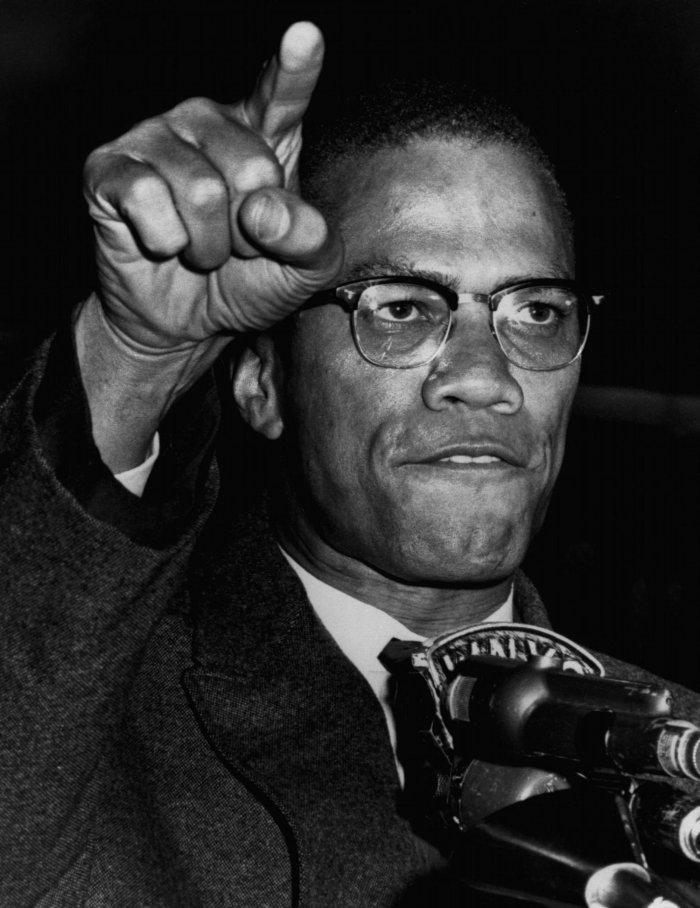
Malcolm X

"I told the Englishman that my alma mater was books, a good library. Every time I catch a plane, I have with me a book that I want to read - and that's a lot of books these days. If I weren't out here every day battling the white man, I could spend the rest of my life reading, just satisfying my curiosity - because you can hardly mention anything I'm not curious about."
From The Autobiography of Malcolm X
Links:
|
|
 Back to Roger J. Wendell's Home Page...

Abbey |
About |
Blog |
Contacting
Me |
Copyright |
Disclaimer |
Donate |
Guest
Book |
Home |
Links |
Site
Index |
Solutions |
Terms,
Conditions
and
Fair
Use |
What's
Changed
or
New?
Copyright
© 1955 -