Roger J. Wendell
Defending 3.8 Billion Years of Organic EvolutionSM

México
Estados Unidos Mexicanos (United Mexican States)
[see more on the name at the page bottom]
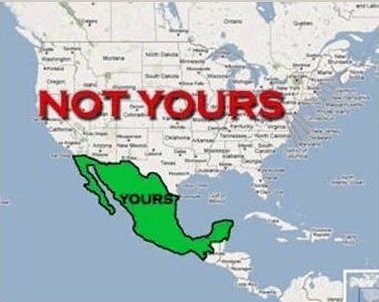
|
I'll have to admit, I love Mexico! In addition to having driven its entire length, roundtrip, I've crossed the border dozens of times on foot and by car all along the Frontera (Borderlands). I've also climbed some of its highest peaks and have enjoyed visits to its beaches, its pyramids, and countless stores, shops, restaurants, churches and cathedrals. And, although I don't speak Spanish I've been treated very well by everyone in Mexico and even offered assistance during those times when I was stranded or needed help.* So, my hope for Mexico is that it somehow improves the living standard for ALL its citizens so that more than just a few tourists (like me...) and the upper class can really enjoy the country... *Yes, like in all other parts of the world I've run into trouble in Mexico, too. [Police robbed my friend Karel and I at gunpoint and the military. with rifles, turned us away from an ATT pay phone (years before the internet or cellphones...) at Mexico City's airport] |
Anyway, despite how much I've enjoyed traveling through Mexico I thought I'd update this page a bit in mid-2010 as things were getting pretty dangerous down there. The drug "war" was heating-up with shootings, kidnappings, decapitations, and hundreds (if not thousands) of murders and killings. Add to that the millions of illegal immigrants coming into my own country and what we've now got on our hands is a North American mess. Although Arizona started to take some action my own government (the Obama administration), in general, almost refuses to address any of these problems.Hopefully America can gain control of its borders (with over 300,000,000 people already living in the U.S. we're already overpopulated and don't need any more immigrants of any kind - legal or not!) Let's also add to this list of hopes that all the killing and poverty will come to an end inside of Mexico as well - although the Mexican government is corrupt beyond description its regular citizens deserve better...
Prehistoric Mexico - the first Mexicans
From Lynn V. Foster's, A Brief History of Mexico, pp. 6-7
"The first known Mexicans were big-game hunters. Over the millennia, the rainfalls and grassland diminished; the hairy mammoths and giant armadillos and Ice Age horses became extinct around 5000 B.C. Some argue that overhunting from indiscriminate mass kills contributed to their extinction. Humans survived, but out of necessity they evolved into seminomadic hunters of deer, rabbit, and peccary; trappers of iguanas, turtles, shellfish, and birds; and gatherers of wild plants, roots, and seeds. Then, around 3000 B.C. after maize (or corn) was domesticated in Mexico, they became farmers."By 2000 B.C. the first Mexicans - unlike their neighbors to the north - had become sedentary villagers, relying on cultivated crops. As surplus crops of corn, beans, chile [sic] peppers, and squash produced a wealthier and more complex culture, the villagers changed from subsistence survivors to citizens of the first American civilizations. The cultures that evolved were unique to the New World - even the basic foods were distinct from the wheat, barley, and rye of the Old World civilizations. And these cultures were unusual in their independence from outside influence: the nearest center of Old World civilization was 7,000 miles away in China, a distance greater than from London to Beijing and made more formidable by the barrier of the sea."
The Population Fix
(Breaking America's Addiction to Population Growth), pp. 135-136
by Edward C. Hartman
"This leads me to close this section on Mexico with a thought provoking letter written by a local reader, published in my local newspaper:"'By continuing with such a liberal acceptance of illegal immigrants, we're really doing countries such as Mexico a disservice. Mexico is a large country with many resources: oil, forests, agriculture, minerals, ports, tourist hot spots, and a vast labor supply. By rights, it should be far more prosperous than it is. Yet 40 percent to 50 percent of the population lives in poverty. Why? There are only two possibilities - either Mexicans, as a people, have the ability to make their country prosperous, or they don't. I believe they do.
"'I think the main reason for their failure is a lack of focus. From the top (the President) on down, the focus in Mexico is on moving as many people as possible to the United States. Instead, it should be on raising the standard of living in their own country. By continuing to allow the high levels of illegal immigration, we impede their progress. In other words, we need to encourage them to either sink or swim. They can swim, but they will need to be forced to do so. If Mexicans don't have the ability to improve their country, then why would we want them here at all?'"
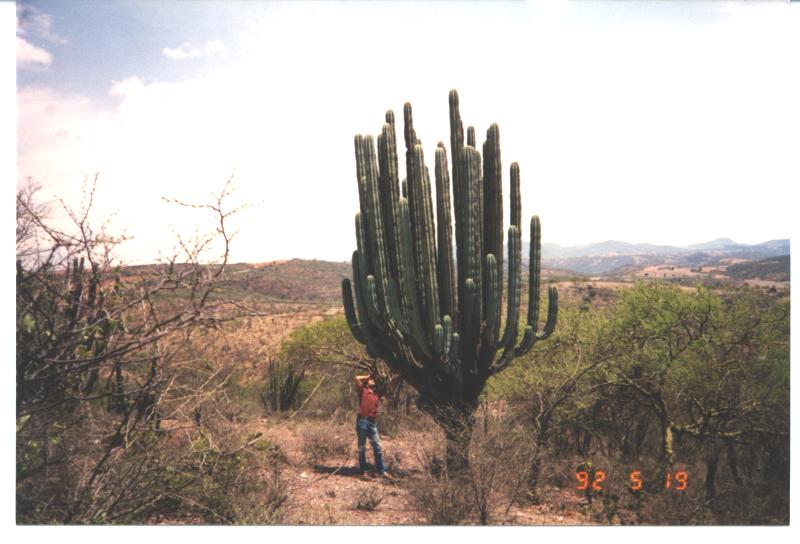 Karel and the Cactus |
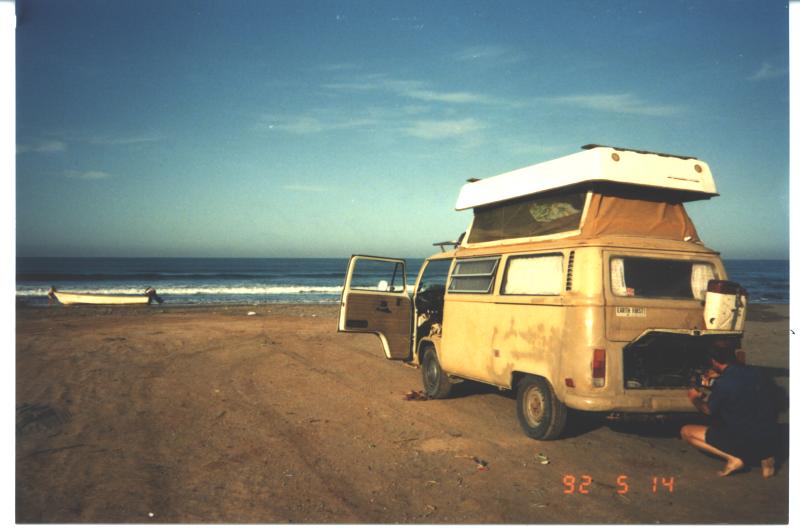
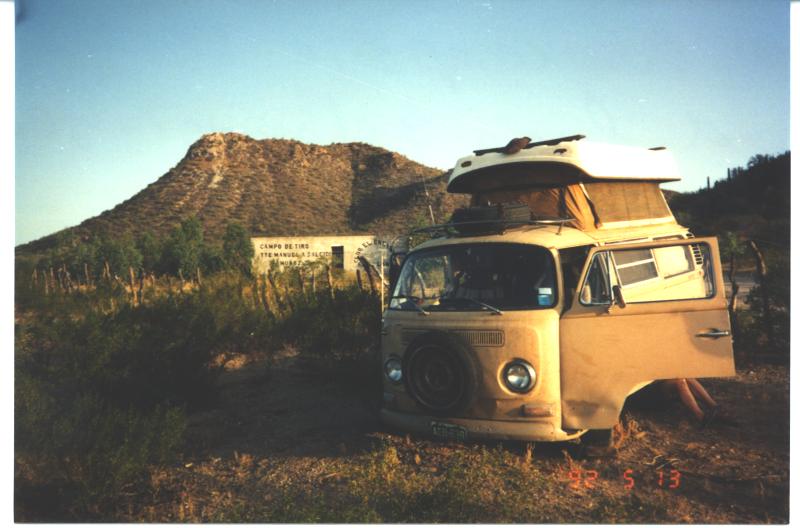
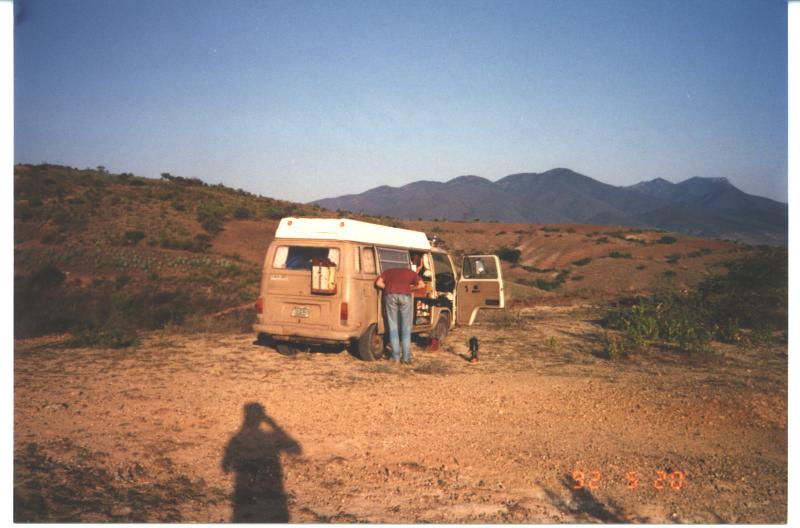
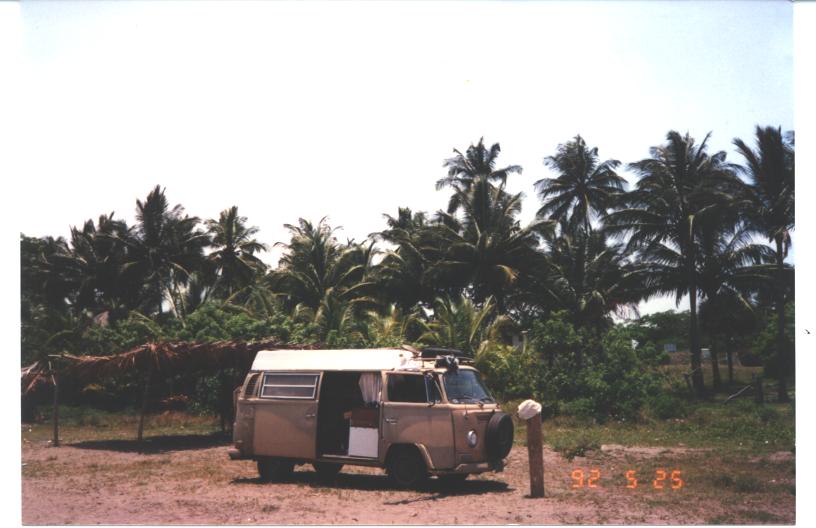
In May, 1992 my friend Karel Karásek and I drove his 1972 VW bus from Denver, through the back roads of Mexico, to just inside Guatemala, and back to Denver again. It was quite the adventure, taking over 3 weeks of nearly solid driving along 6,000 miles (9,600 kilometres) of some of the roughest roads on the continent! Anyway, I've always loved Mexico and am grateful that I eventually had enough time to create this page - enjoy! (Click on any of this page's "thumbnail" images for a larger view) [Note: It took me 13 years, almost to the day, to getting around scanning these pix for posting on the Internet. Since so much time had passed I had forgotten many of the details. And, sadly, Karel passed away after sustaining severe head injuries during an automobile wreck in the very same van we took through Mexico. It was wild a driver on a dark, Denver night that got him - not the romantic encounter with spies or mountain peaks that I thought would take him from us...] |
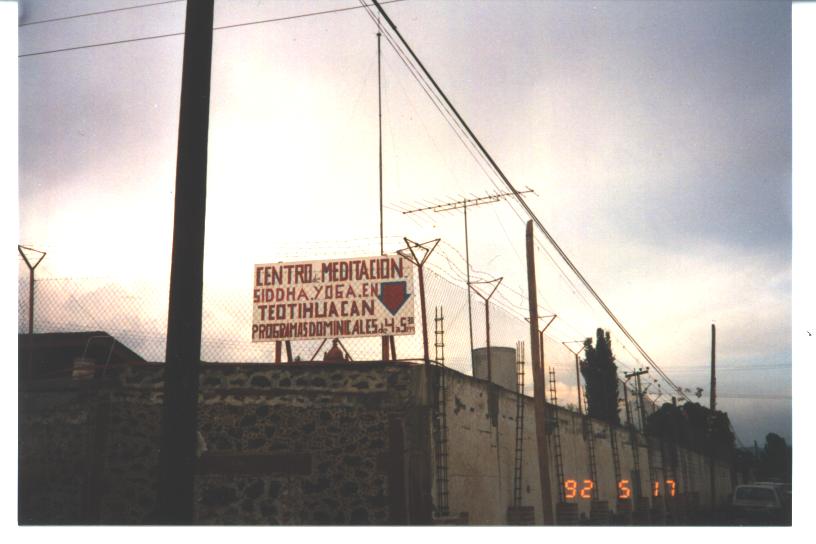
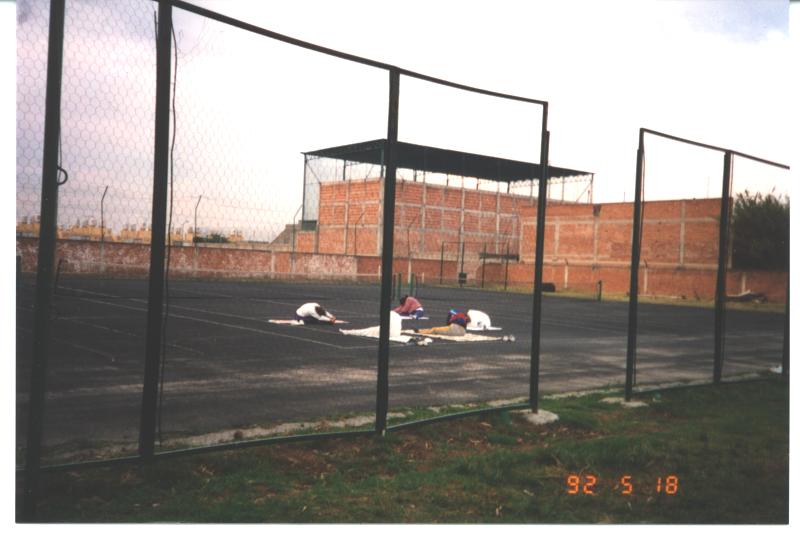
1. Yoga Center:
(May, 1992)
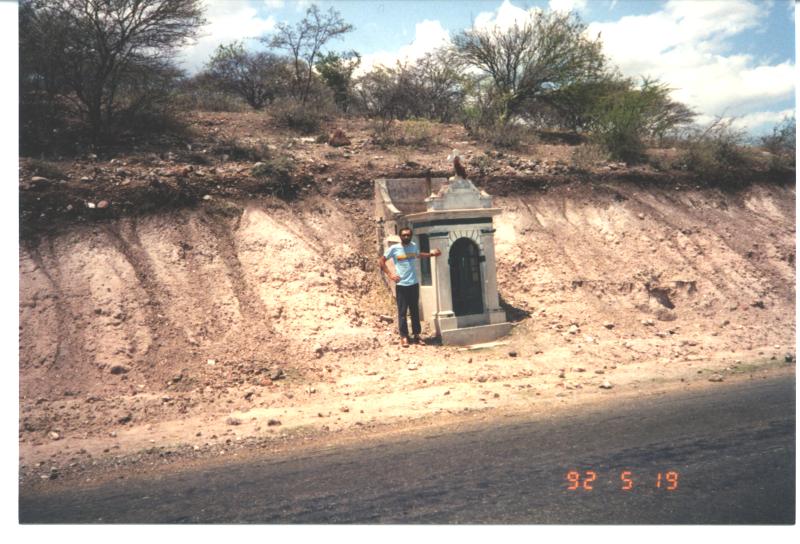
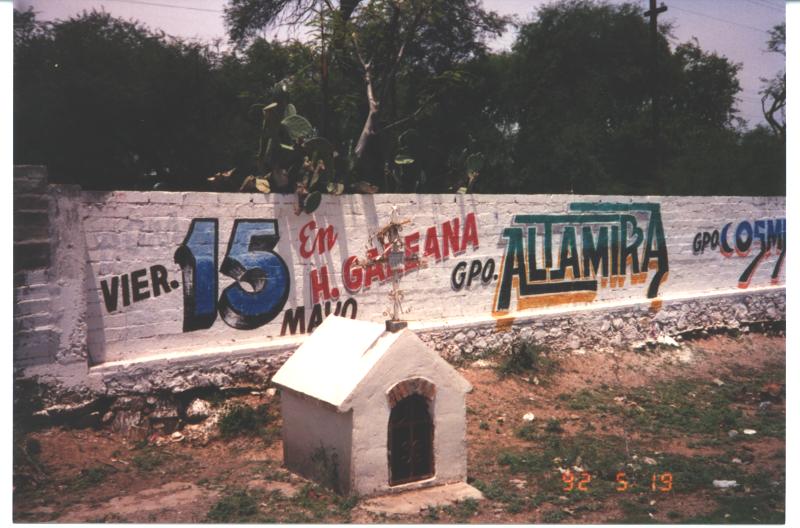
Near Mexico City we were delighted to find this Yoga Center - we were later invited in to a Hindu ceremony, near there, but had to first change into long pants after being reminded shorts were not appropriate attire for a temple... In 1992 the sight of a roadside memorial, for a car wreck, was very rare in the U.S. By that time, however, they were very popular throughout Mexico so I photographed them whenever I got the chance. photographed them.
|
|
|
|
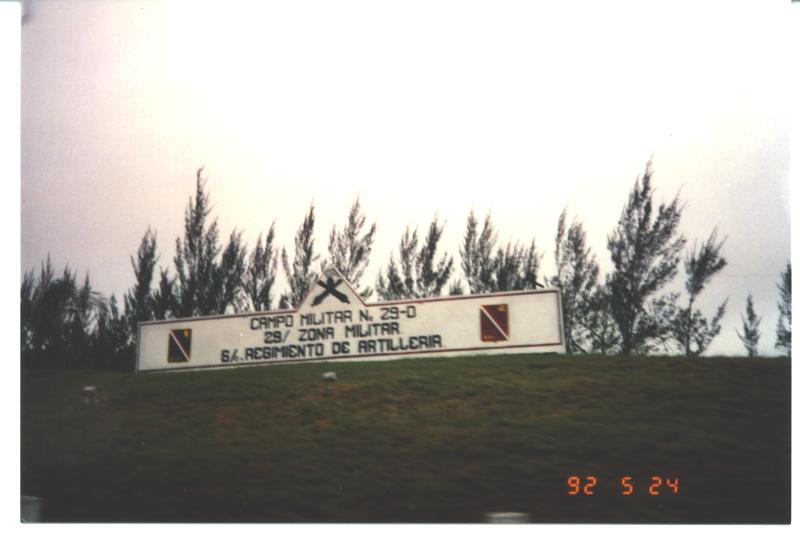
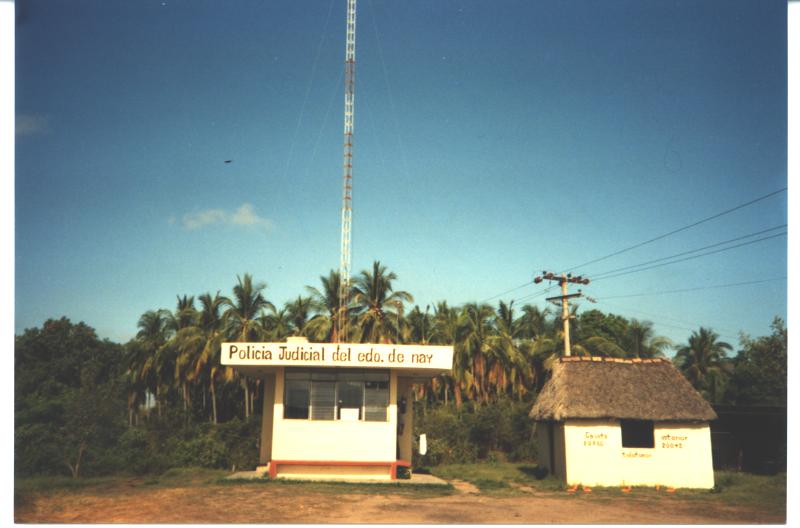
2. Military:
(May, 1992)
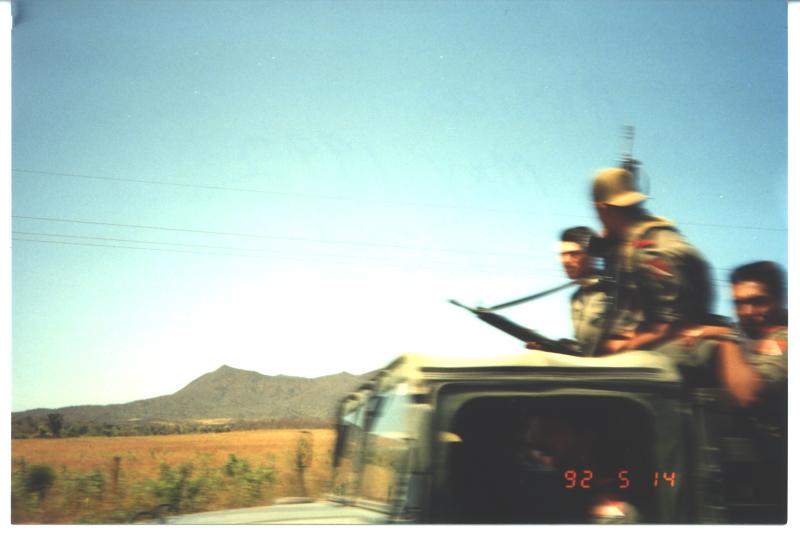
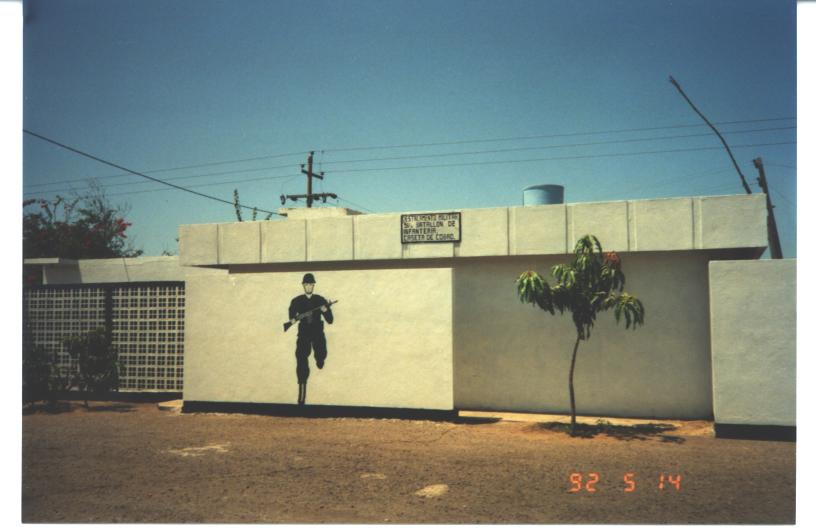
Like our own country, Mexico's military maintains a very visible presence. Again probably not so much to protect the country but, rather, to just keep folks like you and me in line. It's an an age-old problem you encounter just about anywhere you go in the world...
|
|
|
|
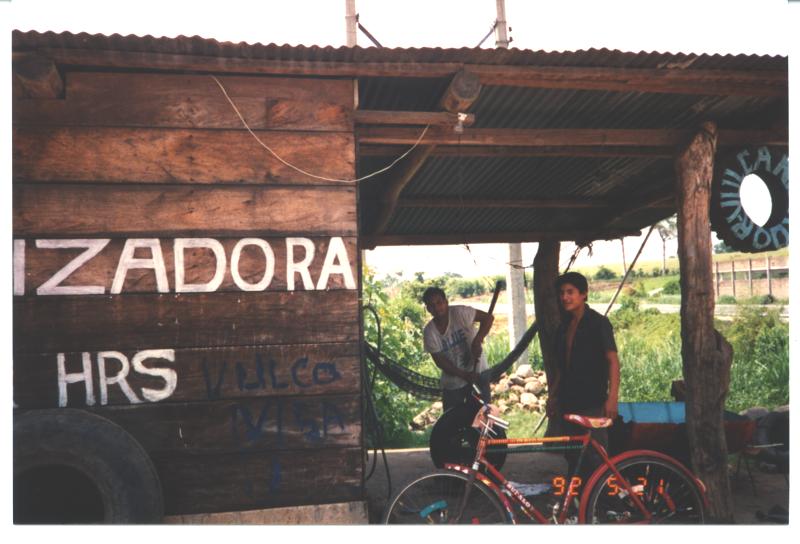
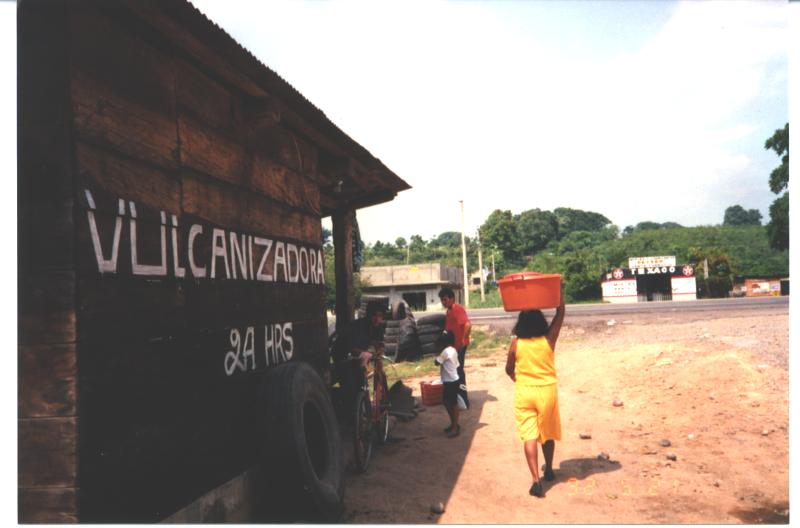
3. Local tire repair:
(May, 1992)
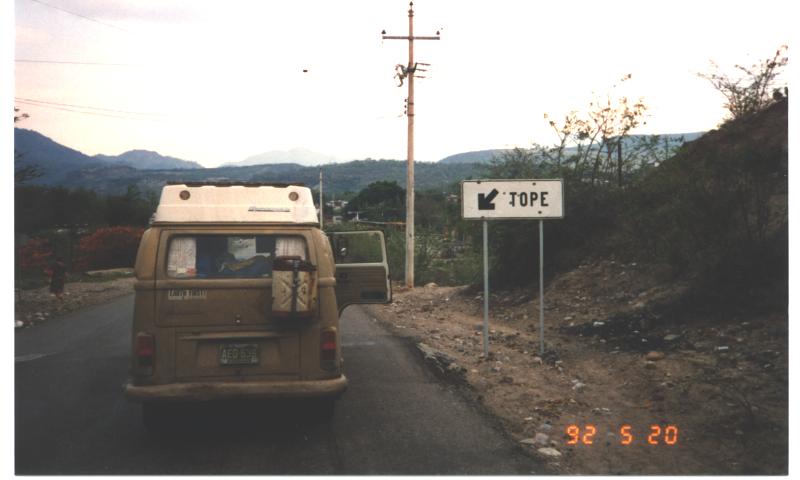
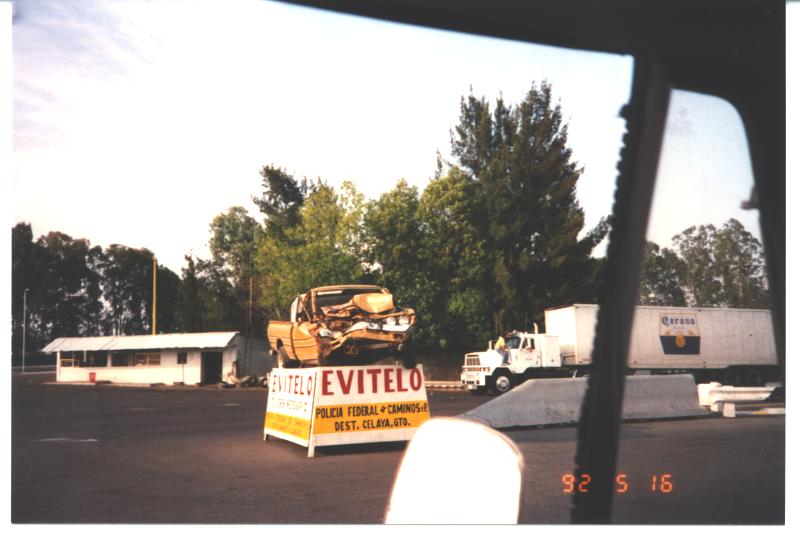
These shots were taken down in southern Mexico. Apparantly the automobile wreck is on display as a public warning - I may have seen something like that during my travels to Asia although I don't recall for sure. I think "Tope" was a speed bump warning but I'm not sure now either...
|
|
|
|
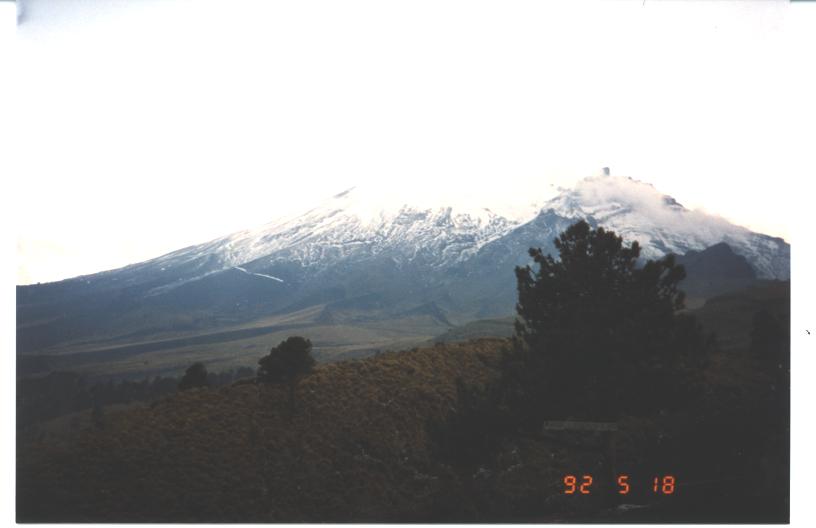
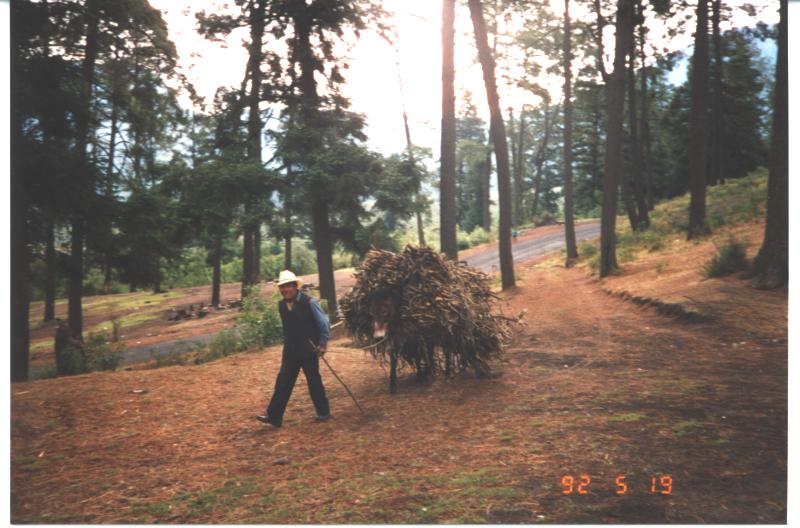
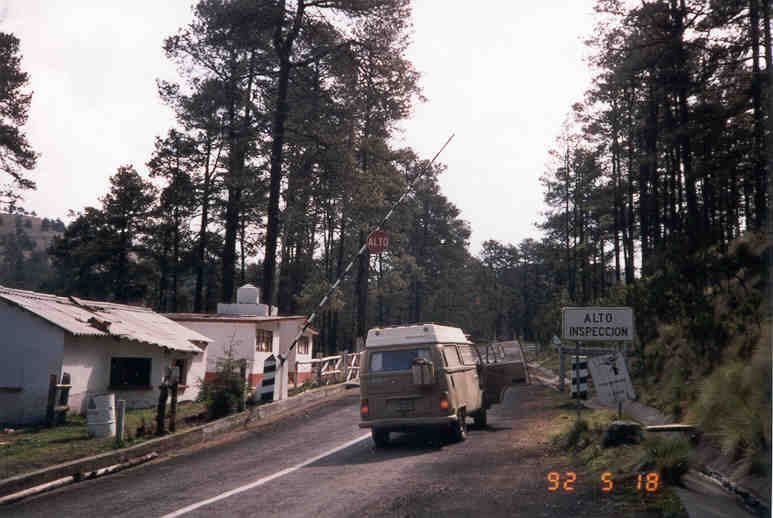
4. Popocatepetl is (was!) a 17,500 foot snow-covered volcano outside Mexico City back then...
(May, 1992)
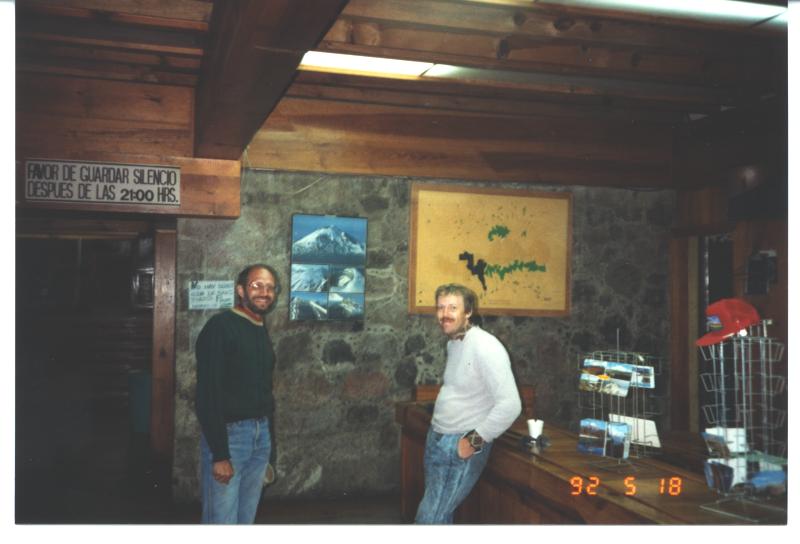
It has since erupted and is pretty much off-limits as far as I know. Karel and I were ill-prepared for mountain climbing and only made it to just above the 15,000 foot level. Nevertheless, Karel was really interested in detouring to see the mountain since it plays a big role in a particular Czechoslovakian (now the Czech and Slovak Republics) childhood story that he grew up with as a kid in eastern Europe. Unfortunately I don't recall the details of the story. Still, there were less than ten people, TOTAL, on the entire mountain that day (including the park ranger!) we run into two guys from Steamboat Springs, Colorado (my home state) and a journalist (who Karel had never met before) from Czechoslovakia!!
|
|
|
|
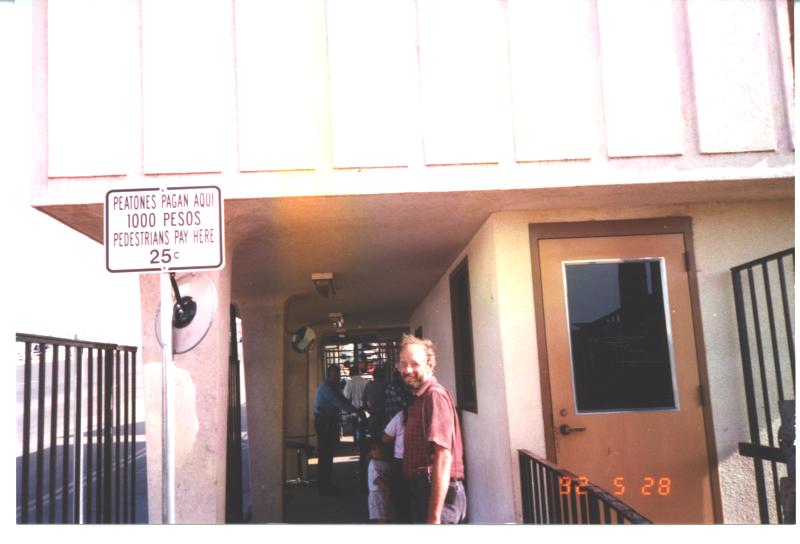
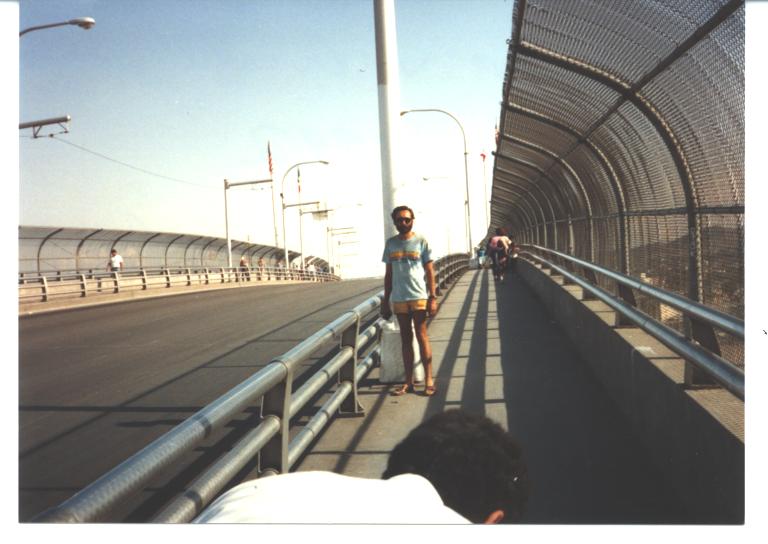
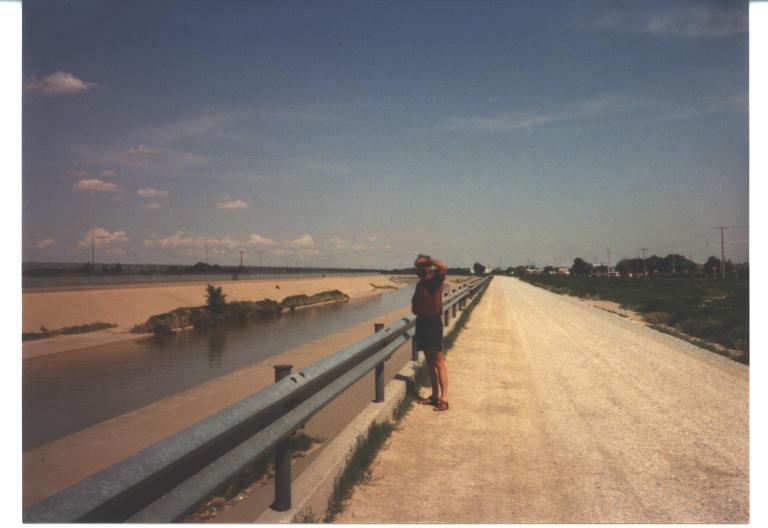
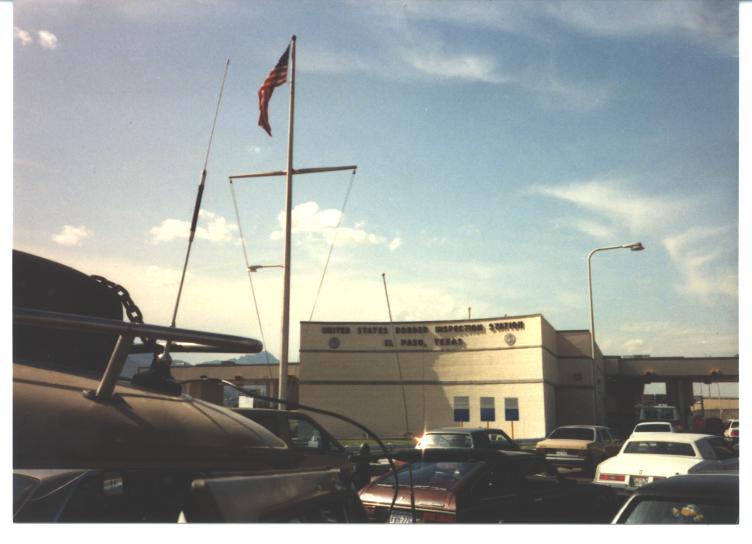
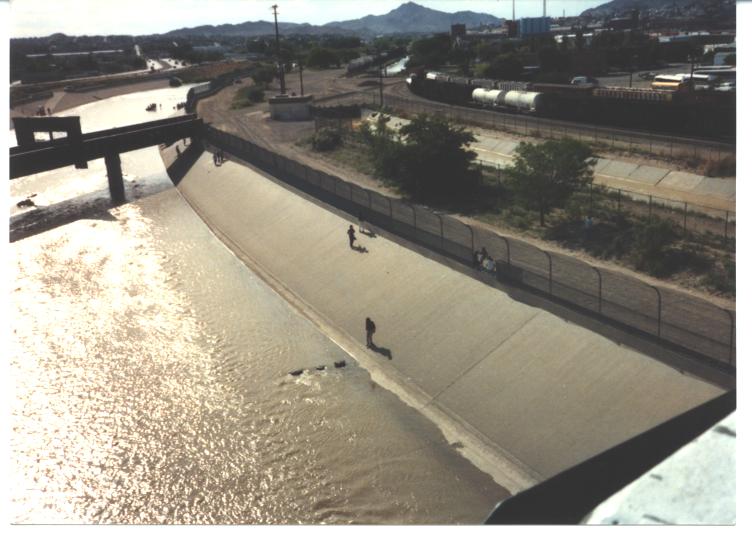
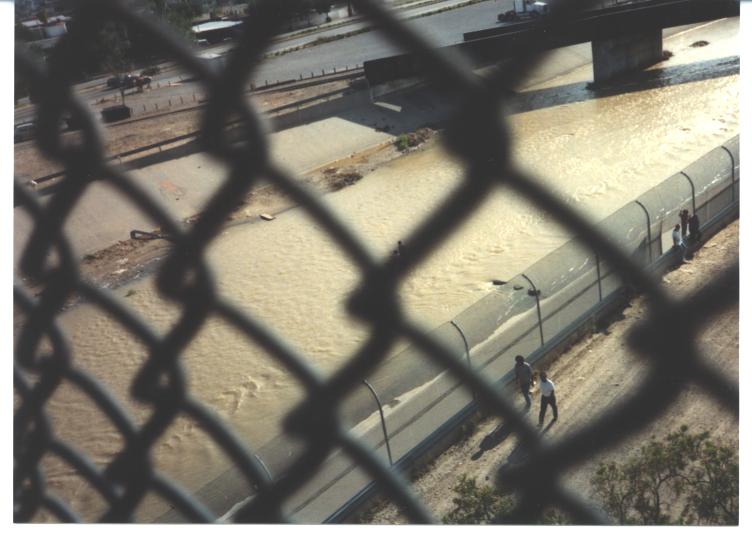
5. What border?
(May, 1992)
As you can see here, folks were walking through the fence even as tourists like us gazed on. Although the U.S. is grossly over populated (it's the third most populated country in the world) it's obvious why Mexicans want to come here - jobs! Hard to believe but most of the world isn't too impressed with our way of life or system of government. What brings 'em here are jobs - and who can blame them?
|
|
|
|
|
|
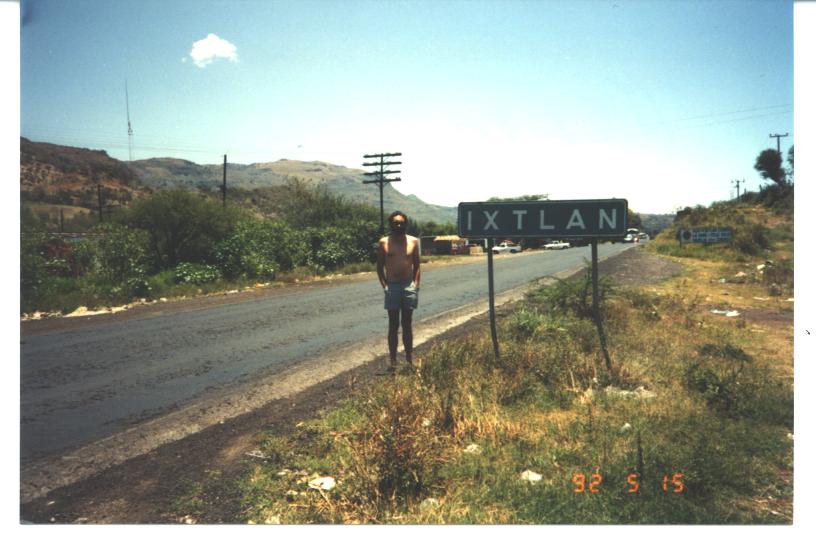
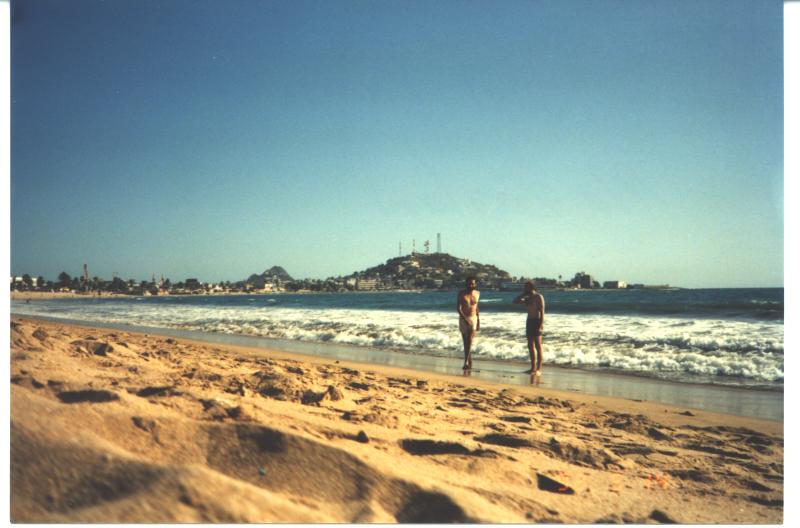
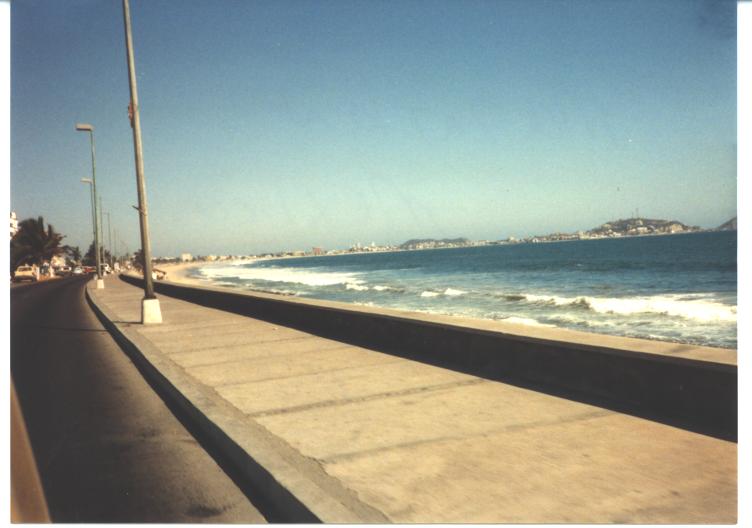
6. Ixtlan and Mazatlan - when opposites collide!
(May, 1992)
Ixtlan, of course, is of spiritual significance for anyone familiar with Castaneda. Mazatlan, on the other hand, is another one of those moronic resorts for the rich. Luckily our little van allowed us to see both close up...
|
|
|
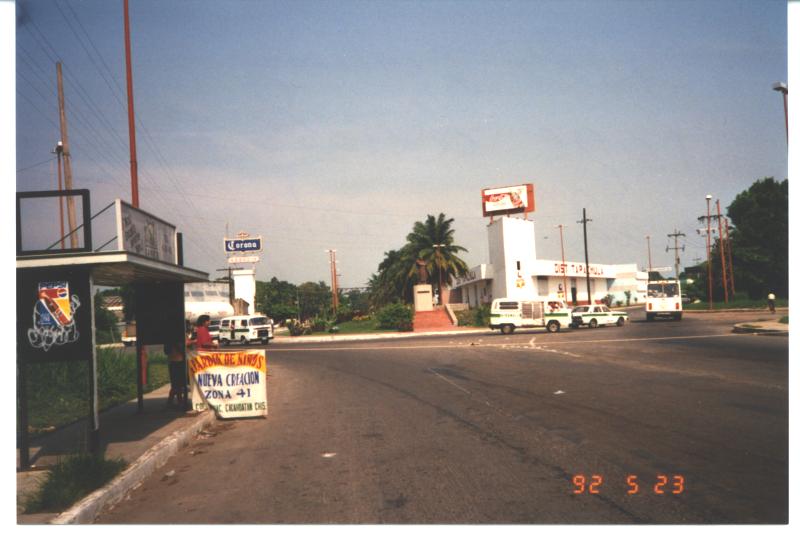
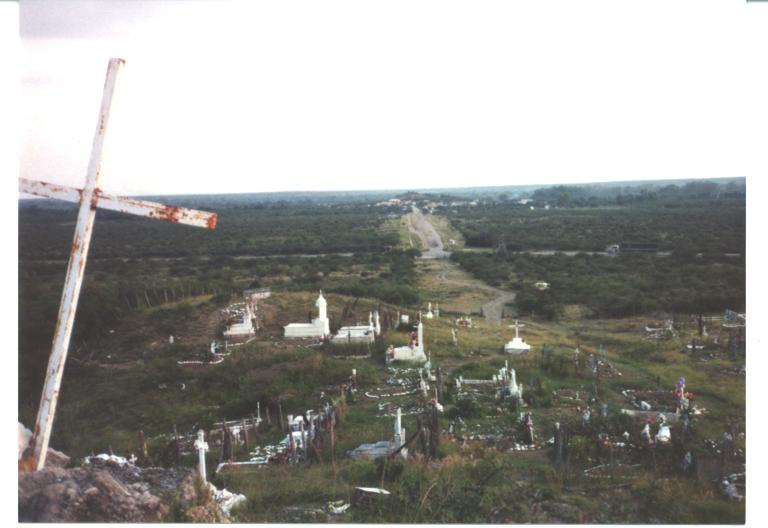
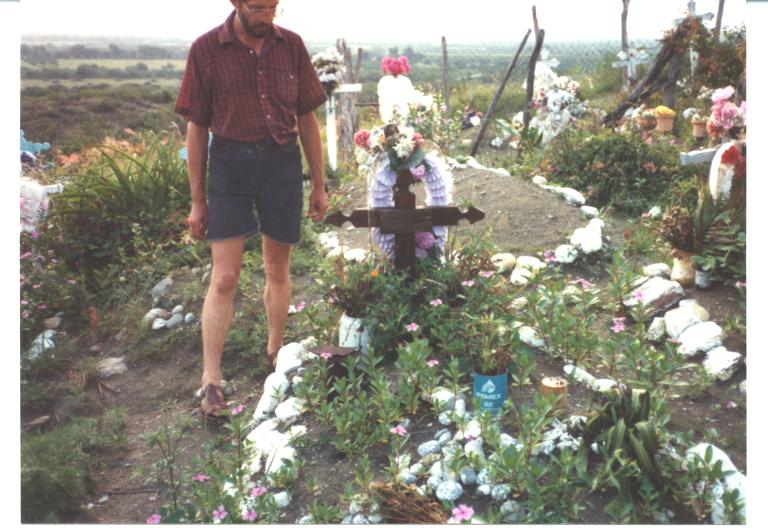
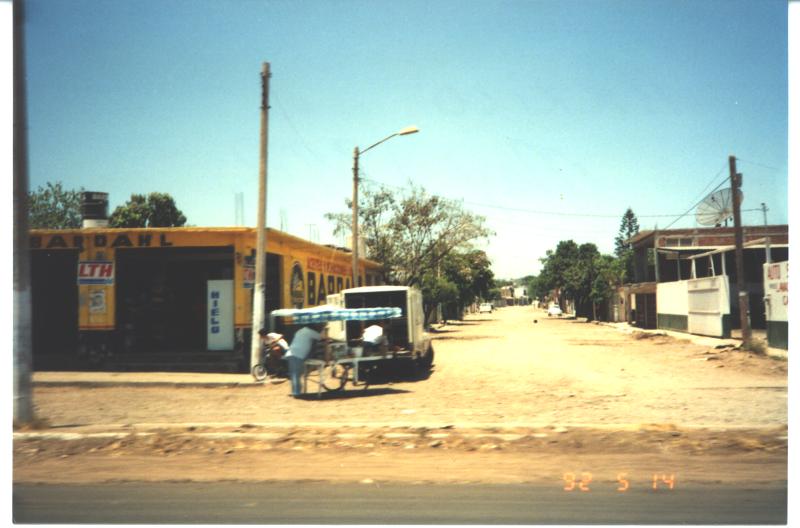
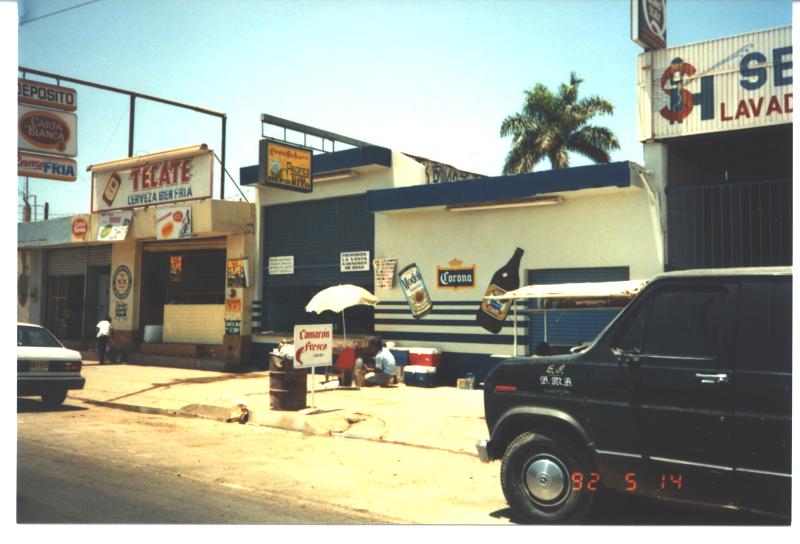
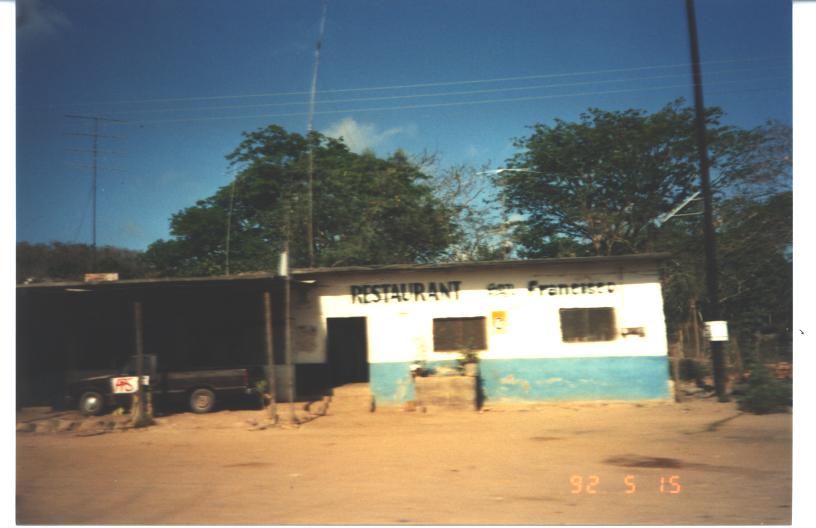
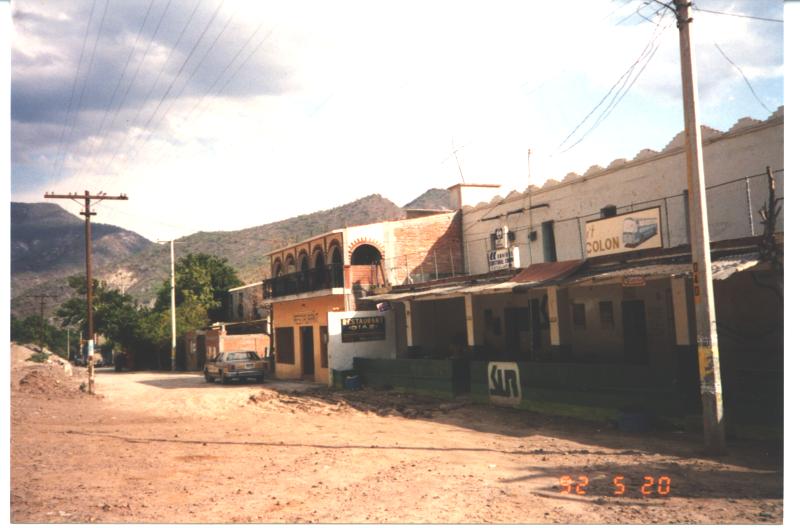
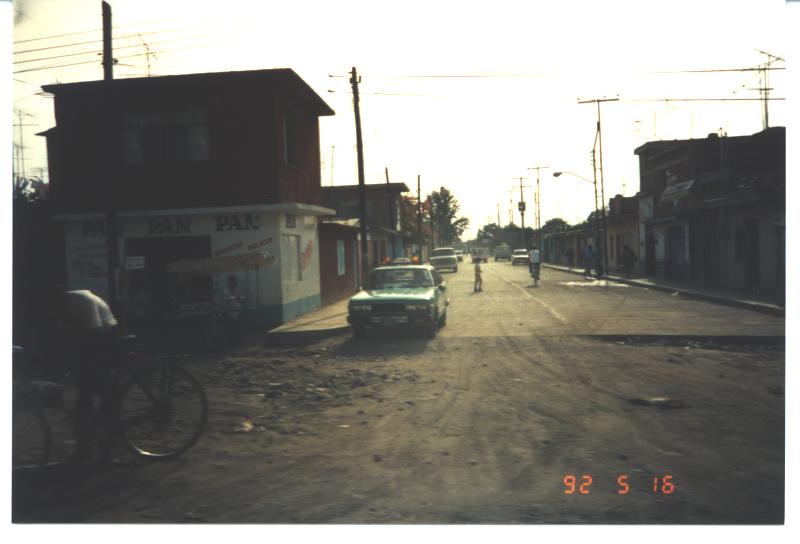
7. Small towns and graveyards...
(May, 1992)
|
|
|
|
|
|
|
|
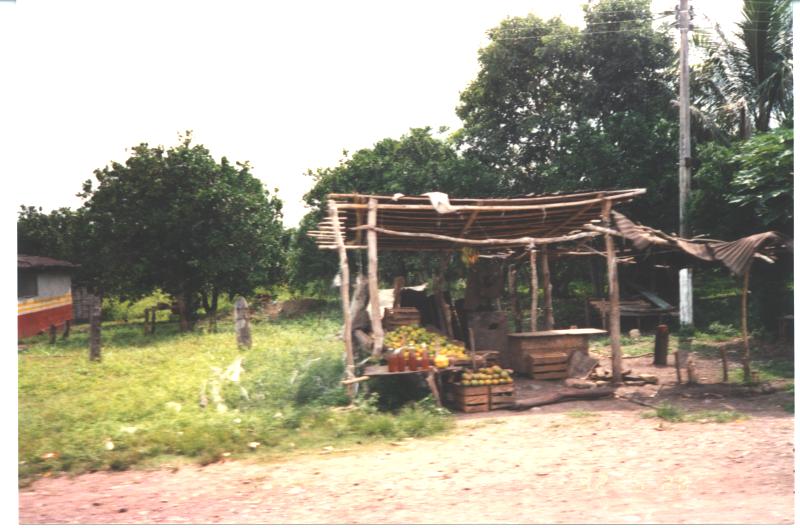
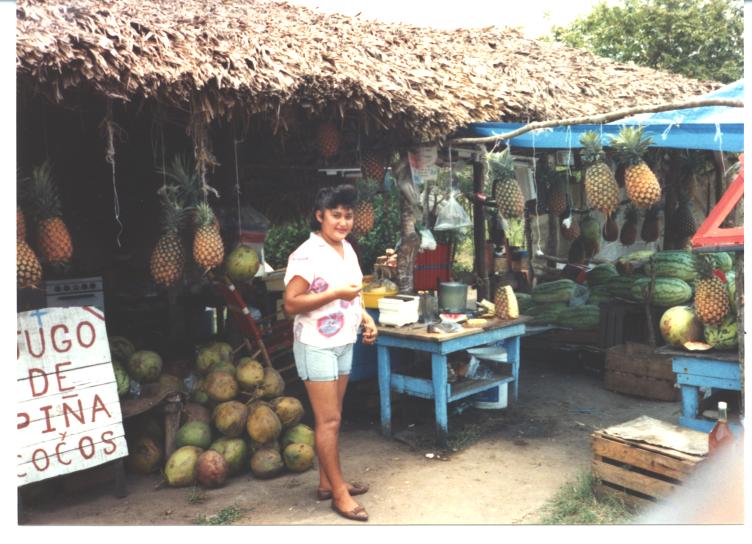
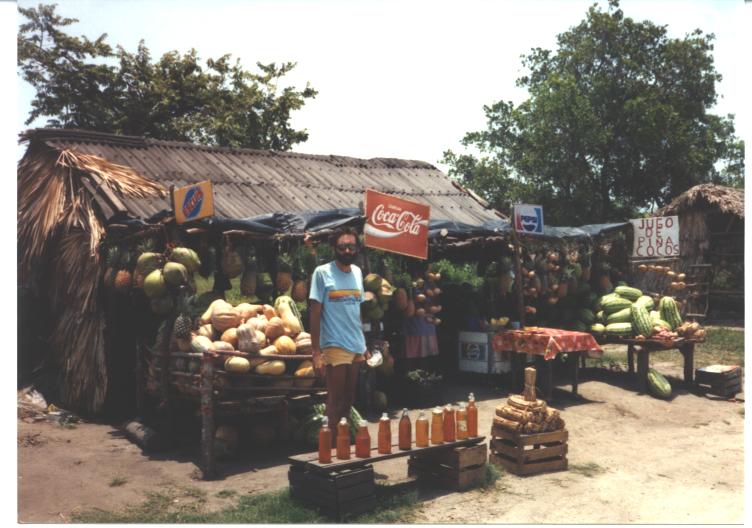
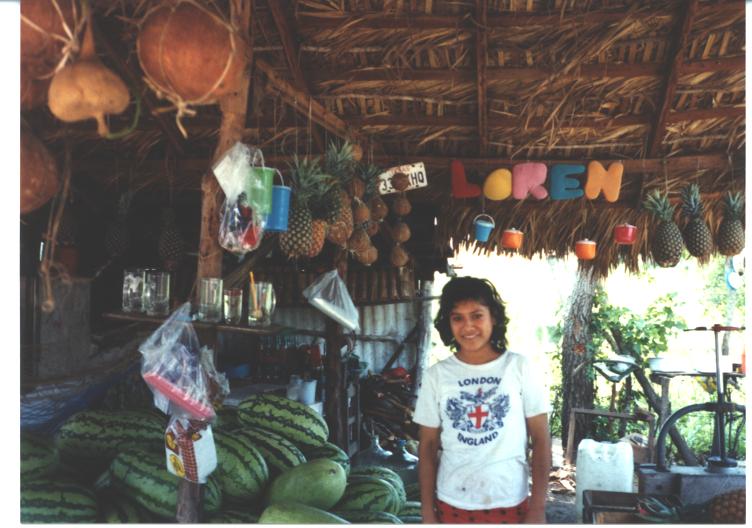
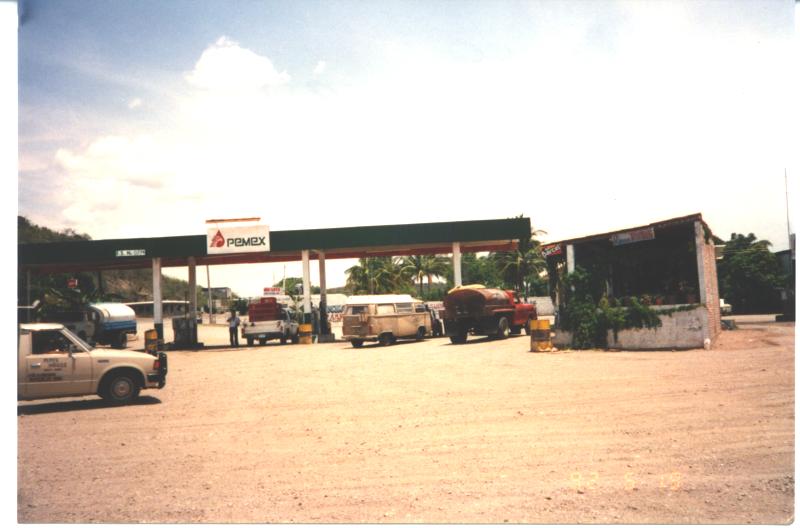
8. Think globally, shop locally! (Pemex was their national gas station...)
(May, 1992)
|
|
|
|
|
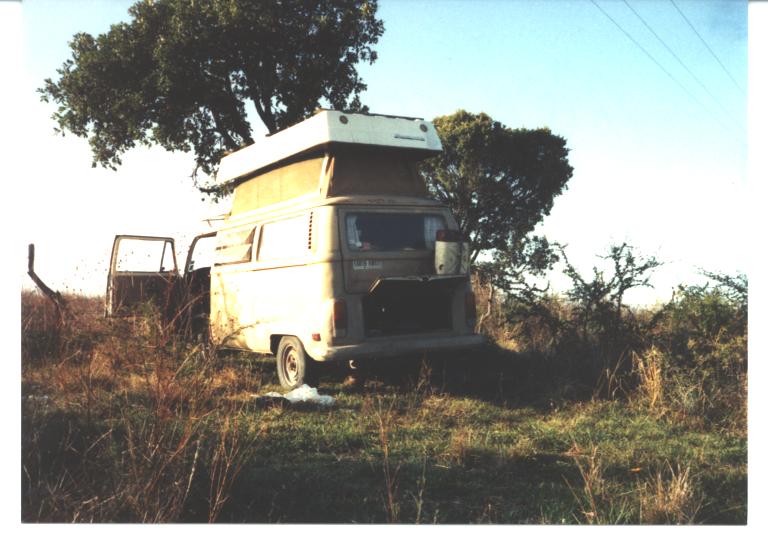
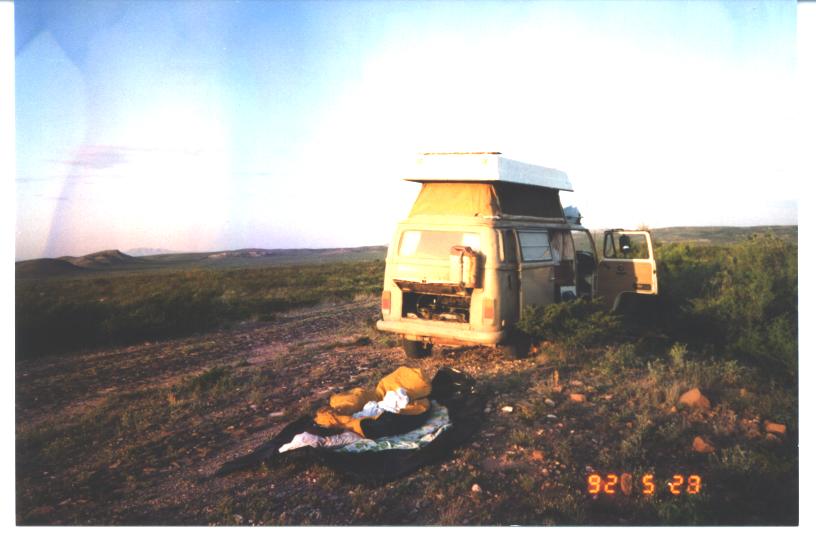
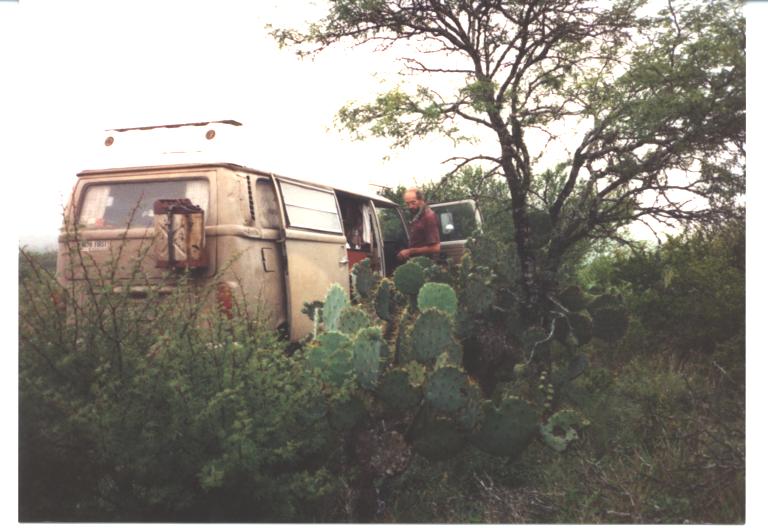
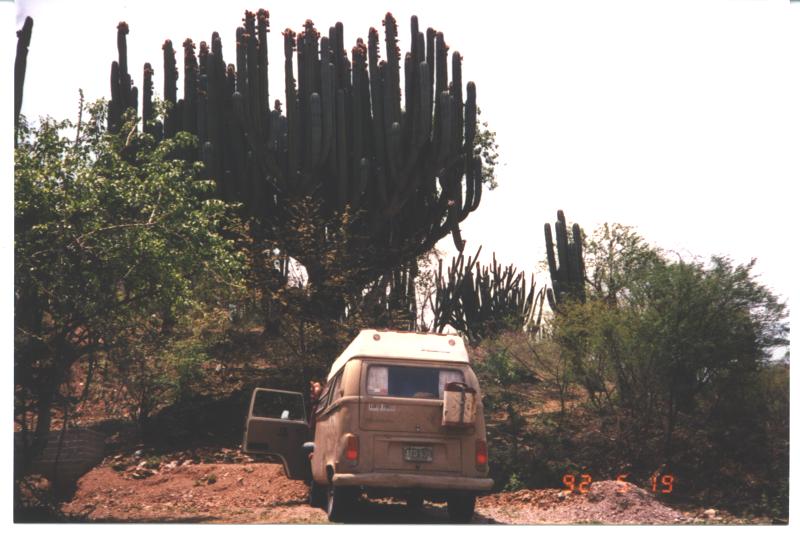
9. Home was anywhere we could find a place to park!
(May, 1992)
|
|
|
|
|
|
|
|
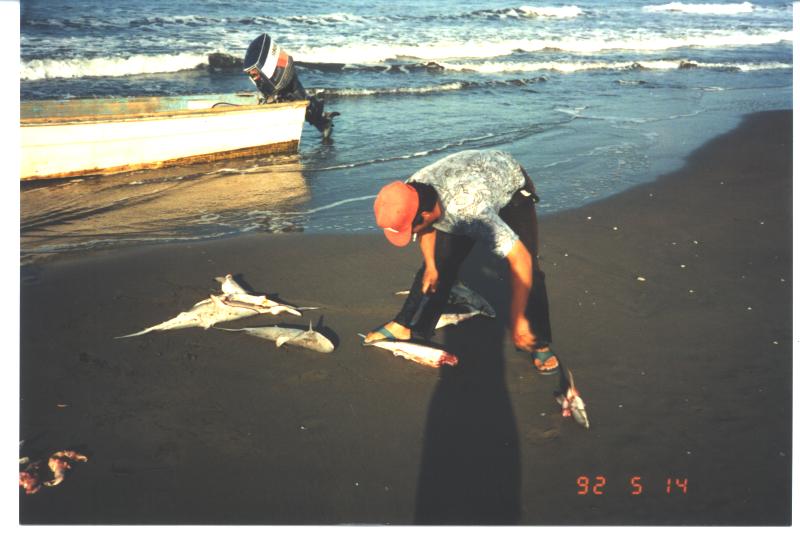
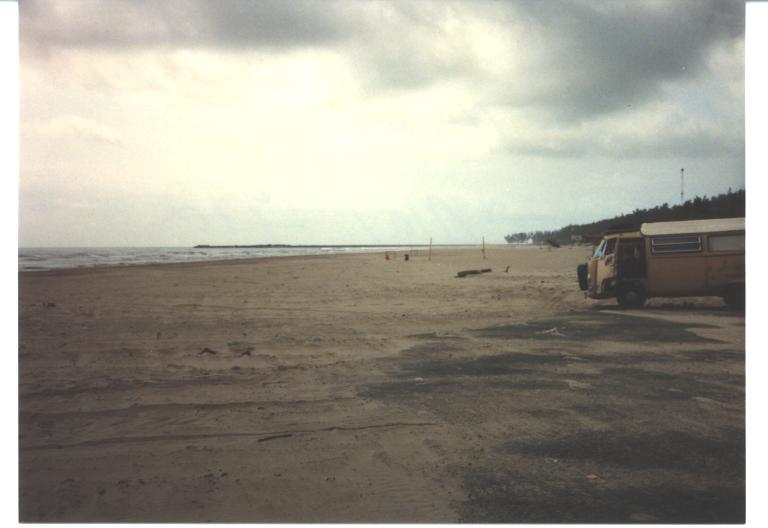
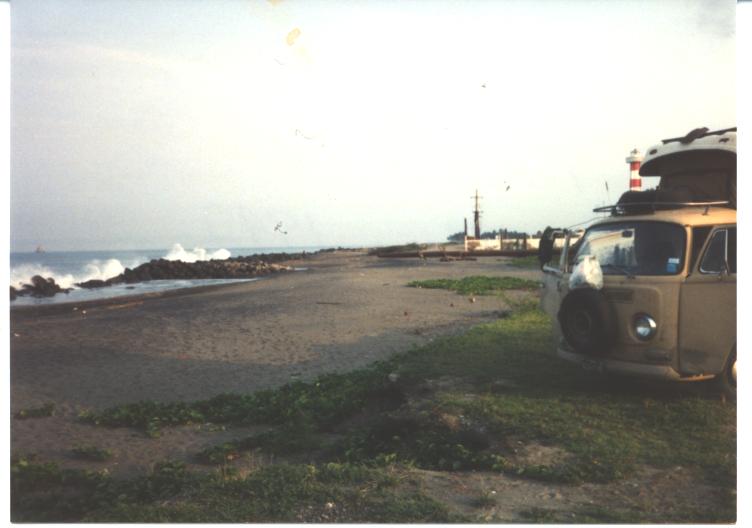
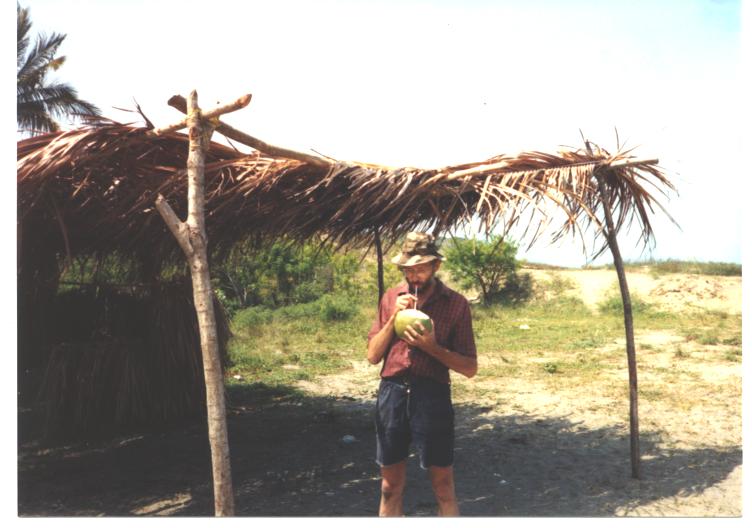
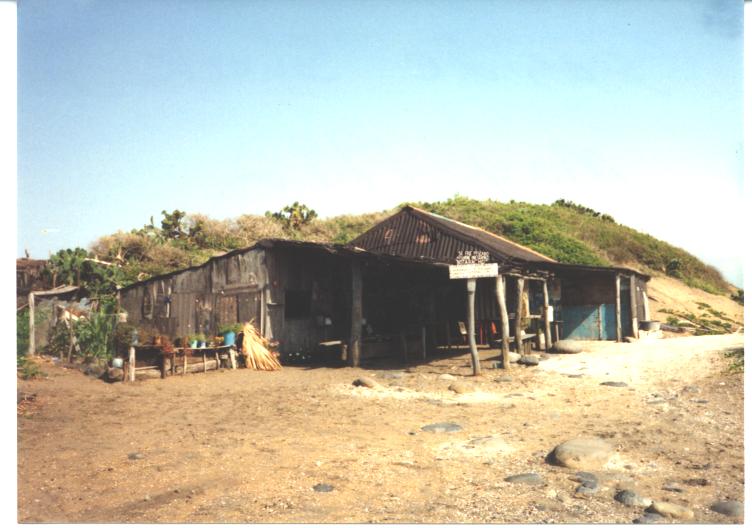
10. La Playa (the Beach!)
(May, 1992)
|
|
|
|
|
11. Flag, Maps and Info:
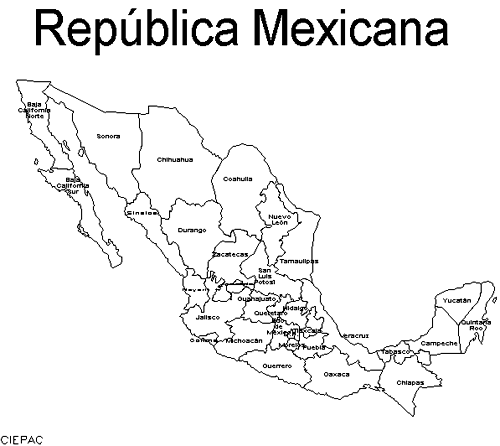
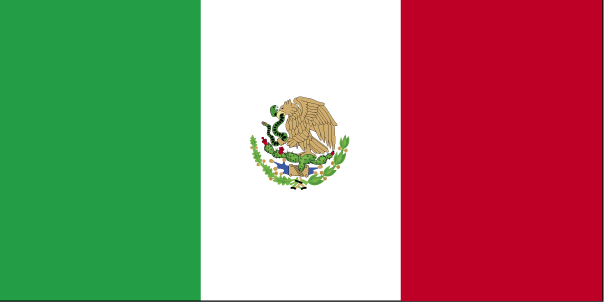
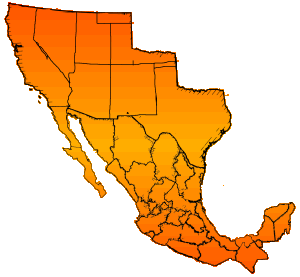
Mexico is comprised of 31 states plus the Federal District of Mexico City (that's why it's official name, in English, is "United Mexican States"). Mexico is nearly three times the size of Texas and had a population, in 1992 (at the time Karel and I drove through it), of about 90 million people (Texas' population, in 1992, was about 18 million, when the entire U.S. was about 259 million). Aztlan is the area of North America many Mexicans believe still belongs to them - it's, in part, the areas taken by the United States and also refers to the mythical place of origin of the Aztec peoples...
|
|
|
12. Karel Karásek:
At the time of our adventure Karel was 42 and I was 36. We had spent a lot of time together in the wilderness, including a great trip to Grand Canyon, so driving a half dozen thousand miles seemed the thing to do! The people of Mexico, even though we didn't speak a lick of Spanish (In college, Karel studied English and I studied Russian), treated us really well - it was very touching and something I always try to remember when I encounter Mexicans in my own country. The only problems we had were with the police - they robbed us twice, at gun point, making me feel the most helpless I had ever in my life. Maybe in fairness to the police might be that these guys were off-duty or maybe even imposters. Hard to tell. Luckily they only got $20 or $40 out of us each time so we were able to continue our travels without much difficulty.

|
13. Other Notes:
Our travels actually took us down one coast and back up the other but did not include Baja (having lived in southern California, for a while, I'd seen quite a bit of Baja many times before). We stopped in the town of Tequila (state of Jalisco) and purchased much of that famous drink to wash our vegetables in. Although I wouldn't recommend this method of sanitation to anyone else, it seemed to work for Karel and I because we ate "tons" of local produce, all over Mexico, and never once got sick!Our travels took us over "Istmo," or the Isthmus of Tehuantepec (the "skinny" part down south, between the Gulf of Mexico and the Bay of Campeche on the Pacific Ocean, a distance of about 125 miles or 200 km). We also traveled through the southern most state, Chiapas, at a time when the indigenous peoples were preparing for civil war - a fact that was kept out of the media, at the time, so there wouldn't be any worries about implementing NAFTA a year and half later.
In Chiapas we attempted to spend the night on a small farm but the family was so frightened that rebels might come to kill us (I didn't speak Spanish, or Indian, so they kept providing us with the international gesture for life's end, i.e., drawing a finger across their throat to suggest death). I doubt the rebels being referred to had anything to do with the upcoming peasant revolt, or the Zapatista National Liberation Army - somebody, later, suggested the threat was real but probably due to bandits and others searching for some quick cash - hence we drove a few extra hours to spend a pleasant night on a safe beach...
Spending the night on beaches, at somebody's farm, or out in the open was the norm throughout our trip. On the west coast we were invited to spend time on a French ranch, comprised of a few hundred hectares of tropical forest and all kinds of exotic insects and other creatures. The ranch owner road horseback and spoke perfect English and French - saying that he avoided using Spanish unless absolutely necessary. He said his family had a long history in Mexico so my guess is that he was probably a descendent of somebody involved in the French occupation during the 1860s - a struggle won by the Mexican people that is now celebrated as "Cinco de Mayo" (5th of May)...
Oh, somewhere in the desert, in the state of Oaxaca, we broke a "U-joint" on our VW bus. Luckily VW, at that time, was the vehicle of choice throughout Mexico. I hitch-hiked about 60 miles into the capital city of Oaxaca where I easily found the needed replacement part for our 20 year old van! I think it was somewhere in the state of Tobasco, too, that we needed even more car parts (our dashboard caught on fire, due to some loose electrical wiring, while we were attempting to cross into Guatemala) and easily found everything we'd ever need to keep the old VW running.
Anyway, I'll add more travel and driving notes as I remember them and time permits...
14. More Recent Visits to Mexico:
(2004 & 2007)
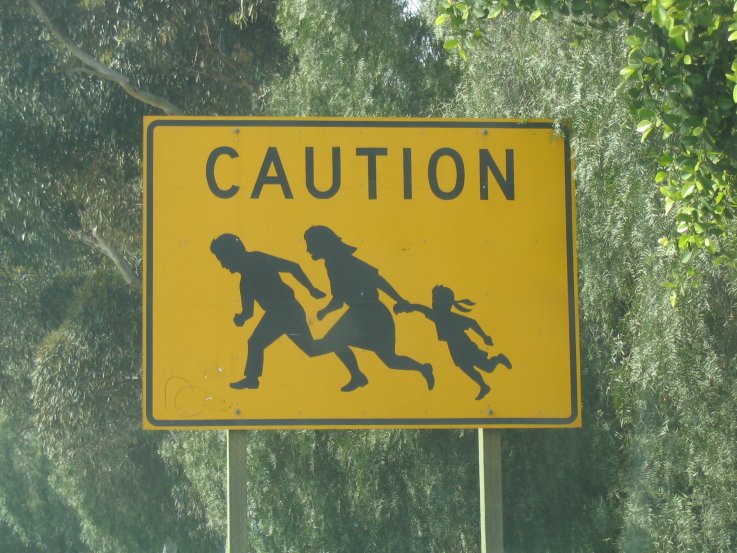
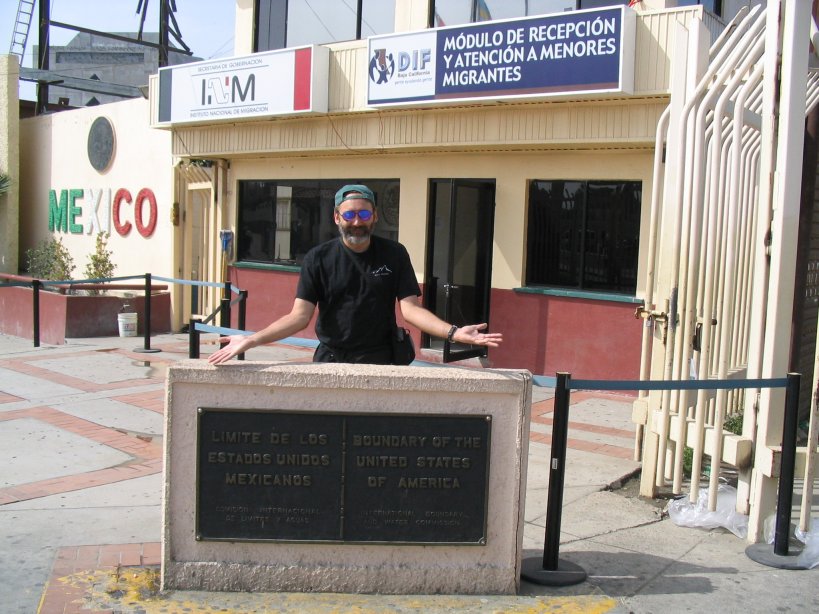
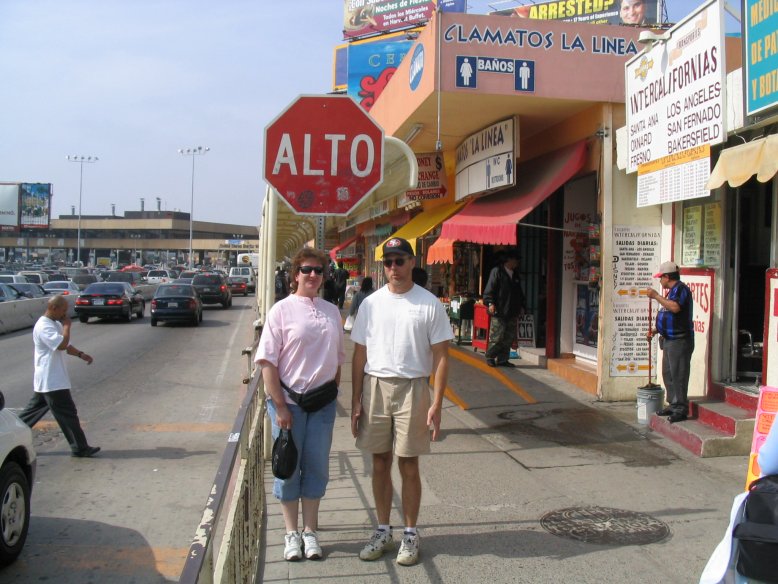
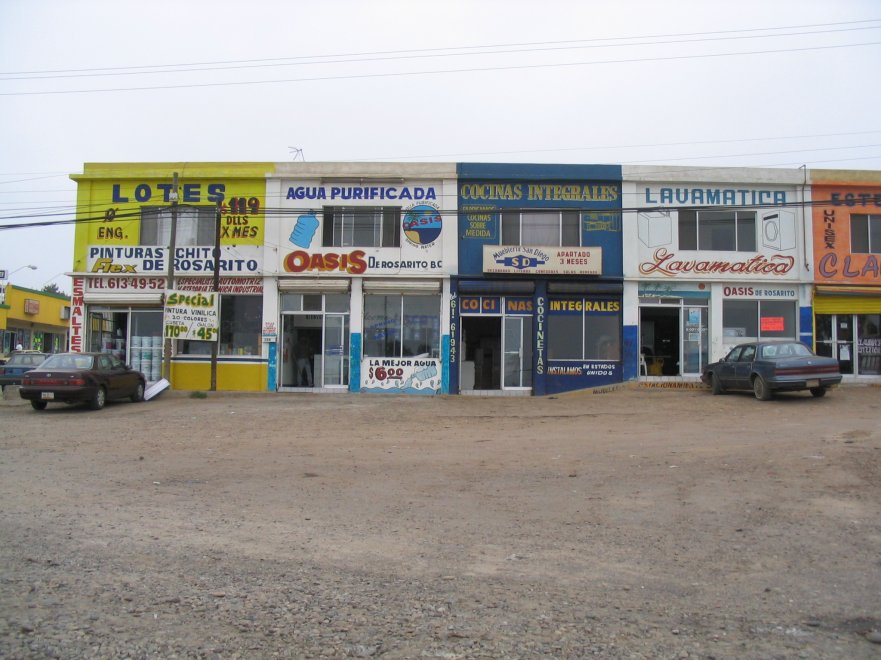
Over the years I have enjoyed numerous trips through Tijuana and other border
towns over the years. On this particular visit Brian joined us for a day in
Tijuana and Rosarito Beach. Sad to note that I was easily able to photograph
everything while going into Mexico. However coming back into the United States
American border guards forced me to delete the photos I had taken of the American
side of the crossing - go figure!
 San Diego crossing sign... |
 Roger on the border! |
 Alto! |
 Tijuana, Mexico |
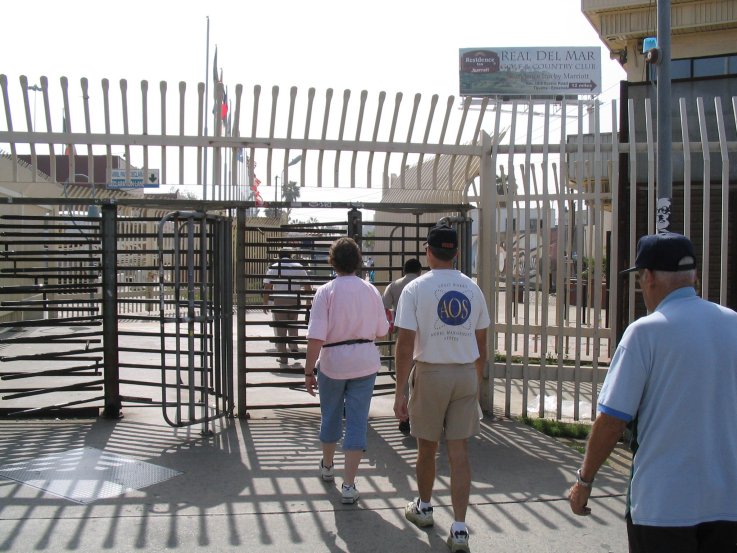 Crossing into Mexico |
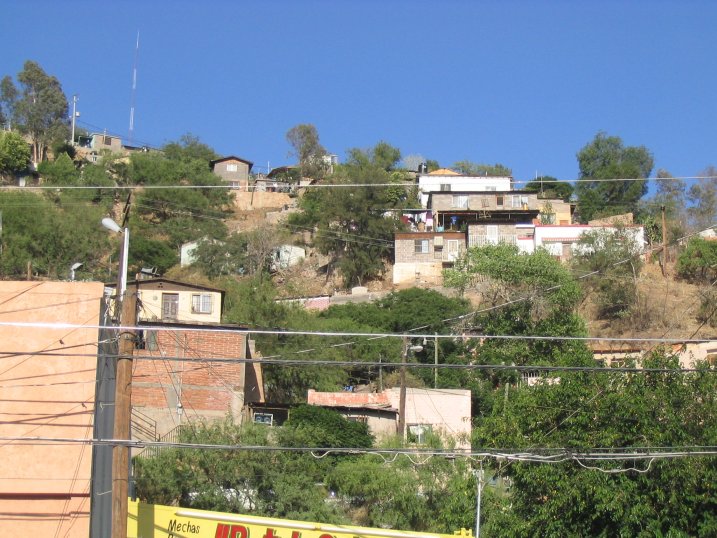
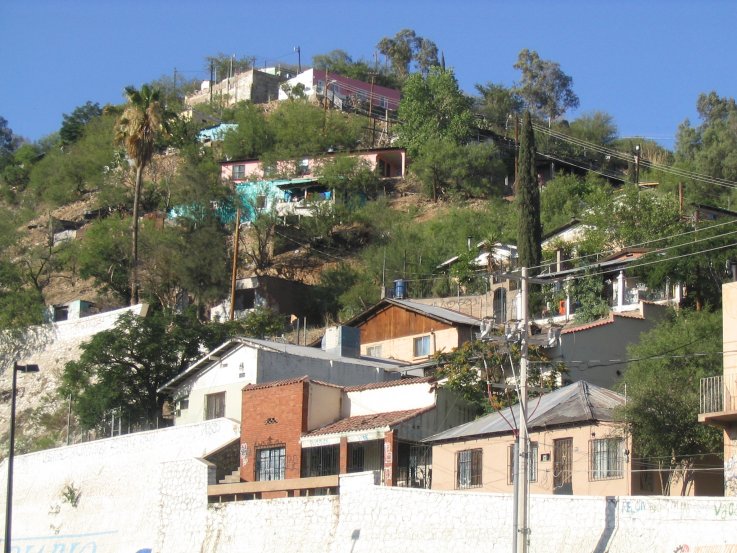
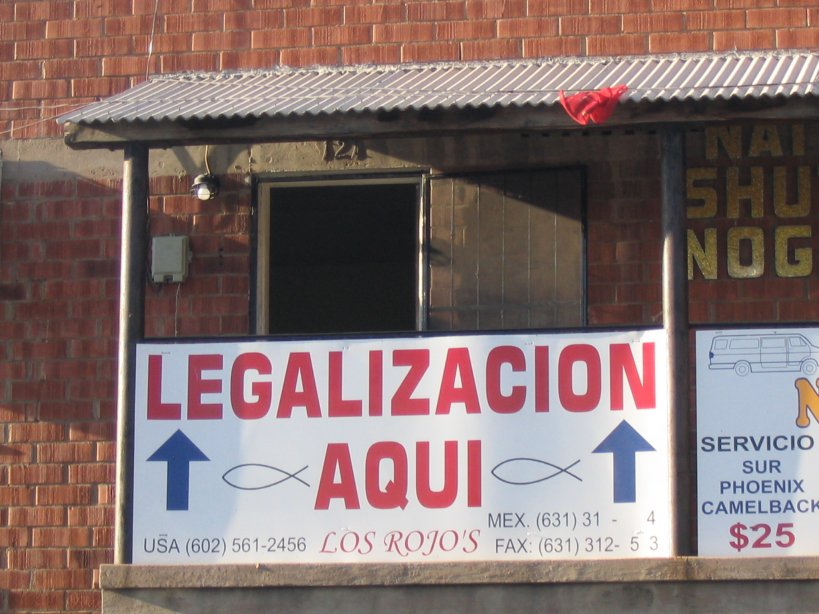
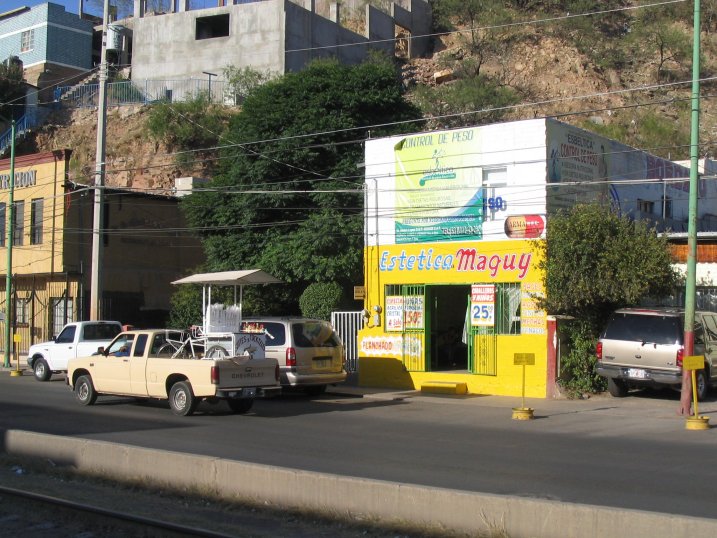
Nogales:
(Spanish for "Walnut")
In June, 2007 I was on business in Tucson and had the
pleasure of visiting Nogales again - for the first time
in at least a decade. All of the border towns seem to
be changing/growing very fast!
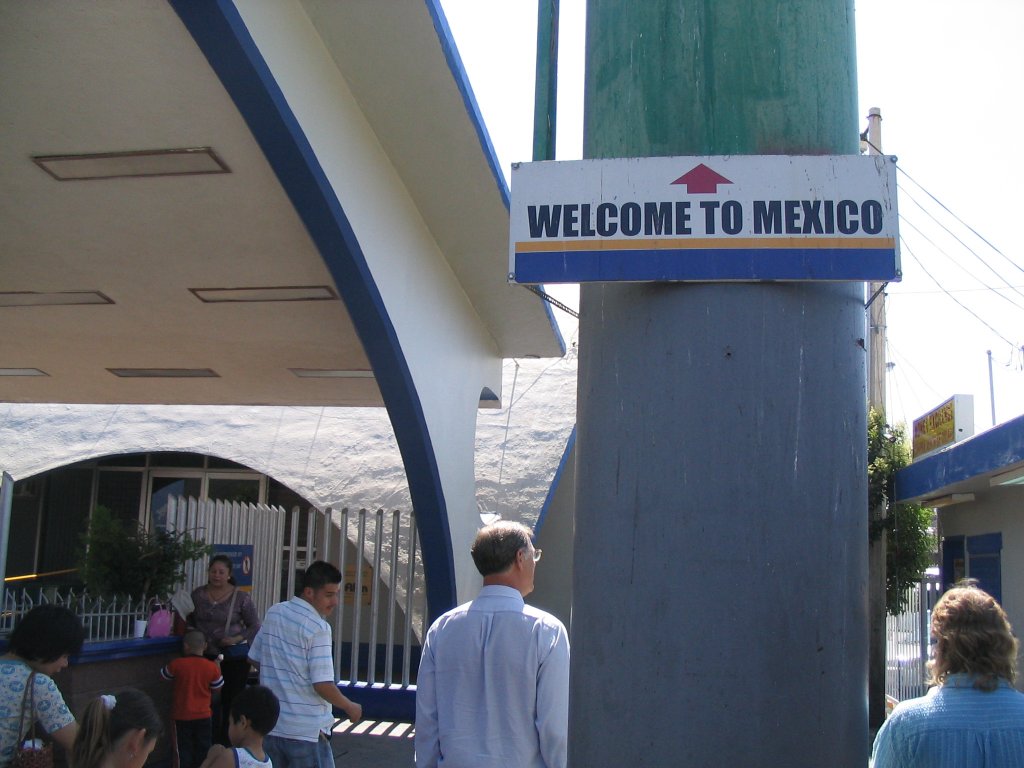 Welcome to Mexico! |
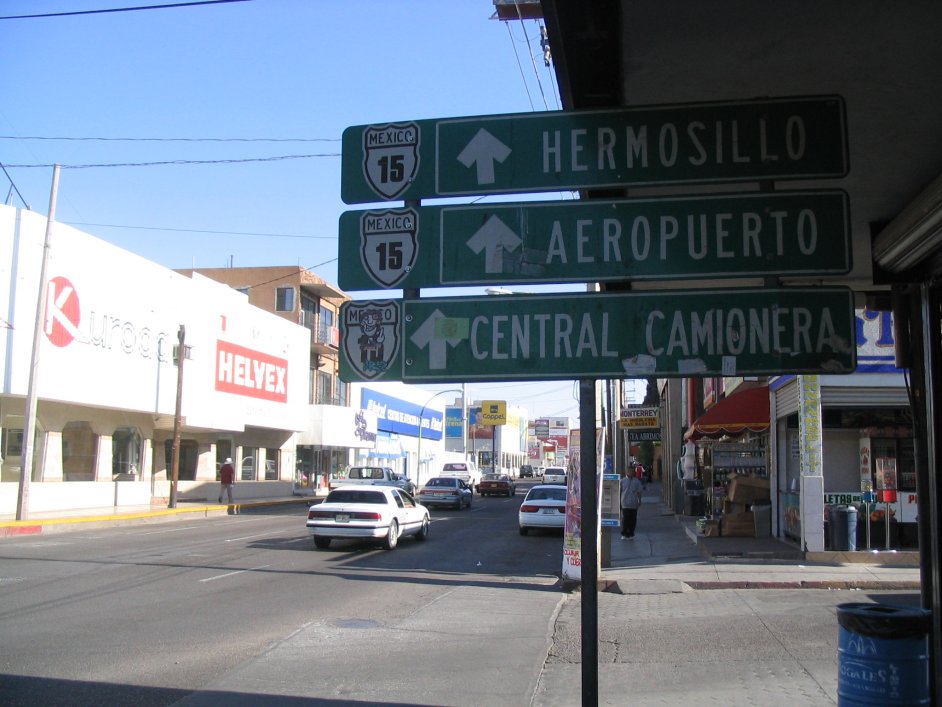 Street Signs |
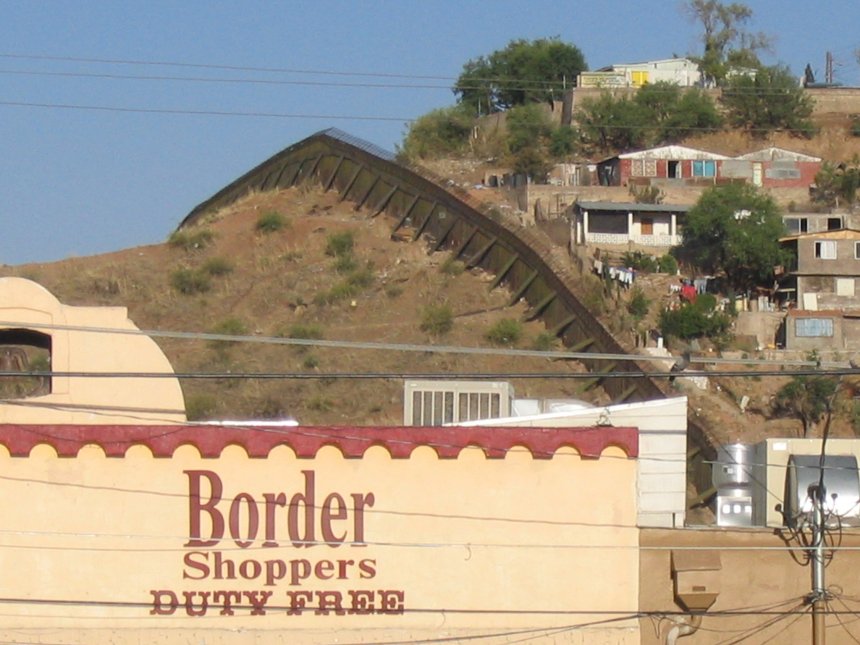 Border Shoppers |
 Nogales Neighborhood |
 Nogales Neighborhood |
 Legalize Here! |
 Nogales Shoppette |
 Nogales Businesses |
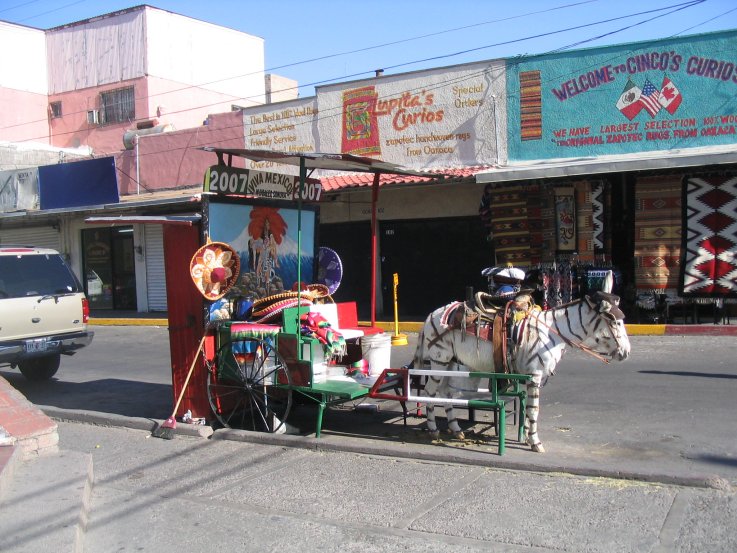 Donkey Photos |
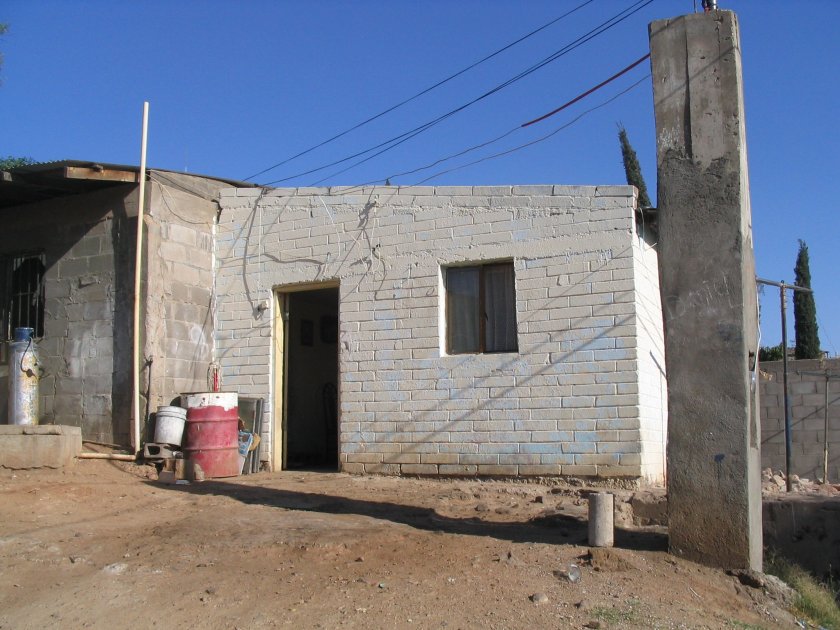 Home Sweet Home |
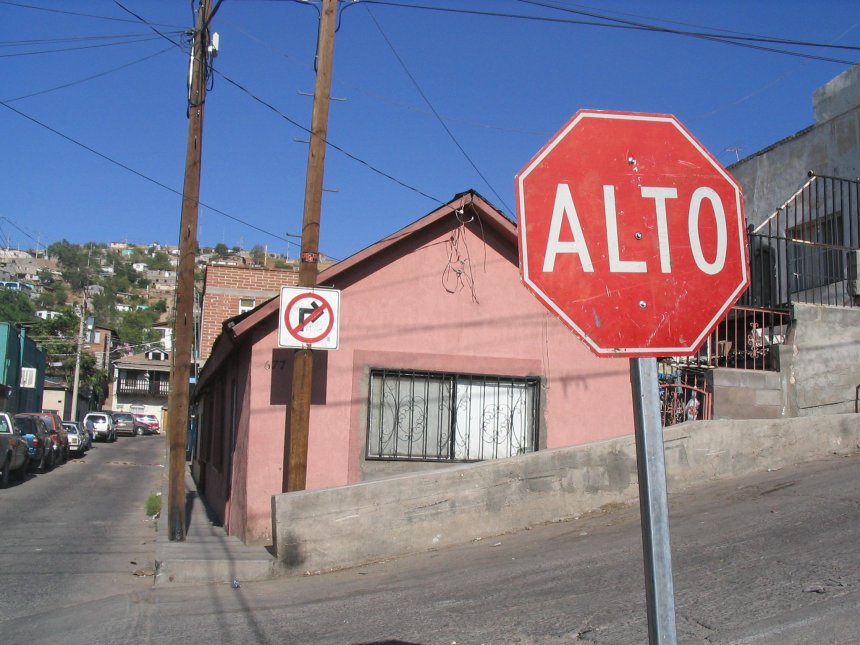 Alto |
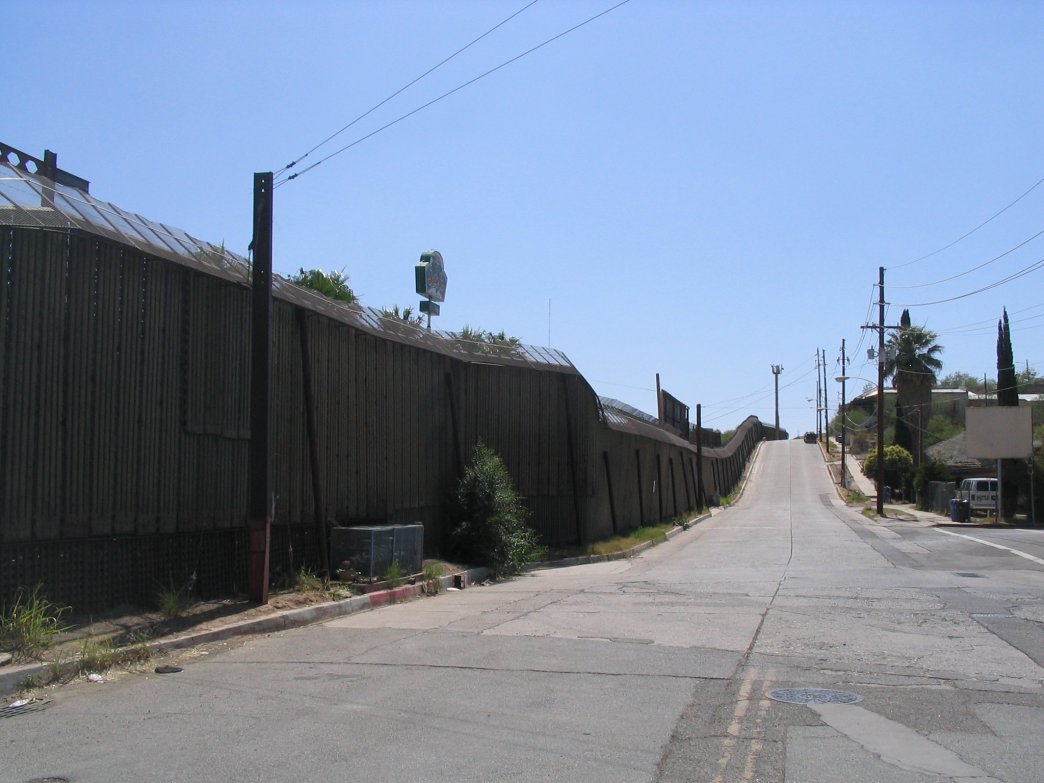 Border Fence |
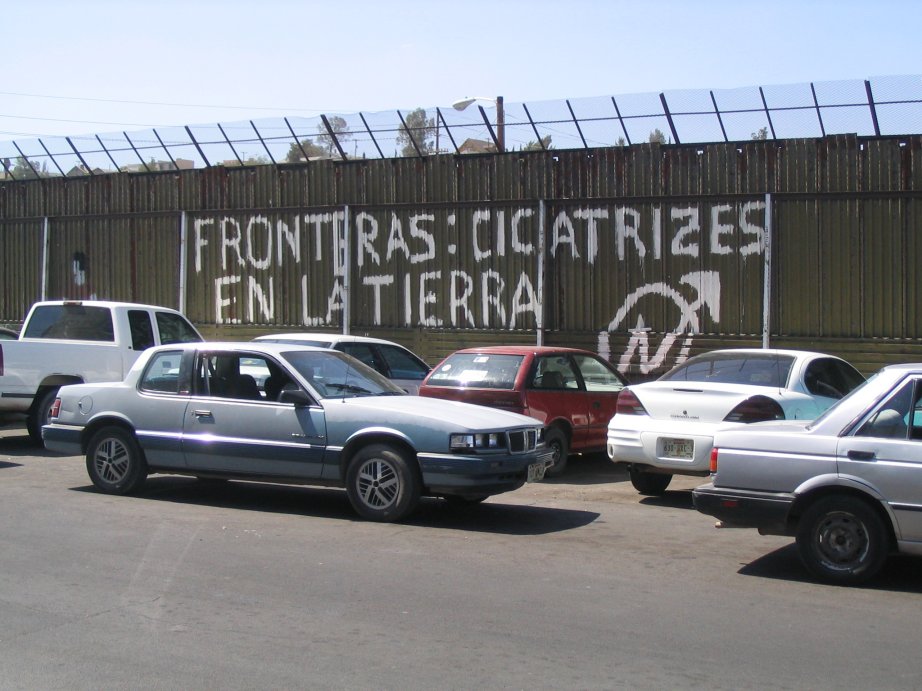 "Borders Scar the Earth" |
 Back to the USA! |
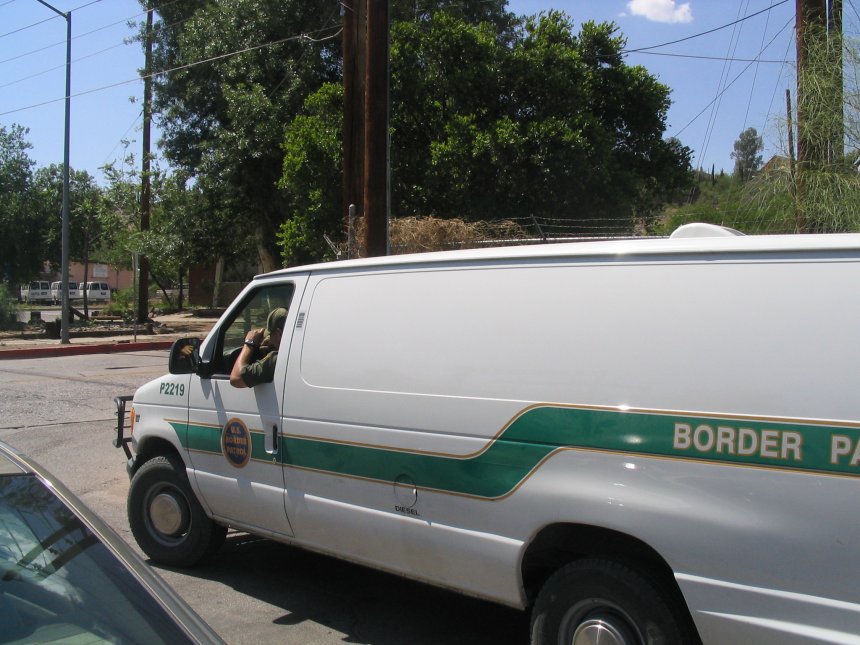 U.S. Border Patrol |
Jacumba, California:
(pronounced "ha-COOM-ba")
In November, 2007 we took a drive along Interstate 8 and
couldn't resist detouring a few miles south into Jacumba
via old Highway 80. Jacumba features a hot spring that
apparently attracted the Kumeyaay peoples prior to European
arrival. The town officially sits one half mile from the
Mexican border so I had to take a look for myself!
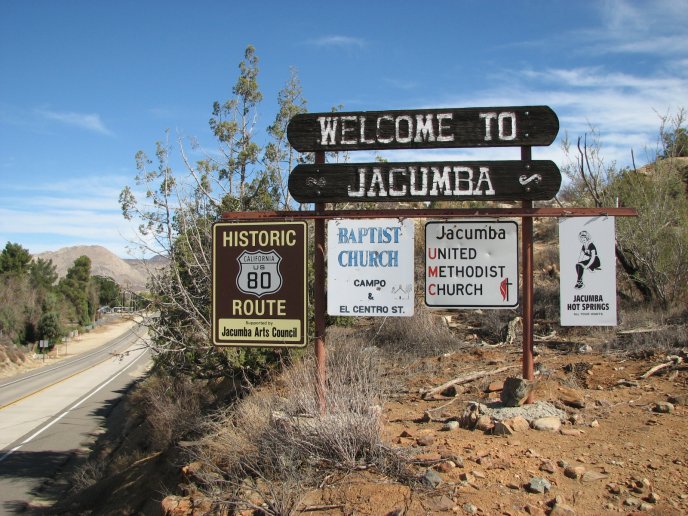 Welcome to Jacumba! |
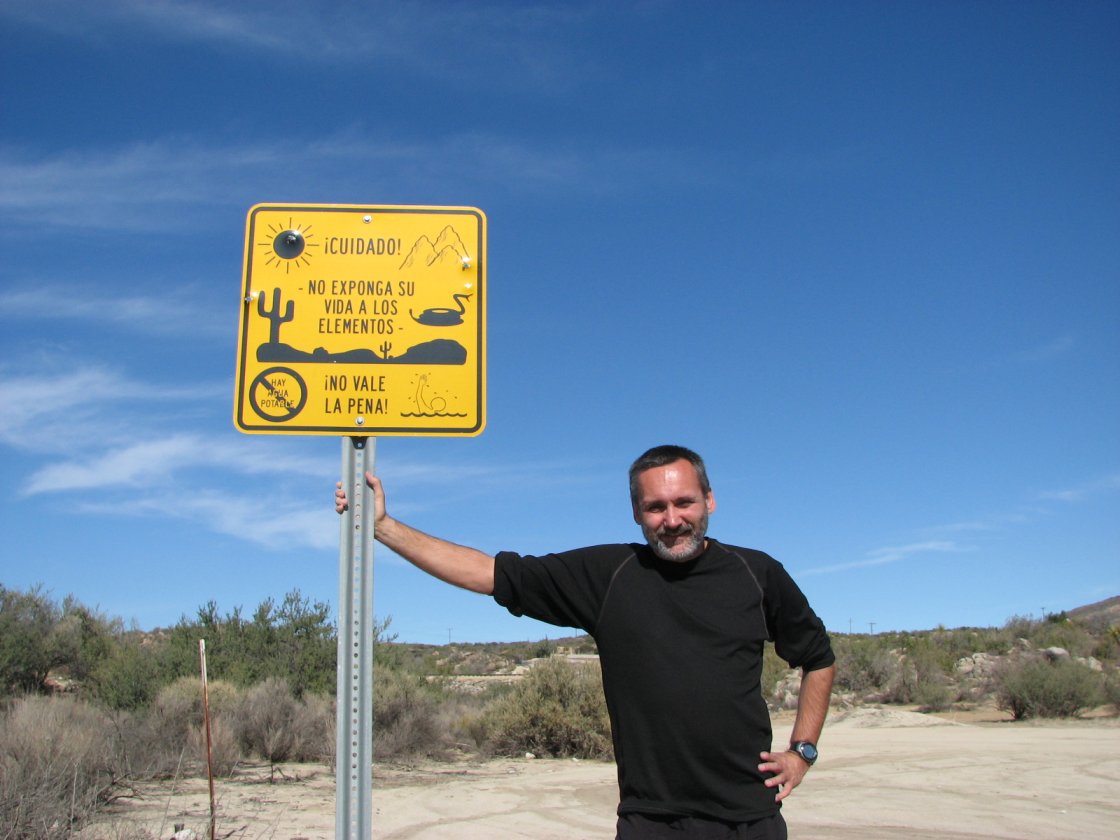 There is no water! |
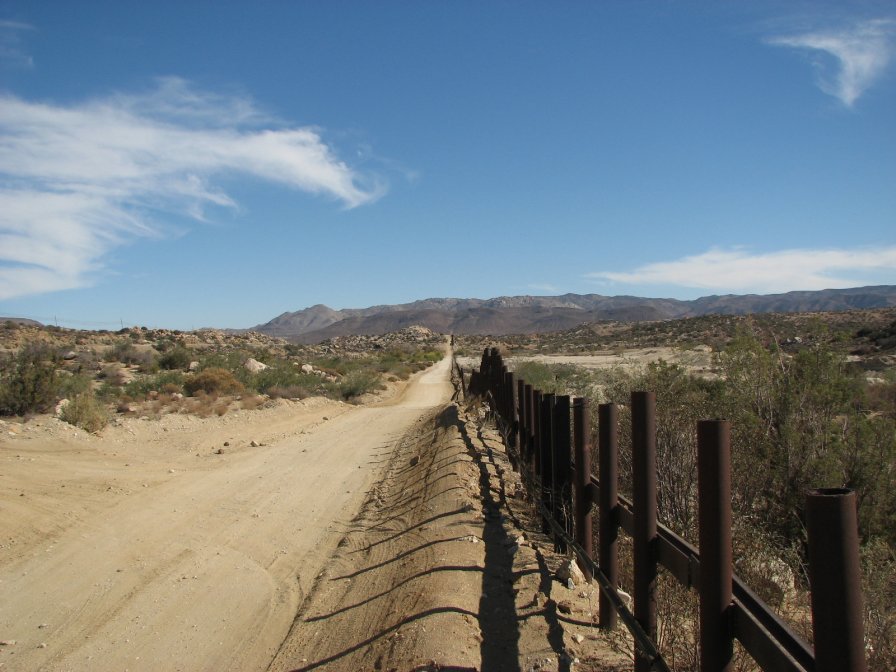 Looking east |
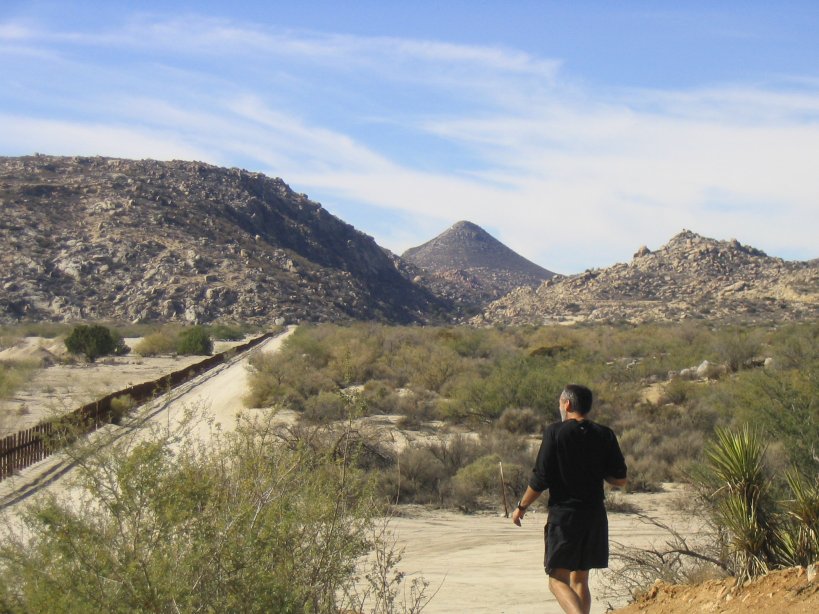 Looking west |
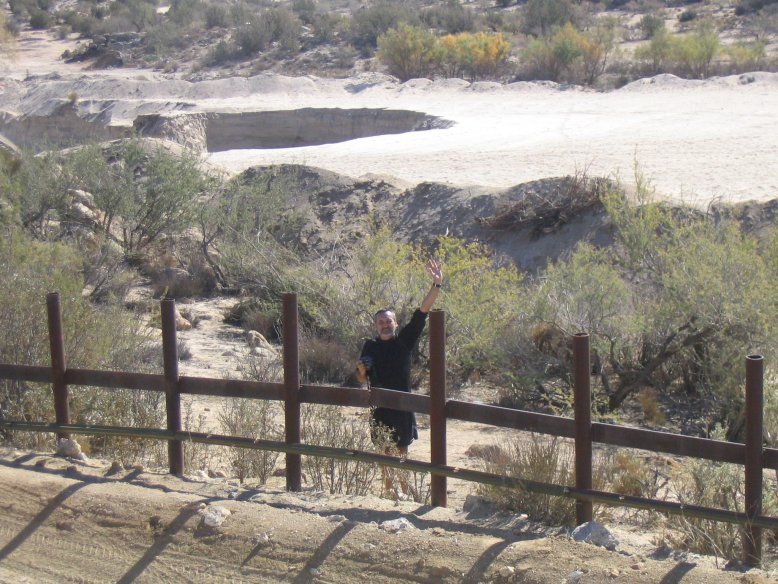 Greetings from Mexico! |
The yellow sign, in the second photo, roughly translates as: Beware!
Beware! Do not expose their lives to the elements - (There is no drinking water)
North America's Largest Desert:
The Nature Conservancy, Winter 2007, p. 49
"In the heart of North America's largest desert lies a biological oasis - a little-known expanse of basin and range straddling both sides of the boundary between the United States and Mexico. The Chihuahuan Desert Borderlands, as it is called, is a sparsely populated 30-million-acre wilderness where barren lunarscapes, arid scrublands and cactus forests coexist with majestic canyons, lush grasslands and pine-oak woodlands.""To the abundant populations of year-round and migrating wildlife, the borderlands is a land without borders, a single ecosystems that rivals Greater Yellowstone in its biodiversity. Hundreds of species use the borderlands as a migratory megacorridor, including monarch butterflies, black bear and more than 10 species of hummingbirds. Populations of elk, pronghorn and desert bighorn sheep flourish as well."
"Plant and animal life in the borderlands draws sustenance from hidden springs, exotic wetlands, high-country creeks and, most of all, from the river running through it. The Rio Grande, as it is called by people living on its northern banks, or Río Bravo del Norte as those in the south know it, is the vital lifeline in this arid landscape, snaking through the desert for hundreds of miles."
Ecological Wounds of North America:
from Dave Foreman's Rewilding North America (A Vision for
Conservation in the 21st century), pp. 61-62
"[Aldo] Leopold came to understand land health and ecological wounds from his field work with the U.S. Forest Service in New Mexico and Arizona from 1909 to 1924 and bow-hunting trips to the Sierra Madre in Chihuahua in the mid-1930s. In 1937, he mused, 'For it is ironical that Chihuahua, with a history and terrain so strikingly similar to southern New Mexico and Arizona, should present so lovely a picture of ecological health, whereas our own states, plastered as they are with National Forests, National Parks and all the other trappings of conservation, are so badly damaged that only tourists and others ecologically color-blind, can look upon them without a feeling of sadness and regret.""Far ahead of his time in his skill to wisely read the story of the land, Leopold understood that free Apaches kept settlement out of the northern Sierra Madre Occidental well into the twentieth century. Without livestock grazing and with hearty populations of mountain lions and wolves, mountain ecosystems in Mexico were ecologically healthy, whereas similar mountain ecosystems in the United States were deeply wounded. Unfortunately, since Leopold's time, the mountain fastness of northern Mexico has been as carelessly wasted as the southwestern United States."
Mexico: An Oil Nation in Crisis
Council on Hemispheric Affairs Research Memorandum - 10/22/2009
"Mexico is currently facing one of the biggest economic recessions in the country's two hundred-year history of independence. Some Mexican policy makers blame the economic crisis on this year's decrease in tourism, while others attribute it to the continued dependence of the Mexican economy on the United States, pointing to its neighbor's recession as a principal cause for the country's woes. Nonetheless, Mexico's plummet in oil production and the decline in the price of oil are two main contributors to its present economic downfall. While other countries have begun to pull out of the recession, it appears that the fall in oil production and prices have further led to an ongoing decline in Mexico's economy, which the country's planners are finding difficult to reverse."Current Oil Situation
"Oil is at the heart of the Mexican economy. Profits on its extraction are the country's number one revenue, accounting for approximately 40 percent of Mexico's total revenues. Due to the decline in the price of oil that began last year with the escalation of the global recession, Mexico's oil-dependent economy has suffered grievously. Prior to the sag in oil prices, when other oil producing countries were taking advantage of the tremendous peak in prices, Mexico was hit particularly hard; government officials reported that last year's drop in oil production cost the Mexican government an estimated US$20 billion in lost revenues. This year's plunge in oil prices has resulted in oil export revenues being recorded at only $1.25 billion per month for the first seven months of 2009, a fall from an average of $1.44 billion per month in 2008. The falling prices and production rate continue to damage the economy, and many blame the Mexican government for its failure to channel new investments in to various oil-producing fields, along with its mismanagement of revenues. Mexico feels the pressure to convert its oil profits into public spending in order to generate immediate results and to keep a lid on the country's mounting social tensions; instead it sometimes foolishly refuses to put aside some of the profits to ensure financial stability."
What's in a name?
by Rafael Romo, Senior Latin American Affairs Editor
CNN.com November 22, 2012
"...outgoing Mexican President Felipe Calderon on Thursday [November 22, 2012] sent to the Mexican Congress a piece of legislation to change the country's name officially to simply Mexico.""Calderon, a conservative president better known for his war on drug cartels and organized crime, is literally in his last days in office. Enrique Pena Nieto, who was elected in July, takes office on December 1."
"It's still too early to know if the new Mexican Congress will quickly act on Calderon's bill or tackle other more pressing matters like security and the economy."
In announcing his decision to propose officially changing his country's name, Calderon said Thursday the name Mexican United States was originally taken because back in 1824 the United States of America was an example of democracy and liberty for the new independent nations in the Americas." "'It's time that we Mexicans retake the beauty and simplicity of our motherland's name: Mexico. (It's) a name that we use when chanting or singing, a name that identifies us throughout the world and that makes us proud,' Calderon said."
"'Mexico' is a word first used by the Aztecs in their original nahuatl language. The indigenous tribe founded a city called Tenochtitlan in the valley now occupied by the modern Mexico City. That original city was conquered by the Spanish in 1521. Mexico gained its independence from Spain in 1821. In Spanish, Mexicans pronounce the 'x' in Mexico as a hard 'h.'"
Links:
|
 Back to Roger J. Wendell's Home Page...

Abbey |
About |
Blog |
Contacting
Me |
Copyright |
Disclaimer |
Donate |
Guest
Book |
Home |
Links |
Site
Index |
Solutions |
Terms,
Conditions
and
Fair
Use |
What's
Changed
or
New?
Copyright
© 1955 -