Roger J. Wendell
Defending 3.8 Billion Years of Organic EvolutionSM

|
Fuel Economy: Hypermiling and doing the right thing! [Okay, I'm adding this note in early 2015 when gasoline prices have fallen as low as $2.00 USD per gallon. However, the math is simple - higer priced oil (and higher gasoline prices) will be returning much sooner than you'd expect...] |
Having lived (and driven) through the '73 Arab Oil Embargo it amazed me, for the 30 years leading up to the creation of this page, that people (mostly Australians, Americans and Chinese Communist party officials) continued to drive such huge, inefficient and expensive vehicles. Even in 2007, as I updated this page, Hummers, Suburbans, "sport" trucks and other SUVs continued clogging our highways and fouling our skies. And, in 2007 all of this continued despite science confirming that our wasteful ways were responsible for Global Warming and some very serious threats to our safety and well-being.So, because my 1973 experience suggests that people aren't about to completely give up driving I thought I'd keep this page intact as a way to help reduce fuel consumption in general. Although I'm not a scientist I've been experimenting with small cars for nearly four decades and am convinced that more efficient fuel use can not only extend the limited supply of oil but also greatly reduce harmful emissions and greenhouse gases. Below you'll find commonsense tips on fuel economy, "hypermiling" and various ways to drive your car "forever." I hope you'll consider experimenting on your own to not only save money but reduce energy consumption and pollution as well - thanks!
- Roger J. Wendell
Golden, Colorado - February 2007
Note: Although I wouldn't expect anyone to simply throw away their gas-guzzler it still amazes me that people continue the recreational use of huge cars, trucks and SUVs well after the 2008 oil shock. Here it is, February 2009, and I still see giant Suburbans, Hummers and other gas hogs "filled" with one person. The good news is the bike rack on my daily bus commute continues to fill-up each morning, despite the bitter cold and winter conditions! Also, I've been seeing a few more of those tiny "Smart" cars around town in addition to the Honda Fit and other efficient vehicles. There's hope!
- Roger J. Wendell
Golden, Colorado - February 2009

|
Click Here for my page on Fossil Fuels and Peak Oil..." |

|
Click Here for a YouTube video of me hypermiling to Johnson Village, Colorado... |
|
|
Click Here for my page on Climate Change and Global Warming..." |
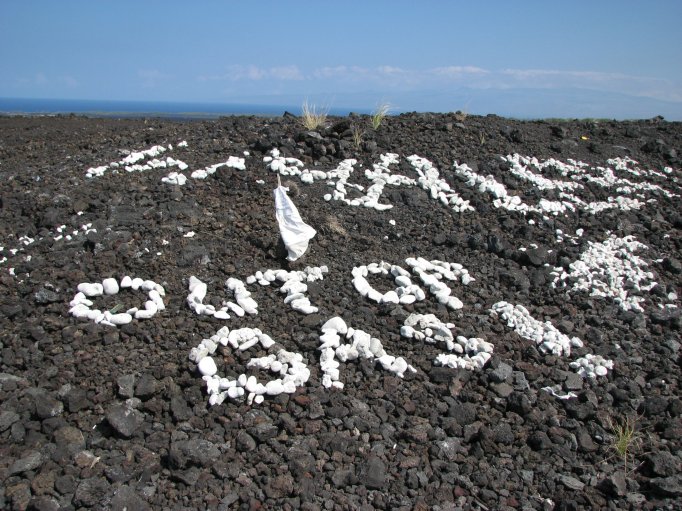 Out of Gas on the Kona Coast |
Tips on Fuel Econonmy
(Getting better miles-per-gallon/kilometres-per-litre without a lot of effort!) |
There are a bunch of more serious and "dramatic" things I've experimented with, over the years, to improve the fuel economy on my own cars. Although I'd like to see others adopt similar methods I'm not going to hold my breath! Some of the things I've done to my own cars include removing unused seating to reduce the vehicle's weight, I've added block heaters for easier starting (even in the summer months!), I've parked my car (and turned the engine off) to wait-out dust storms along side the road, and to this day I still roll-start down my steep driveway...
In the future I hope to experiment with belly pans and shrouds to make the car's underbelly more aerodynamic. I also want to install an electric oil pump (along with the aforementioned block heater) to circulate the oil a minute or two before actually starting the car.
Sikorsky is also big on sheltering your car from the elements to not only prolong its life [Roger - there's a whole other web page waiting to be created on "embedded energy" and the resources it takes to create and replace cars and everything else in our lives...] but to promote more efficient starts and fuel savings. Skikorsky states, "Shelter from the wind and cold will do more to promote good winter gas mileage than any other single item."
Related to to a lot of this is my Voluntary Simplicity and Things you can do for the Environment pages. There's so much that we can all do to contribute to a better, healthier world that not only benefits us but contributes to the well-being of everyone and everything. Let's give it a try!
|
Tip References: A lot of these gas-saving points I've gained from practical experience having driven cars and motorcycles since the late 60s. In the early 70s I started practicing a lot of this since we were in the middle of an oil embargo that really shook up America's automobile culture. Unfortunately the lesson didn't "stick" as the yuppies of my generation started to believe that bigger is better (oh, they are so wrong!). |
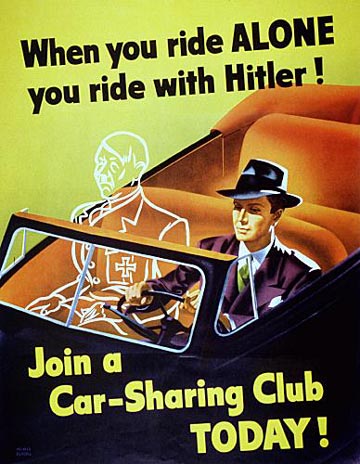
Some great references I've run accross include:
|
|
 No Hummers! |
Bob Sikorsky
|
I, myself, drove a Honda 90 "scrambler" motorcycle during the Arab oil embargo of 1973. Even though I was getting well over 100 mpg it was clear to me that waste and disregard for conservation were continuing everywhere around me - despite the long gas lines and rising prices. Nevertheless, on a personal level, even though I was only 18 years old, I felt committed to energy and money conservation no matter how indifferent my fellow countrymen! That ethic has stayed with me my entire life (even as I make this entry in 2008) but received a great kick start when I read a couple of Bob Sikorsky's books in the early 80s.
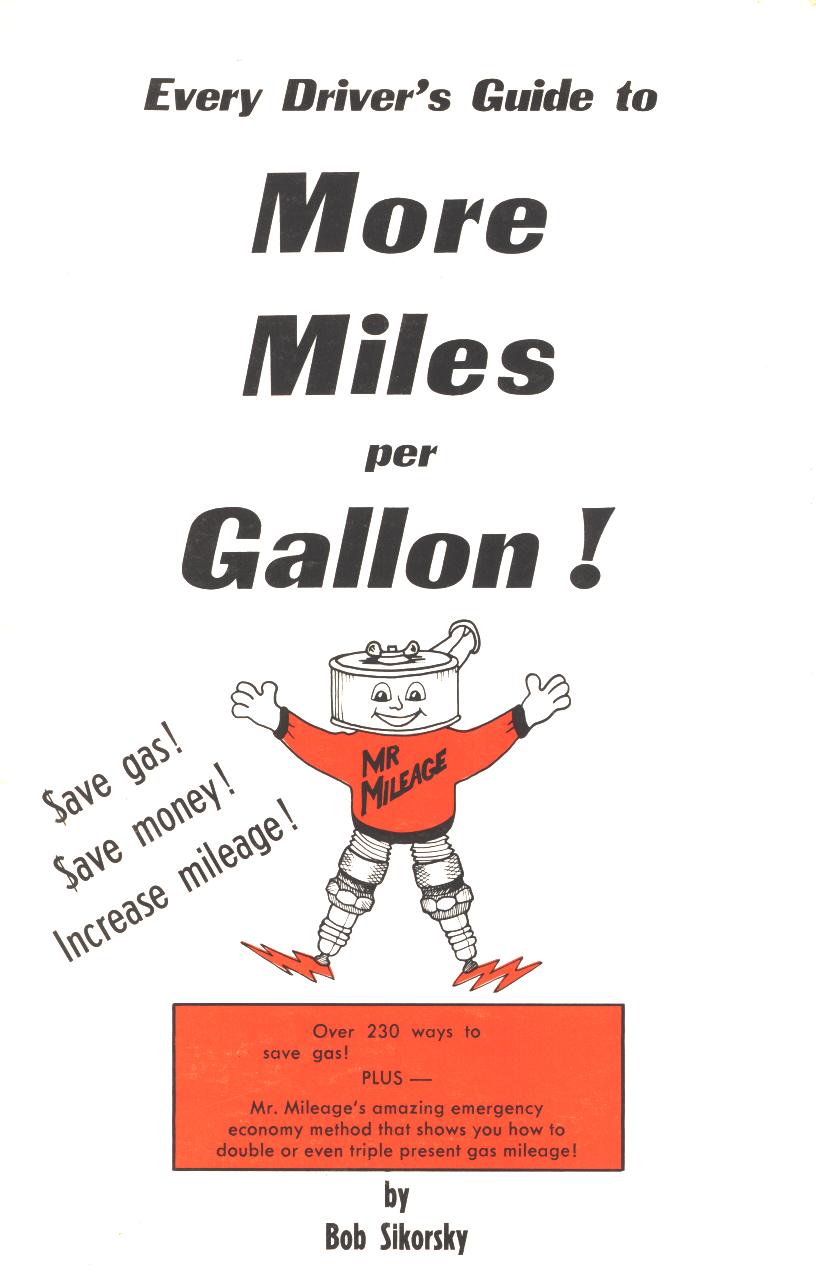
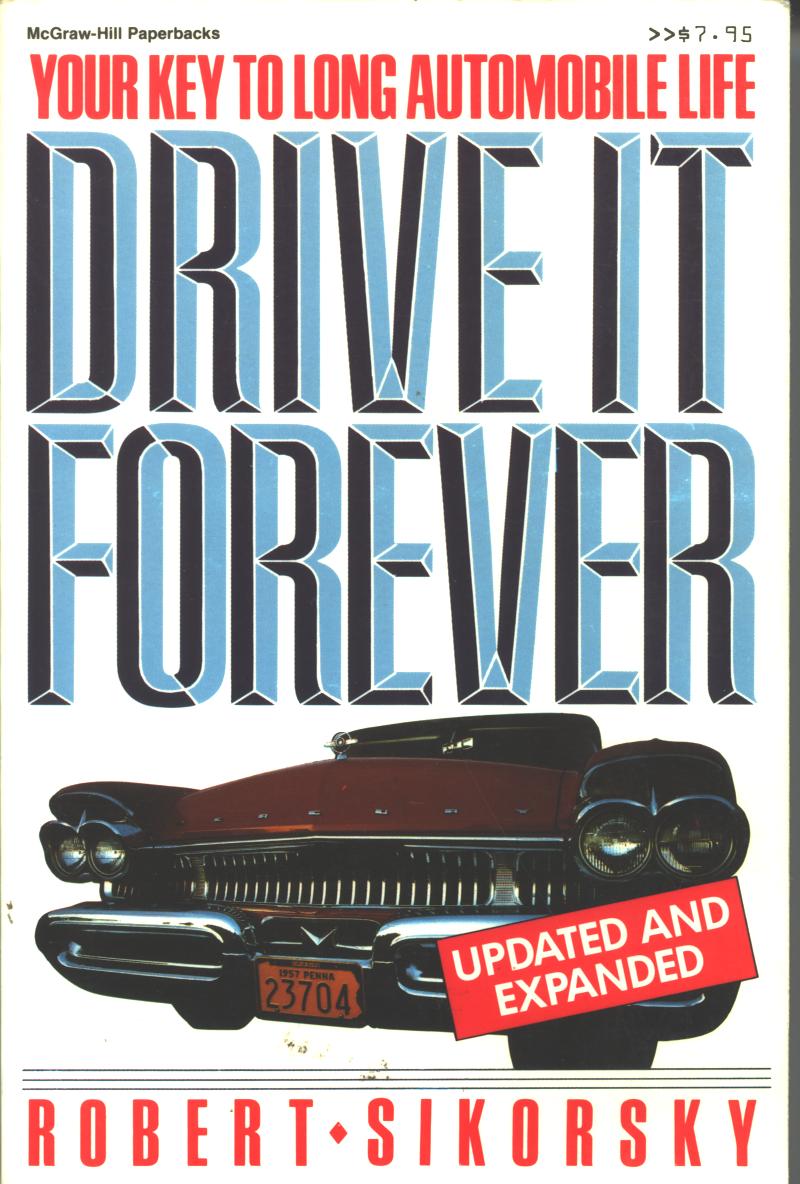
Sikorsky's Drive it Forever and Every driver's Guide to More Miles per Gallon were way ahead of there time in not only teaching folks how to properly care for an automobile but providing great emphasis (way back then!!) on fuel economy. I don't know whatever happened to Mr. Sikorsky but he was certainly a genius when it came to conserving gasoline. Here are a few excerpts from his earlier book, Every Driver's Guide to More Miles per Gallon! (1976). In it Sikorsky listed 230 ways to save gas - so as not to violate any intellectual property laws I just list a few of 'em here to "wet" your appetite; |
|
Just imagine, these basic ideas were formulated way back in the 70s yet most Americans continued driving huge Hummers and SUVs well into the 2000s after oil surpassed the $100 per barrel level. I think our society can do much better than this so I hope my little page contributes to some positive change - with a bit of thanks to Bob Sikorsky, three decades earlier!
Golden, Colorado, USA Note: No, I never met Mr. Sikorsky nor did I own any stake in his company - I bought his books, implemented his ideas, and saved lots of fuel and money over the intervening third of a century! And, of course, a very special ancillary benefit has been a smaller carbon footprint and less damage to this very special place we call Earth! |
|
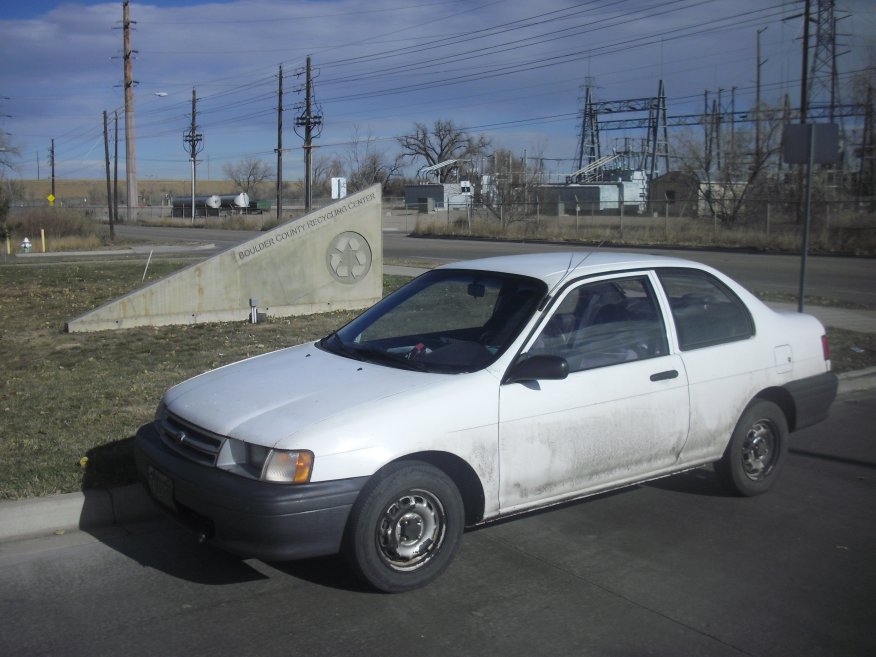
When I'm not walking, running, hiking, riding my bike or taking the bus I'm using my 1993 Toyota Tercel and loving it! Although I've never owned a new car [and don't care if I ever do...] I bought this one when it only had 14,000 miles (22,500 kilometres) on it so it felt pretty new to me at the time! Anyway, I was purposely looking for the best possible gas mileage available, at the time (this was four years before the first Prius came to market in Japan...), and even waiting until I found a model with a four speed manual transmission as the EPA suggested this would provide better mileage than a five speed or automatic. Over the years, thanks to Sikorsky (Drive it Forever) and the development of my own Hypermiling techniques, I easily averaged 45 miles per gallon with this Toyota anytime I wasn't driving in the city. And, even in the city I still averaged nearly 40 miles per gallon while hauling groceries, backcountry gear, and recycling materials around town. |
In late November, 2010, my little Tercel hit the quarter million mile mark (402,336 kilometres) without ever having had any major engine, clutch or transmission work! At 55 years old I was still doing all of my own oil changes, wheel rotations, brake jobs, battery replacements and other small repairs - in addition to some very serious hypermiling techniques I'll be writing about later... Anyway, this particular photo was taken at EcoCycle at the 249,870 mile mark as I new the actual quarter million mile figure wouldn't get hit until I was driving through Vail, Colorado during the dark a short time later. Anyway, you get the idea - a lot of tender loving care, special driving techniques, and a well designed vehicle and you end up with great gasoline mileage, low carbon emissions, and very minimum repair bills for almost two decades of reliable use! My guess is this little Toyota was less expensive, more efficient, and lighter on resources (included "embeded" energy in the manufacturing process) than almost any other car on the road - including all hybrids* and many motorcycles up to this date! Oh, and as you can see from the adjacent picture, I never ever wash a vehicle other than the windows, mirrors, control panel, and sometimes the engine compartment. Why waste the water? Plus, what could be more of a waste of time and money than standing around at some car wash? Get a life!*Interestng to note that the December/January 2011 issue of HomePower magazine ("Straight Talk, by Dominic Crea, p. 63)
Hypermiling
Increasing your car's gas mileage by making
Skillful changes in the way you drive (very
similar to Sikorsky, above, but gaining in
popularity after the mid 2000s...)
Here are some hypermiling tips from CleanMPG.com:
Links:
|
|
 Back to Roger J. Wendell's Home Page...

Abbey |
About |
Blog |
Contacting
Me |
Copyright |
Disclaimer |
Donate |
Guest
Book |
Home |
Links |
Site
Index |
Solutions |
Terms,
Conditions
and
Fair
Use |
What's
Changed
or
New?
Copyright
© 1955 -