Roger J. Wendell
Defending 3.8 Billion Years of Organic EvolutionSM

 Recycling |
Reduce the amount and toxicity of trash you discard. Reuse containers and products; repair what is broken or give it to someone who can repair it. Recycle as much as possible, which includes buying products with recycled content. Okay, in this day and age you might find it strange that somebody would have created a page about recycling. But, remember, many of us come from a generation (in America) where waste was the norm and anyone who recycled was considered either a hippie or an eccentric. Nevertheless, my wife and I have been very conscientious about recycling since early in our marriage, during the mid 70s, when anyone concerned did it through a local co-op, collective, or commune! Of course the rest of the country didn't come 'round until the 2,000s but that's okay - better late than never! - Roger J. Wendell |

"And Man created the plastic bag and the tin and aluminum can and the cellophane wrapper and the paper plate, and this was good because Man could then take his automobile and buy all his food in one place and He could save that which was good to eat in the refrigerator and throw away that which had no further use. And soon the earth was covered with plastic bags and aluminum cans and paper plates and disposable bottles and there was nowhere to sit down or walk, and Man shook his head and cried: 'Look at this Godawful mess.'"

|
Click Here for my page on Earth Friendly things and ideas! |
|
|
Click Here for page about Voluntary Simplicity! |
|
|
Click Here for Earth Day page! |
Recycling Quick Facts:
- Recycling one ton of paper saves 17 trees, two barrels of oil (enough to run the average car for 1,260 miles), 4,100 kilowatts of energy (enough power for the average home for 6 months), 3.2 cubic yards of landfill space, and 60 pounds (27 kilograms) of air pollution. Trash to Can
- Americans throw away enough aluminum to rebuild our entire commercial fleet of airplanes every three months. Environmental Defense Fund
- Recycling creates 6 times as many jobs as landfilling. Colorado Recycles
- Recycling glass instead of making it from silica sand reduces mining waste by 70%, water use by 50%, and air pollution by 20%. Environmental Defense Fund
- Recycling just one aluminum can saves enough energy to operate a TV for 3 hours. Eco-Cycle
- If we recycled all of the newspapers printed in the U.S. on a typical Sunday, we would save 550,000 trees--or about 26 million trees per year. California Department of Conservation
- The energy saved each year by steel recycling is equal to the electrical power used by 18 million homes each year - or enough energy to last Los Angeles residents for eight years. Steel Recycling Institute
- If every household in the U.S. replaced just one roll of 1,000 sheet virgin fiber bathroom tissues with 100% recycled ones, we could save: 373,000 trees, 1.48 million cubic feet of landfill space, and 155 million gallons of water. Seventh Generation Co.
Plastic bags:
(Some notes I took from the PoconoGreen slideshow)
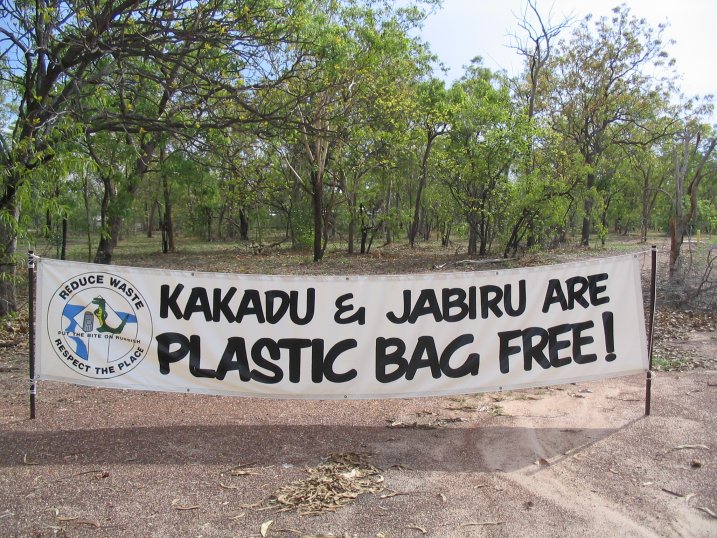
We visited Australia in 2005...Worldwide, it's estimated that 500 billion to one trillion plastic bags are manufactured each year. That's over one million bags per minute! In the United States we use one-fifth the total world production or about 100 billion plastic bags per year. Only one to three percent of plastic bags are recycled - the remaining 97 percent ends up in landfills, streams, trees, or floating in oceans. Plastic bags are usually made of polyethylene - it takes about 12 million barrels of oil, each year, to manufacture the plastic bags used in America. It's estimated that the bags, when not recycled, will persist in the environment for a thousand years... The National Marine Debris Monitoring Program estimates that plastic bags account for over 10 percent of the debris washed up on the U.S. coastline.
Plastic shopping bags are made from polyethylene: a thermoplastic made from oil. Bags find their way into the sea via drains and sewage pipes. Plastic bags photodegrade: Over time they break down into smaller, more toxic petro-polymers which eventually contaminate soils and waterways. As a consequence microscopic particles can enter the food chain. - CNN.com/technology November 16, 2007The effect on wildlife can catastrophic. Birds become terminally entangled. Nearly 200 different species of sea life including whales, dolphins, seals and turtles die due to plastic bags. The die after ingesting plastic bags which they mistake for food. - World Wildlife Fund Report 2005
If we use a cloth bag, we can save 6 bags a week. That's 24 bags a month. That's 288 bags a year. That's 22,176 bags in an average life time. If just 1 out of 5 people in our country did this we would save 1,330,560,000,000 bags over our life time.
Bangladesh has banned plastic bags. - MSNBC.com March 8, 2007
Ireland took the lead in Europe, taxing plastic bags in 2002 and have now reduced plastic bag consumption by 90%. - BB News August 20, 2002
In 2005 Rwanda banned plastic bags. - Associated Press
Israel, Canada, western India, Botswana, Kenya, Tanzania, South Africa, Taiwan, and Singapore have also banned or are moving toward banning the plastic bag. - PlanetSave.com February 16, 2008
On March 27th 2007, San Francisco becomes first U.S. city to ban plastic bags - NPR.org (National Public Radio) China has banned free plastic bags. China will save 37 million barrels of oil each year due to their ban of free plastic bags. - CNN.com/asia January 9, 2008
Reducing plastic bags will decrease foreign oil dependency - Pocono Record
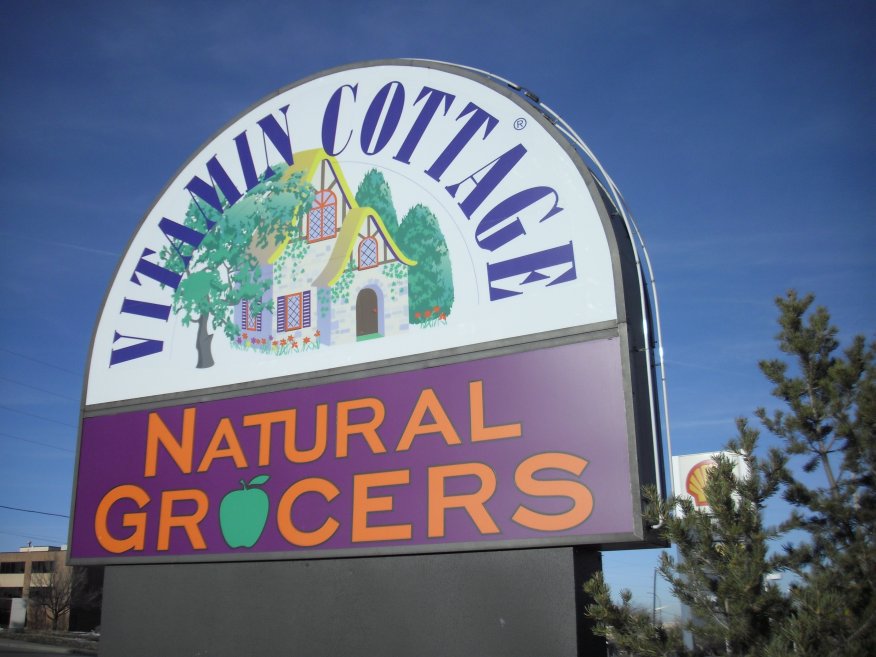
Kudos to Vitamin Cottage!
Welcome!
Containers at each registerWhenver I get a chance I do a good portion of my grocery shopping at the Green Mountain Vitamin Cottage on 12612 West Alameda Parkway. In addition to some huge reycling containers out in their parking lot, Vitamin Cottage started offering their customers recycled cardboard boxes to take groceries home in. What a great idea! Vitamin Cottage was way ahead of the curve when they eliminated paper and plastic bags altogether back on Earth Day 2009. Their employees tell me that this change took place at ALL Vitamin Cottage stores - fantastic!! (Now if we could get businesses and consumers to act this responsiblities all around our socieity we'd be headed in the right direction...
Population and Recycling:

"According to Californians Against Waste, 'Recycling has come almost full-circle in the last 60 years.' During World War II, Americans decreased wasteful consumption, recycled all kinds of items, and saved scrap for the war effort - metal for planes, rubber for military tires, and even leftover cooking fat for lubricants. Americans reduced, reused, and recycle it all!
"Ten years after the war Americans re-learned how to waste. For several years we became the 'Disposable Society.' Then starting in the late 1970s and continuing right up to today, Americans realized they were choking on their own waste and depriving future generations of needed resources."And yet ... according to an Associated Press article by Jim Wasserman, even as government, industry, and the public move toward a 'Recycling Society,' population growth is overwhelming that progress and overwhelming our capacity to handle our waste."
GOMI
Pronounced "Go-Me"
(Maybe a backwards acronym for,
"Interesting Materials Omitted in Garbage!!??")
It wasn't until the mid 2000s that I, myself, heard the term "GOMI." I don't know if it was meant to be some kind of marketing ploy, or just another fad that was going to fade away but I certainly like the idea of reusing junk that's been thrown away! Anyway, when I finally got around to searching for a true definition of Gomi, I found this on Marque Cornblatt's GOMI Style website: "Gomi is a slang word meaning trash or junk. It's originally a Japanese word for dust or garbage, but it's now used to describe anything that we discard or no longer value. It was introduced to English speakers by the best selling fiction writer, William Gibson, who is also credited with coining the term 'cyberspace' back in the 1980's. Gibson used the word gomi frequently to describe the near-future dystopia of our material culture gone haywire. 'Rubin, in some way that no one quite understands, is a master, a teacher, what the Japanese call a sensei. What he's the master of, really, is garbage, kipple*, refuse, the sea of cast-off goods our century floats on. Gomi no sensei. Master of junk.'"
*Wikipedia defines "kipple" as unwanted or useless junk that tends to reproduce itself - popularised
by science fiction author Philip K. Dick in the book Do Androids Dream of Electric Sheep?
I also found this bit of Gomi info, from Conrblatt himself, while searching around YouTube:
(I transcribed it myself off one of his videos)
"There are TV shows, magazines, and web sites, even a whole cable network, all dedicated to DIY which stands for Do it Yourself. The information is out there and people are realizing that the junk in their garage can be made into some pretty cool design. There hasn't been a name given to this movement yet but now there is GOMI. Gomi is so much more than dumpster diving it's a way of life, and one that does the Earth a favor by stressing recycling and reuse over conspicuous consumption."
- Mark Cornblatt, GOMI Style
My son is fluent in Japanese and assures me that the word "gomi" mean trash or garbage. He adds that the word "gomibako" litterally means "trash box." Anyway, whether a promo for somebody's TV show or just a catchy sounding Japanese word, I think the idea of "Gomi" is a great one that needs to be adopted everywhere! We've all seen the horrendous amount of waste accumulating almost everywhere - let's try reusing some of it!- Roger J. Wendell
Golden, Colorado 2008
This page:
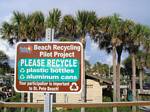
The idea for this page hit me, like a ton of (recycled) bricks, while I was entering one of our local grocery stores here in the Denver area on March 13, 2005. It had just quit snowing, a few hours earlier, and I was about to conduct some family shopping after having climbed Mt. Morrison through the cold and drifting snow just 10 miles west of town. As I entered the store a young man, immediately in front of me, gulped down the last of his soft drink and threw the aluminum can in the trash at the store's entrance.
Not an unusual sight except two whole paces further, into the store, was the recycling counter!! Unfortunately I've witnessed this indifference (laziness) all around our society. Even in my work place, where I received Eco-Cycle's award for instituting a worksite recycling program (1994), people will go out of their way to avoid using our blue recycling containers and, instead, throw their cans and computer paper into the regular trash!Recycling, especially in this day and age, is just too easy not to do! The advantages to our society, and our planet, are huge - if we could just get people to do the right thing. In my aluminum can example, above, it's not just the aluminum, ore, mining, and manufacturing that's saved every time a can is recycled - Reynolds Metal Company says that 97% of the energy used to produce an aluminum container can be saved by simply recycling it! And, the energy that's saved is enough to run a television set for three hours!!! Also, think of how much green house gas could be kept out of our atmosphere through such action!
Aluminum is just the tip of the iceberg - by seriously recycling glass, plastic, metal and a host of other materials we could reduce green house gas emissions, reduce energy consumption, reduce landfill space - all while increasing our quality of life! All it takes is just a little bit of effort - every crumpled soda can, discarded newspaper, or plastic bottle are candidates for a better environment and a better way of life!
|
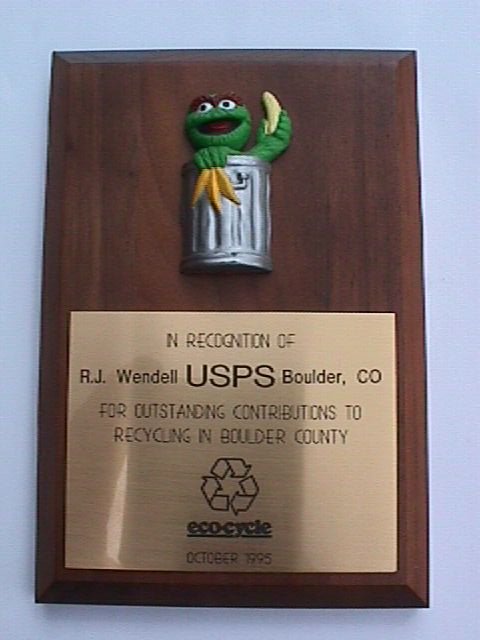
In 1995 Eco-Cycle honored me, and other business recyclers around Boulder County, with this cute little award (you can click on it for a more complete view). Although I didn't live in Boulder I did spend most of my working hours there and was able to convince my employer (we had over 450 employees at the time) to embark on an ambitious recycling program that was of great benefit to not only our employees but the entire community as well. Eco-Cycle has been a leading innovator in community recycling since the 70s - I hope even more communities will adopt their methods and philosophy as well! [Note: I have a bunch of pictures of Eco-Cycle below, just click Here...] |
A Typical Week at Our House:
I think the two of us, in our home, generate an average of 15 to 20 pounds (7 to 9 kilograms) of recycling each week. That's probably more than most because we go to great lengths to remove whatever we can from the regular weekly trash pick-up. Also, we occasionally pick up bits of trash recyclables lying in the street during our evening walks around the neighborhood. Additionally, I'm lucky in that I work relatively close to Eco-Cycle so it's easy for me to drop stuff off on my way into the office.
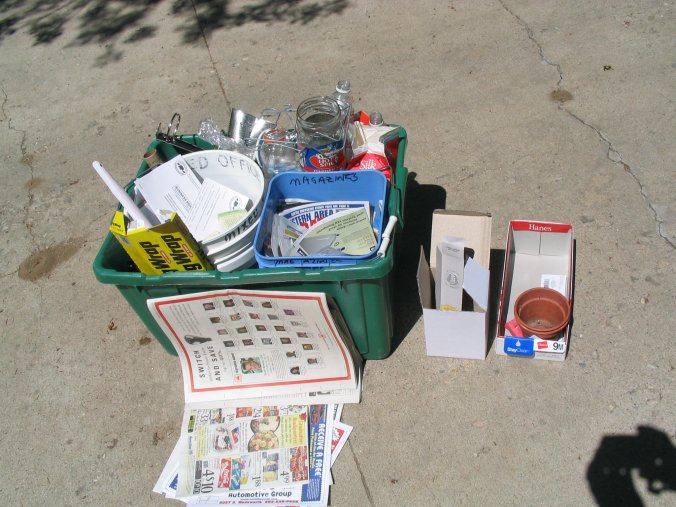 Typical recycling week |
The picture, at left, was taken on Sunday, May 22nd (2005). I weighed it on the scale and it came to about 16 pounds (7.2 kilograms) net - a pretty typical load that included steel food cans, the metal backbone from a school binder (plus the cardboard backing to that same binder), one coat hanger and its little paperboard clothing shield, the little metal "teeth" off the cutting edge of an aluminum foil dispensing box (plus the box itself, as paperboard), a few glass jars, a couple #2 plastic garden pots, numerous plastic bottles, office paper, magazines (they have high clay content and are processed somewhat differently than office paper), a few newspapers (we don't subscribe but seem to end up with a few each week anyway), a few used nuts, bolts and metal pieces from my work bench, plus all kinds of paperboard (toilet tissue tubes, facial tissue boxes, shoebox, etc.) and one soymilk carton. |
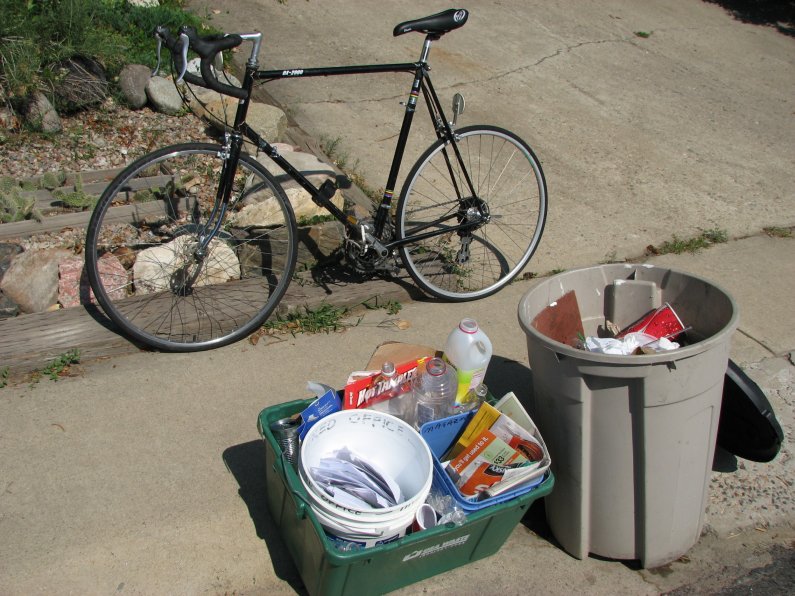 25 Gallon Trash Can |
This picture is a good representation of the amount of trash we generate at our home each week. The recycling container is in the picture for size reference as I usually take it to Boulder's Eco-Cycle with me each week. The bicycle is in the picture not only as a size reference but to emphasize another aspect of the "reduce" and "reuse" philosophy. In this case it's a three decades old Panasonic ten speed that's served duty as my local commuter bike - requiring no additional bike purchases other than some gearing and wheel upgrades because I now live on a steep hill!
As for the trash can, its contents represent a week's accumulation of mostly usual stuff - a few table scraps that won't work well in our compost bins, a drink cup that has way too much wax in it for current recycling operations, certain food containers that aren't recyclable at this time, a piece of carpet square that served as a ground cloth while I worked on our cars, etc. Our main goal, of course, is zero waste but I think we're off to a pretty good start (at least by American standards!) with just a few pounds of garbage going to the landfill from our house each week! |
A Not So Typical Week at Our House!
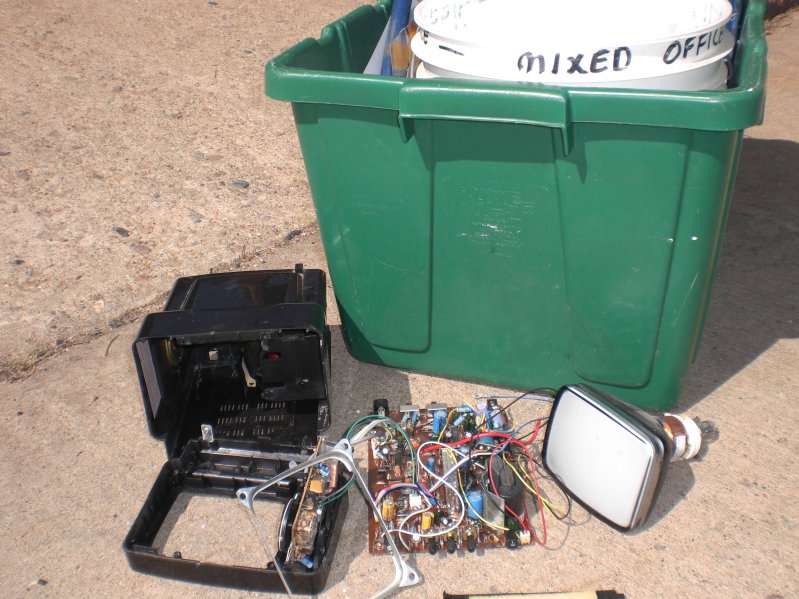 A small television |
Occasionally I have an old TV (especially because we have no television reception in our neighborhood west of Denver and can't do much with any we receive!), stereo, or other appliance that can't be repaired or used for anything else so I attempt to dismantle it and recycle what pieces I can. Again, I'm sure that in places like Europe or Japan it's pretty easy (and even required!) to dispose of these items in places other than a landfill. But, even in early 2008 (when I got rid of this small black and white TV) it's still tough to recycle used and worn appliances here in the U.S.
What I've been doing for many years, as illustrated in this photograph, is to dismantle the appliance as safely as I can and removing the bits and pieces that can be recycled while dumping what's leftover in the regular garbage. In the case of this small, portable television I was able to successfully remove a few dozen screws, retaining clips, electrical shields, connecting wires, and a bit of CRT frame for metal recycling. Although most of the casing was made of an unidentified plastic I was able to remove some small metal rods and a grounding strap that was keeping everything together. Additionally, I was also able to dismantle a portion of the receiver's "RF" section - recycling small portions of shield and even some of the very tiny copper coils inside that portion of the receiver. Since this particular television was so small it didn't take a lot of time and energy to dismantle it looking for recyclable parts. Nevertheless, it's hoped that someday there will be a way to completely salvage all of the materials in an appliance like this - until then we'll have to do the best we can by hand! |
Completing the Circle/Closing the Loop:
When we purchase items that have been made from recycled materials we're "Closing the Loop." In addition to saving energy, we're also preserving our natural resources and reducing waste - stuff I mentioned earlier on this page. Although there is a growing market for recycled content products the demand isn't as high as it should or could be. Let's all do our part in completing the cycle. Let's not only recycle as much as we can but also buy recycled products whenever possible. Always look for the recycle symbol product packaging.Here, at my house, we've been able to purchase all kinds of recycled products: typing/computer paper, toilet tissue, car parts, building materials (thanks to Resource in Boulder!) and virtually all of our regular clothes (thanks to a variety of local thrift stores!). We're also pretty good about using, many times over, those flimsy little plastic bags they give you for practically any purchase. Whenever possible we tell 'em to keep the bag (why not save a plastic tree?) and either carry stuff out in our own hands or one of those cotton grocery bags that we brought along. In early 2005 my wife and I noticed that Wild Oats Natural Marketplace started dispensing salads and other small food items in what they call "Compostable" carry-out containers made from corn - fantastic!!
Zero Waste:
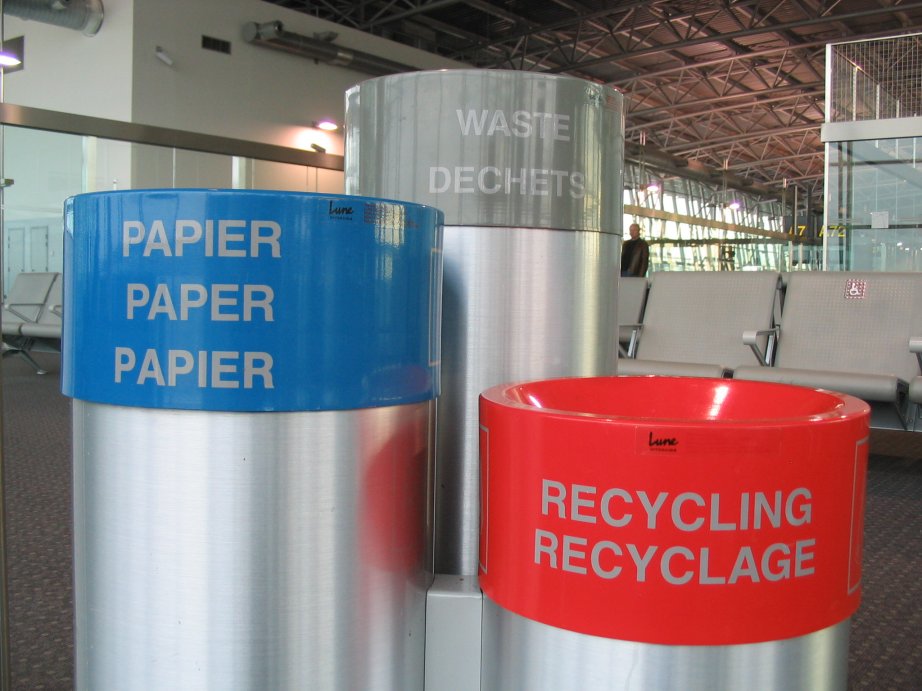
I flew out of Bruxelles in '07"Zero waste is a philosophy and a design principle for the 21st Century; it is not simply about putting an end to landfilling. Aiming for zero waste is not an end-of-pipe solution. That is why it heralds fundamental change. Aiming for zero waste means designing products and packaging with reuse and recycling in mind. It means ending subsidies for wasting. It means closing the gap between landfill prices and their true costs. It means making manufacturers take responsibility for the entire lifecycle of their products and packaging. Zero waste efforts, just like recycling efforts before, will change the face of solid waste management in the future. Instead of managing wastes, we will manage resources and strive to eliminate waste." ISLR - Institute for Local Self Reliance, Washington, DC
Doing our part to go zero waste
There are simple things you can do to help
by Heather Hansman for the Colorado Daily
Wednesday, September 8, 2009, p. 16
"The term 'zero waste' gets tossed around a lot in these parts.""So what does it mean? And how the heck do you ever get to zero?"
"It's an ambitious goal, but, essentially, achieving zero waste means that everything can, and will be, reused in some way, either through recycling, composting of biodegradable waste or materials designed to be reused - unlike, say, plastic plates."
According to a 2006 Boulder City Council resolution, the principles of zero waste are: managing resources instead of waste, conserving natural resources through waste prevention and recycling, turning discarded resources into jobs and new products instead of trash, promoting products and materials that are durable and recyclable, and discouraging products and materials that can only become trash after their use."
"Basically, the best way to eliminate waste is not to waste things."
"There are two main areas where you can reduce waste, and ultimately get to zero waste: what you consume and what you get rid of."
"To limit what you put in the trash you probably already have the resources you need: recycling and compost. A lot of things that we typically throw away can be diverted from landfills. Recycling and reusing are probably hammered into your brain by now and composting should be."
"Plant-based food scraps, any kinds of plant matter and some paper products can be composted..."
"You can get rid of a significant chunk of your waste by not using or buying disposable products."
"The next step is to try to get the producers of materials that you do use to be made more sustainable. Ask for it. And don't think that your request doesn't matter."
"Big companies are starting to change their products because of consumers. This year, Sun Chips, owned by snack giant Frito Lay, is going to start selling chips in compostable bags. Even corporations are helping to make the move to zero waste. Sometimes they just need an incentive, or a shove from the grassroots."
"Although zero waste policies have been mandated by organizations like schools and local governments, it doesn't mean that we can sit back and watch it happen. For our community to truly become zero waste, we all have a hand in it."
"If you need some inspiration, local nonprofit organization EcoCycle - www.EcoCycle.com has a lot of good ideas, and links to exciting zero-waste news from around the world."
"So challenge yourself to start shrinking your trash can. Make your life zero waste and encourage other people, groups and businesses to do the same."
Did You Know?
In the period between Thanksgiving and New Year's, American households generate 25% more waste. That's
about 1 million extra tons of trash each year, according to the Environmental Protection Agency - 2010.
|
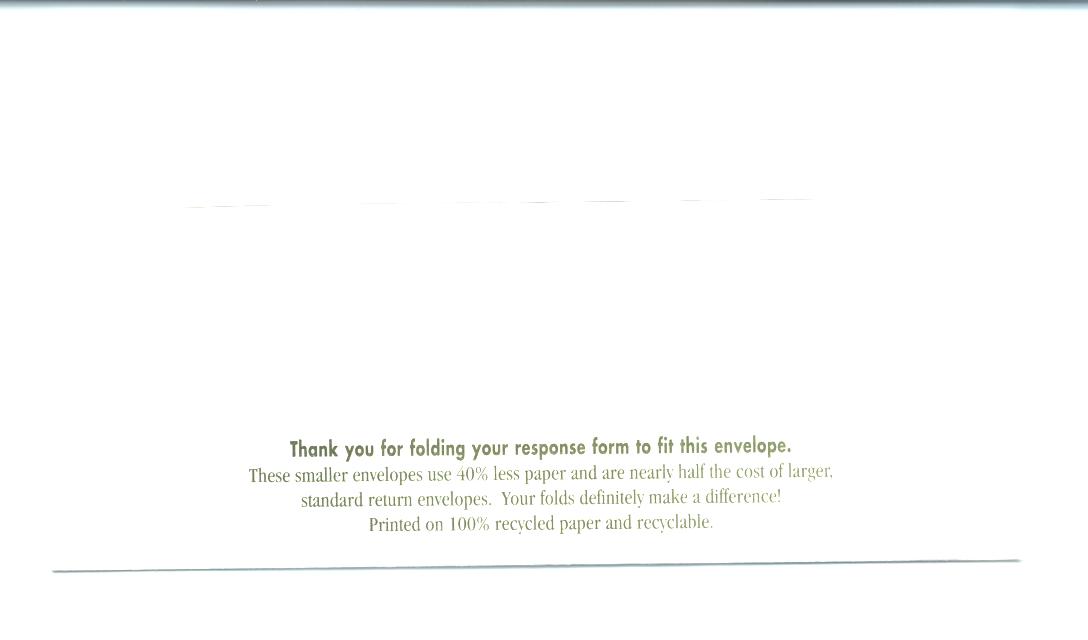
The Colorado Environmental Coalition has a nifty idea for saving paper. Their 2005 membership renewal envelope stated that they'd like you to fold your application to fit into an envelope that's designed to be 40% smaller to save on paper. Click Here to see a scan of their little envelope's printed message.
In December 2010 Xcel Energy/Public Service Company of Colorado started using billing envelopes made out of natural brown, 100% post-consumer waste. |
Summary:
Montezuma, ColoradoIt's imperative that we reduce, reuse and recycle for not only the planet's health, but also for our own well-being. And, although these concepts may sound "radical" to some, they've actually been around a very long time. As any survivor of the Great Depression can tell you, it would have been unthinkable to waste anything during those trying economic times. And, the same holds true for people living in difficult circumstances around the globe today - wasting anything is simply unthinkable. So, our time has come as well - by acting consciously we can reduce our own consumptive ways thus lessoning our impact on an already overburdened planet. It's the least we can do!
|
Eco-Cycle Building a Zero Waste community in Boulder, Colorado! |
|

|
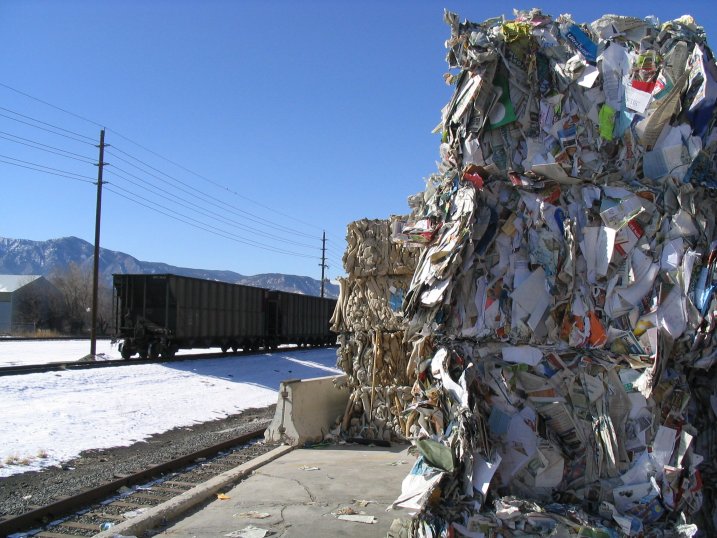
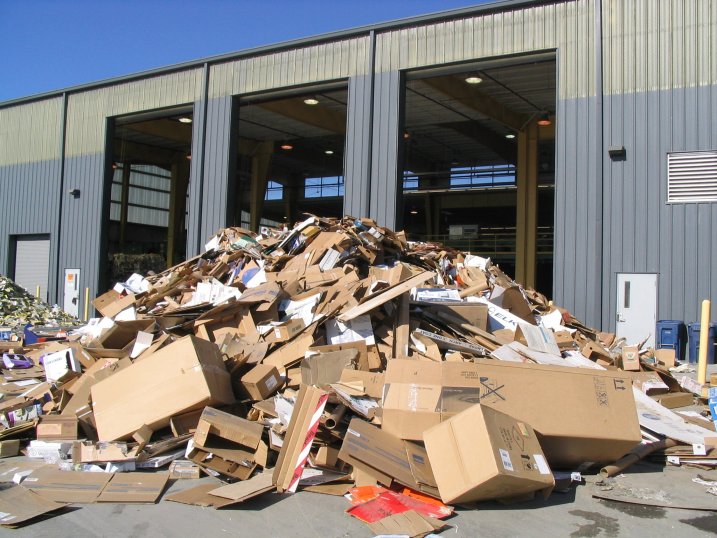
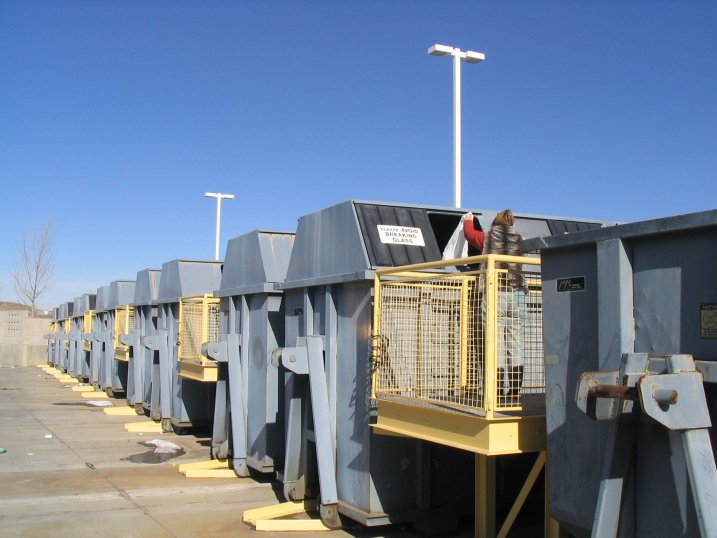
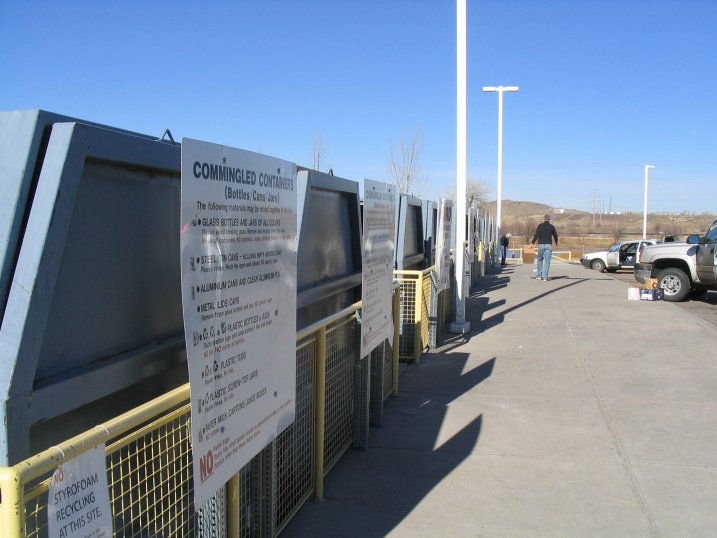
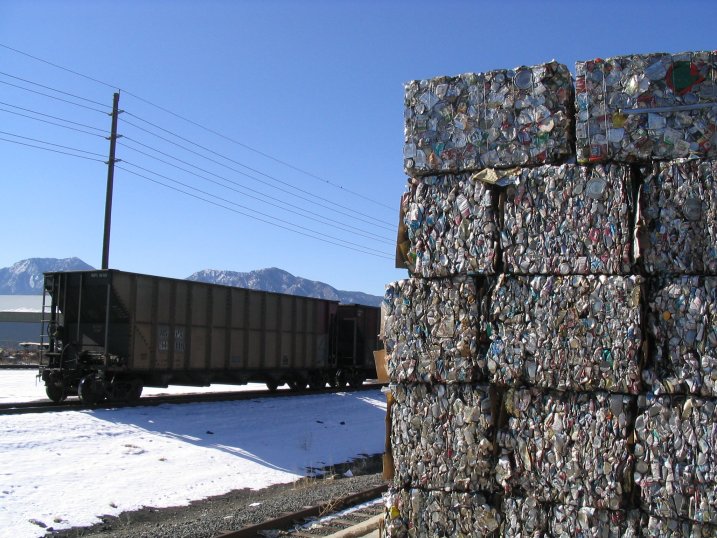
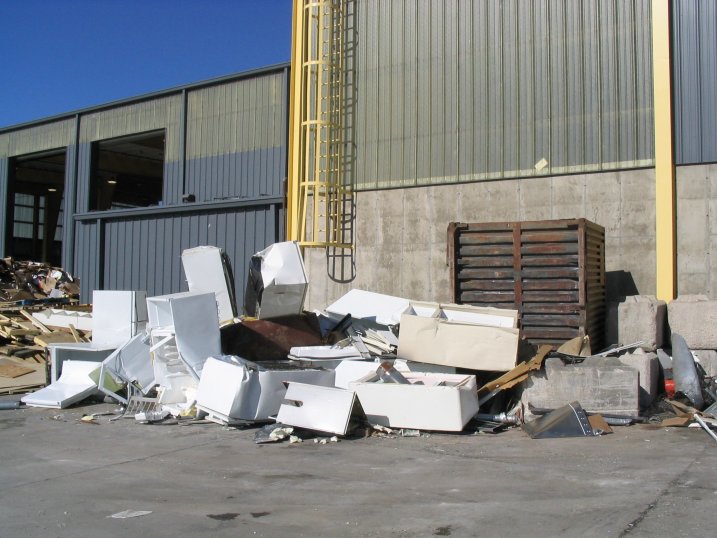
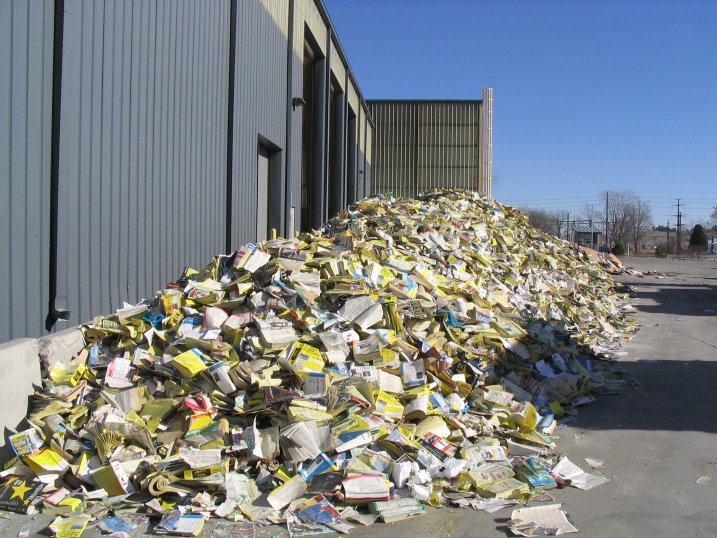
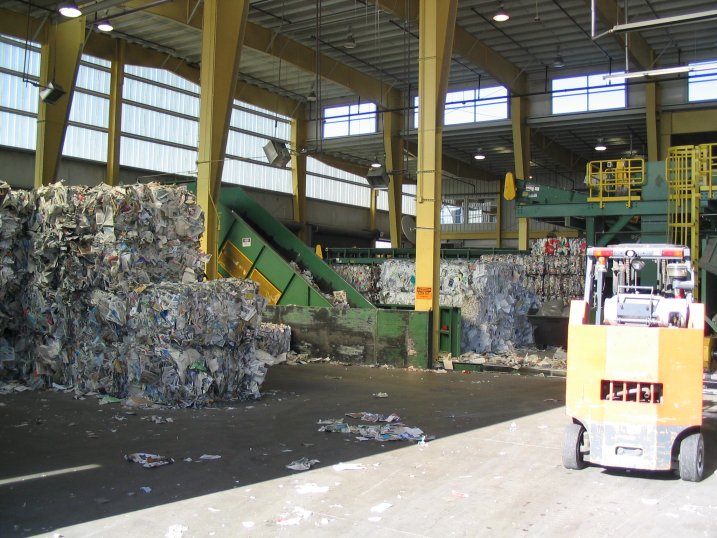
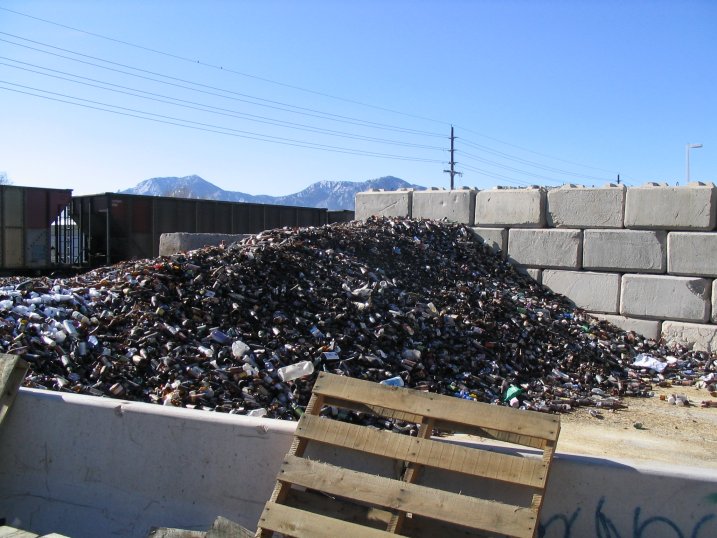
Okay, I'll have to admit that I love Eco-Cycle! Even though our trash-removal company does some recycling I've been taking our family's recycling, on a weekly basis, to Eco-Cycle since 1994. Why? First because they recycle not only 1s, 2s, and 5s but they take all kinds of metal, paper, and glass products. Plus, you can see that they really do make good use of these materials - unlike some companies who have been known to throw large quantities of recyclables into regular trash when market conditions aren't favorable. And, finally, they way they've configured their drop-off center is almost too convenient to believe - it really is very handy!!
Anyway, it didn't hit me until January '06 to actually take some photos of Eco-Cycle while there during my weekly visit. Although Eco-Cycle may not find some of these photos very flattering I can assure you their operation is well organized and efficient - I just happened to catch them as they we're preparing huge piles of recycling for train transport. Too bad more communities haven't attempted what Boulder and Eco-Cycle have accomplished - the world would be a much, much better place! |
|
|
|
|
|

|
|
|
|
|
|
|
I've always loved Boulder County as well, click Here for my Boulder page! |
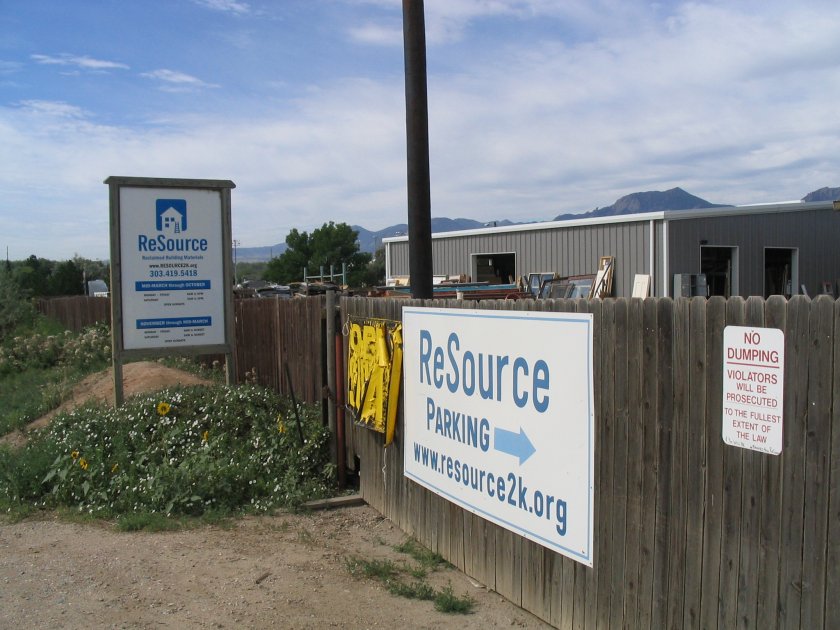
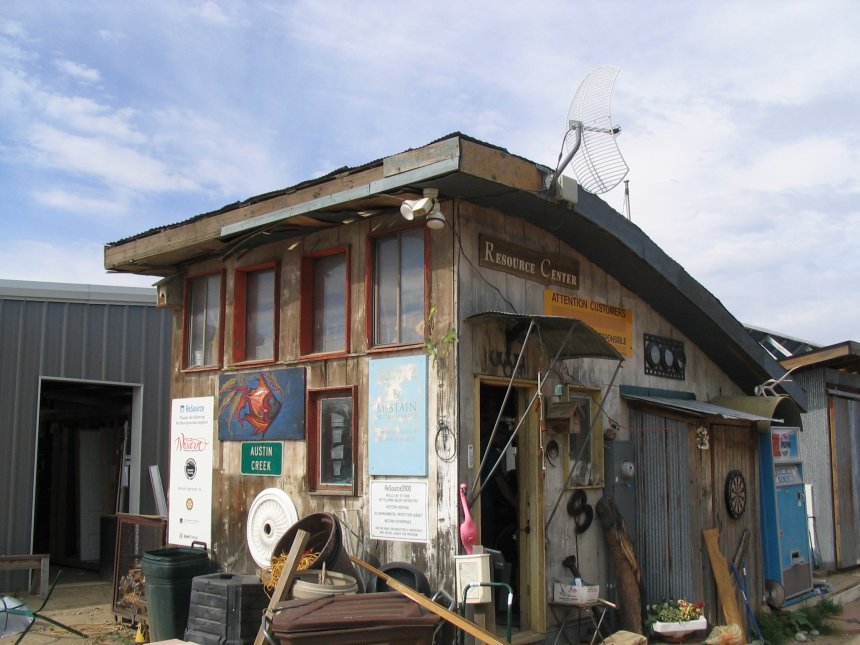
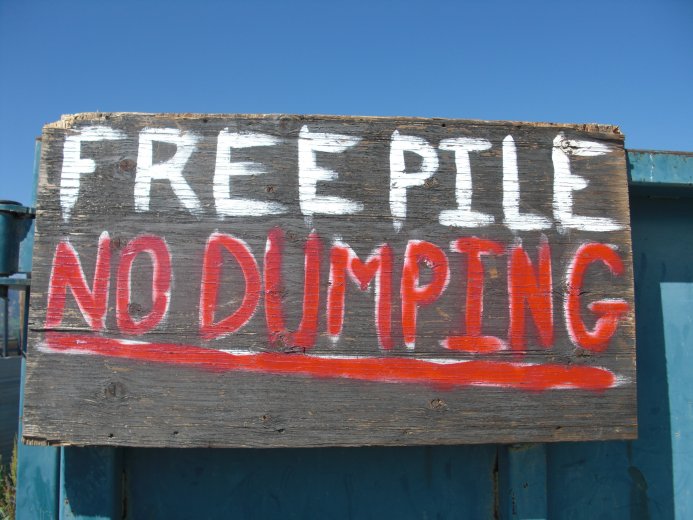
ReSource
Boulder's source for used building Materials!
(This was their old location at 2665 North 63rd Street)
|
|
|
 Donation Receipt |
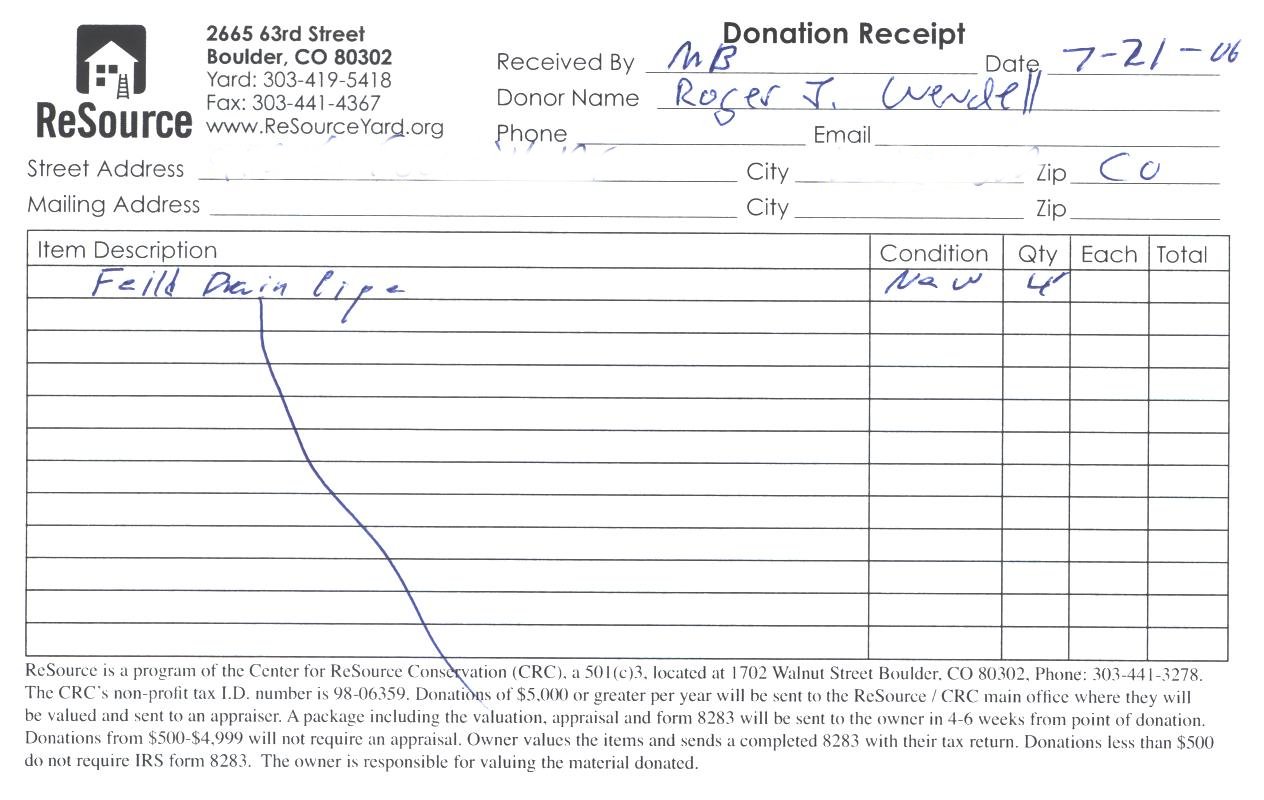
What a great idea! Simply drop stuff off for a tax receipt, or, stop by to purchase used (but good condition) building materials at a great price! Every city needs and operation like this - it makes perfect sense!
Their website is: http://www.ResourceYard.org |

|
Click Here for my YouTube video of ReSource! |
Composting in my backyard:
Recycling by Nature!
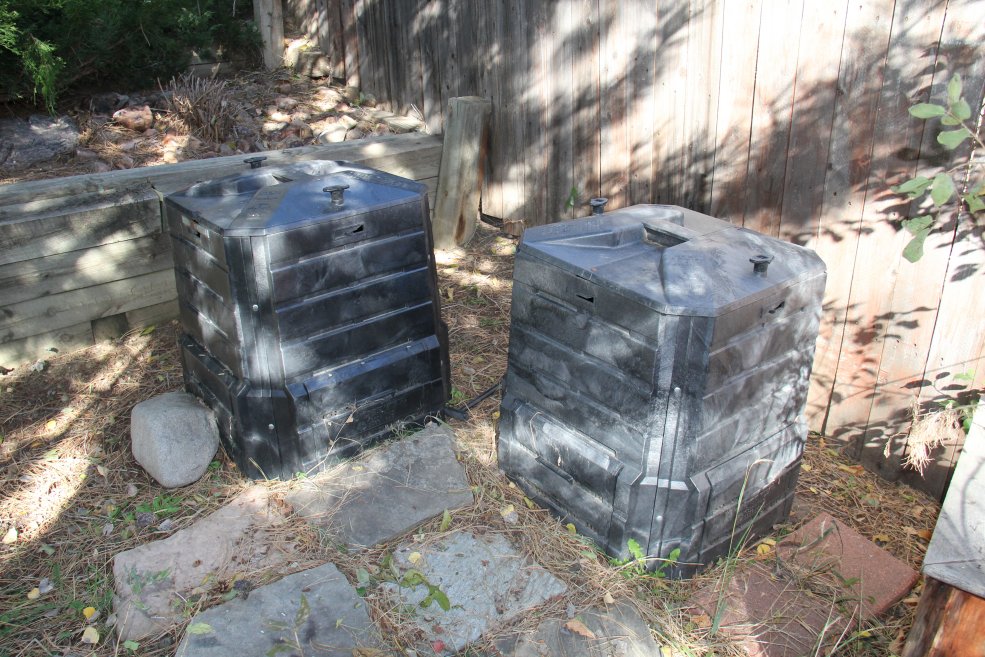
Tami and I have been composting for many years - saving nearly every table scrap or yard clipping for our composting bins. Nathalie Vasilou, in an article titled Brown Gold [The Journal of Health & Healing - Volume 27, Number 1, 2006] defines composting as, "The process of transforming organic wastes into nutrient-rich humus through controlled decomposition."That's a pretty fancy description for what takes place in Nature all around us - things die and decompose back into the soil. Vasilou also said, "Building good soil is a goal of most gardeners. And one of the best ways to do this is with compost. This brown treasure can be an especially valuable fertilizer; it costs basically nothing to produce, increases organic matter in the soil (thus increasing water retention and soil aeration), and provides a pantry of nutrients for the plants grown. In fact, if made from a wide variety of materials, compost often will contain trace elements not found in commercial fertilizers!"
In our backyard there's a "ton" of wildlife that we're glad is around. However, some creature was pretty serious about trying to chew through our plastic recycling bins (each is made out of recycled plastic) so I added a metal strap to the configuration (photo at far right). Other than that there have been no problems with our current composting configuration!
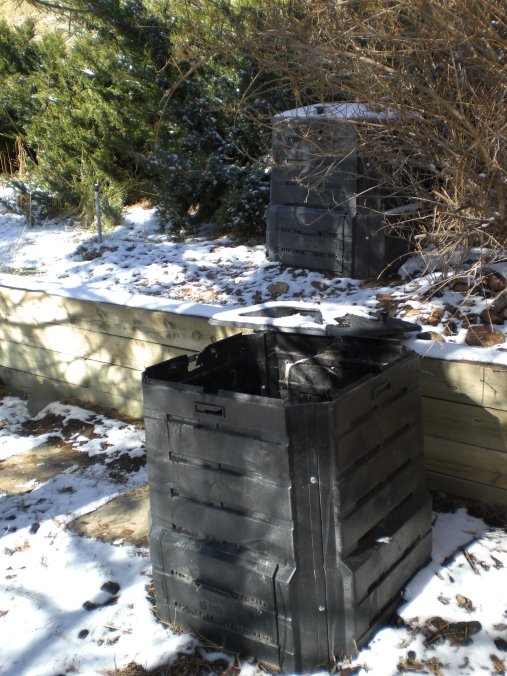 Our 2 composting bins |
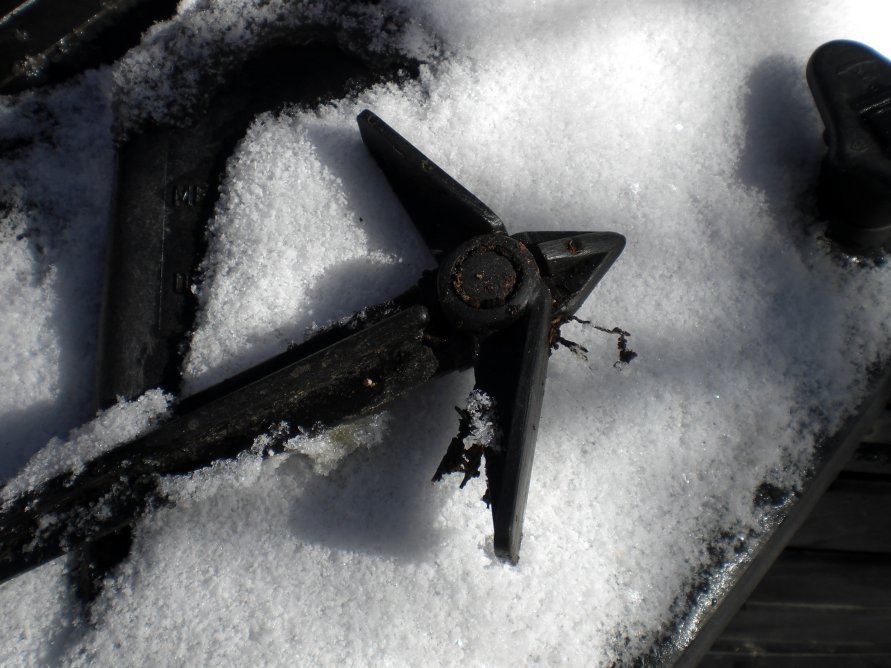 Stirring tool |
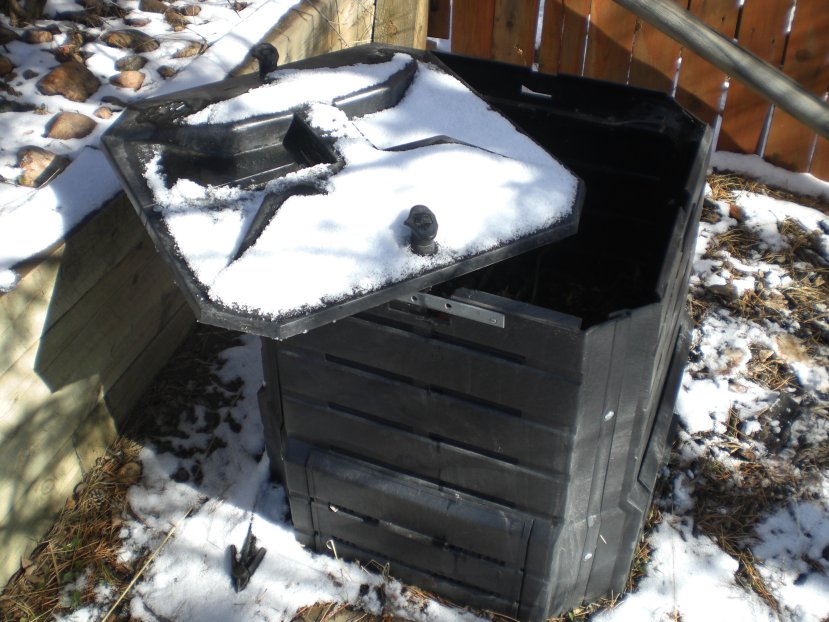 Snow on our bin... |
 Looking in... |
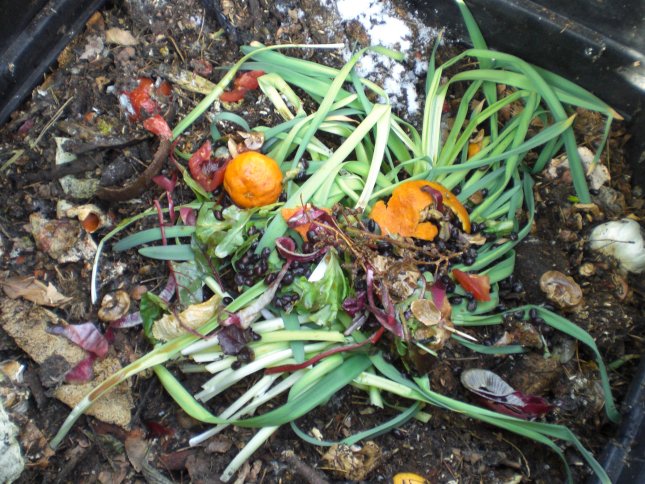 Inside our bin |
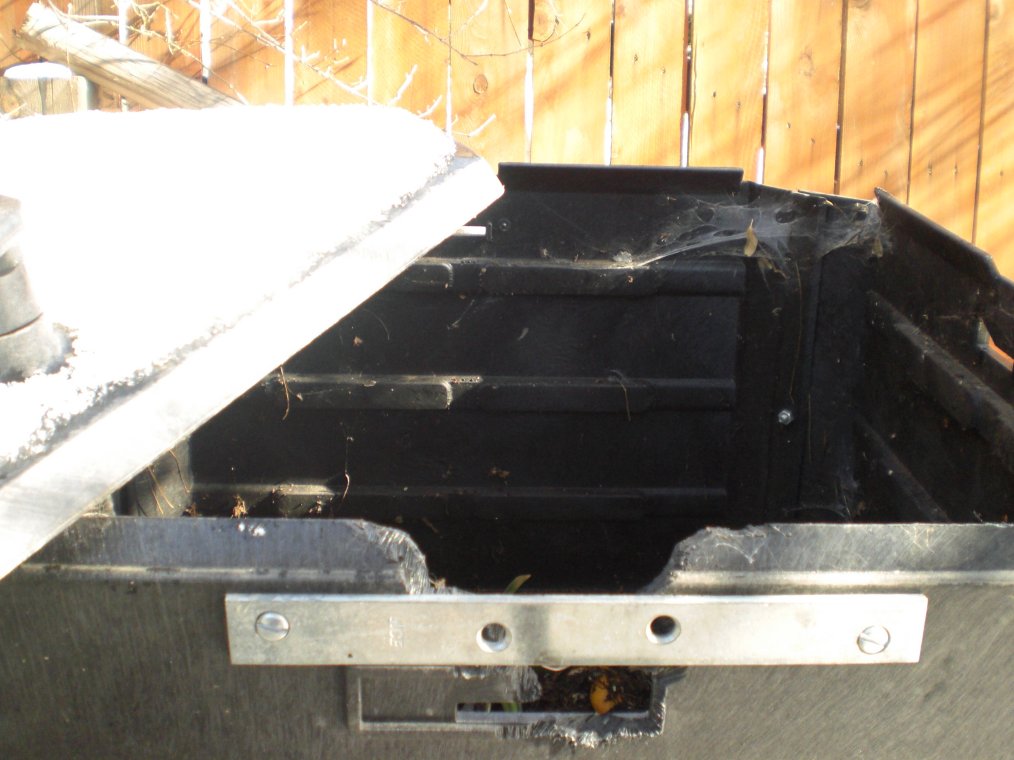 Metal guard against animals |
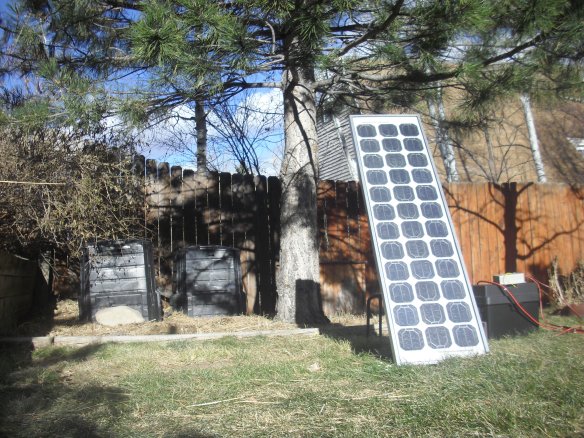 Bins with Solar Panel* |
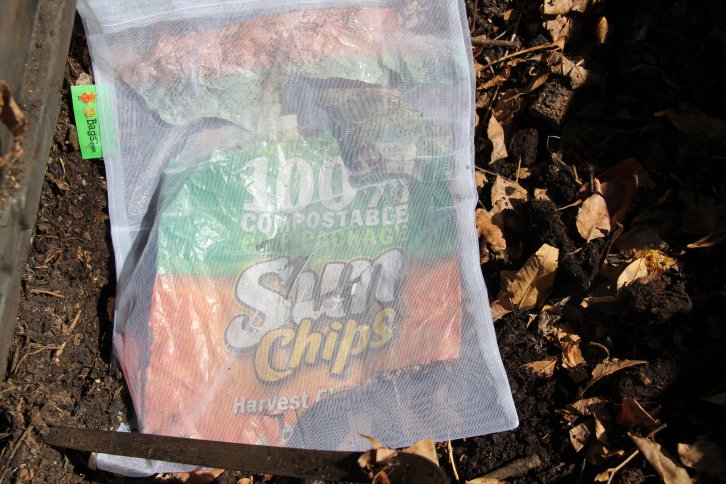
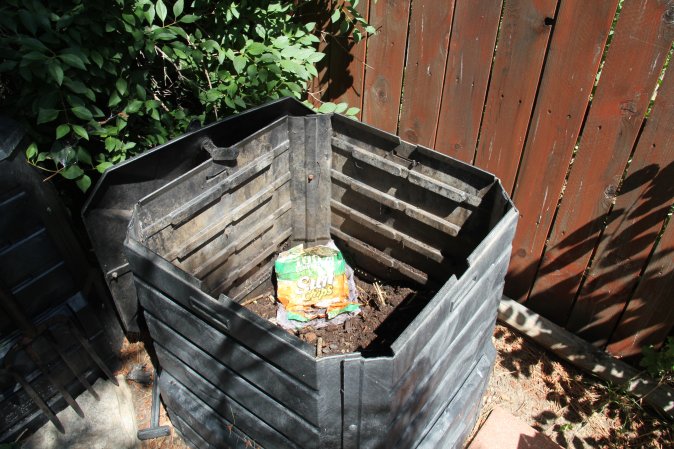
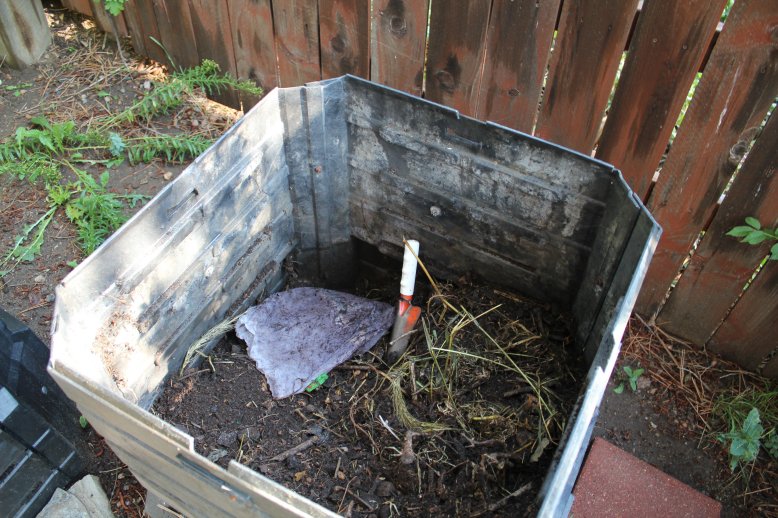
My Unscientific Compostable Packaging Experiment!
2010
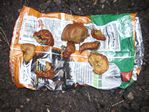
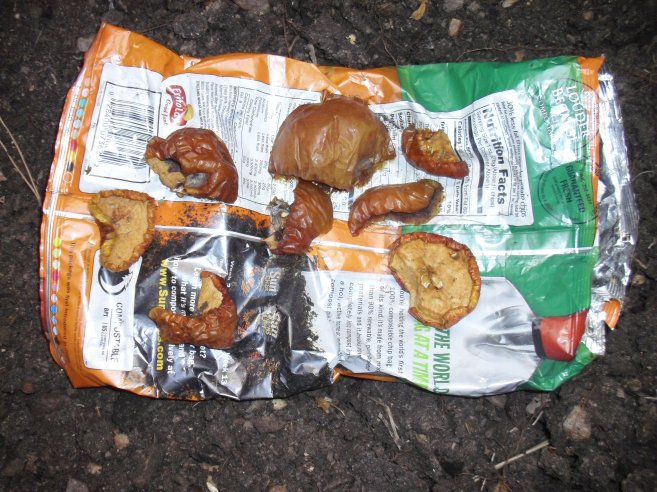
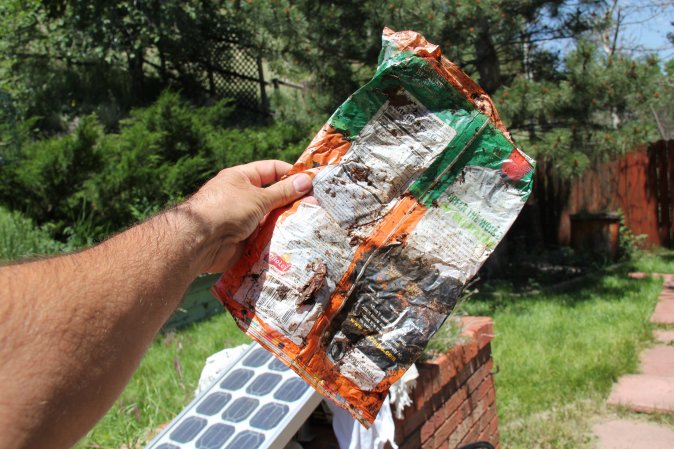
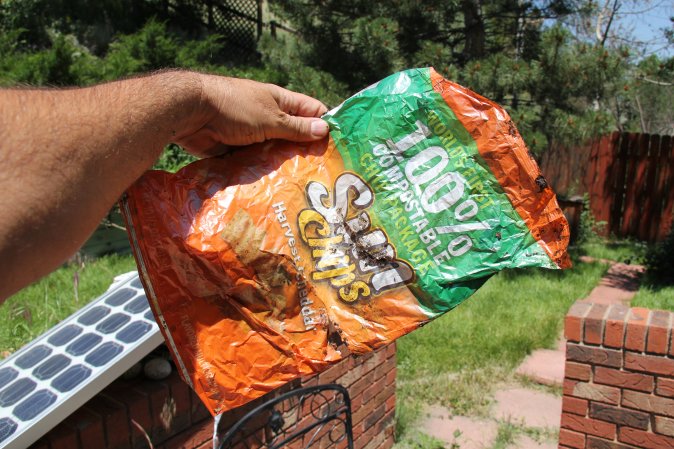
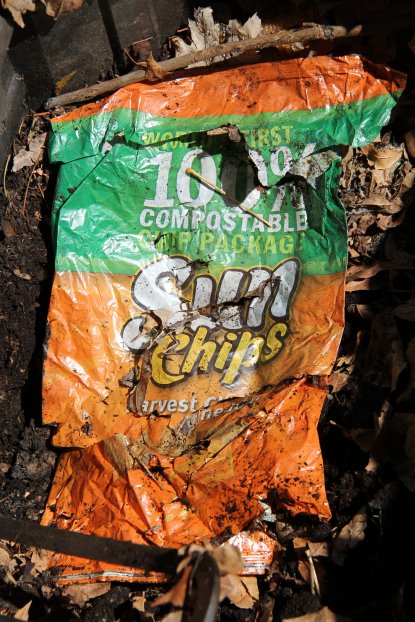
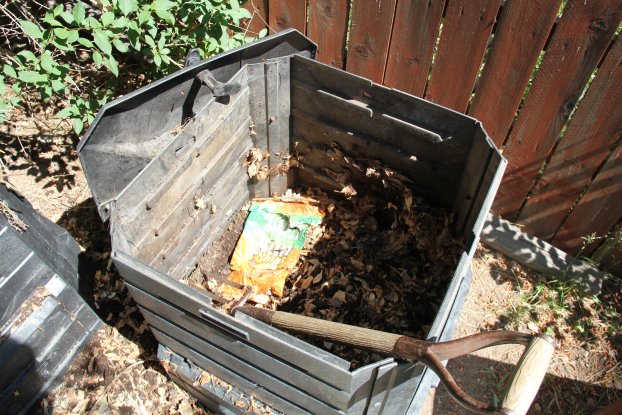
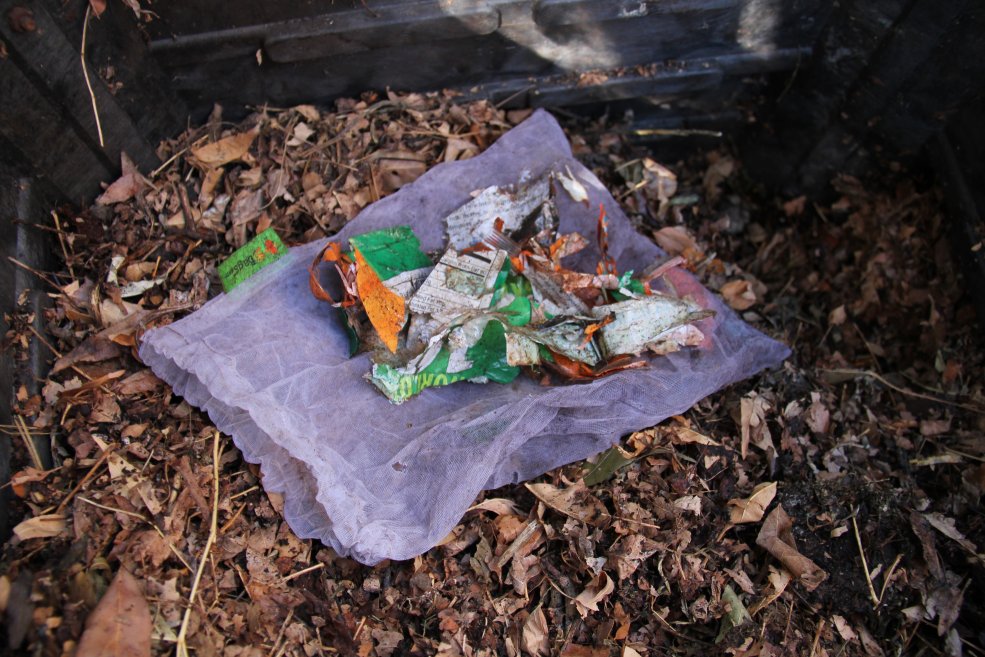
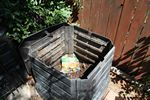
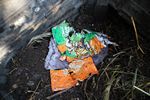
I commend SunChips®, by Frito Lay, for their compostable packaging! Although there still appear to be some consumer/technological bugs to work out, as of late 2010, the bags seemed like a fantastic idea! Amber thought it would be fun/interesting to see how well these bags decompose in our backyard compost bin. On October 30th (2010), I took some food scraps (mostly bits of old apple) and placed them inside, beneath, and on top of a SunChips bag at the bottom of one of my empty compost bins. I then loaded the entire bin completely full of fall leaves and will come back in the spring to see how much of the bag has decomposed. Unfortunately decomposition in the dry, thin, cold air of Colorado can be slow and difficult so I won't hold it against SunChips if the process takes a while - it usually takes almost a year just for the fall leaves to decompose!
2011
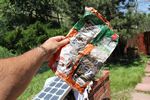
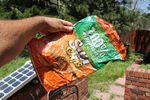
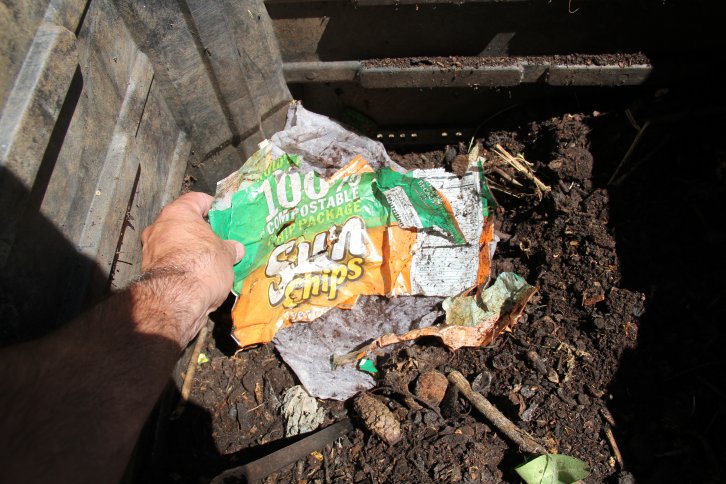
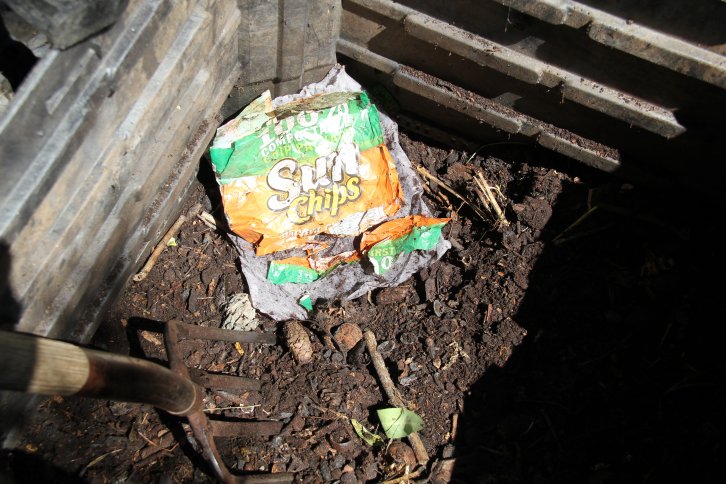
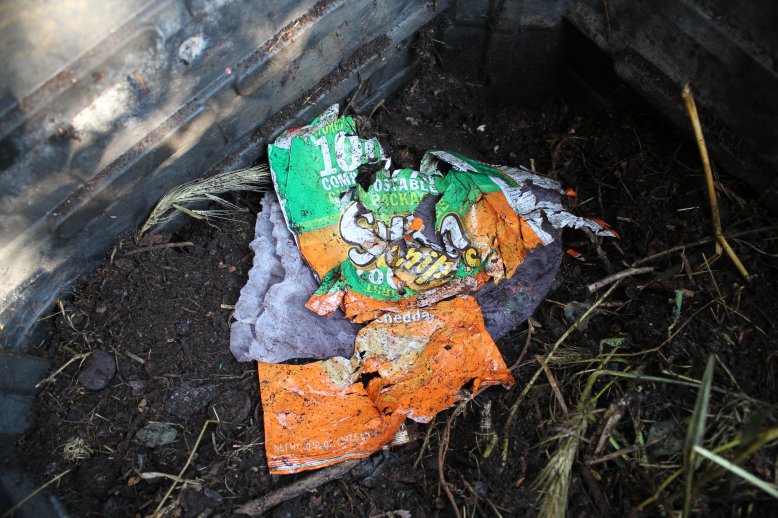
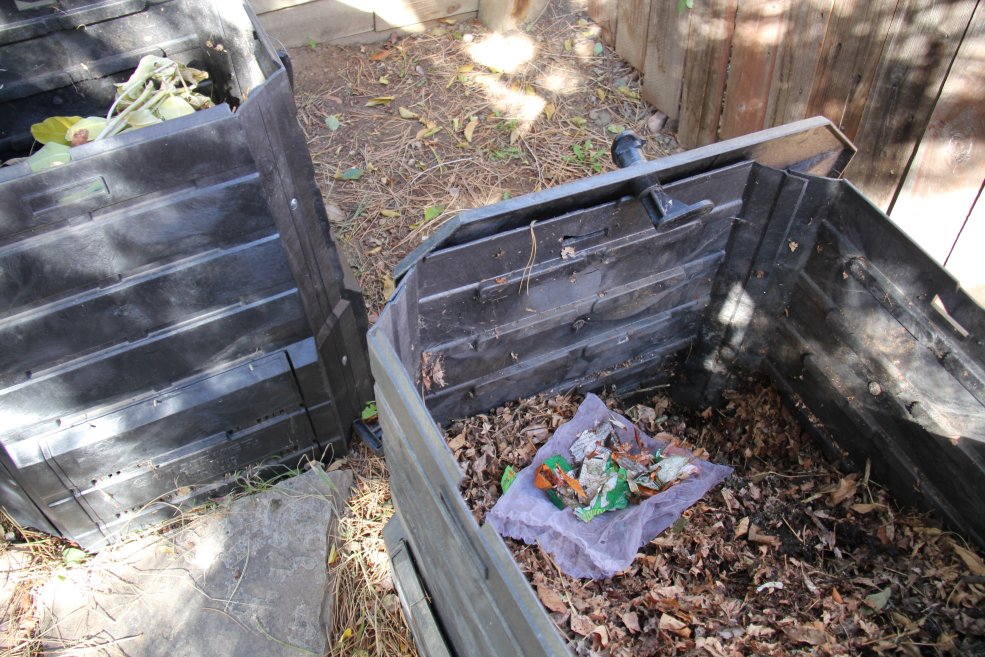
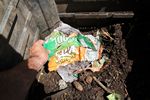
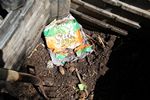
These two pictures were taken on June 27th (2011), a full 240 days after starting the experiment in the fall of 2010. Unfortunately the results are pretty much as I predicted back then - Colorado's cold, dry climate increases the time it takes to compost anything - despite my weekly stirring of the material and an occasional sprinkling of water to elevate moisture levels. As you can see from both photos, the chip bag is pretty much intact with little evidence of decomposition other than the material feels a bit more fragile and is certainly easier to rip or tear. Because of the more fragile feeling (or the bag's material) I'm confident it will eventually decompose. Therefore, I've placed the bag at the bottom of the compost bin and will try examining it again sometime in 2012. Hopefully it will have completely decomposed by then and I won't be able to find it - we'll see!
2012

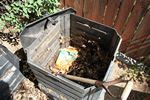

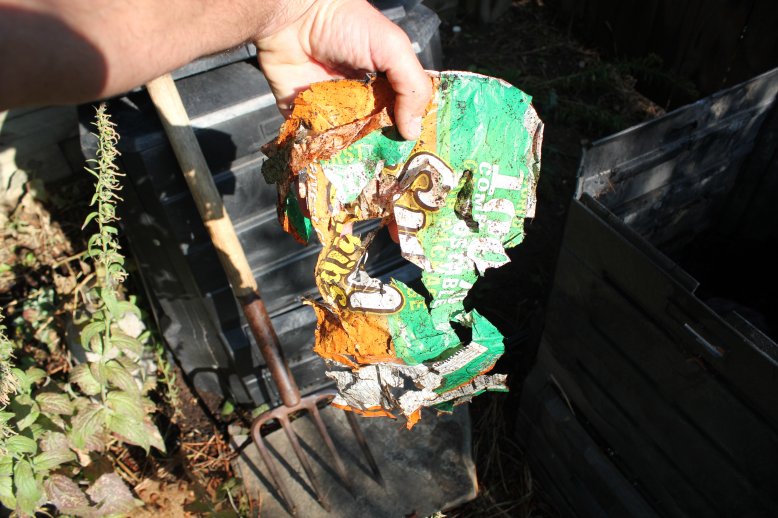
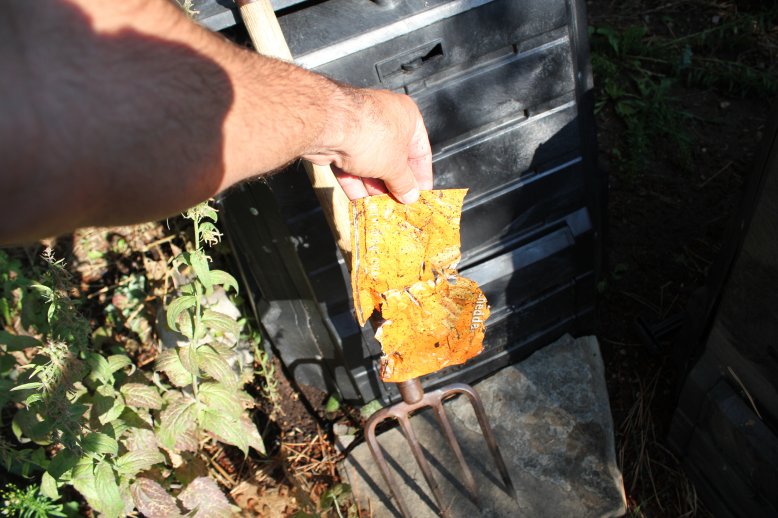
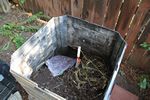
These three pictures were taken on June 11th (2012), a full 590 days after starting the experiment in the fall of 2010. Unfortunately the results are pretty much as I predicted back then - Colorado's cold, dry climate increases the time it takes to compost anything - despite my weekly stirring of the material and an occasional sprinkling of water to elevate moisture levels. As you can see from both photos, the chip bag is pretty much intact with little evidence of decomposition other than the material feels fragile and is easily ripped and torn by my hands and pitchfork while digging it up. The picture furtherest right is where I decided to place the experiment in a mesh bag so it things don't get torn up so much when I dig for it again next year. I suspect the mesh bag will slightly alter the experiment but not by any appreciable amount.
|
|
Click Here for my YouTube video of this composting experiment in June 2012... |
2013

These four pictures were taken on July 21st, 2013 - a full 995 days after starting the experiment in the fall of 2010. Still not a lot of decomposition but, like I suggested a few years ago, Colorado's cold, dry climate isn't conducive to composting. I'll try to follow-up with this next year, and the years after, until either the bag or I am completely gone!
|
|
Click Here for my YouTube video of this composting experiment in July 2013... |
2014
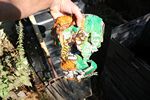
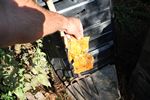
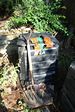
These five pictures were taken on August 10, 2014 - a full 1,380 days after starting the experiment in the fall of 2010. Maybe about a third decomposed at this point? Not a whole lot of difference from last year but the bag is definitely deteriorating, albeit slowly...
|
|
Click Here for my YouTube video of this composting experiment in August 2014... |
2017
7 Years Later...
Goat leaf composting!
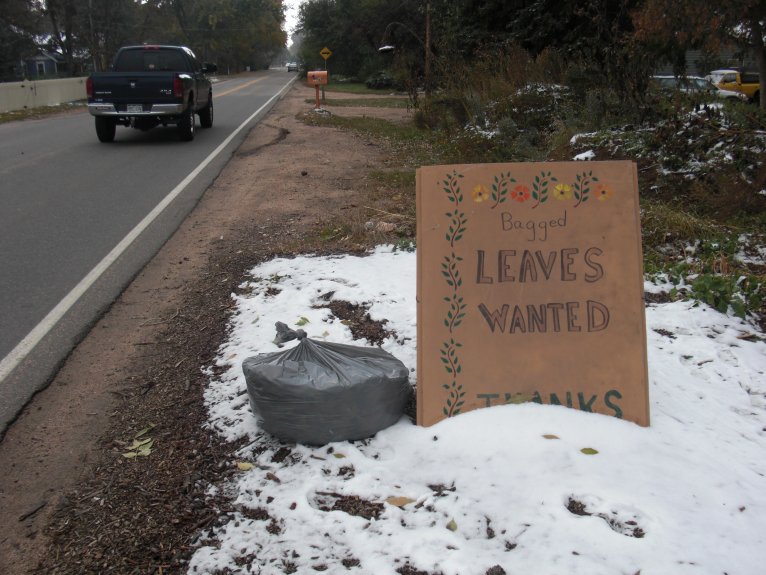
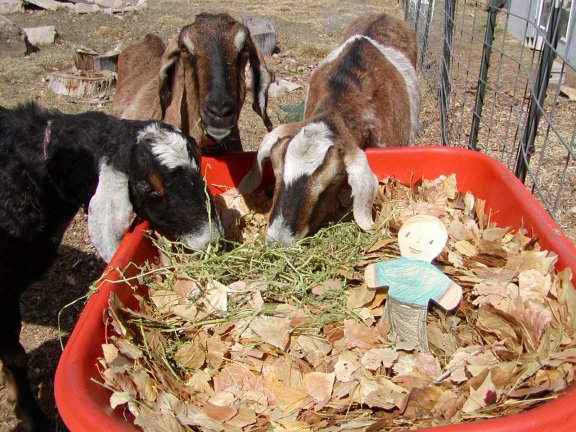
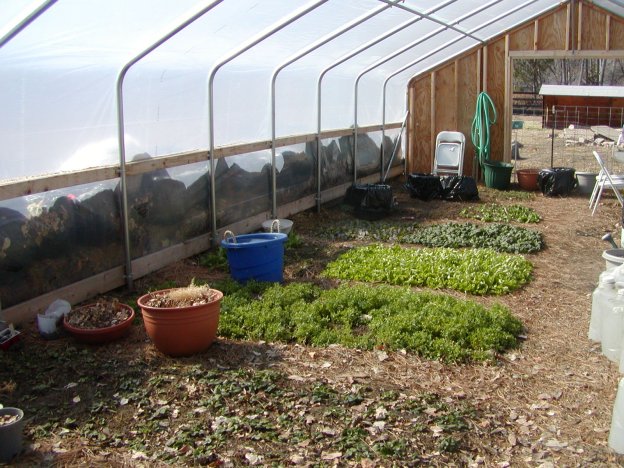
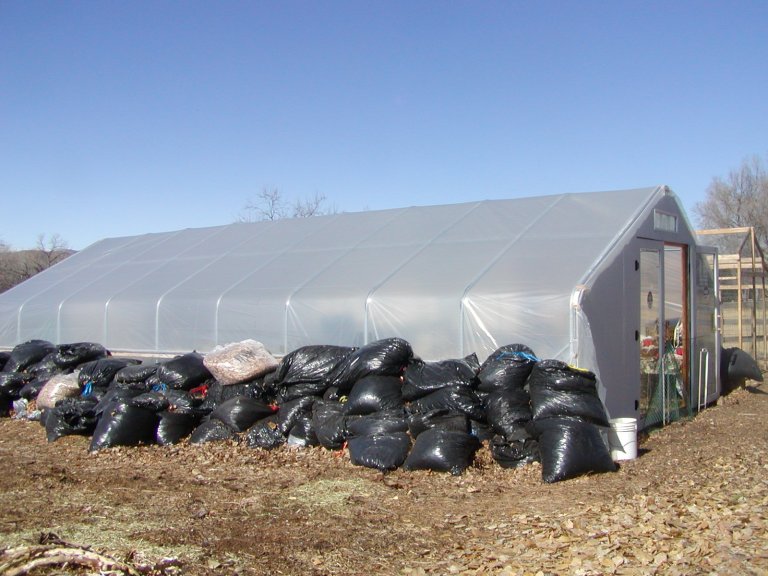
Every year, in southeast Boulder, this family puts out a sign inviting folks to drop off bagged leaves from the fall foilage - most of it destined to feed their goats! Since my yard's own leaves easily dwarf my own composting system I always make a point of dropping off a bag or two at this house on Cherryvale Road whenever I'm driving through for other reasons (I don't make special road trips, if I can help it...). As you can see from this photo I was the first one along in 2009. At the bottom of my Boulder page I have a picture of this same location, in earlier years, when the pile of leaf bags was neck high!Much to my surprise, and delight, the owner of this leaf composting system stumbled upon my page a few years after I had posted the first photo. The email she sent me, explaining it all, is just below these pix:
|
|
|
|
|
|
|
Click Here for my YouTube video of this goat leaf recycling a year later! |
Barbara Jane Miller
January 2010
Hi Roger,Just came across your blog and realized that our Cherryvale leaf collection operation is on it - wow, we're famous! I'm attaching some photos of the leaves in action, but you're always welcome to come visit. It's more interesting in the growing season, of course. Joanne Cole from KGNU comes sometimes to pick veggies and she can tell you about it too. So glad you enjoy bringing the leaves to us for we sure enjoy using them.
This season, I personally have used over 1600 bags of leaves (I do keep a count) and then my neighbor to the south, Matt Wintersquash, used 500 or so more. After that, we let our gardener friends take what they wanted - probably at least another 300 bags total. We try to clear the street area constantly, but sometimes it gets away from us. The local fire company comes with their fire truck packed with bags and the landscapers drop bags by the dozens.
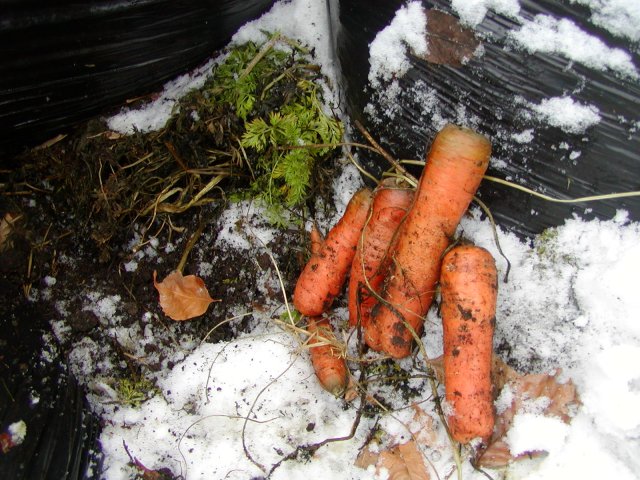
We do indeed feed them to the goats and use them for goat bedding. They are used in the two chicken coops for litter and then when it's dirty, put on the garden (goat bedding goes on the garden eventually too). They are used for insulating tender plants through the winter -- flowers and veggies. Since the ground beneath the bags doesn't freeze solid, we can harvest carrots, beets, turnips, etc. all winter. In summer, the leaves and grass cuttings preserve the ground's moisture and feed the worms that enrich the soil. The goats eat every tasty leaf as if it's a potato chip (although some they don't find tasty, like oak, moldy leaves, etc.). Of course, I compost leaves to make good potting soil, and pile leaf bags to insulate the greenhouse in winter and probably use those leaves in a few ways more that I can't think of now! Eventually, of course, they all end up in the soil.
Regards,
Barbara Miller
City of Norman, Oklahoma
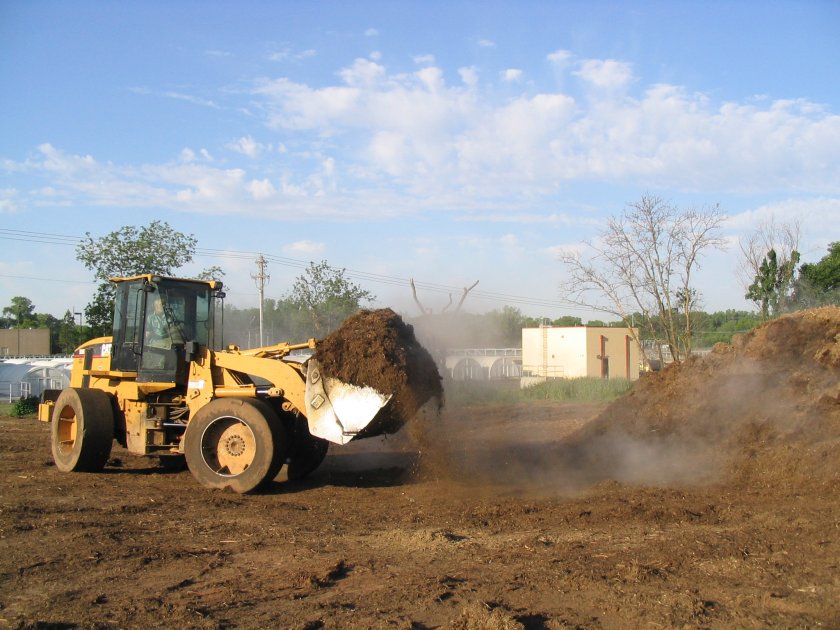
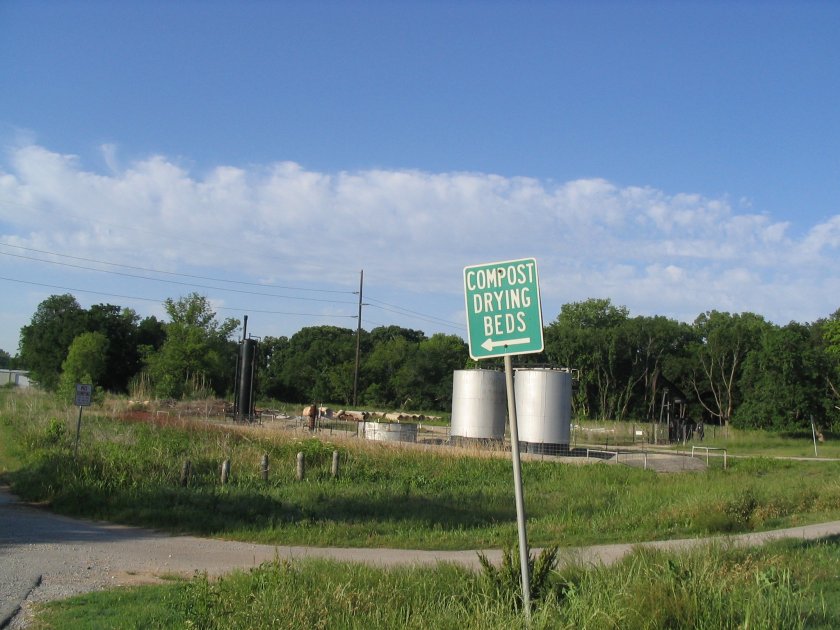
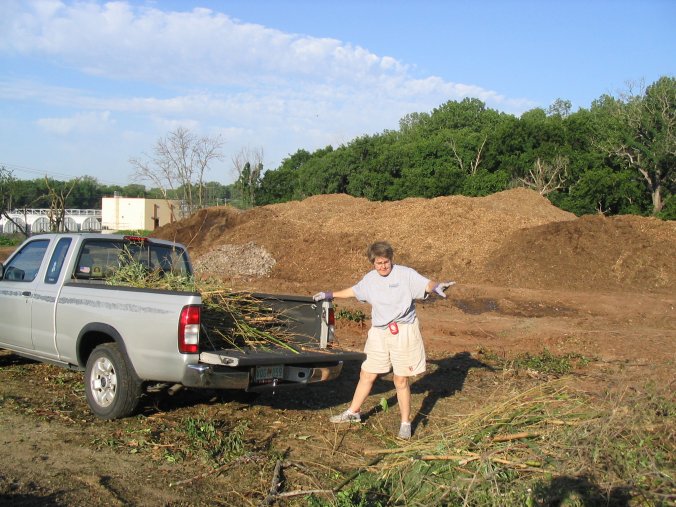
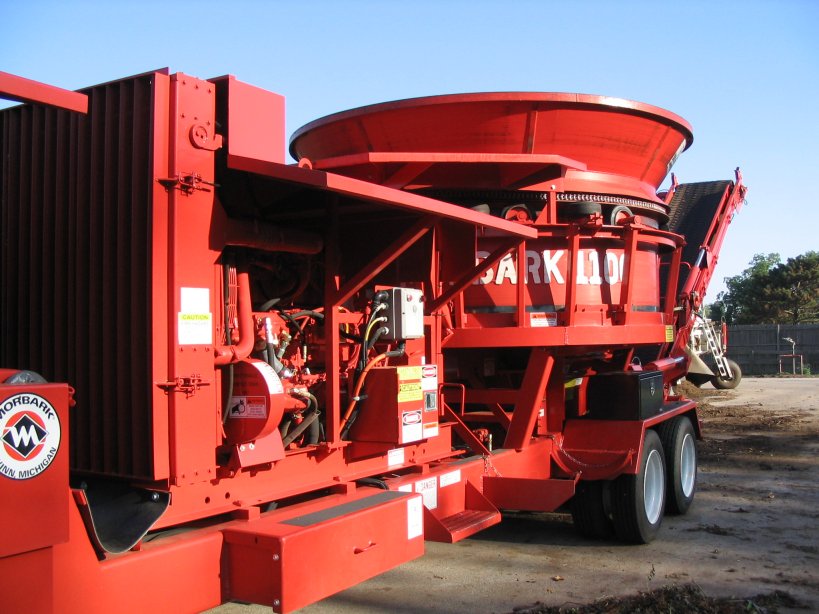
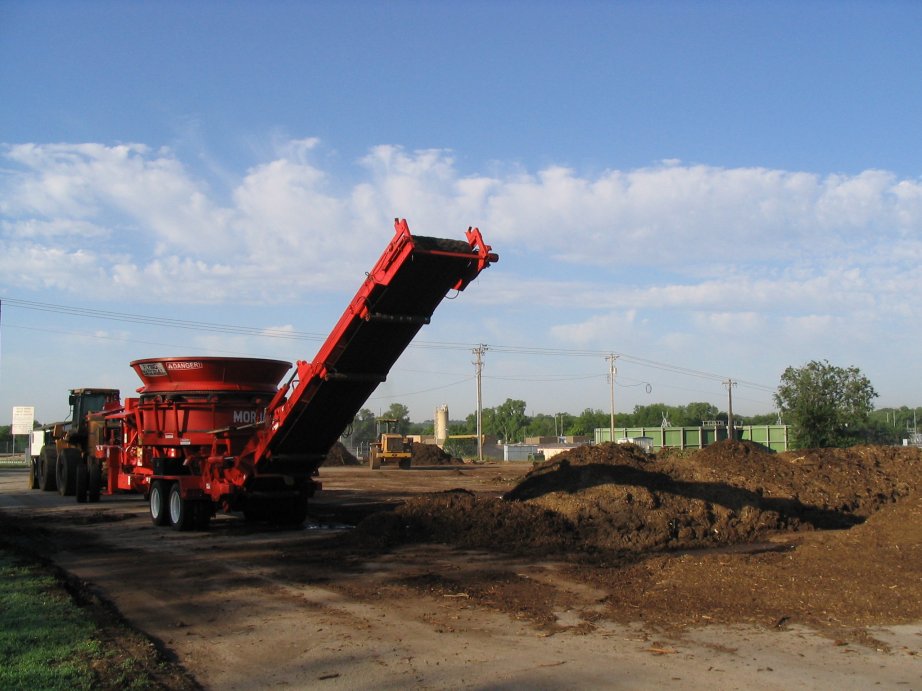
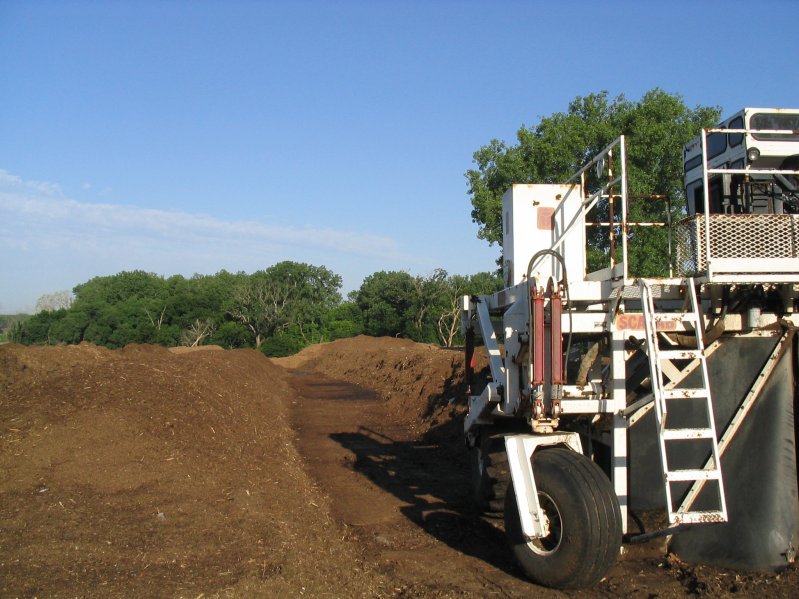
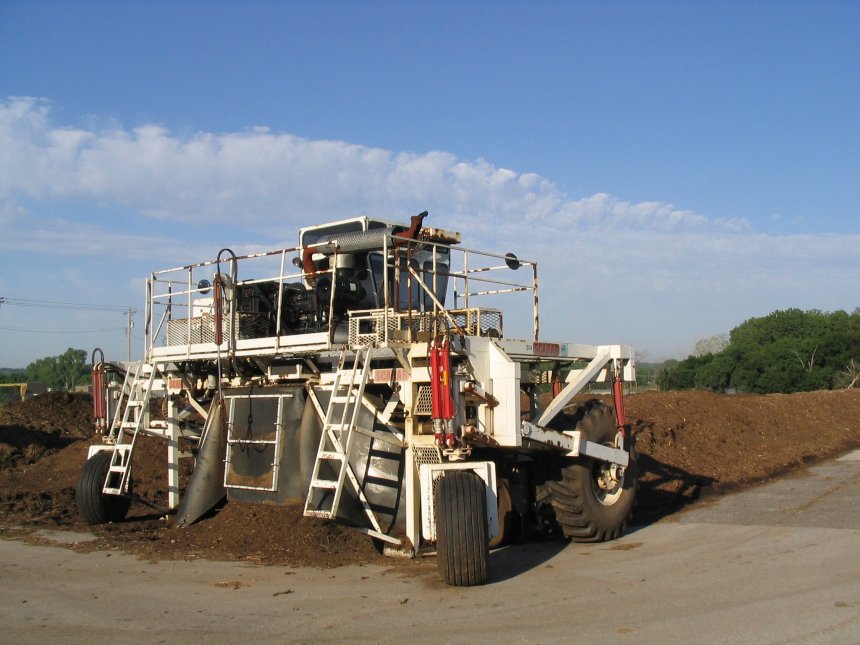
It's obvious that composting is not only good for the soil but it helps reduce landfill requirements and lessens the burden on water treatment facilities when we don't use those nasty sink disposals! Anyway, I love composting and was very pleased to run into a huge public facility that's run by the City of Norman, Oklahoma. Located just off State Highway 9, Norman's facility is large, efficient, and very user friendly. Here are some pictures I took in May, 2006:
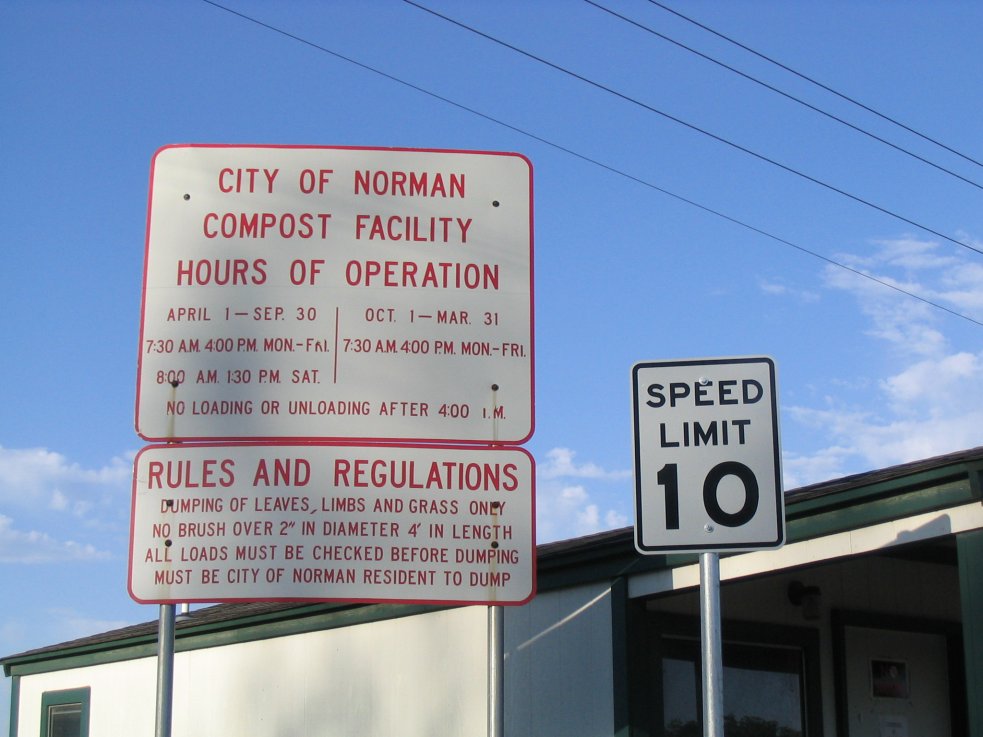
|
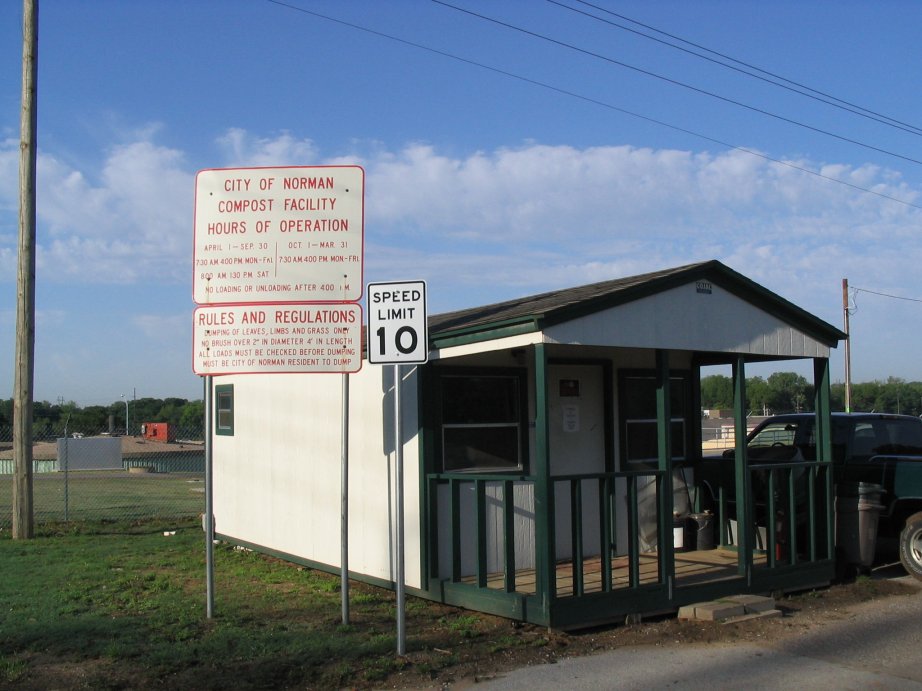
|
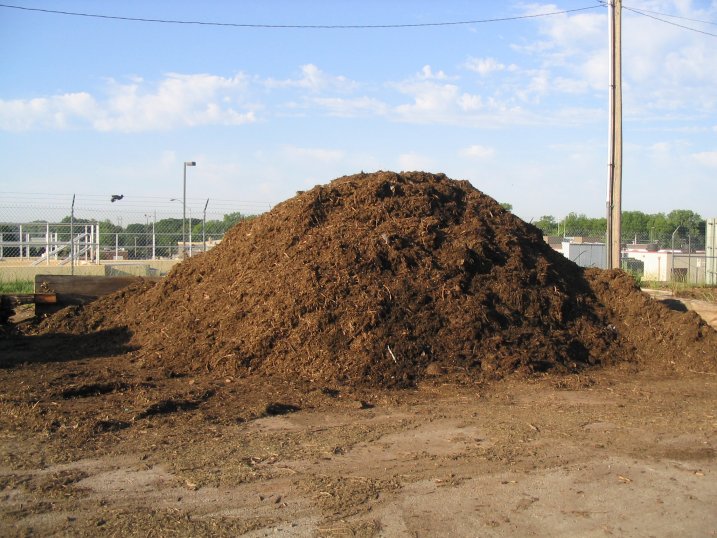
|
|
|
|
|
|
|
|
The lady in the bottom left-hand photo said I could take her picture - I warned her that it would end up my web page! Notice the "steam" rising from the compost being lifted by the tractor's shovel in the upper row? Vasilou said, "If the pile is built well, a metal implement (such as a pipe or crowbar) stuck in its center about one week after building it, may be too hot to hold!"
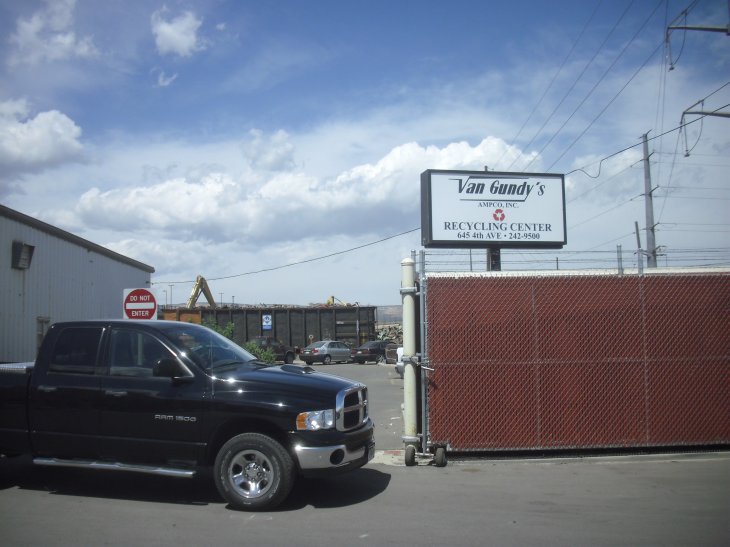
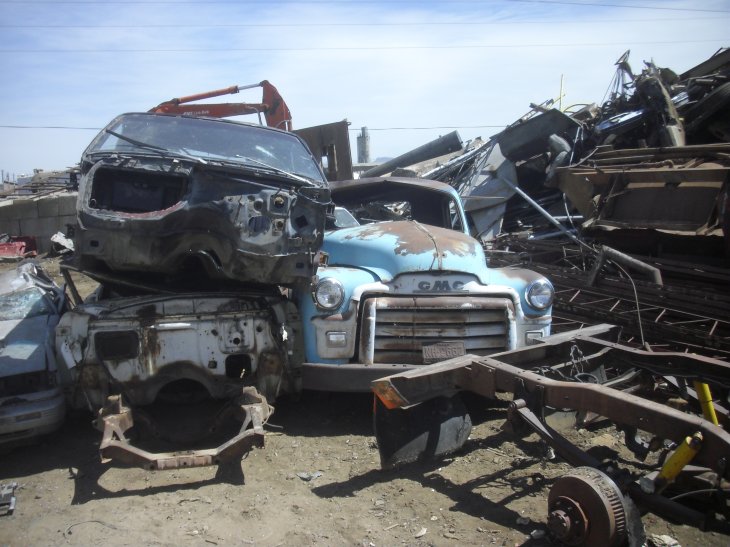
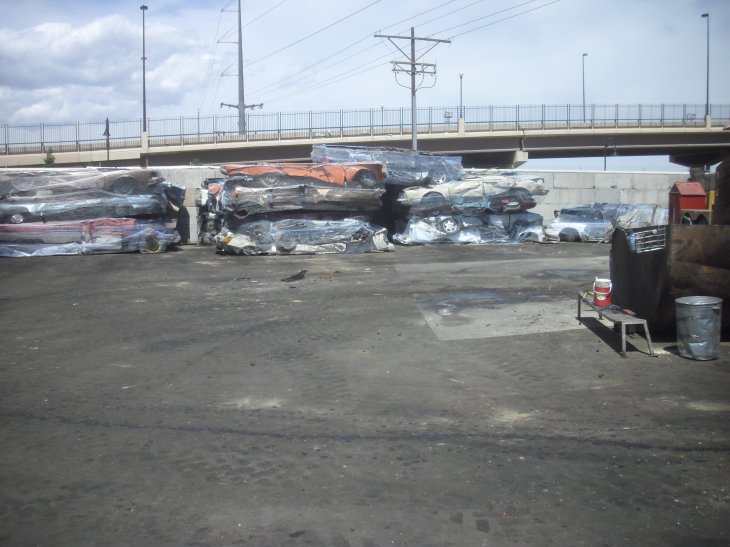
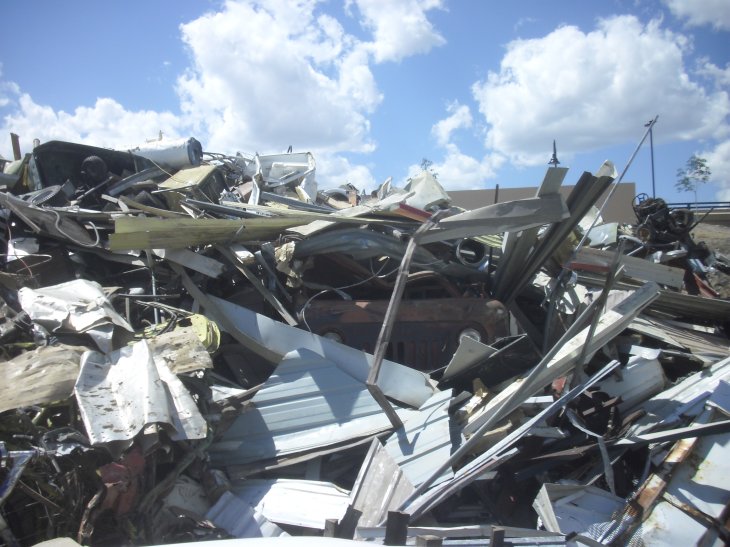
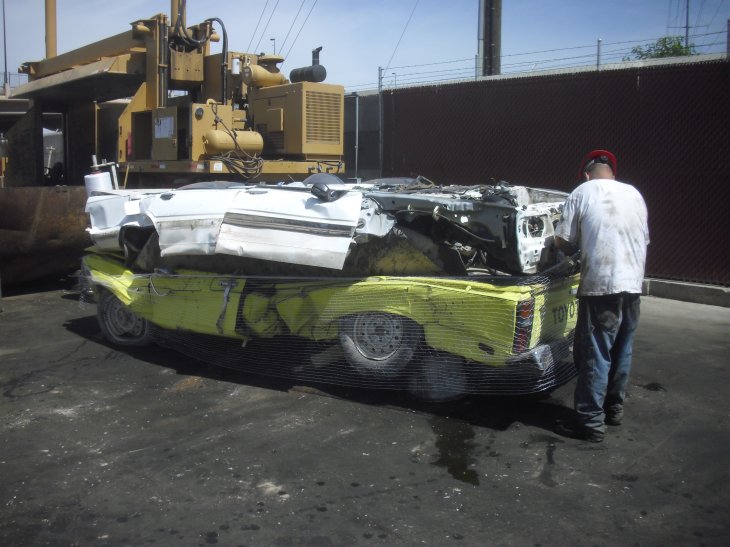
Car Crushing and Metal Recycling at Van Gundy's
in Grand Junction, Colorado (June 11, 2010)
I've always loved "Junkyards" - even in the early 60s before the word "recycling" became fashionable. Van
Gundy's is a serious recycling center with just a touch of that old timey "junkyard" feel I love so much!
I'm in Grand Junction, a lot, so I've had opportunity to stop by Van Gundy's and watch 'em in action - enjoy!
|
|
|

|

|

|
|

|

|
|
|
|
Click Here for my YouTube video of Van Gundy's car crusher in action! |
Ask Mr. Green

Each issue of Sierra Magazine there's a piece by Bob Schildgen called "Ask Mr. Green." In the November/December 2010 edition (p. 10) a reader says his friend refuses to recycle because, "...the amount of energy it requires is enormous and the effect on the planet is negligible." Mr. Green responded: "Tell your friend that recycling does save energy, and lots of it - the equivalent of 10.2 billion gallons of gasoline per year from recycled U.S. municipal waste alone. And we still recycle only about a third of our staggering annual total of 250 million tons of waste, according to the EPA."
"The savings do depend on the material. Recycling aluminum cans, for example, saves a high percentage of energy per pound, yet we Americans recycle only about half or our cans.
"If your pal claims that recycling has its roots in tree hugger hysteria, point out that U.S. aluminum companies import more than 7 billion used cans per year - 90,000 tons - to reduce their energy expenses and other costs."Even if recycling didn't spare a crumb of coal or a drop of oil, its effect on the planet is far from 'negligible.' It averts some of the collateral damage from our material excess. A ton of recycled steel prevents 2,500 pounds of iron ore, 1,400 pounds of coal, and 120 pounds of limestone from getting gouged out of the earth, says the Steel Recycling Institute.
"Recycling also slows the spread of dumps, keeps plastic out of the food chain, and prevents hundreds of millions of gallons of used motor oil from fouling our streams and lakes."
Miscellaneous Recycling Pix from Around the World:
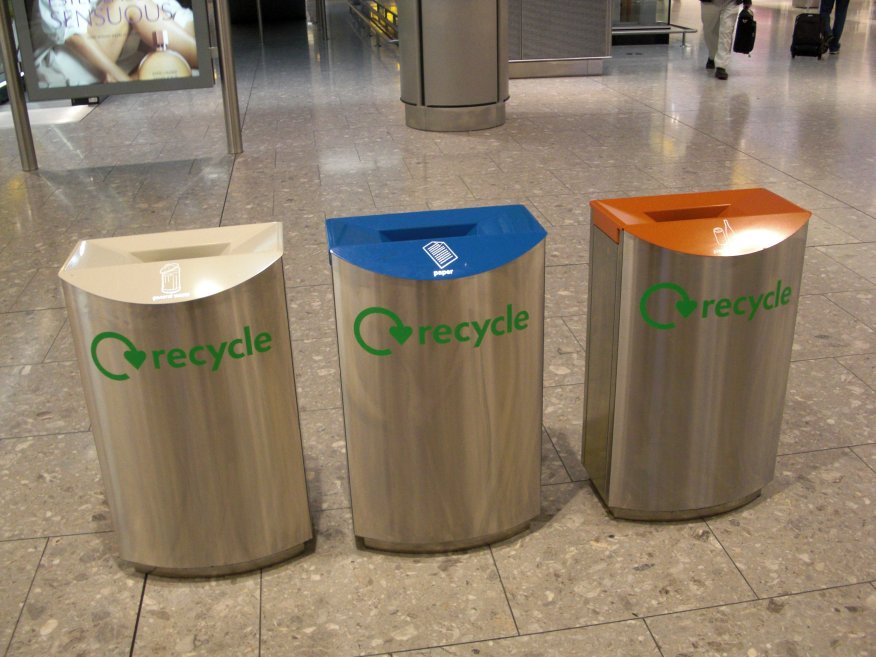
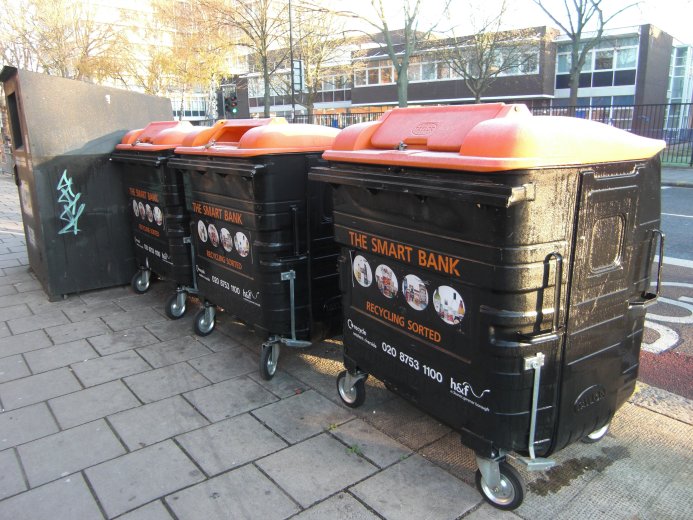
London Heathrow Terminal 5
London Burough of Hammersmith
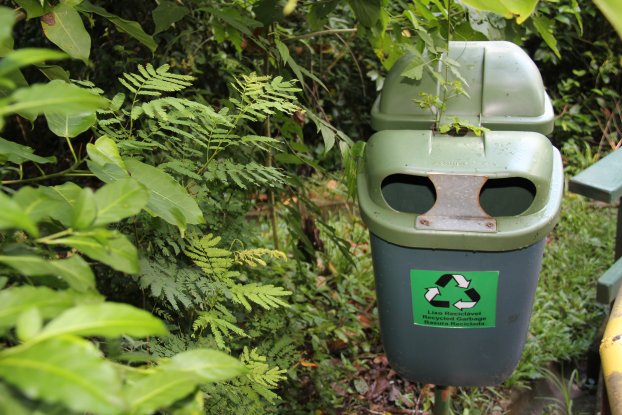
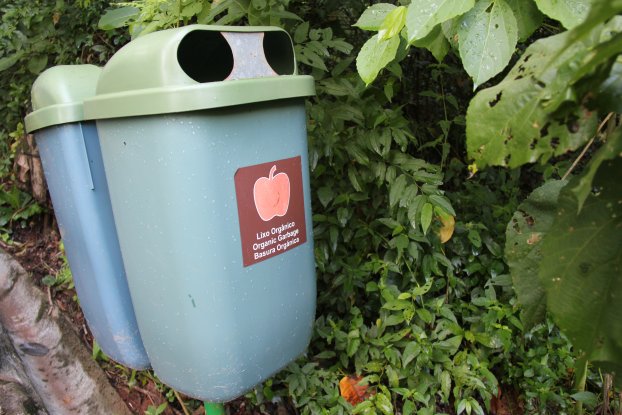
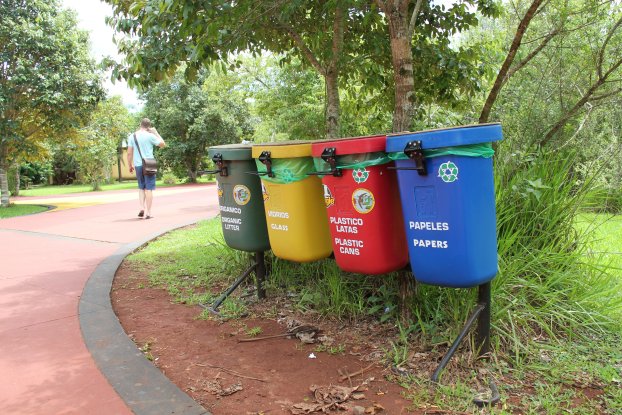
Iguaçu National Park, Brazil
Iguaçu National Park, Brazil
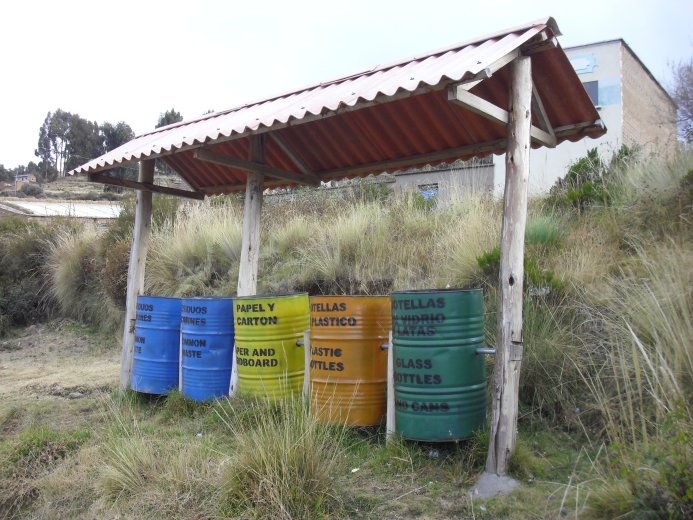
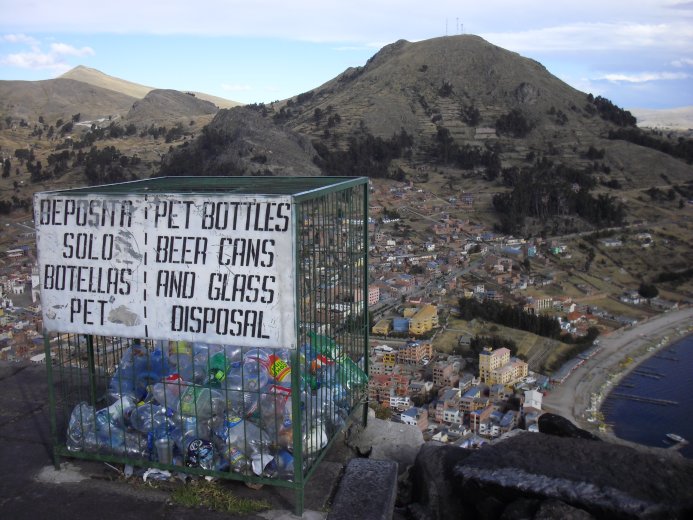
Copacabana, Bolivia
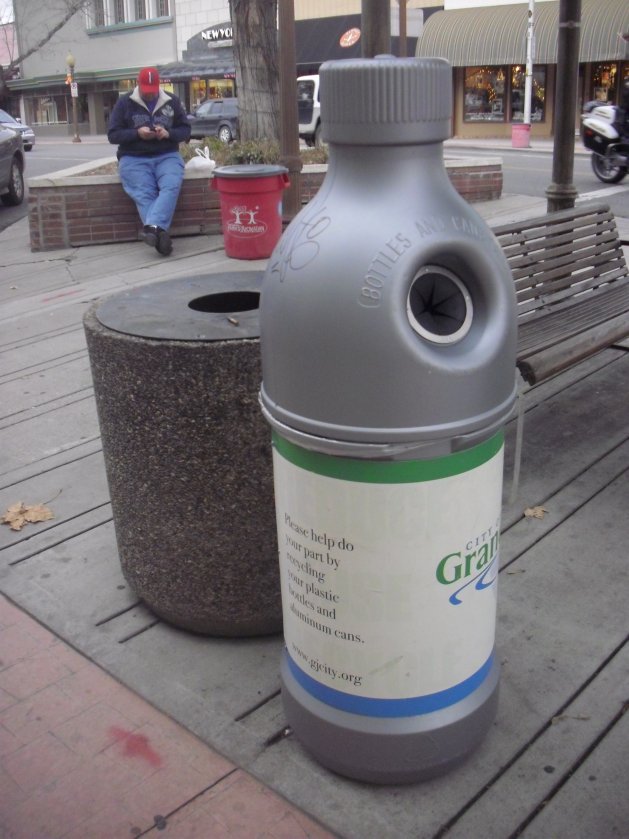
Grand Junction, CO
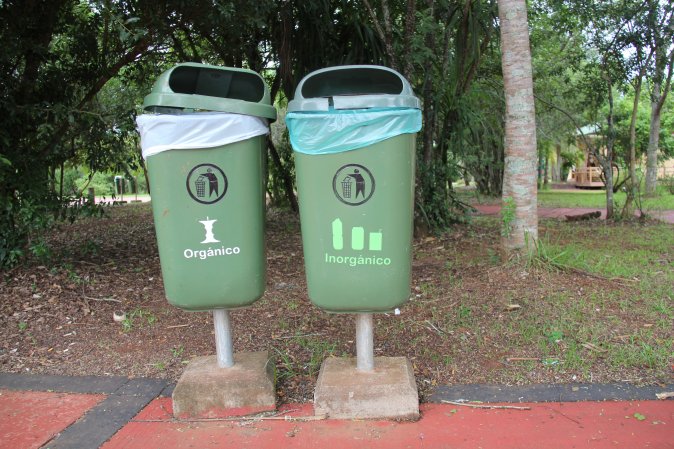
Iguazu National Park, Argentina
Iguazu National Park, Argentina
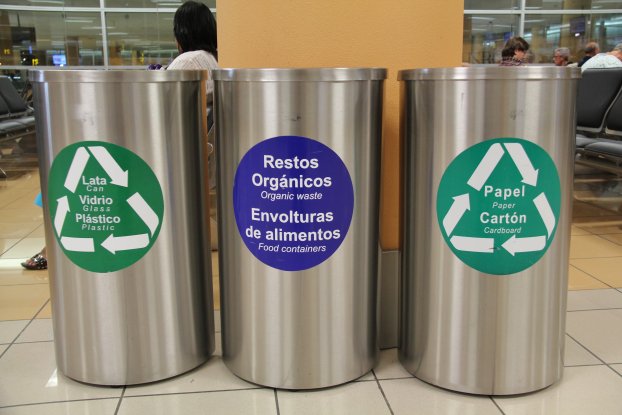
Jorge Newbery Airfield, Argentina
On top Mount Calvario, Bolivia
Links:
|
|
 Back to Roger J. Wendell's Home Page...

Abbey |
About |
Blog |
Contacting
Me |
Copyright |
Disclaimer |
Donate |
Guest
Book |
Home |
Links |
Site
Index |
Solutions |
Terms,
Conditions
and
Fair
Use |
What's
Changed
or
New?
Copyright
© 1955 -