Roger J. Wendell
Defending 3.8 Billion Years of Organic EvolutionSM

Invertebrates
My page honoring terrestrial invertebrates - Arthropods,
Insects, Spiders, Millipedes, Molluscs, and Worms!
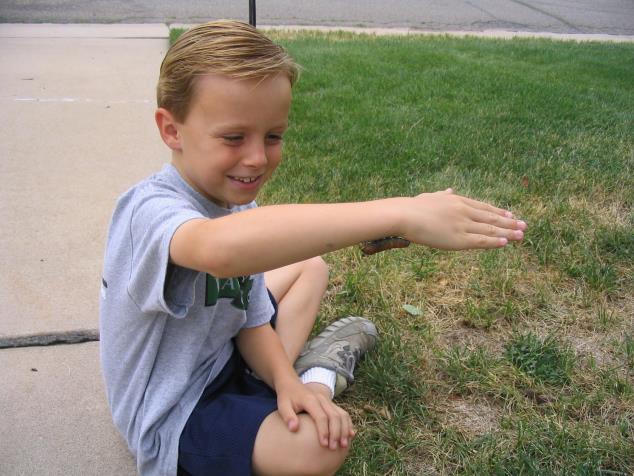
Garrett and the Caterpillar
There are species of "bugs" that belong to the Arthropod family (invertebrates that lack a backbone) that are sometimes mistaken for "insects" when they're actually not. Examples include worms, centipeds, millipedes, and spiders. Spiders belong to the class called "Arachnids" while Centipedes are in the class "Chilopoda," Millipeds are in "Diplopoda," worms are in the class of "annelids," with true insects* being in the class "Insecta" (which are a major group of arthropods).
Either way, "bugs" and insects, in general, are all around us as they make up more than half of all living things on our planet. There are more than a million known insect species and it's estimated that there are probably many more waiting to be discovered. Insects are the most diverse group of animals on Earth and rank among the most successful creatures on our planet.*Most insects have six legs (Hexapoda - meaning "six feet"), while most spiders have 8 legs and centipedes have at least 36 legs, but worms, of course, have none...
This page (and me!) is also opposed to the indiscriminate poisoning, "zapping," killing, and extermination of invertebrates, insects or any other creature!
|
To see a World in a Grain of Sand And a Heaven in a Wild Flower, Hold Infinity in the palm of your hand And Eternity in an hour. - William Blake (Auguries of Innocence) |
"Studying insects is often the quickest way to assess a habitat's health. Their diversity (or lack of it)
can tell us if water is polluted, or if a forest has an adequate balance of decaying timber."
- Richard Jones, Sierra, March/April 2011, p. 34 |
Edward O. Wilson

There are vastly more kinds of invertebrates than vertebrates. Recent estimates have placed the number of invertebrate species on Earth as high as 10 million and possibly more.... Invertebrates also rule the earth by virtue of their sheer body mass. For example, in tropical rain forest near Manaus, in the Brazilian Amazon, each hectare (or 2.5 acres) contains a few dozen birds and mammals but well over a billion species of invertebrates, of which the vast majority are mites and springtails. There are about 200 kilograms [440 pounds] by dry weight of animal tissue in a hectare, of which 93% consists of invertebrates. The ants and termites alone comprise one-third of this biomass. So when you walk through a tropical forest, or most other terrestrial habitats for that matter, vertebrates may catch your eye most of the time but you are visiting a primarily invertebrate world."
- Edward O. Wilson in his book,
The Little Things That Run The World
Beetlemania!
Here I'm at the Museum of Space Exploration, Colorado Springs, Colorado

Click Here for my page on Deep Ecology...
Click Here for my page about plant biology...
Click Here for my page about animals...
Click Here for my page about biodiversity...
Click Here for my page on Evolution...
"So important are insects and other land-dwelling arthropods that if all were
to disappear, humanity probably could not last more than a few months."- Edward O. Wilson
Abundance!
"The sheer abundance of invertebrate species - and of individual invertebrates themselves - means that they are present in virtually every corner of our planet, from the deepest ocean to the highest mountain and from pole to pole. Invertebrates build the stunning coral reefs of our oceans; they are essential to the reproduction of most flowering plants, including many fruits, vegetables, and nuts; and they are an important food source for birds, fish, and other animals. Yet invertebrate populations are often imperiled by human activities, and are rarely accounted for in mainstream conservation."- Scott Hoffman Black
Executive Director,
The Xerces Society, November '08
Cold Weather Grubs:
"From eight feet of log I recover 23 grubs. All of them have been facing into the interior of the log, jammed tightly into their burrows and surrounded with hoar frost. Their creamy white bodies are covered with spiky white ice crystals. Temperatures over the last two weeks have often been near -20°F, though today it is 'only' - 10°F. All of the larvae are pliable, however; none is frozen solid. They are apparently laced with antifreeze, because they taste glycerol sweet, just like the oeverwintering carpenter ants also found inside trees."
The Power of Inscets:
"The power of insects is not in the puny individual but in the wonder of their combined masses. The insect class is mind-numbingly divers. Experts can't agree on whether there are 3 million, 30 million, or maybe even 89 million insect species out there (compared with only 5,400 mammal species worldwide). They have identified and cataloged fewer than 1 million so far."Even within an individual species, the sheer numbers are staggering. The termite population in a tropical rainforest has a greater biomass per acre than the wildebeest herds on the Serengeti. Insects have colonized every conceivable ecological niche from the mountaintop to the seashore. They predominate in the middle sections of virtually every terrestrial food chain. They eat, and are eaten, by the untold billions of tons.
"Why is it, then, that insects are so poorly understood, so unappreciated, so unloved? Mostly, it's a size thing. A few brightly colored butterflies catch our attention but they represent a tiny minority. Most insects are minuscule, even microscopic. They are also secretive, evasive, and often inextricably attached to microhabitats, like a single rare plant species deep in the jungle or a particular salt-defined zone on the Florida Keys. The truth is, most insects shun humans, and we hardly ever get to see them. Even if we do, they are mostly small and dark - specks of animated nothing."
What is an Arthropod?
"Insects, spiders, scorpions, crustaceans, barnacles, horseshoe crabs, and trilobites are members of the largest phylum of animals on Earth: the Arthropoda, or 'joint-legged' animals. (In Greek, arthros means 'joint' [as in 'arthritis'], and podos is 'foot' or 'appendage.') By any measure, arthropods have been and always will be the dominant animals on Earth - even though we like to think of ourselves as rulers of the planet. With over 1 million species (and probably a lot more still uncounted), arthropods make up more than 85 percent of the roughly 1.4 million (and county) animal species. There are almost 900,000 species of insects and over 340,000 species of beetles alone. When asked what his knowledge of biology taught him about the Creator, the great biologist J. B.S. Haldane said, 'God must have had an inordinate fondness for beetles.' By contrast, our phylum, Chordata, contains fewer than 45,000 species, over half of which are fish. There are barely more than 4000 of mammals.""If the total species diversity does not impress you, what about abundance? Arthropods are legendary for reproducing quickly when the conditions are right and multiplying to astonishing numbers. Think of the plagues of locusts or the speed with which aphids can overwhelm a plant or the immense number of individuals in an ant colony or a termite nest. If not held in check, a single pair of cockroaches can have 164 billion offspring in just seven months! In the tropics, a few acres might support a few dozen birds or mammals, but over 1 billion arthropods, including mites, beetles, wasps, moths, and flies. A single ant colony may contain 1 million individuals. In the richest parts of the ocean, there can be millions of tiny planktonic arthropods (shrimps, copepods, krill, and ostracodes) in 1 cubic meter (35 cubic feet) of water."
- Donald R. Prothero in his book,
The Story of Life in 25 Fossils
(Tales of Intrepid Fossil Hunters and the Wonders of Evolutin), pp. 51-52
Invertebrates
Invertebrates are animals that do not possess or develop a vertebral column (backbone or spine). This includes all animals apart from the subphylum Vertebrata (fishes, birds, mammals, etc.). Familiar examples of invertebrates include insects; crabs, lobsters and their kin; snails, clams, octopuses and their kin; starfish, sea-urchins and their kin; and worms.
Mollusks
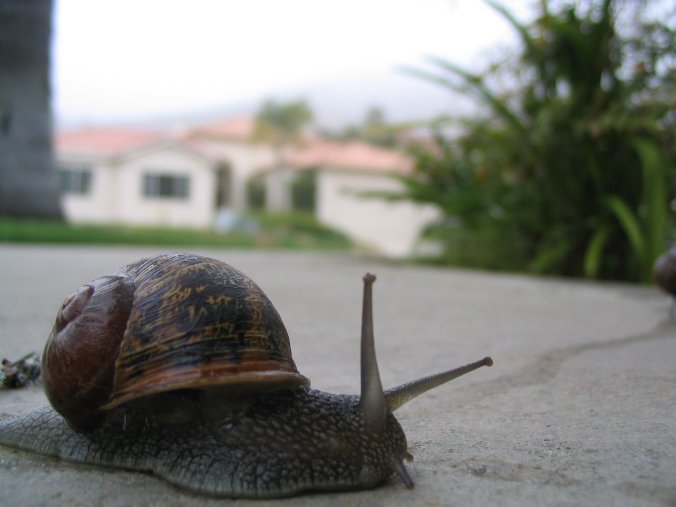
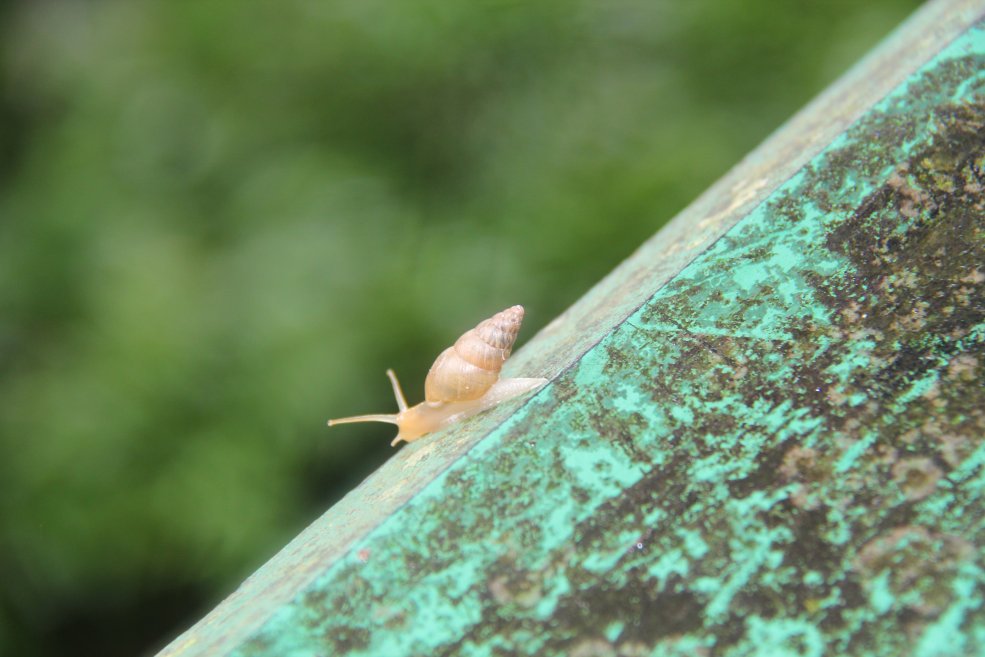
Snail at my brother's houseThe molluscs or mollusks [USA spelling] compose the large phylum of invertebrate animals known as the Mollusca. Around 85,000 extant species of molluscs are recognized. Molluscs are the largest marine phylum, comprising about 23% of all the named marine organisms. Numerous molluscs also live in freshwater and terrestrial habitats.
(Click on any of this page's "thumbnail" images for a larger view)
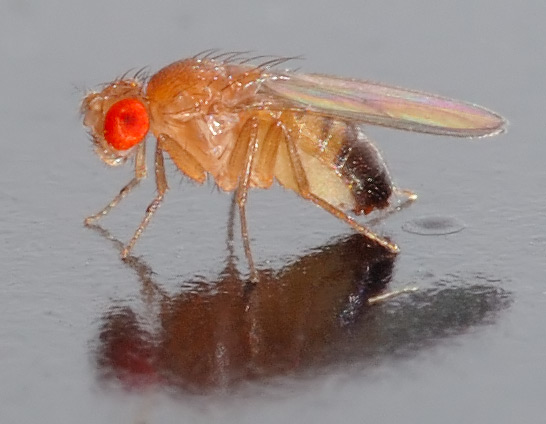
Drosophila melanogater
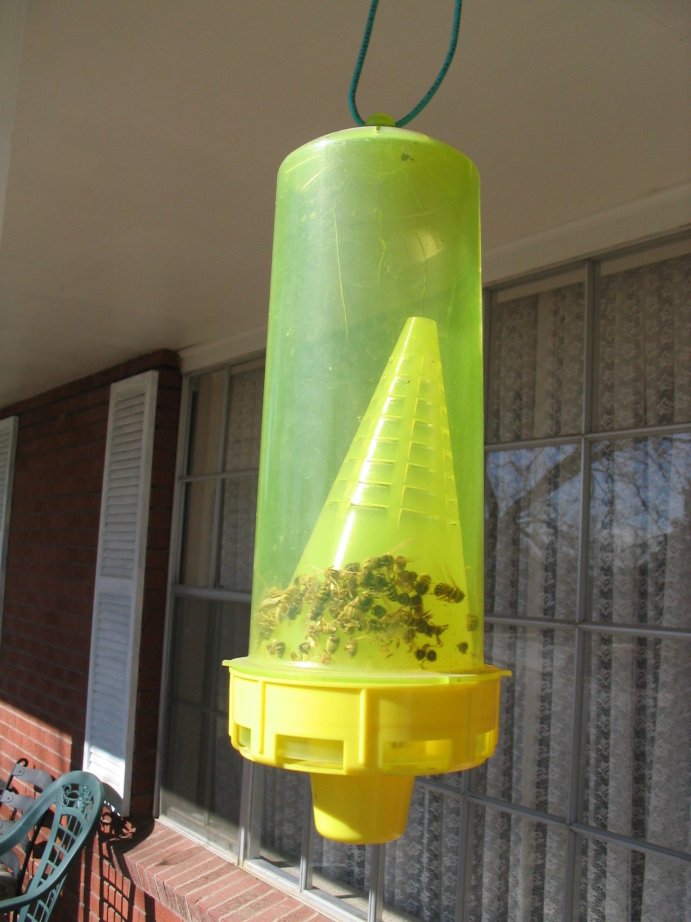
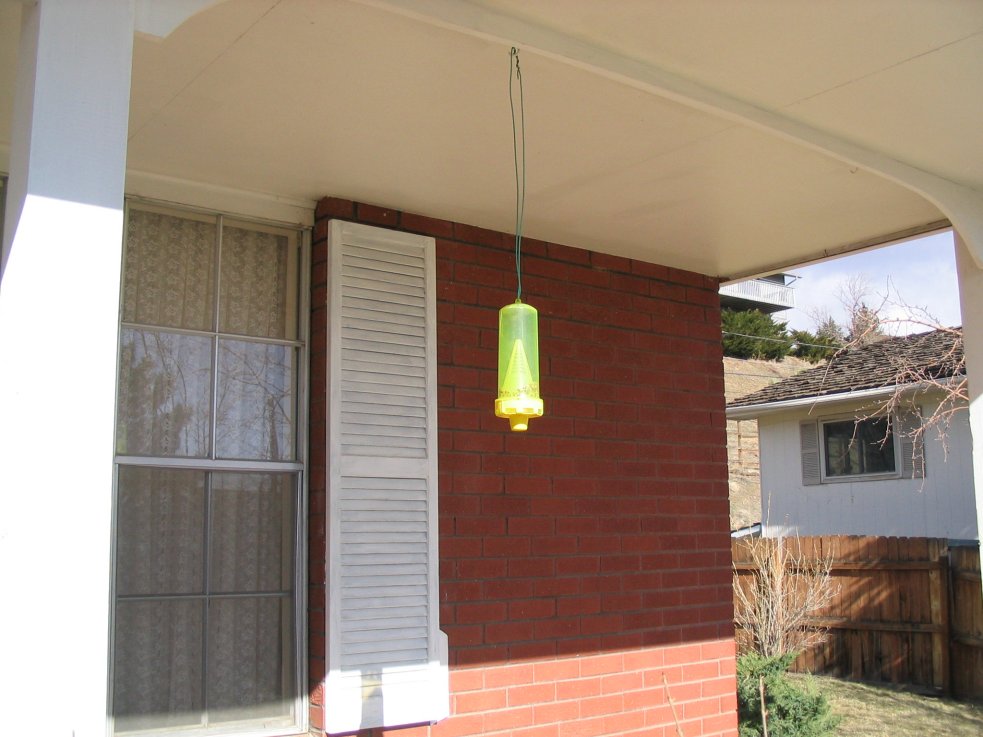
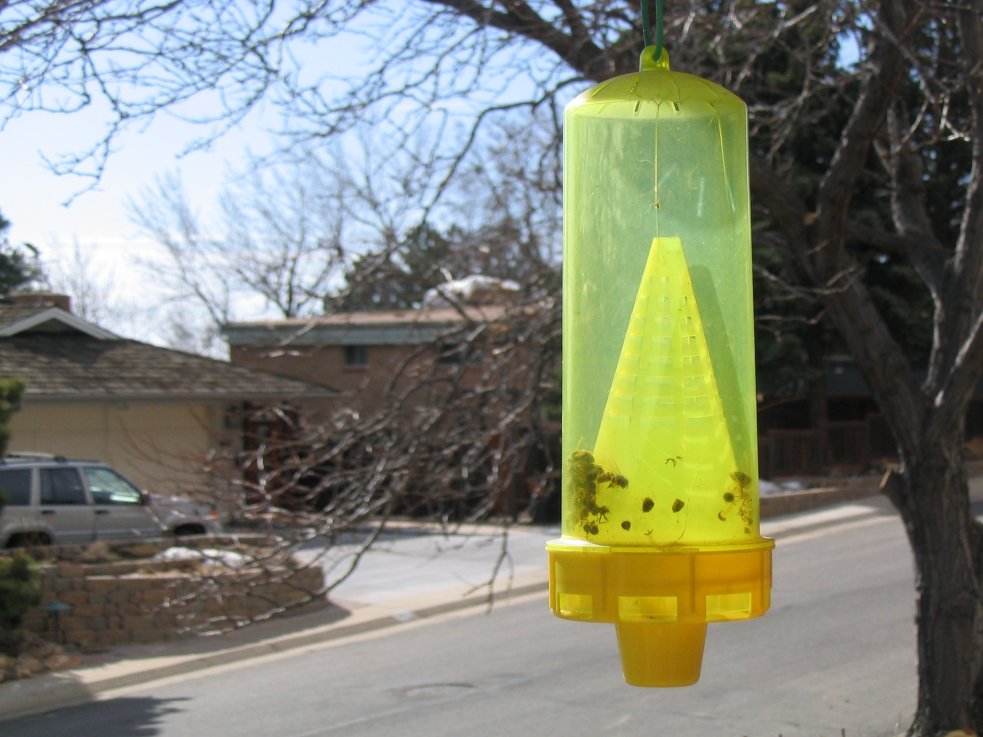
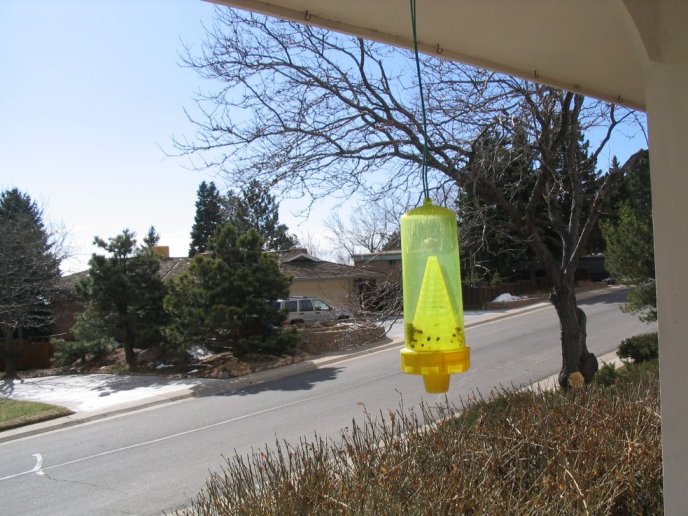
Spider at the Butterfly PavilionI've always loved living things, including insects. The beauty and diversity of life fascinates and astonishes me. Insects first caught my attention, like everyone else, when I was a child. Their small size, intricate body parts, and unpredictable behavior still captivates the kid in me. As a child I was also saddened by our complete disrespect for animals and insects of all kinds. We kill them for fun, pleasure, or just out of boredom. Even today, in the neighborhood I live in west of Denver, people install powerful bug "zappers," set ant traps and hang yellow bee traps outside their homes. For what purpose? Do you really need to kill all of the insects outside of your home? It's even more amazing to think we're killing all of those outdoors insects when we, ourselves, are too wrapped up in television or eating to make our way outside the door to enjoy our surroundings anyway!!
Then, of course, there's our national mania with killing anything that even appears like it'll crawl, fly or slither near a flower garden, school yard, golf course or picnic area. We spray deadly poisons that not only kill the insects but endanger our own lives and wellbeing as well. I hope my little page here will help foster more respect for not only insects, but all living creatures and life in general. Our track record is poor so we've got a long way to go. Nevertheless, I know we can learn to do the right thing!
Insects are Beneficial and Necessary
Insecticide and Lawn Chemicals:
"Looking back, I often speculate on just how my parents viewed the natural world. Although they were not religious people by any means, I'm convinced that when it came to nature, they took their cues from Genesis, believing that man should have dominion over all the earth. They fought crabgrass as fiercely as our nation was then fighting communism. Insects, regardless of their size, function, or level of threat, were obliterated with extreme prejudice. Employing the doctrine of overwhelming force, they sprayed our trees so relentlessly with chemicals that flocks of birds fell dead onto our perfectly clipped lawn. (Spring in our neighborhood was an intensely silent affair.) The roses, the only flowering plant on our embattled landscape with the courage to bloom, were so encrusted with white fungicide powder that many years passed before I knew they were red."
- Mark Winne
Closing the Food Gap Resetting the Table in the Land of Plenty, p. 5
Stop the Bug Zappers!
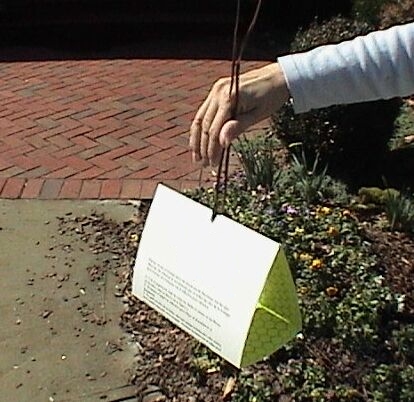
As I suggested, above, there's almost no reason to indiscriminately kill insects outside your home. These first four photographs were taken at a house in my neighborhood on March 26, 2006. In Colorado, where I live, winter can easily linger well into May so there's no real reason to be killing insects all year long because there aren't many out and about until late spring. Nevertheless, it's obvious from these photos that these people intend to kill bees every chance they get (in #4 you can still see clumps of snow on the ground at the house across the street) regardless whether anybody is even home or not!. Even more amazing is that this same house appears to have a bee trap in its backyard - just 15 feet away from their garden that needs the pollination each year!
 1. |
 2. |
 3. |
 4. |
 5. |
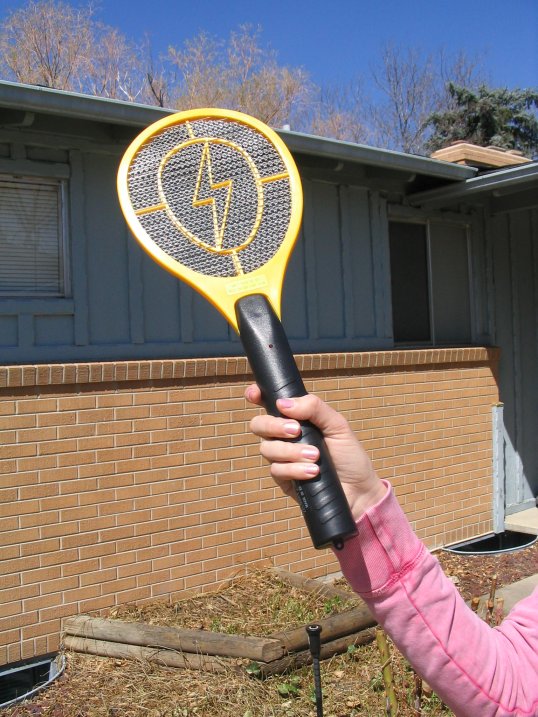 6. |
#5. Is a picture of a Honey Bee Glue Trap. Although I'll probably post pictures of all kinds of other "bug zapper," on this page, I won't be identifying manufacturers since that last thing I want to do is encourage people to buy their products!#6. This tennis racket hand zapper device is especially goofy. I found this description for a similar tennis racket device (but not the same one): "Small tennis racket looking device which is used to electrocute insects. It is powered by two "AA" batteries, which are not included, and works very well at delivering a zap of electricity which is more then strong enough to instantly fry most any insect. IT IS IMPORTANT TO KNOW THAT THIS IS NOT A TOY AND SHOULD BE KEPT AWAY FROM CHILDREN. IT WILL NOT HARM ANYONE TOUCHING THE ELECTRIC GRID BUT IT DOES HURT QUITE A BIT AND IS PAINFUL TO TOUCH."
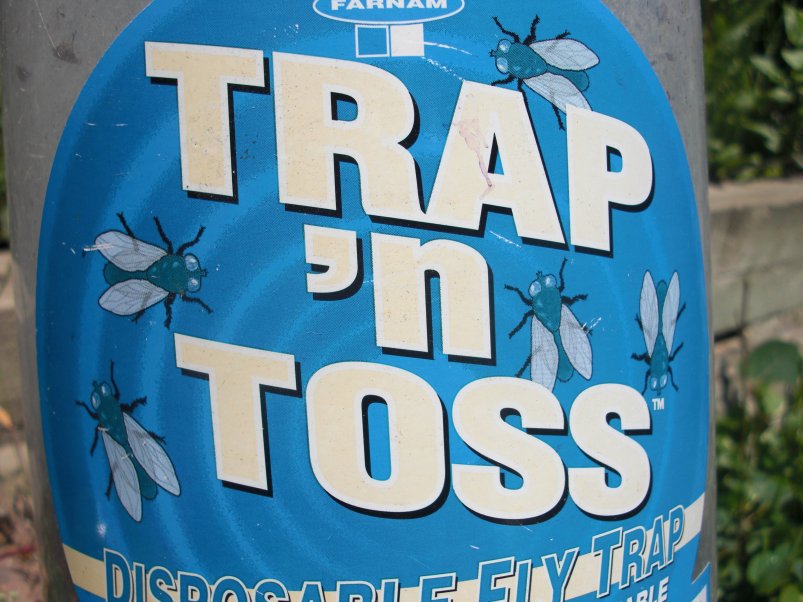 Trap 'N Toss idiocy |
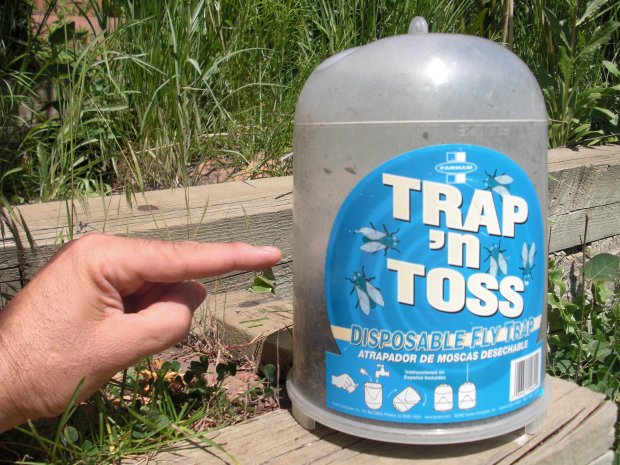 One third full... |
 More Green Mountain Madness... |
 Denver in the distance... |
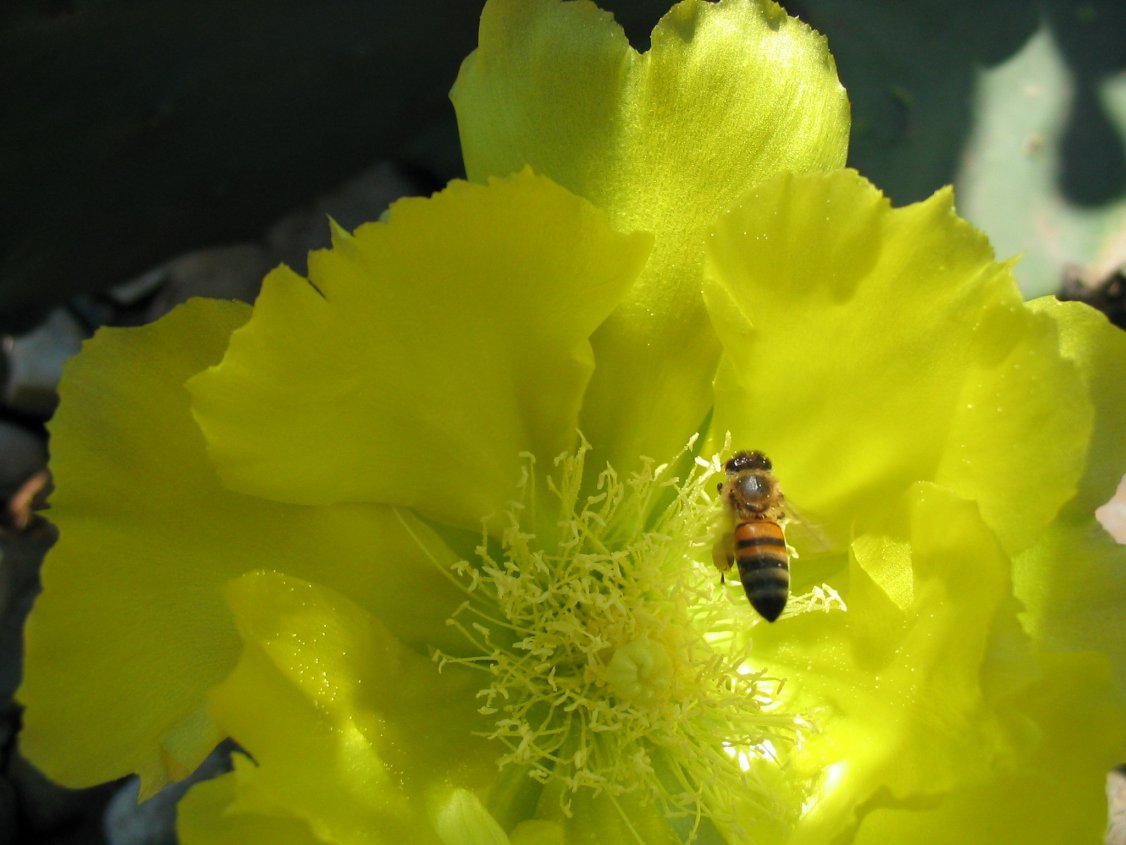 This is what bees are supposed to do! |

|
Click Here for my YouTube video of the "Trap "N Toss" idiocy and Deep Ecology... |
Desert Idiocy:
 GT 200 "Elite" zapper... |
 Tucson carts & zapper |
I'm very lucky, I've been able to travel to many places and experience all kinds of environments. To me, Tucson (Arizona) is especially enjoyable because its desert environment can be so free of pests and pollutants (most of the time, anyway...). So, it seems especially idiotic to kill insects in such a delicate environment especially since the ones that bite and do harm are so rare. So, I couldn't help photographing this bug zapper in a favorite Tucson retail store. And, this isn't meant to pick on this particular store, either, as bug zappers can found in other parts of Tucson where they are needed even less... |
Insect News:
What's happening to the bees?
(Chirstian Science Monitor - April 04, 2007)
"Scientists call it 'colony collapse disorder' (CCD). First reported in Florida last fall, the problem has since spread to 24 states. Commercial beekeepers are reporting losses of between 50 and 90 percent, an unprecedented amount even for an industry accustomed to die-offs.""Many worry that what's shaping up to be a honeybee catastrophe will disrupt the food supply. While staple crops like wheat and corn are pollinated by wind, some 90 cultivated flowering crops - from almonds and apples to cranberries and watermelons - rely heavily on honeybees trucked in for pollinization. Honeybees pollinate every third bite of food ingested by Americans, says a Cornell study. Bees help generate some $14 billion in produce."
"For many entomologists, the bee crisis is a wake-up call. By relying on a single species for pollination, US agriculture has put itself in a precarious position, they say. A resilient agricultural system requires diverse pollinators. This speaks to a larger conservation issue. Some evidence indicates a decline in the estimated 4,500 potential alternate pollinators - native species of butterflies, wasps, and other bees. The blame for that sits squarely on human activity - habitat loss, pesticide use, and imported disease - but much of this could be offset by different land-use practices."
"Moving away from monoculture, say scientists, and having something always flowering within bee-distance, would help natural pollinators. This would make cropsless dependent on trucked-in bees, which have proved to be vulnerable to die-offs."
"The stress on honeybees grew as native and wild pollinators diminished and farmers came to rely more on honeybees. We've put 'all of our pollination eggs in the honeybee basket,' says Mace Vaughan, conservation director of the Xerces Society of Invertebrate Conservation in Portland, Ore. 'We need more baskets.'"
[Note: The article goes on, at length, about how mites, the stress of transportation, being fed high-fructose corn-syrup in the winter, pesticides, and genetically modified crops effect and kill bees.]
The Xerces Society
(Dear Xerces member - May 2007)
"Lately, there has been a lot of media coverage about the widespread declines in honey bee colonies from Colony Collapse Disorder (CCD). In light of this issues, the Xerces Society is promoting wild native pollinators as an insurance policy for when honey bees are scarce.""Although European honey bees are certainly the most important single crop pollinator in the United States, research from across the country demonstrates that a wide range of native bees helps with crop pollination - in some cases providing all of the pollination required.
"Hundreds of species of native bees are available for crop pollination. These free, unmanaged bees provide a valuable service, recently estimated by scientists from the Xerces Society and Cornell University at $3 billion dollars annualy in the U.S."
"Why are native bbes so helpful? Some species, such as mason and bumble bees, are active when conditions are too cold and wet for honey bees. Collectively, native bbes are more versatile than honey bbes. Some native species can buzz-pollinate flowers, which honey bees cannot do; this vibration releases pollen from deep inside the anthers of certain flowers. Plants such as tomatoes, cranberries, and blueberries produce larger, more abundant fruirt when buzz-pollinated."
Teacher loses hand over exploding paperweight
(Tuesday, April 4, 2006)
A Ventura, California teacher blew off part of his hand when he used a 40 mm shell, on his desk, to smash a bug.The teacher, Robert Colla, apparently used the five-inch-long shell as a paperweight.
In front of 25 students, in the adult education class he was teaching, Colla slammed the shell down in an attempt to kill an insect that was crawling or buzzing across his desk.
According to the Associate Press, the blast severed part of Colla's right hand in addition to creating burn and shrapnel wounds to his forearms and torso.
Luckily no one else in the classroom, other than the unidetified insect, was injured. Colla reportedly found the 40 mm round a few years ago, while hunting, and didn't believe it was still live...

|
Backyard and Around the World:
In addition to my childhood encounters, I've had the great pleasure of encountering all kinds of wonderful bugs, "crawlies," and flying things all around the world. Starting in my own little backyard, where my wife and I try to encourage all kinds of natural diversity, to the Amazon Rainforest and jungles of Africa I've seen all kinds of strange and wonderful insects! The main thing, of course, is taking action in our own backyards by doing everything we can to encourage insects and wild nature to flourish. If everyone did their part, around the world, countless species and individuals would begin to thrive again! |
It was a calm day, late in the summer, and these creatures all but ignored my intrusion
into their small and private world. Nevertheless, I still tried to not disturb them as
I moved in real close with my inexpensive camera - I suspect they were all intoxicated by
the warm sun and pollen bounty - life probably couldn't be much better for them other than
having me away!
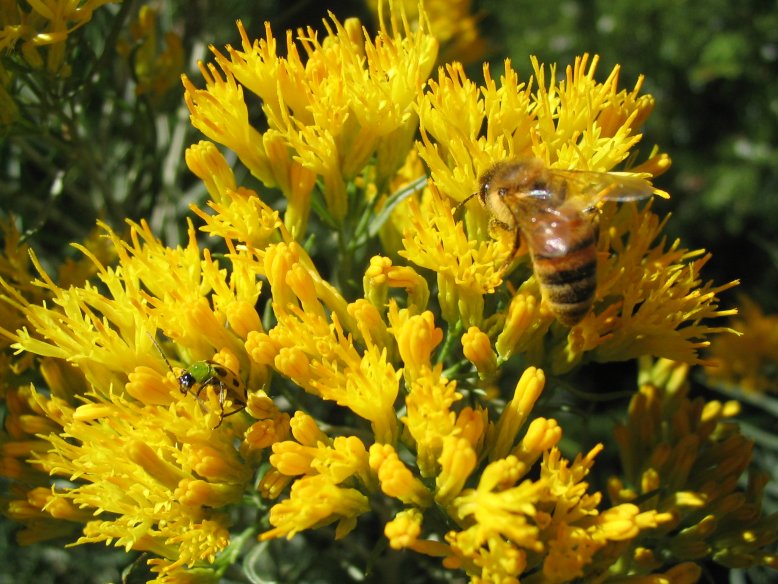 Pollination |
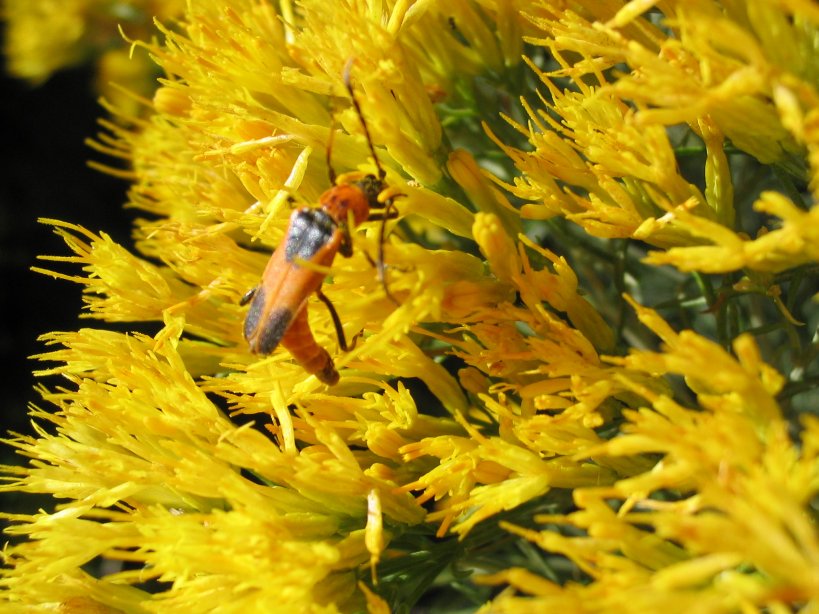 Alone |
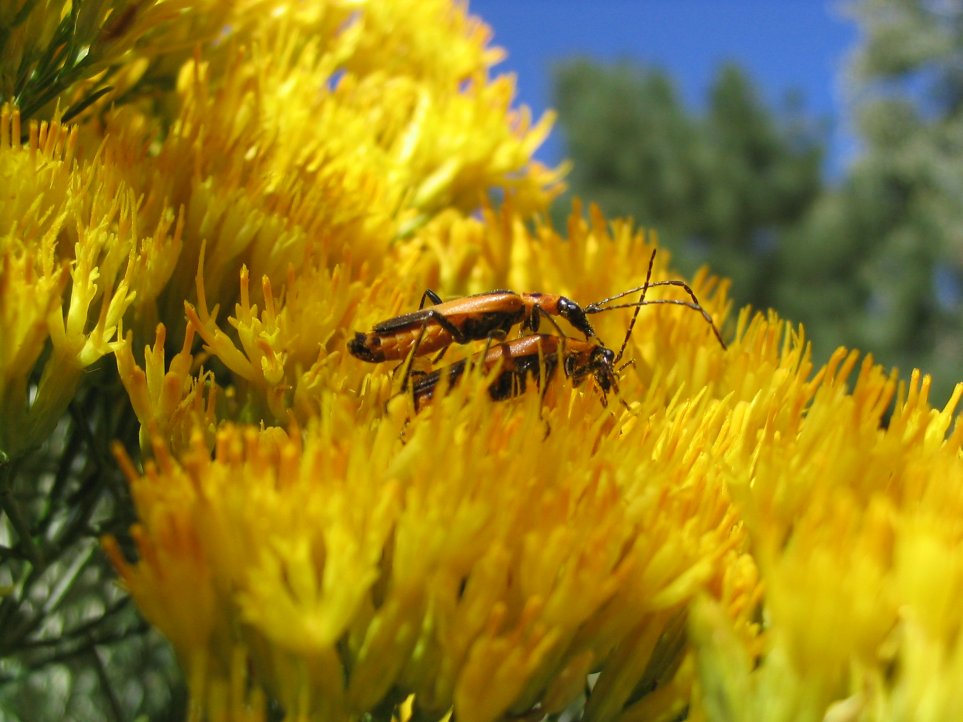 Lovers |
Randy's Pix
The first three photos are from the Humpback Rocks visitor center's garden
along the Blue Ridge Parkway in Virginia. The fourth photo, of a spider's
underside, was taken beneath Randy's backyard deck. The fifth photo, of the
dragonfly, was taken on his porch.
Randy wrote:That spider was so small that he was completely invisible to the naked eye - I was just trying to shoot and interesting flower and I was able to get in good and tight since the flower wasn't moving.
Anyway, feel free to post whatever you like. I used my Canon 20D with a Tamron 100mm macro lens. I experimented some, but I'm pretty sure that I shot all 3 photos using ISO 400, F16, and at a speed of 60 (1/60th of a second). The Bee I probably shot at 100 (1/100th) and all the shots were hand-held (i.e., no tripod).
These pics were taken at the Humpback Rocks visitor center's garden at milepost 5.5 on the Blue Ridge Parkway. This garden is part of re-enactment area where tourists see how folks lived in the Blue Ridge Mountains 150 years ago and I took the photos during an ongoing outdoor bluegrass concert. Unfortunately I don't know any of the details about the bugs or plants. Virginia's Blue Ridge Mountains are known for their large plant and animal diversity. Especially this time of year when it seems almost jungle-like.
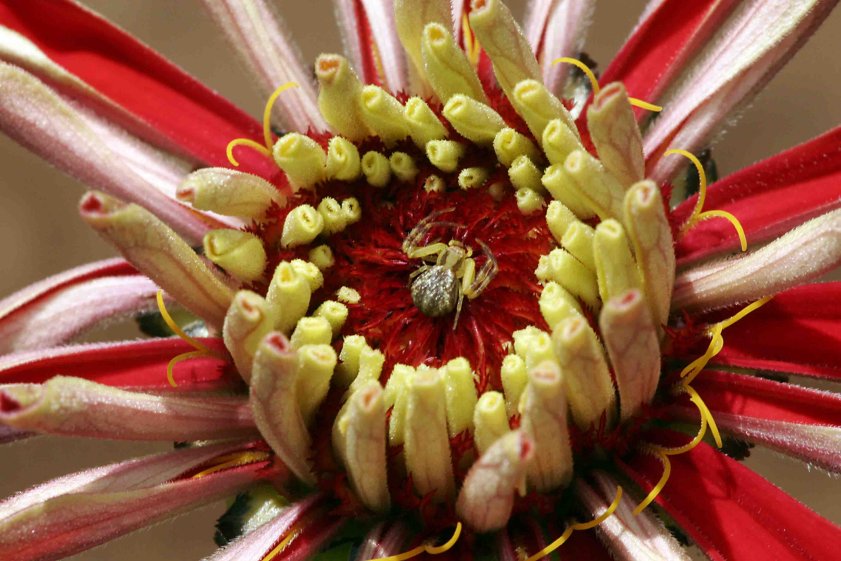 Spider in a flower |
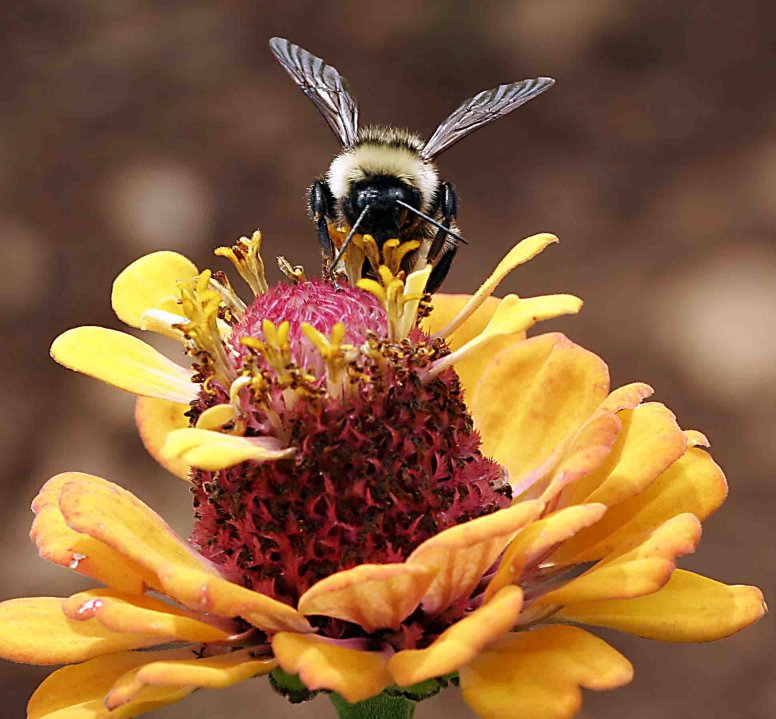 Bee on a flower |
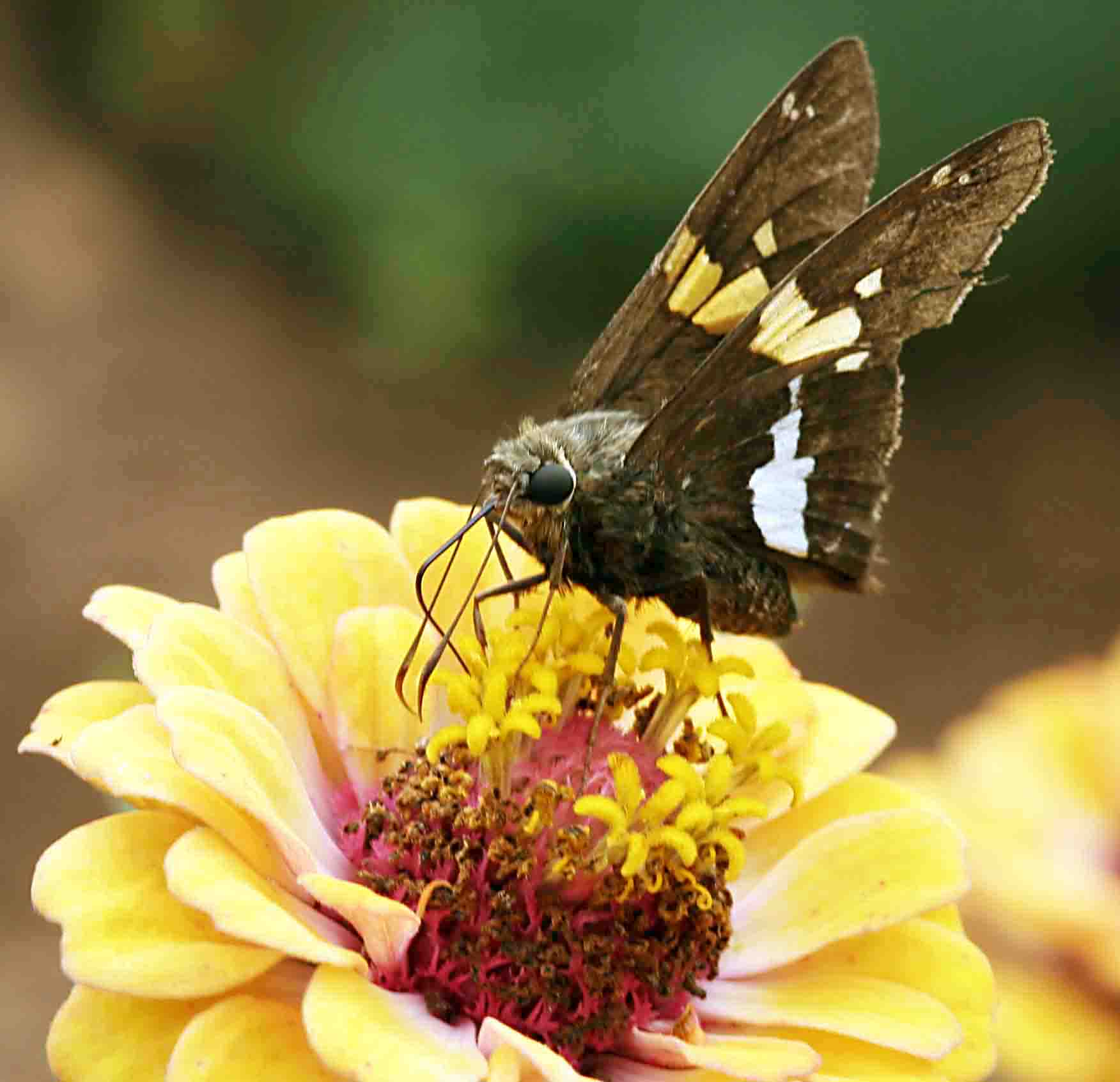 Butterfly on a flower |
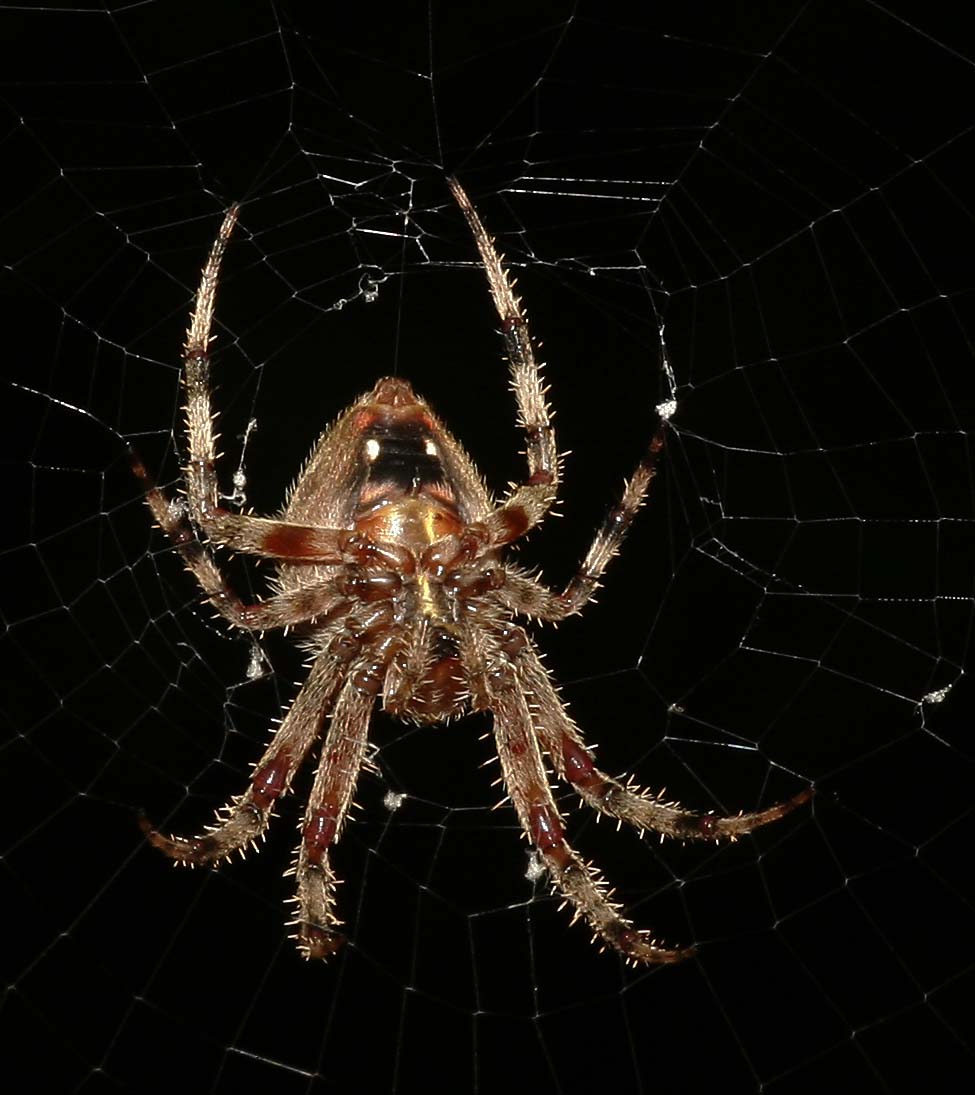 Spider's underside |
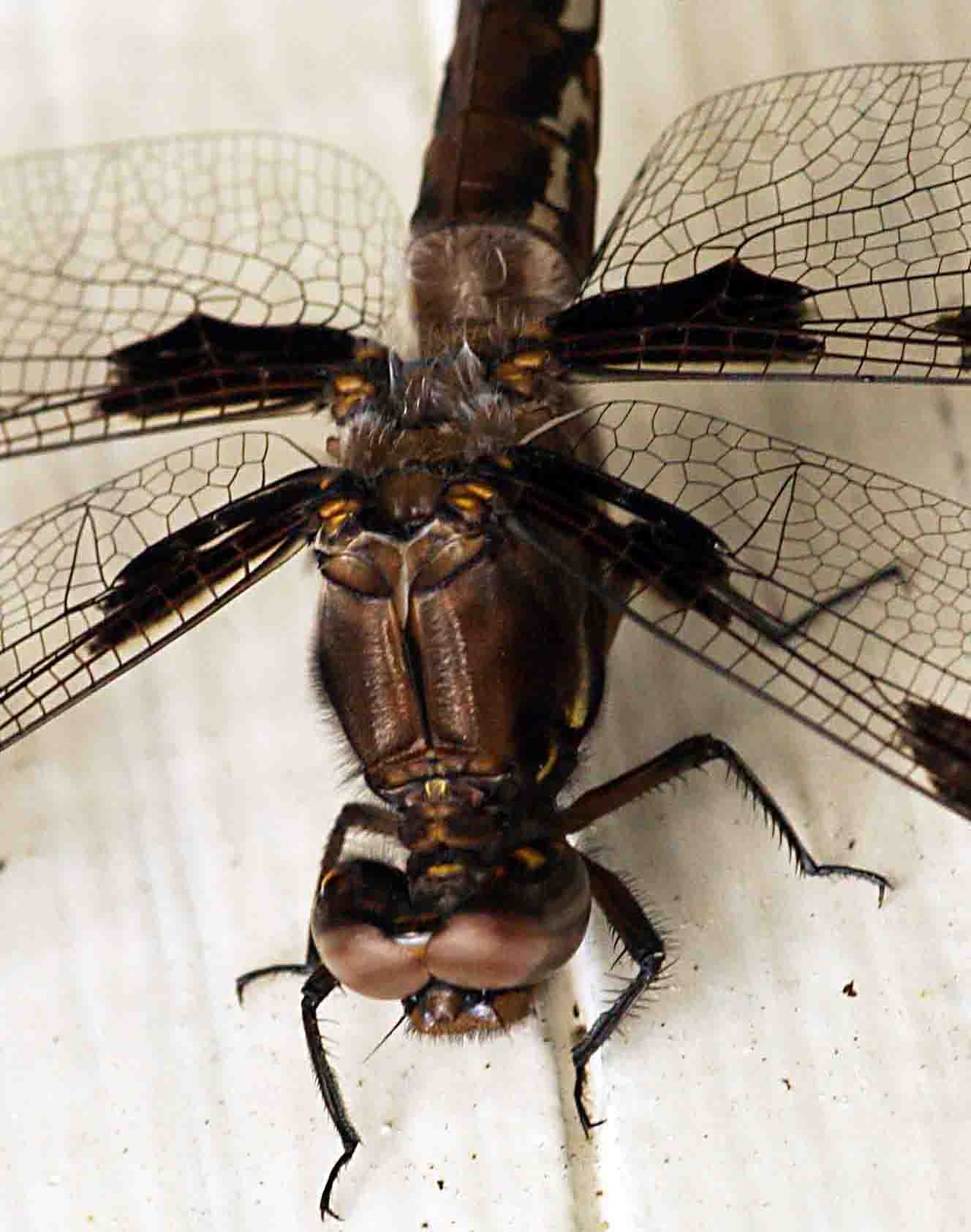 Dragonfly |
Commonsense!
Yes, there are some insects that can do us harm and deserve our attention before they inflict disease or create other problems. Mosquitoes, ticks, flies and other carriers of diseases and poisons should be controlled in a commonsense fashion that doesn't do unnecessary harm to our environment or ourselves. DDT, Malathion and other chemicals have a long history of causing serious damage to countless species (including us!) and the environment. So, if you must kill insects why not take a cautious, thoughtful approach to controlling the problem without inflicting damage over a wide area and other people?
More Commonsense!
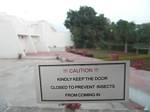
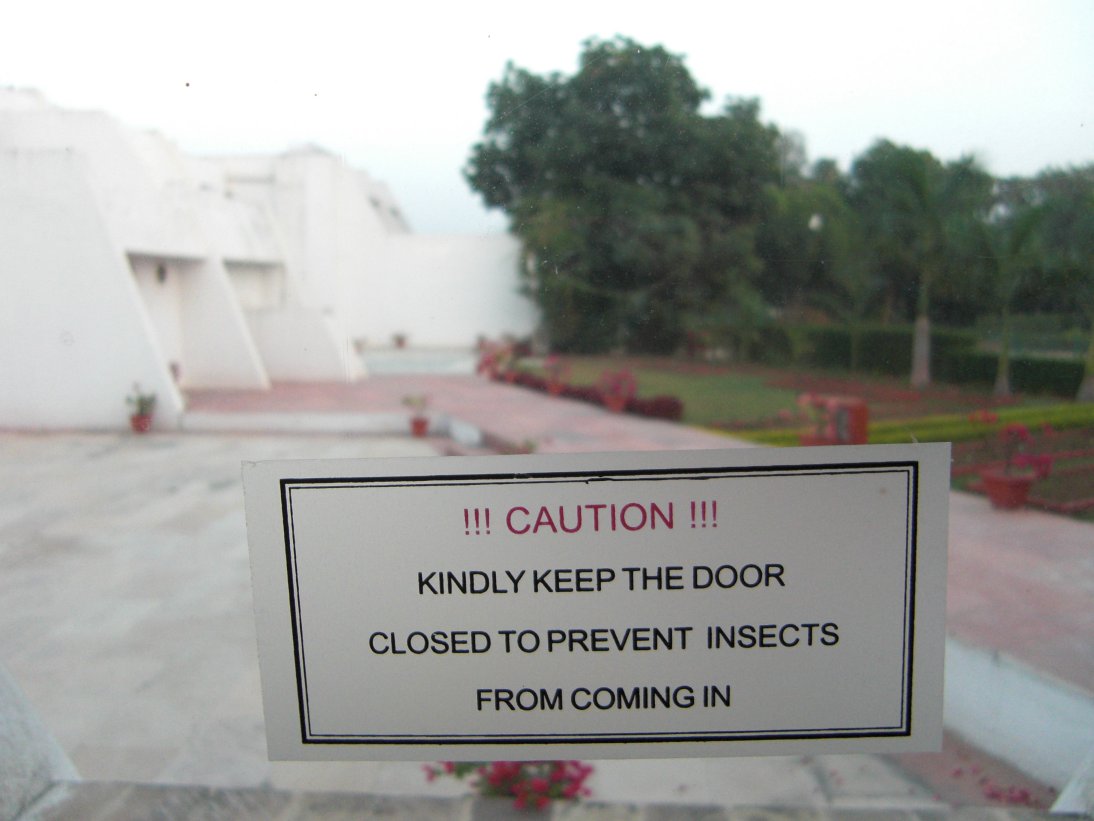
Imagine that! A hotel we were staying at, in India, was recommending that you simply keep your door closed if you didn't want insects inside! A common-sense approach needed in other parts of the world as well!
Grand Canyon Insects:
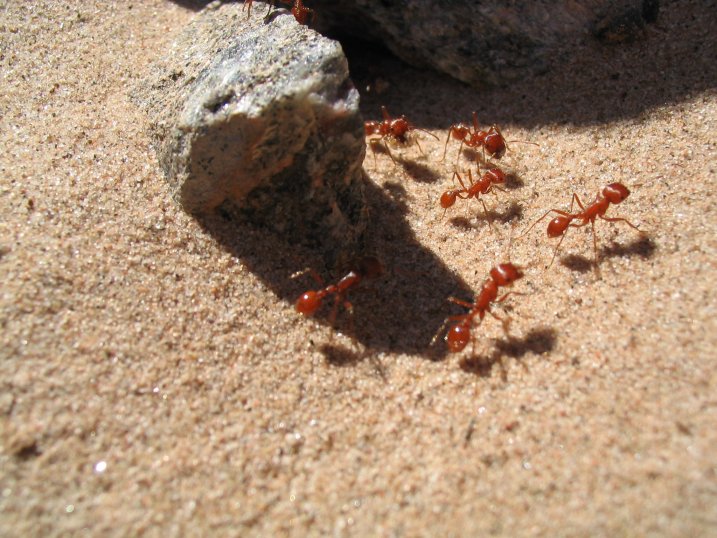
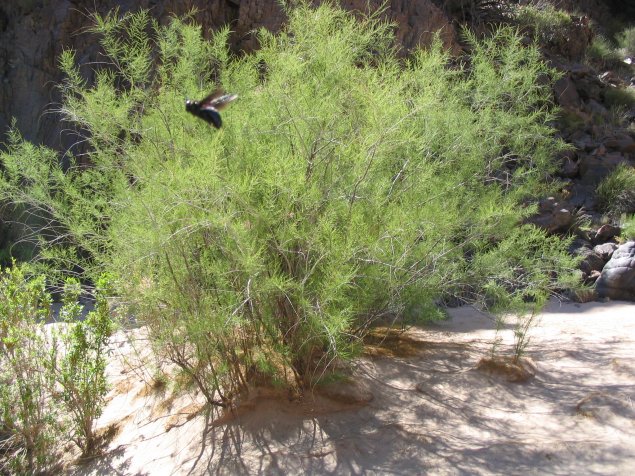
By age 50 I had been lucky enough to travel through Grand Canyon, on foot, over 15 times. Unfortunately I never owned a camera of sufficient quality to properly photograph the different insects I've encountered in that magical desert environment. Nevertheless, I gave it another try during a week-long hike with Doug in April, 2006. These ants came out pretty good and I also feel lucky to have captured a bee in mid-flight near me. The caterpillar didn't come out too clearly but I felt it needs to be represented here as we encountered thousands all along the trail that week...
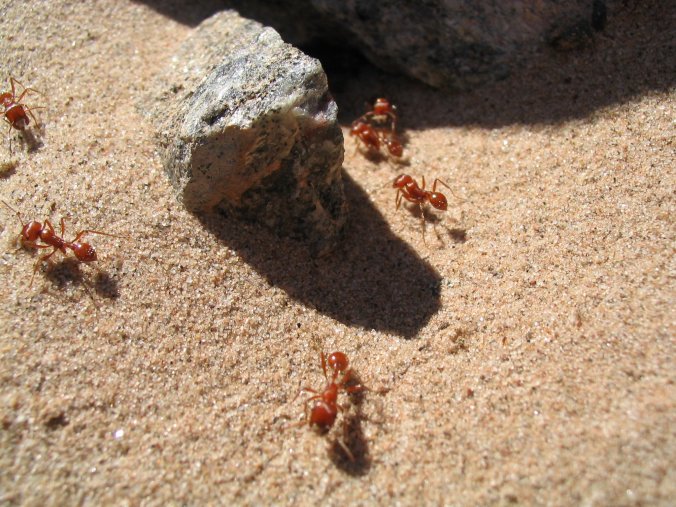 Grand Canyon Ants |
 More Ants |
 Bee in flight |
 GC Caterpillar |
Speaking of ants, I found an interesting article on how they
travel in a British tabloid article by Jo Steele (Metro - Wednesday,
October 18, 2006, p. 16.). Here is some of what he wrote:
- "Ever wondered how ants seem to be able to find the food at barbecues no matter where you put it in the garden? It is all thanks to their memories, which allows the insects to map out an exact route by remembering landmarks along the way."
- "A small group of 'searchers' are sent out to locate the food. They leave a chemical trail behind to guide other members of the colony. The following ants also store images of the route along the way. This map can then be recalled, allowing them to make subsequent visits. When the landmarks were taken away, the ants were not able to locate the food source, researchers at Sussex University found."
|
|
Click Here for my YouTube video of an anthill on Green Mountain... |
Wasps in my Backyard:
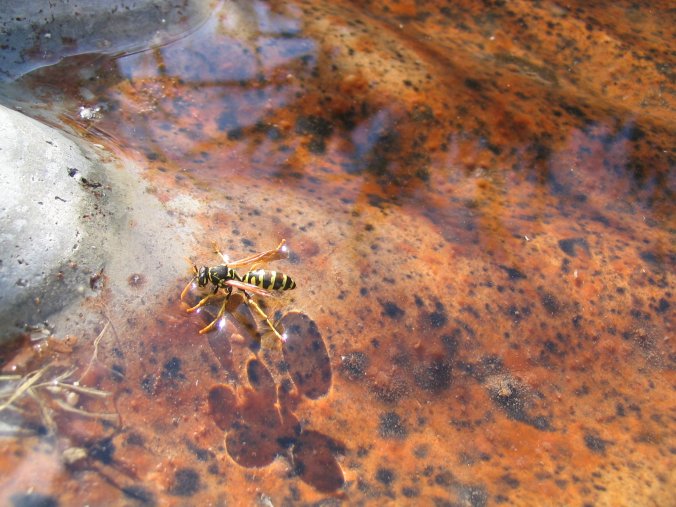
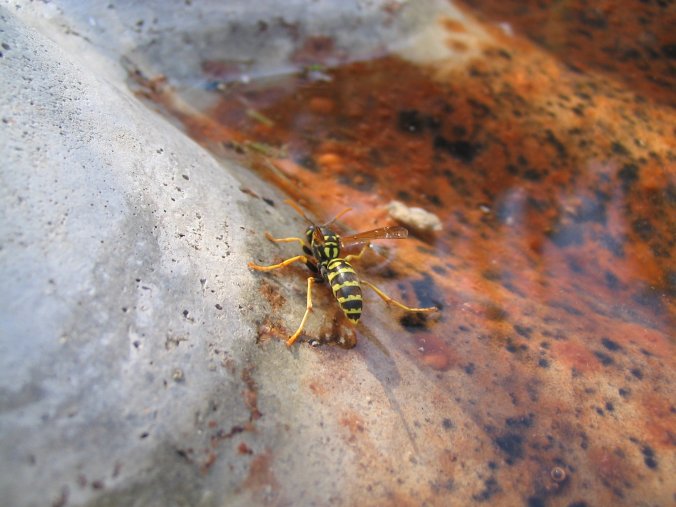
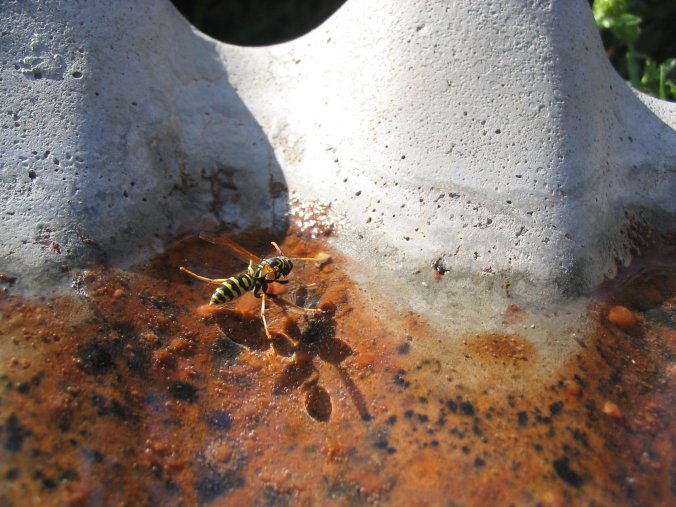
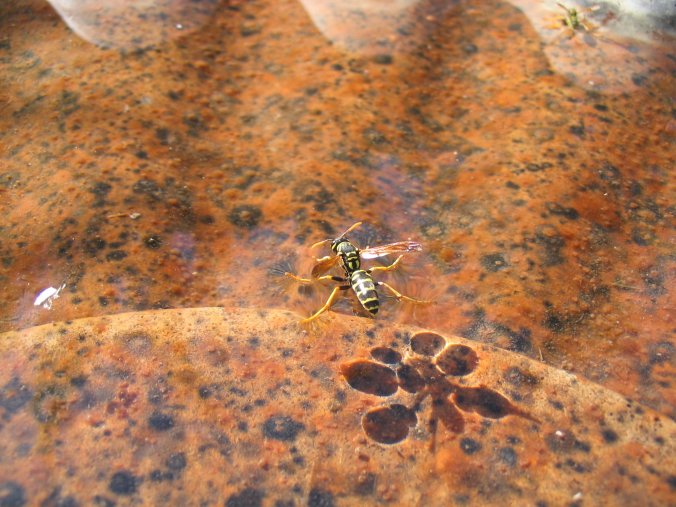
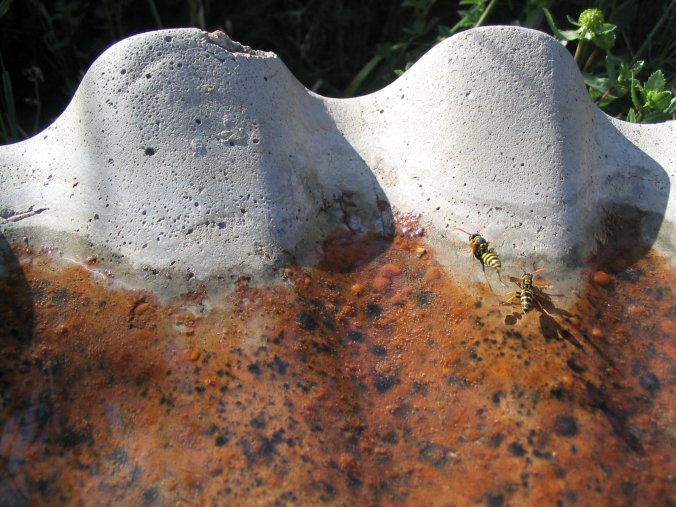
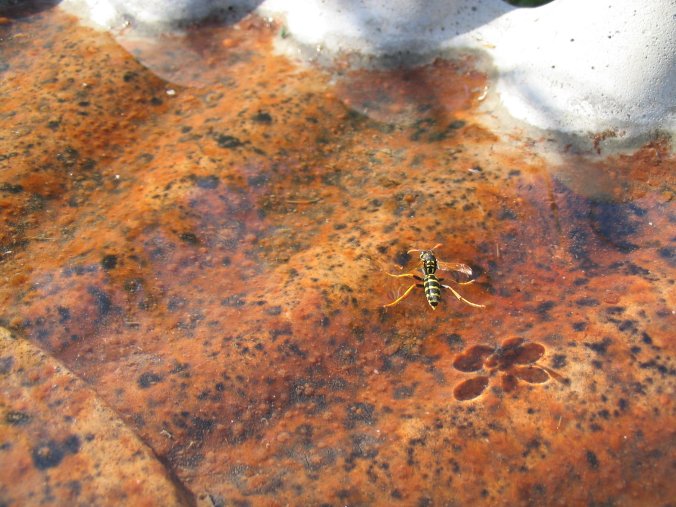
On Monday afternoon (5 pm), July 11, 2005 I photographed these
wasps in our backyard birdbath. At any one time there were a half
dozen of these wonderful little creatures present. Unfortunately
they were quite agitated by the intrusion of my primitive camera
- someday I'll purchase a camera that's a little more sophisticated
that doesn't require resting my wrist on the rim of the bath!
 1. |
 2. |
 3. |
 4. |
 5. |
 6. |
If you click on #4 I think you'll notice something especially interesting - the wasp is resting securely on the water's surface tension! I know they do this all of the time but in this particular photograph you can almost see a film of molecules that's spread-out beneath the wasp to keep it afloat. Granted, it is birdbath water but I change it almost daily so there really isn't any "pond scum" or debris that's creating this effect - it's something wasps and other small creatures experience all of the time...
Humane Bug Catcher!!

|
While looking through the Summer 2006 edition of PETA's Animal Times I found this great little bug catcher for sale on page 3 of their Cruelty-Free Living section. I doubled checked their website, as well, where they described the device like this; "Are you the kind of person who wouldn't hurt a fly? Is your motto 'live and let live,' even when it comes to tiny, six-legged, uninvited house guests? Then the Katcha Bug Humane Bug Catcher is for you! Simply place Katcha Bug over the bug and slowly slide its plastic trapdoor shut. The bug will step onto the trapdoor as it closes, and you can carry Katcha Bug outside, where all you need to do is slide the trap door open, allowing the bug to walk away. You'll have no problem catching even large spiders with this handy gadget. Katcha Bug measures 9 inches in length, so you won't have to get too close for comfort." - At only $6.95 it sounds like a great idea to me!! |
Other Insects in and around my House:
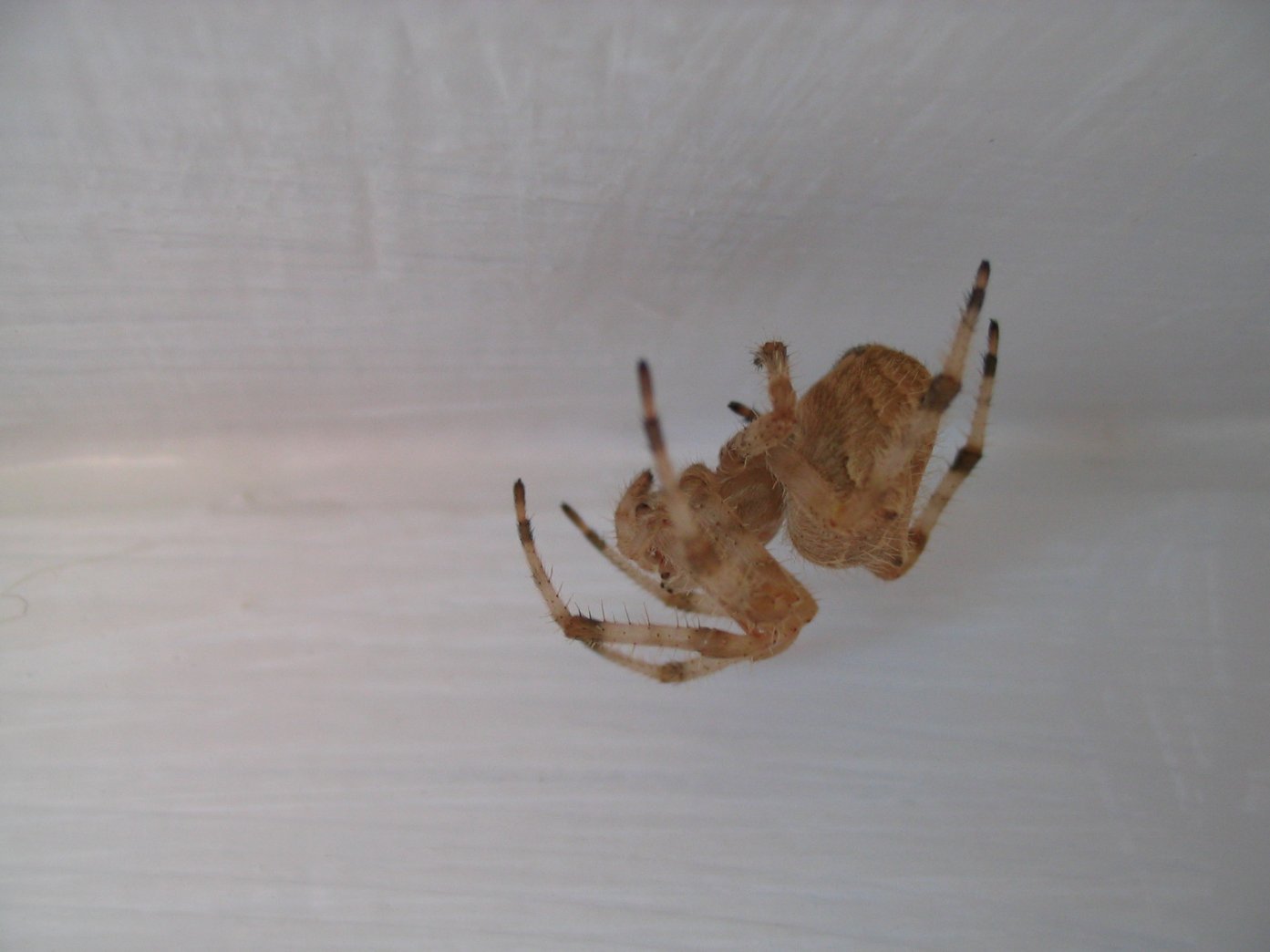
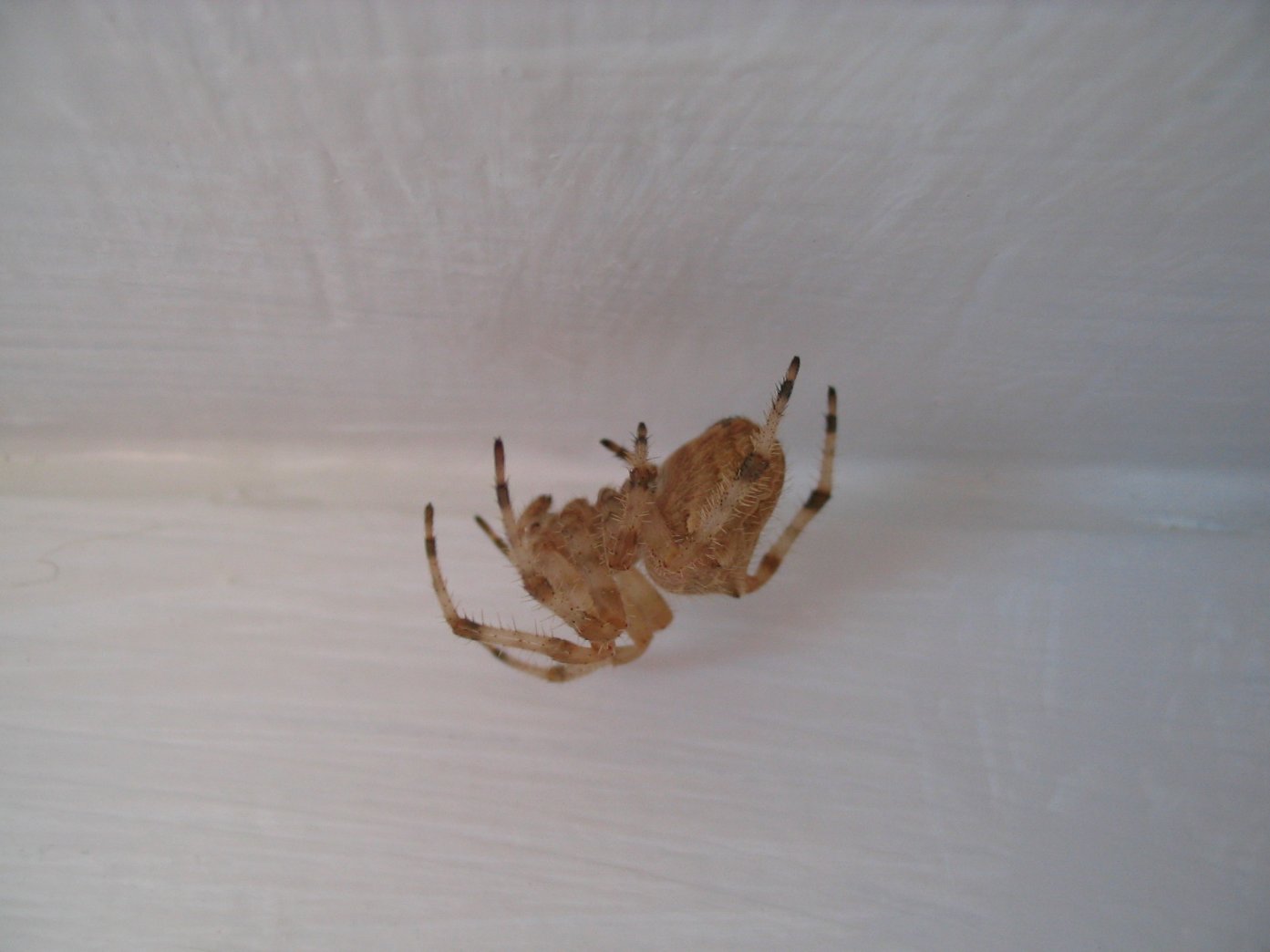
1. Orb Weaver Spider
2.
3.
4.I ran into this unusual spider while painting my garden shed during the summer of '06. Luckily I was able to safely move it long enough for the paint to dry. I came back to that same corner (he/she is living under the eve of the shed's roof), four days later, and the spider was there safe and sound! In early July, 2010 "Mistraker" commented about this spider on my YouTube page saying this, "Came across your website. Glad to find someone else who doesn't indiscriminately kill everything he finds with an exoskeleton. The 'strange' spider' you collected from your home and released was an orb weaver of some sort. Totally harmless spiders, orb weavers make those big pretty net webs that stretch between surfaces to catch insects. Outside is better, as they'll catch more bugs."
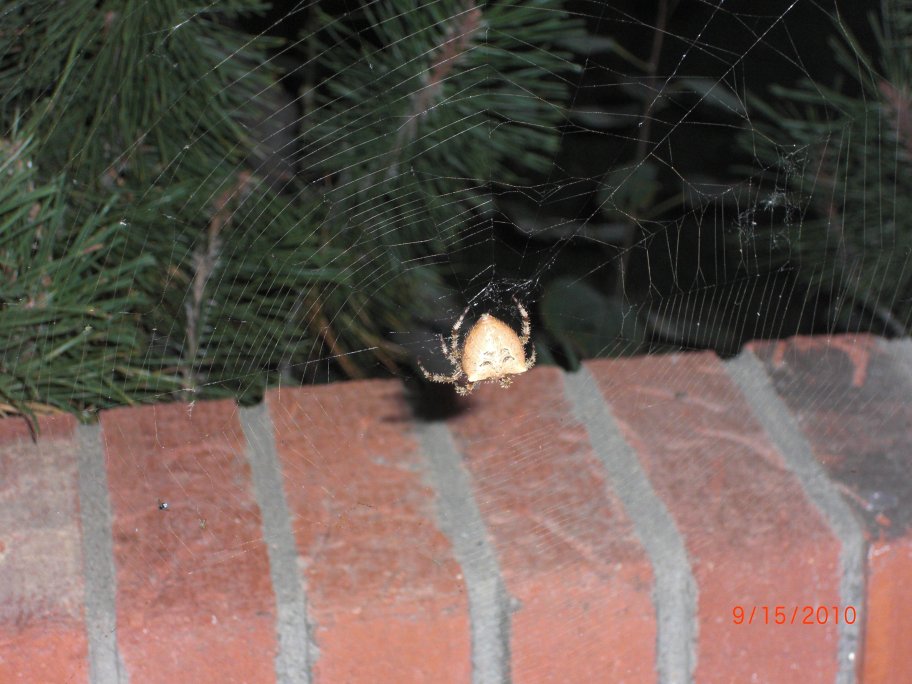
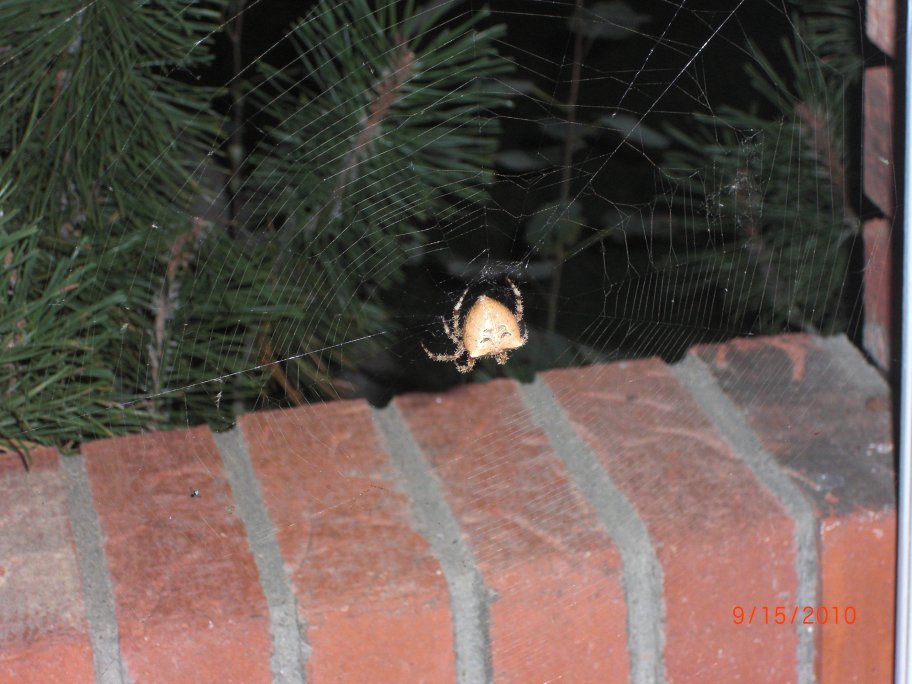
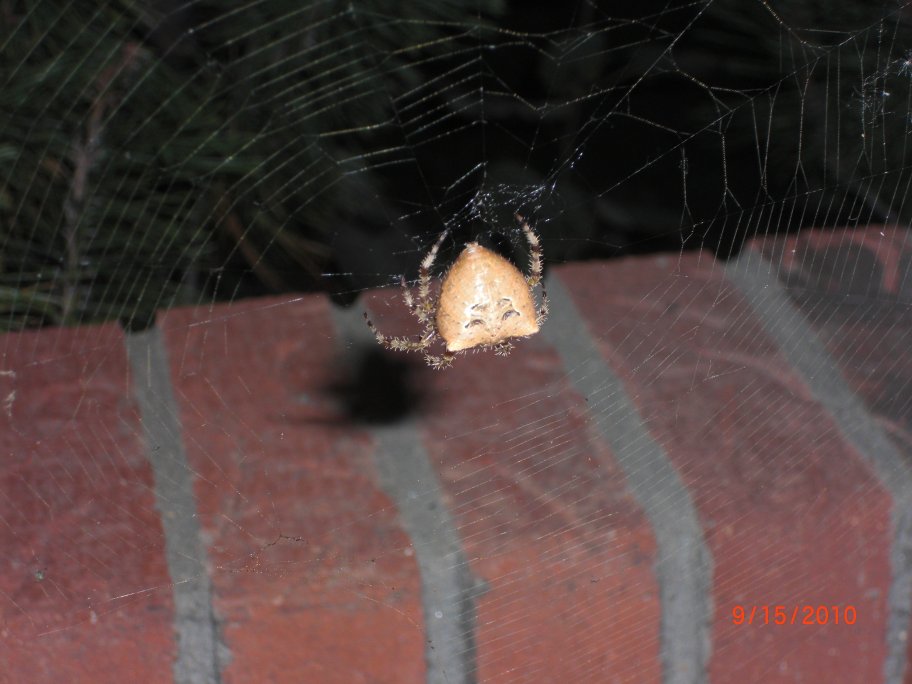
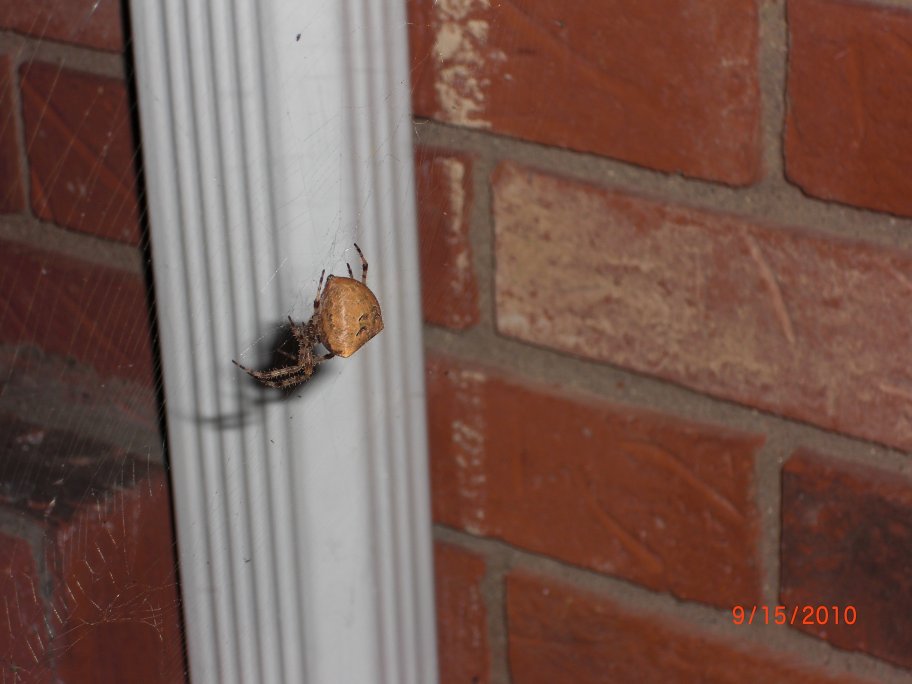
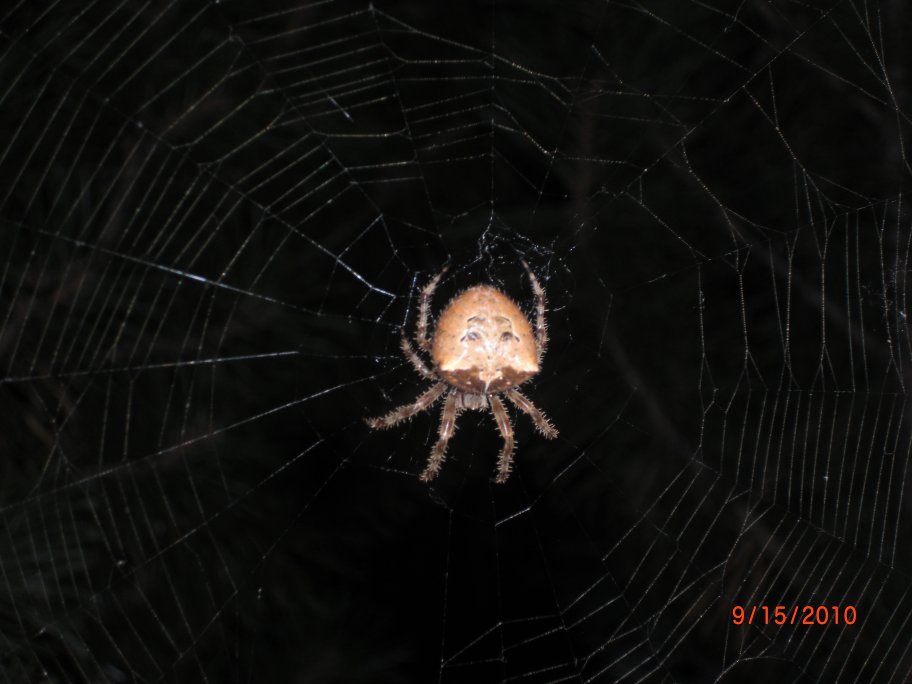
1. Cat-Faced Spider
2.
3.
4.
5.Tami photographed this Cat-Faced spider in our backyard during late summer 2010 It was really reluctant to come out during daylight so there was some difficulty with the darker exposure. We've named the spider "kitty," and are careful not to disturb its web at that area of the house. Immediately next to the web is our unusable outdoor grill because there's a wasp nest in it we don't want to disturb either!
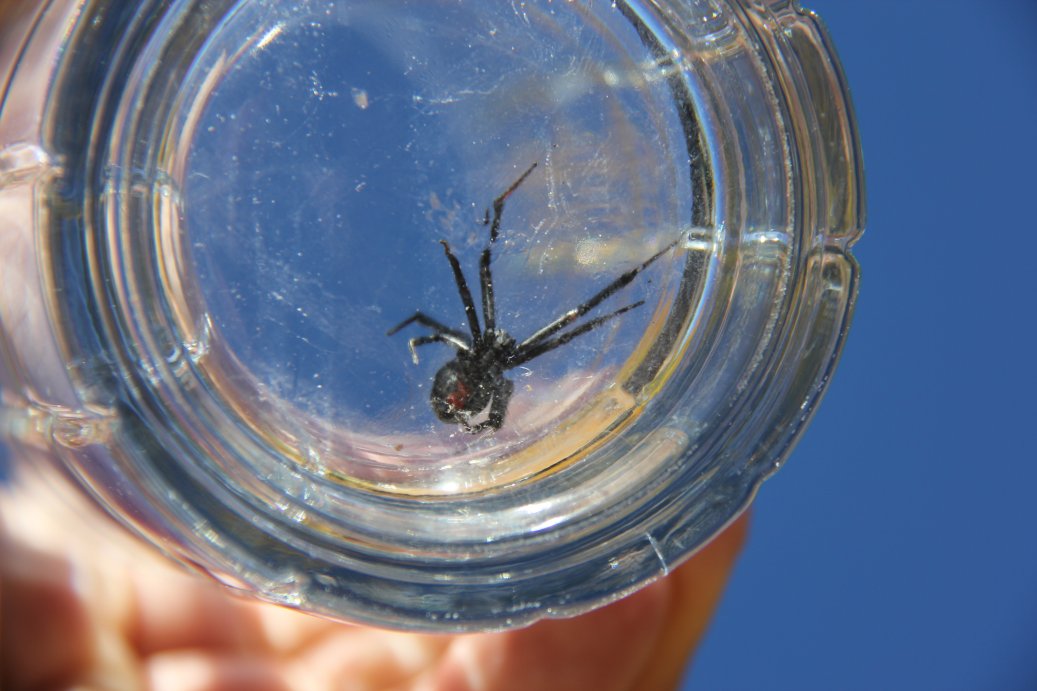
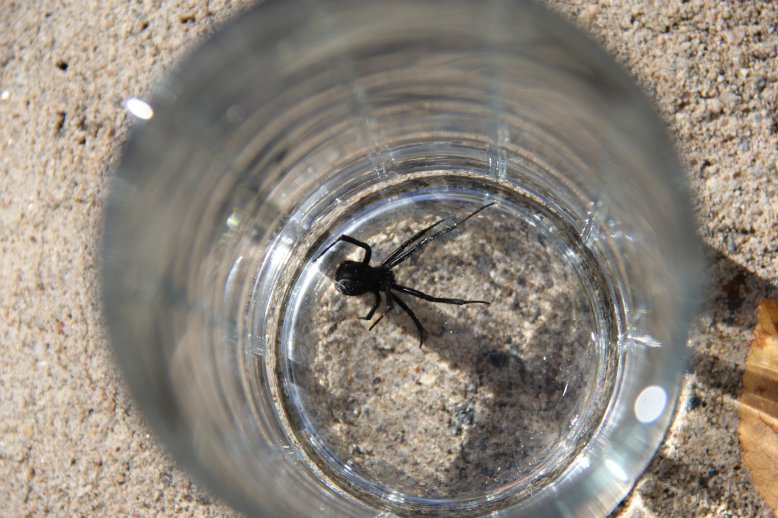
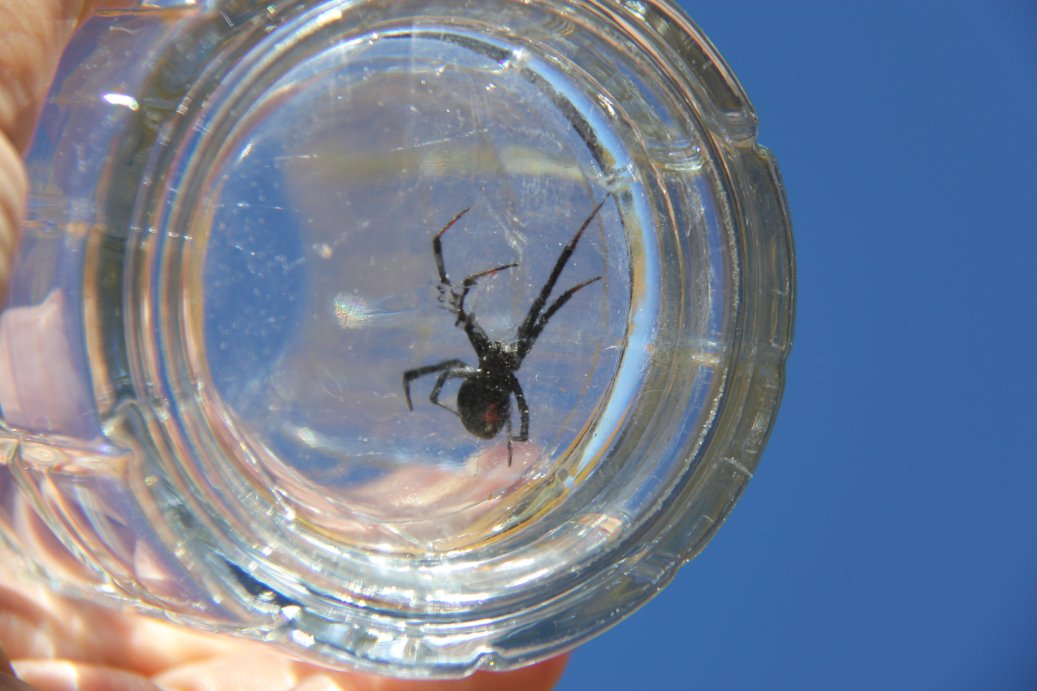
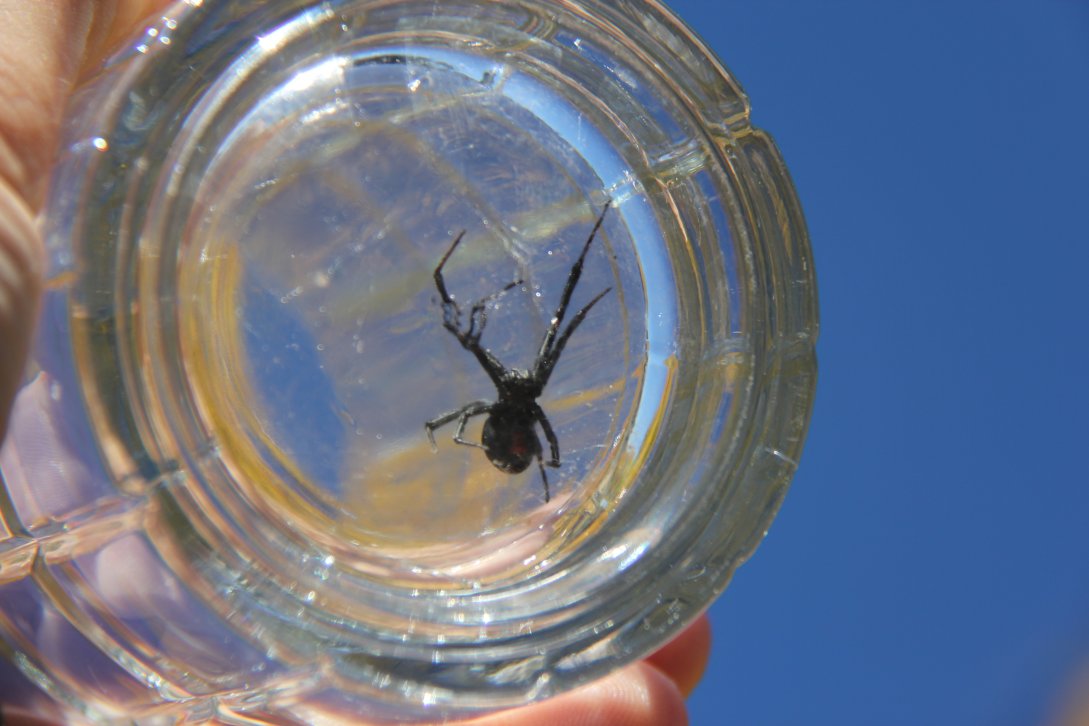
1. Black Widow Spider
2.
3.
4.
5.My son found this Black Widow spider in the lower level of our house west of Denver. For the many decades we've lived in Colorado I've probably encountered about a dozen Black Widow spiders in and around the various houses I've lived in or worked on. My son caught this particular one, with a drinking glass, which you can see being realeased in this YouTube video.
Click Here for my YouTube video of this Black Widow being released...
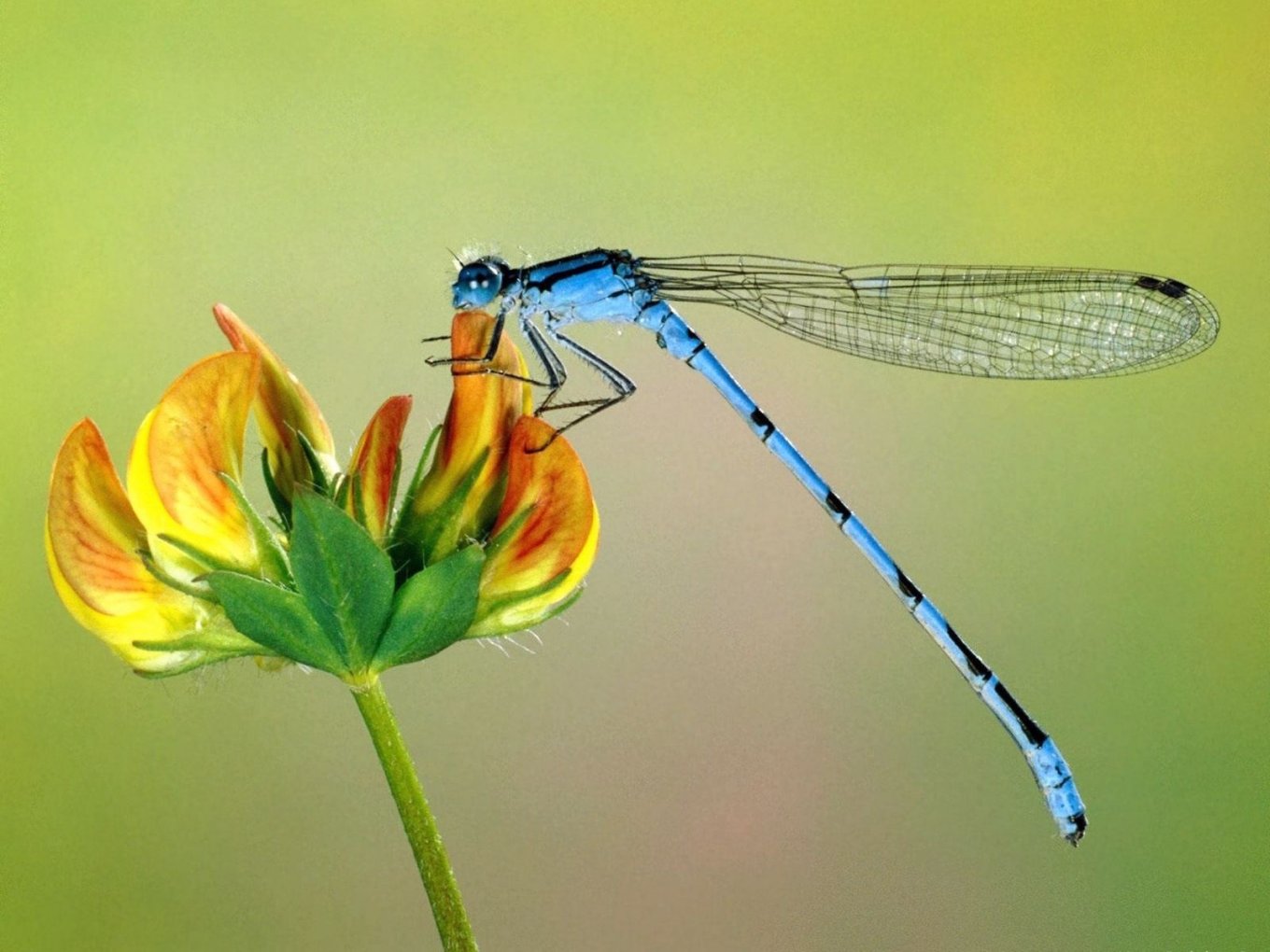
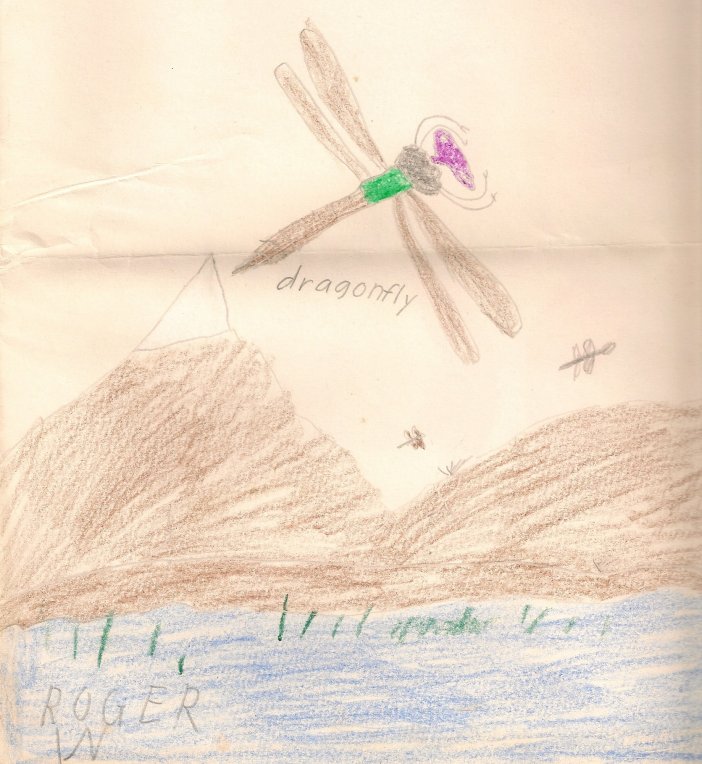
Dragonflies
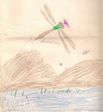
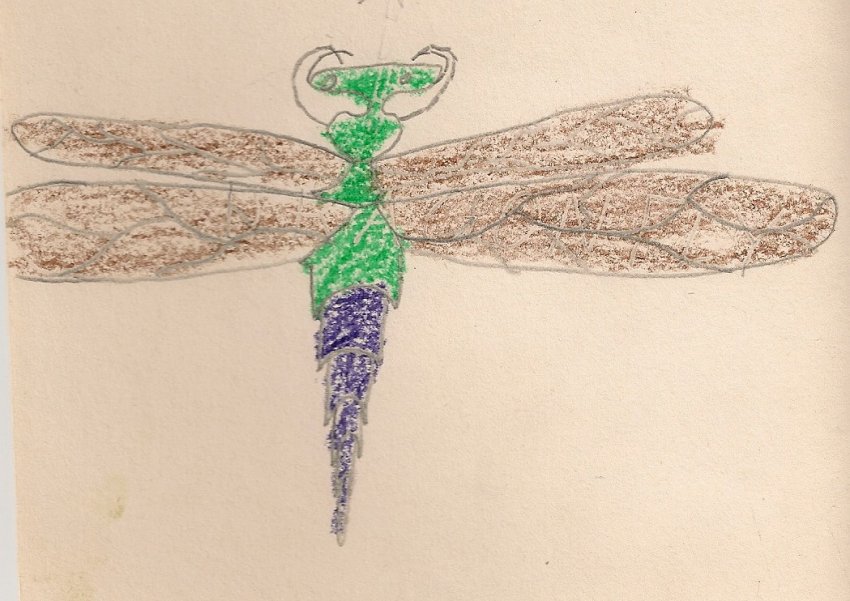
(My drawing of a dragonfly in 1966 at age 11)
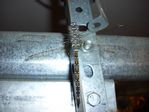
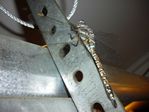
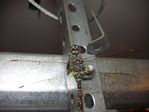
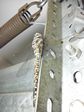
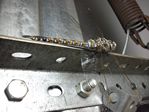
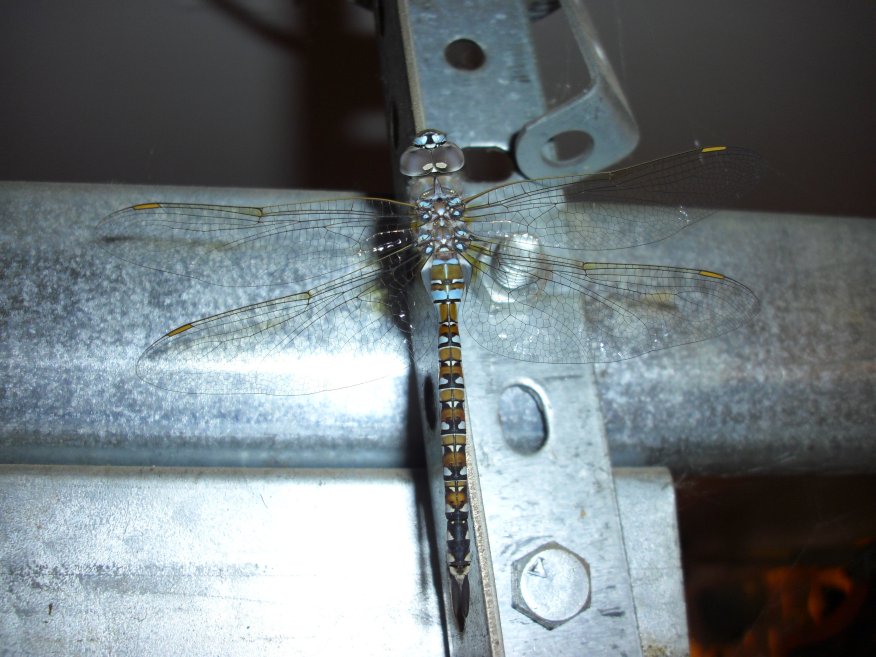
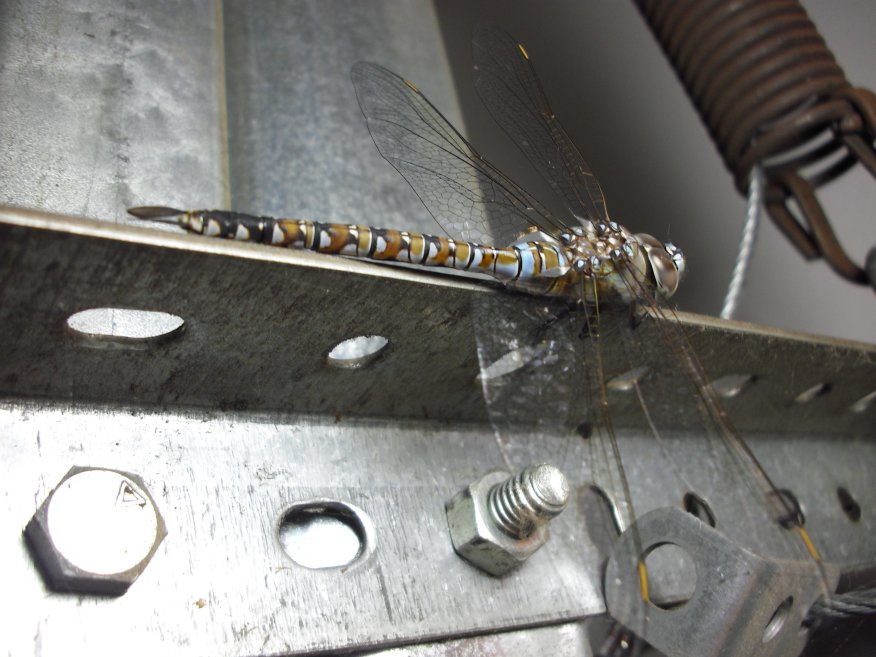
(A dragonfly near the ceiling of my garage in 2010)
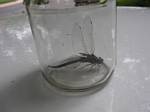
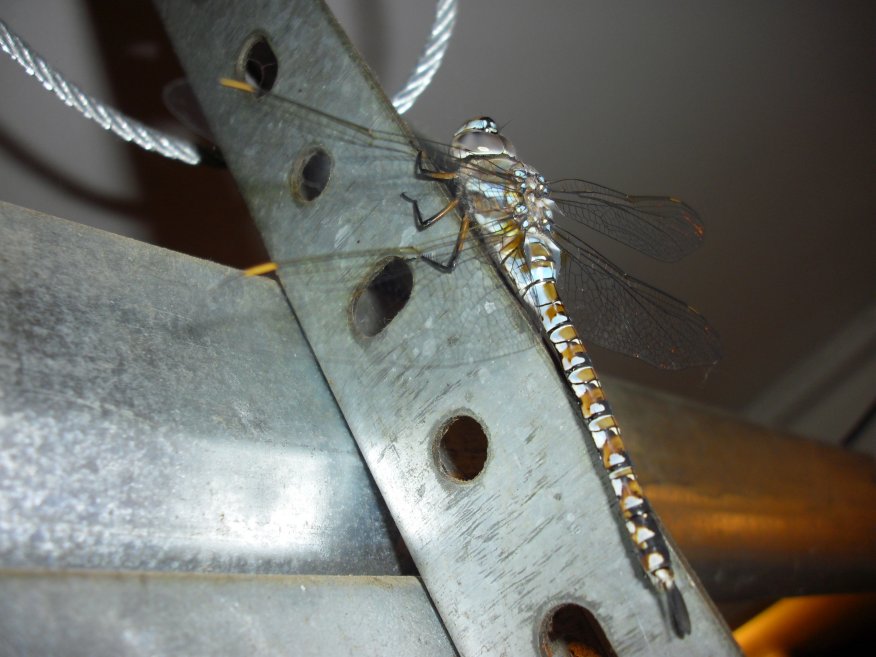
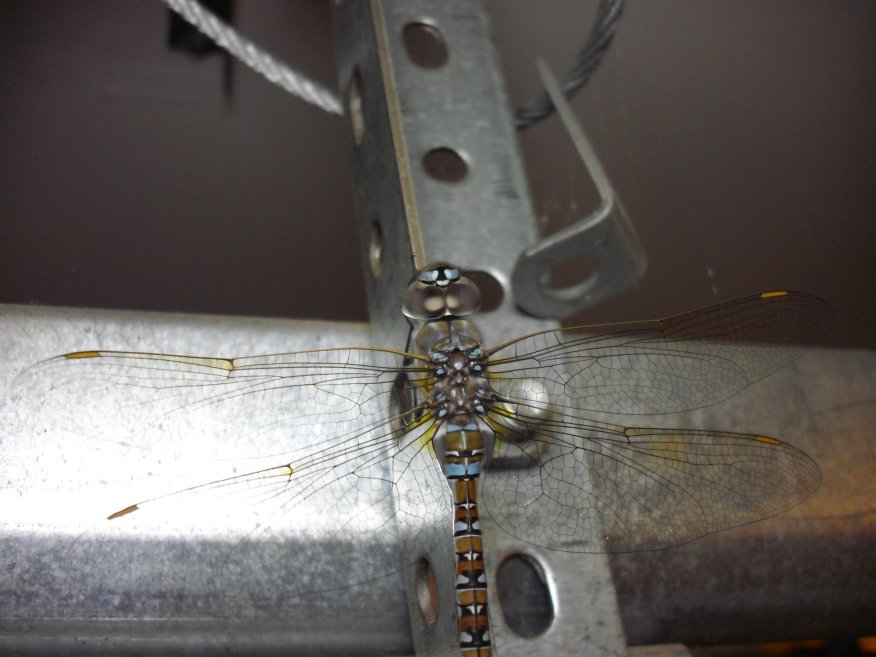
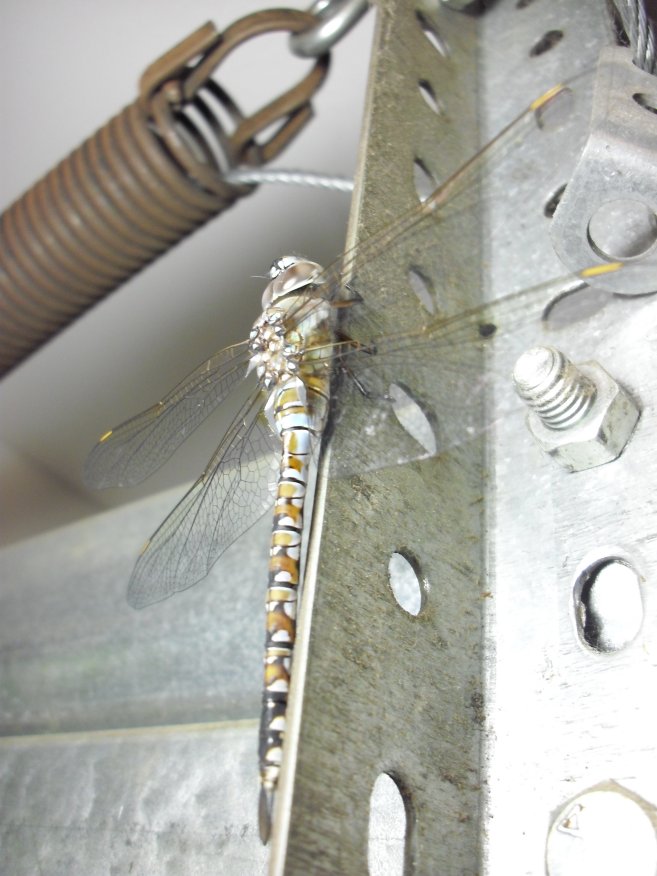
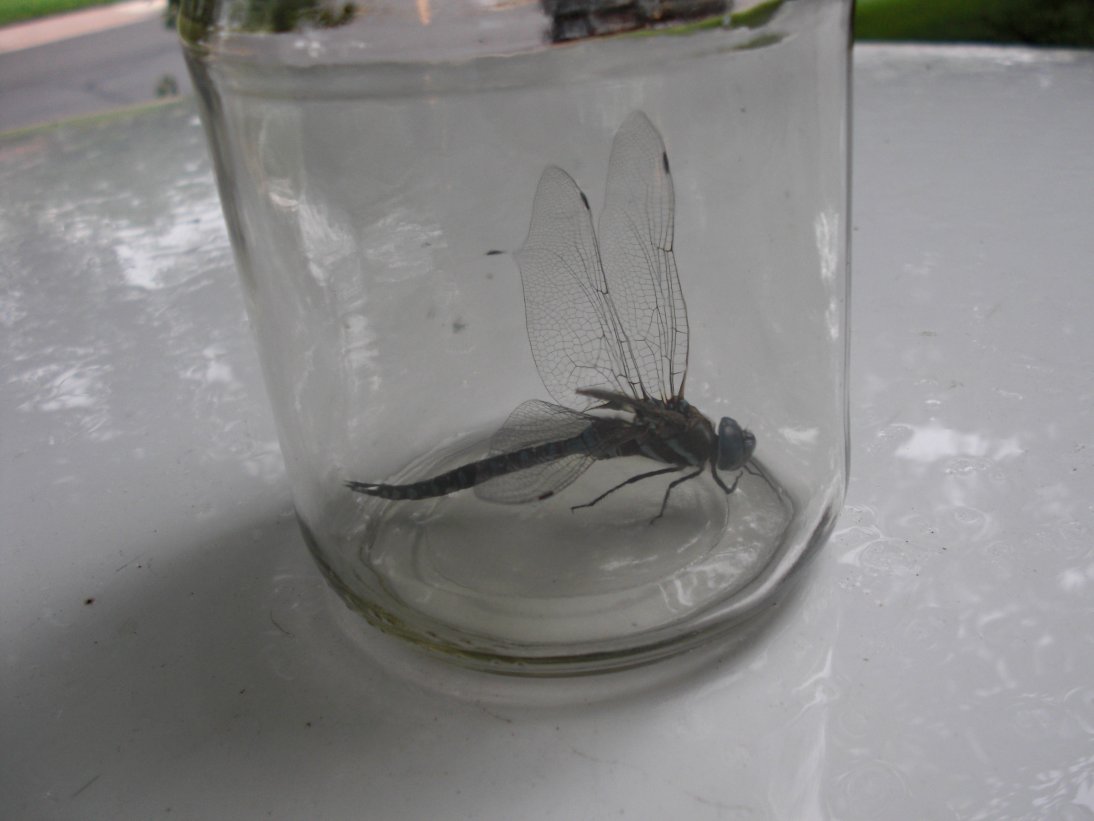
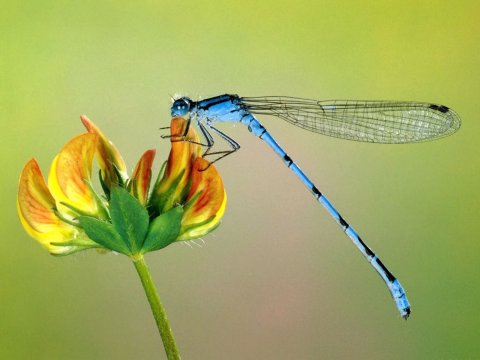
Dragonflies have always seemed so ancient and mysterious to me - I'm spellbound whenever one passes by as they're so relatively rare here in Colorado. Nevertheless, the one in the photo, at left, ended up in my garage, somehow, so I captured it for immediate release outside. Dragonflies are stout-bodied, non-stinging insects of the order Odonata (suborder Anisoptera) which apparently prey on mosquitoes. We don't have that many mosquitoes here in Colorado either - I think because it's too cold and dry for them or maybe the dragonflies are too efficient! Below is a series of shots I took in my garage of a different dragonfly almost a year later. That one rested for a very long time up in the garage door components. Although it was difficult to photograph the creature stood-still while I held a mechanic's light in one hand and a camera in the other - both just a few centimetres away from its body...
|
|
Click Here for my YouTube video of this dragonfly being released... |
Ten fast facts about dragonflies
as provided by the Bohart Museum of Entomology
University of California, Davis (2007)
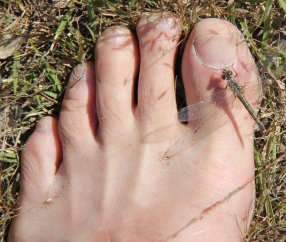
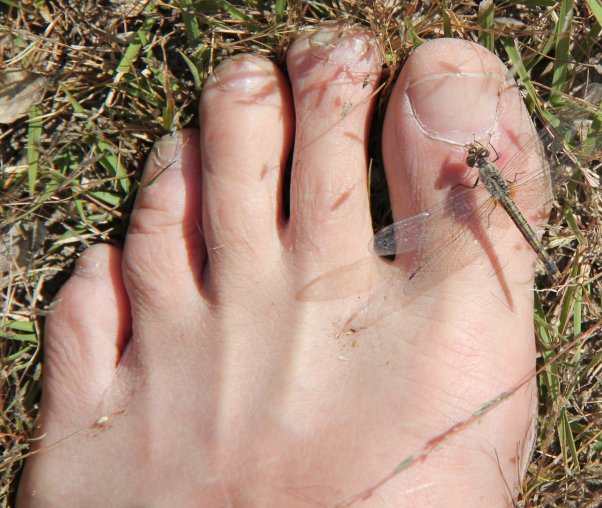
(That's my toe! Check out my Barefoot page!)
Other Insects I've Encountered Around the World:
Iguazu (Iguaçu) Falls
Argentina and Brazil
Snail
Moth
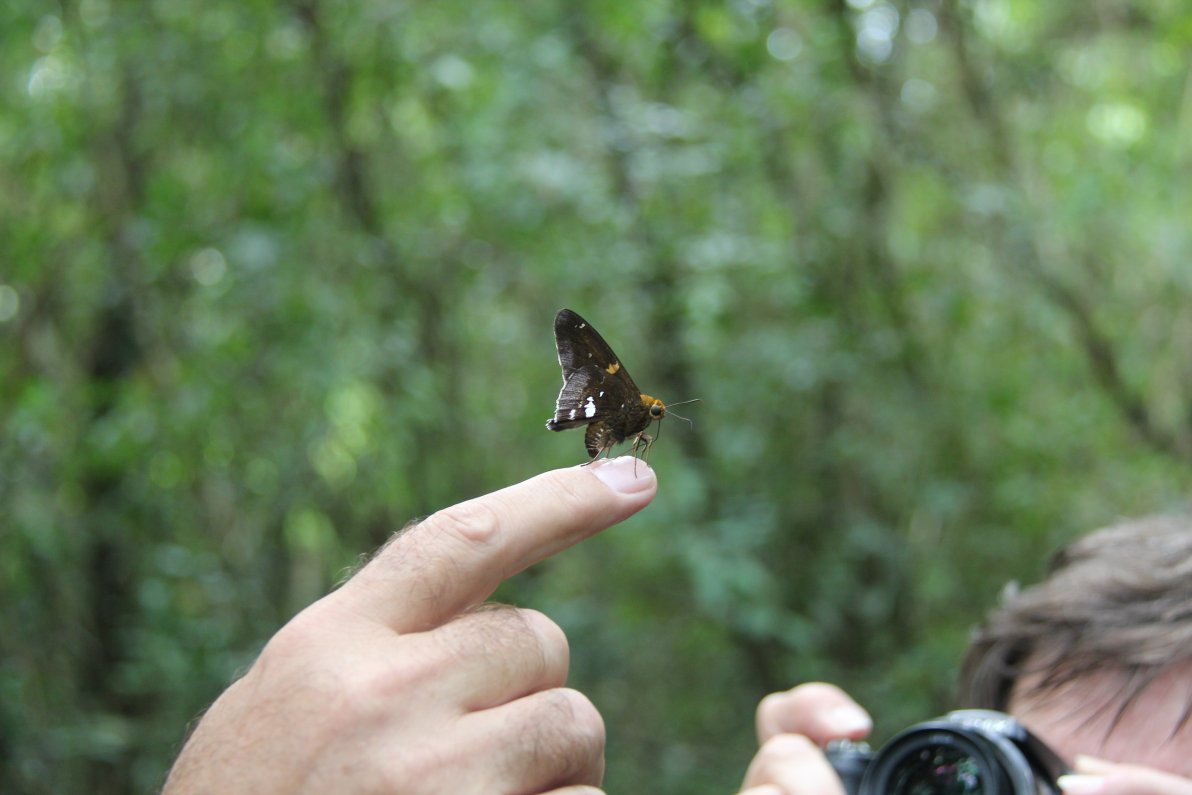
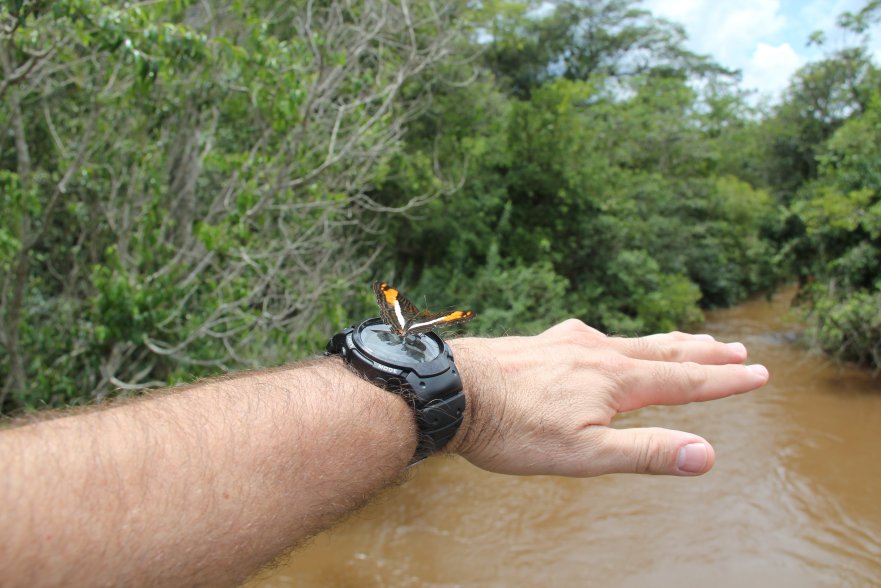
ButterflyIguazû Falls are waterfalls of the Iguazu River on the border of the Argentina province of Misiones and the Brazilian state of Paraná. The falls divide the river into the upper and lower Iguazu.
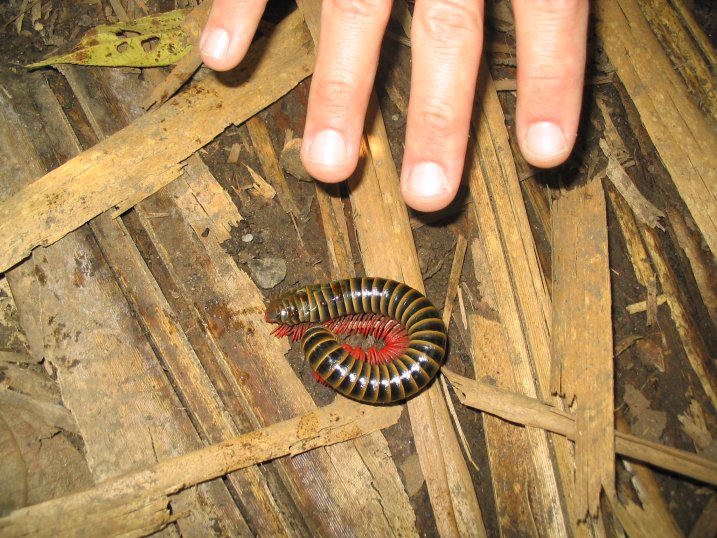
MillipedeI discovered this beautiful centipede-like creature (Millipede) on a heavily used forest trail in the higher part of the Amazon located in Ecuador. Unfortunately it appeared to have been injured so I doubt it had much chance of survival in a jungle environment...
[In early July, 2010 "Mistraker" commented about this millipede on my YouTube page saying this, "And that's a millipede you found in Ecuador. Looks damaged, but if it survived to its next molt, it'd be fine. It was probably bitten by something that thought it look tasty, and then dropped. They excrete bad tasting/toxic fluid from their sides when harassed, and most animals know better than to touch them, so it may well have survived from that point? on. That's why that species is brightly colored. They animals recognize them the second time around, and don't try to eat them again."]
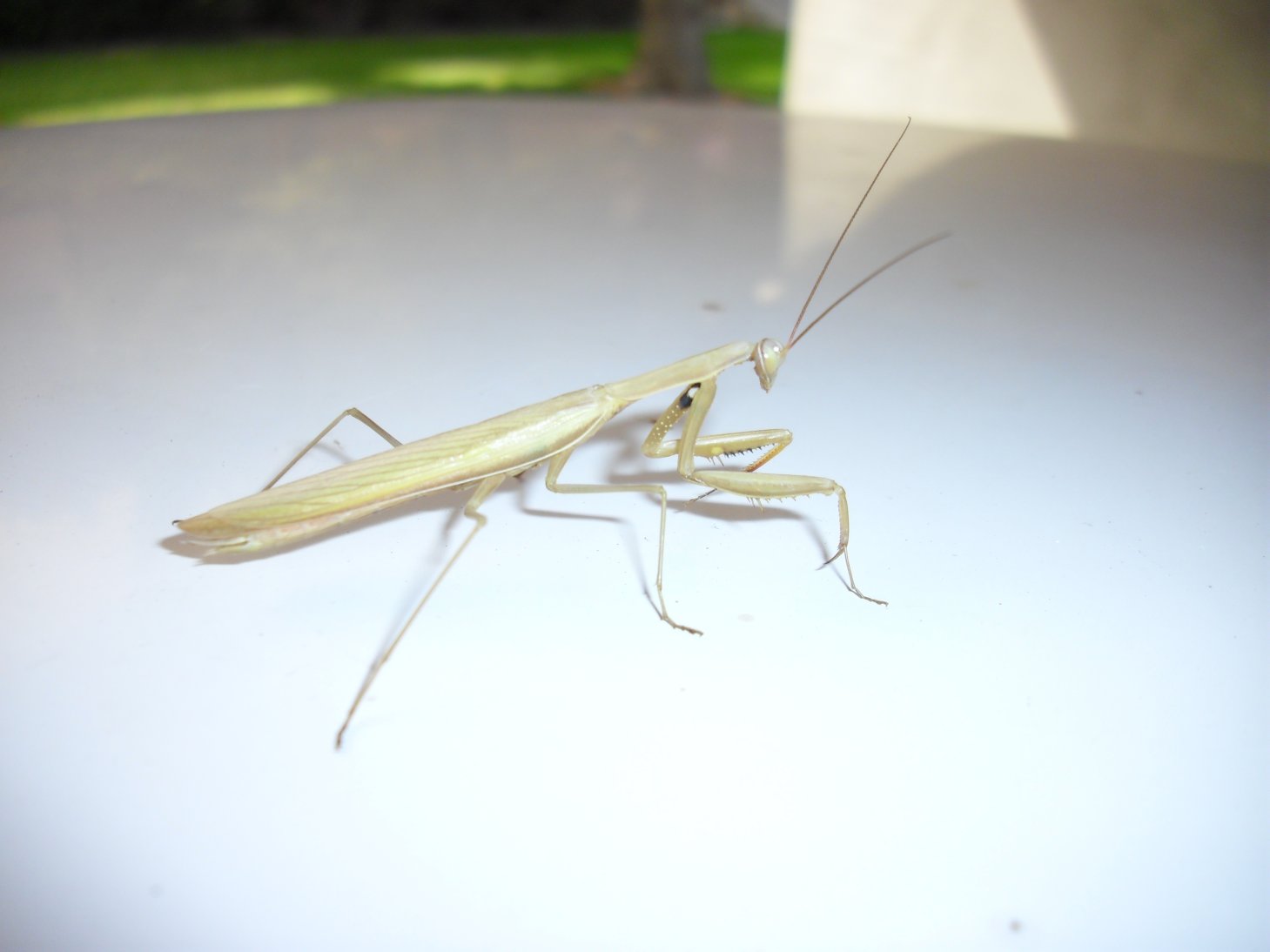
Praying Mantis on my carOkay, I know Colorado isn't "around the world" but I spend an extraordinary amount of time throughout many parts of my favorite state (and home) for both pleasure and business. In Grand Junction, near the Utah border, I found this Praying Mantis in my backseat (I keep windows down on warm and sunny days as I don't use air conditioning, etc.) and placed it gently on the roof using tissue paper. Maybe it was stunned (or simply relieved) but it stayed on my rooftop for nearly five minutes before deciding to fly away...
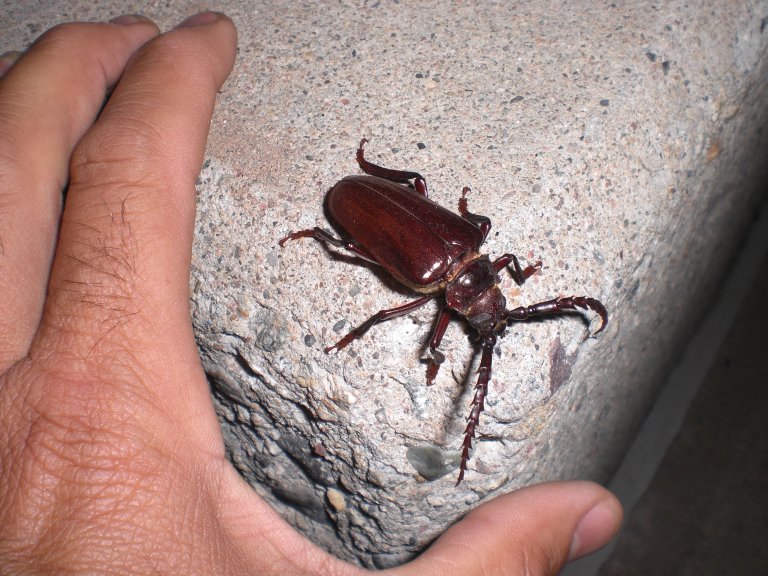
BeetleIt was about 04:30 am on a Saturday morning, and we pulled into this rest stop on I-70 just east of Glenwood Springs, Colorado. Near the restrooms, on a concrete bench, sat this very large and magnificent beetle. My guess is it was attracted to the light shining out from the glass waiting area outside the restroom. Anyway, this creature didn't seem to mind my hand nearby for the photo comparison - we left it unmolested after the photograph and went on our way (heading to the Aspen area to climb the Maroon Bells).
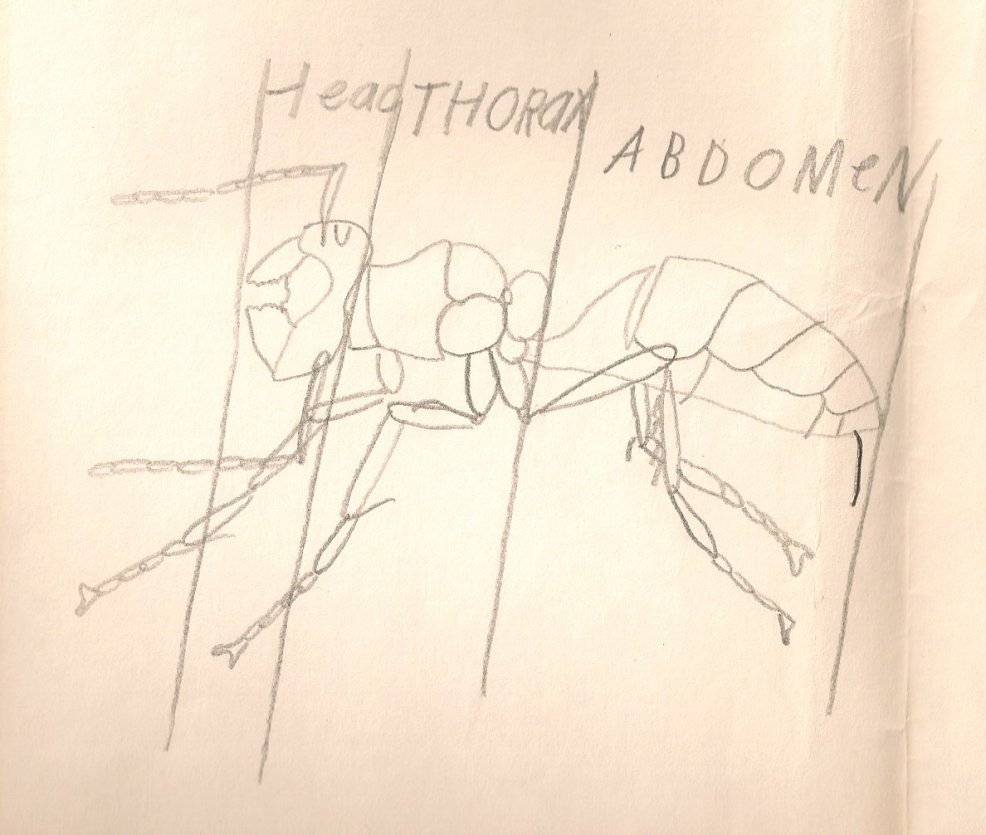
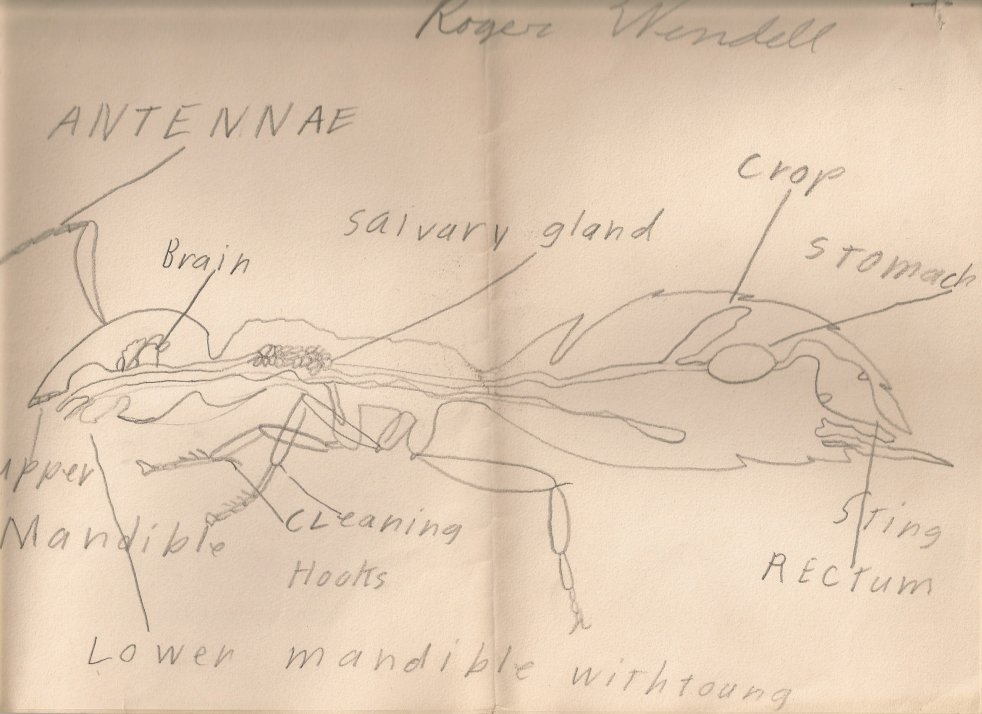
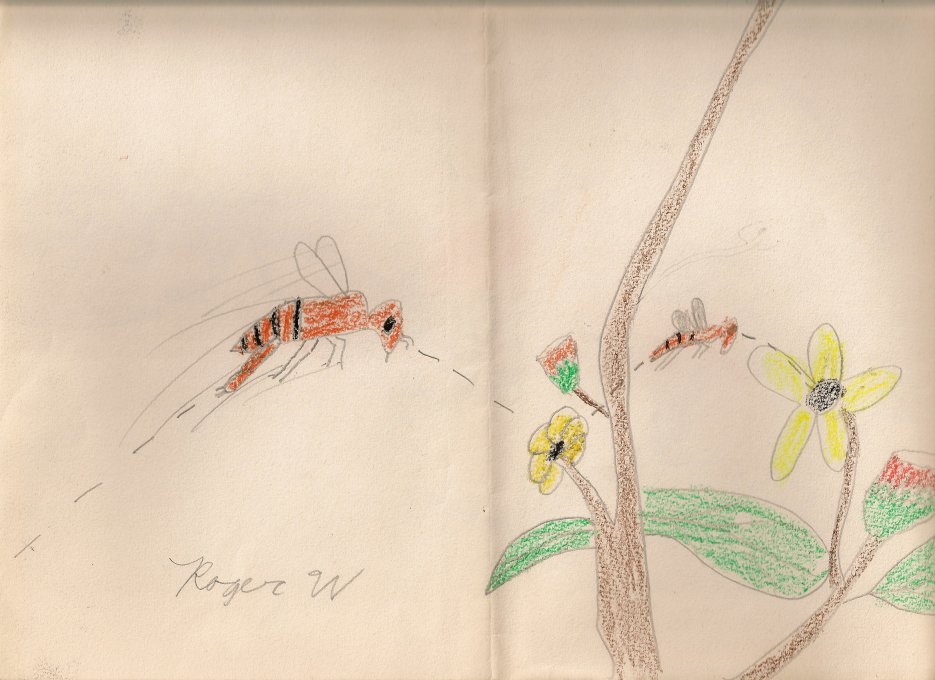
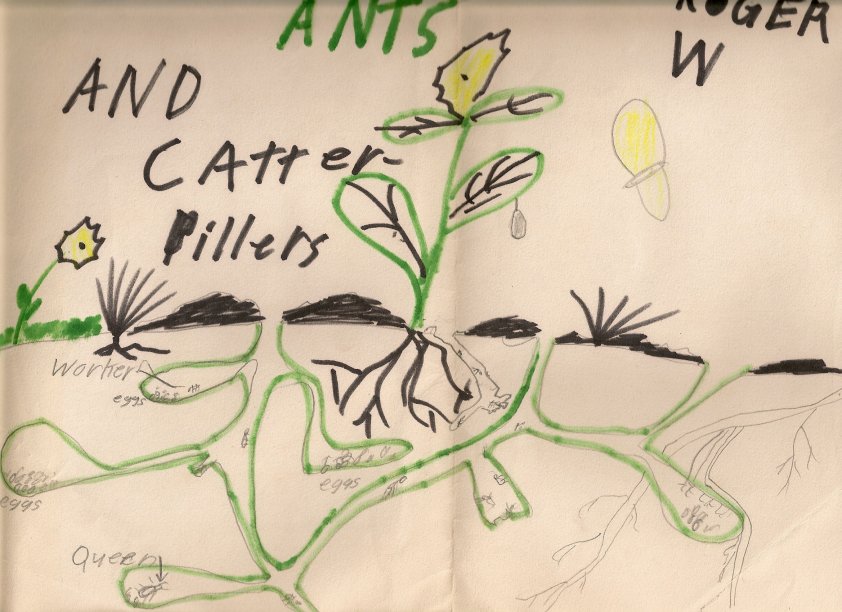
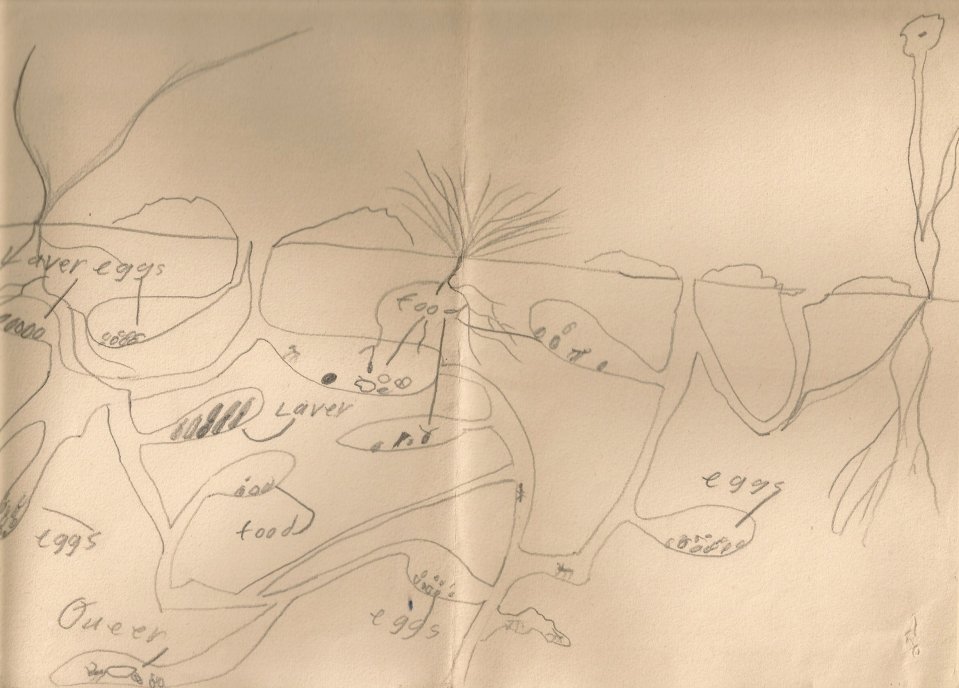
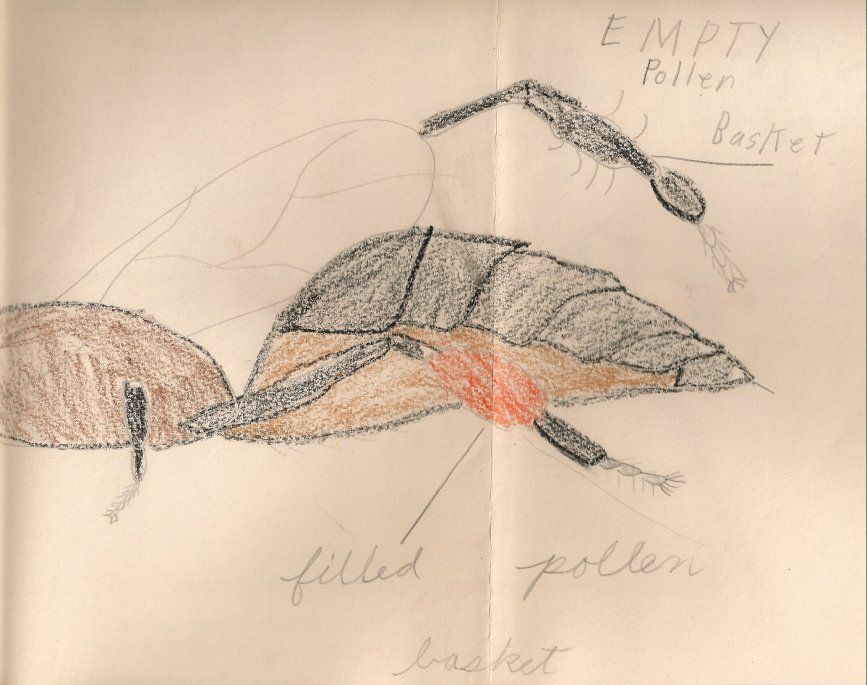
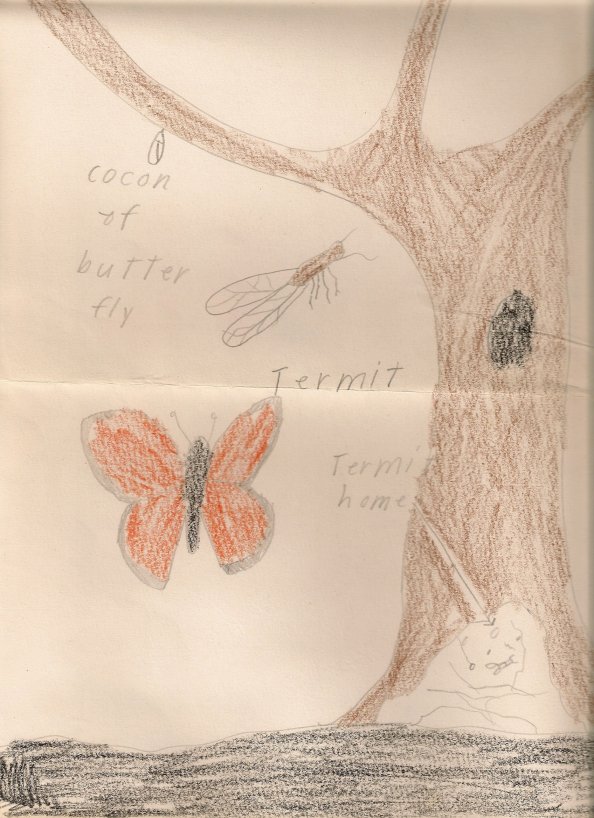
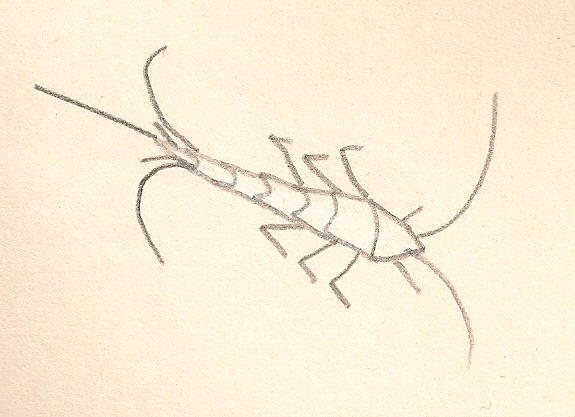
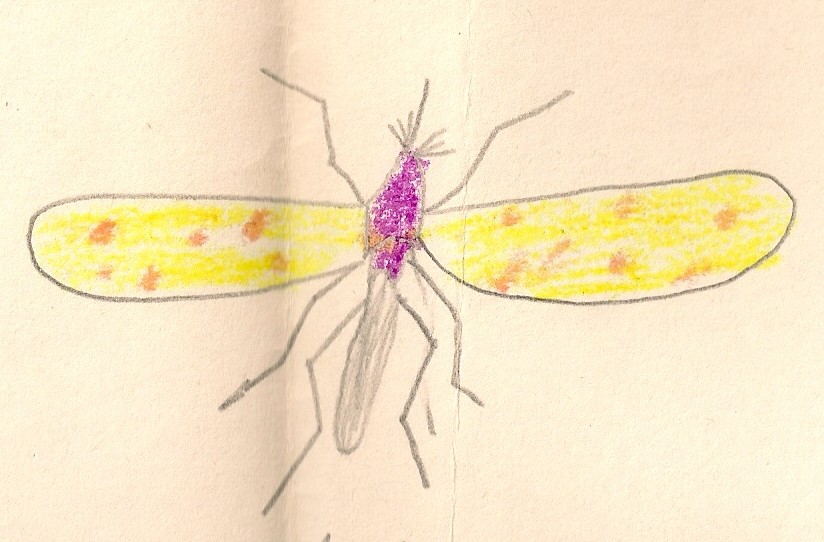
Drawings:
When I was a kid I enjoyed not only seeing
insects, but drawing them as well! These
drawings were made sometime in the early
'60s when I was between the ages of 8 and 11 years old...
|
|
More than 75 percent decline over 27 years in total flying insect biomass in protected areas
Caspar A. Hallmann , Martin Sorg, Eelke Jongejans, Henk Siepel, Nick Hofland, Heinz Schwan,
Werner Stenmans, Andreas Müller, Hubert Sumser, Thomas Hörren, Dave Goulson, Hans de Kroon
Published: October 18, 2017 https://doi.org/10.1371/journal.pone.0185809
Abstract:
"Global declines in insects have sparked wide interest among scientists, politicians, and the general public. Loss of insect diversity and abundance is expected to provoke cascading effects on food webs and to jeopardize ecosystem services. Our understanding of the extent and underlying causes of this decline is based on the abundance of single species or taxonomic groups only, rather than changes in insect biomass which is more relevant for ecological functioning. Here, we used a standardized protocol to measure total insect biomass using Malaise traps, deployed over 27 years in 63 nature protection areas in Germany (96 unique location-year combinations) to infer on the status and trend of local entomofauna. Our analysis estimates a seasonal decline of 76%, and mid-summer decline of 82% in flying insect biomass over the 27 years of study. We show that this decline is apparent regardless of habitat type, while changes in weather, land use, and habitat characteristics cannot explain this overall decline. This yet unrecognized loss of insect biomass must be taken into account in evaluating declines in abundance of species depending on insects as a food source, and ecosystem functioning in the European landscape."

|
Links: |
|
|
 Back to Roger J. Wendell's Home Page...

Abbey |
About |
Blog |
Contacting
Me |
Copyright |
Disclaimer |
Donate |
Guest
Book |
Home |
Links |
Site
Index |
Solutions |
Terms,
Conditions
and
Fair
Use |
What's
Changed
or
New?
Copyright
© 1955 -