Roger J. Wendell
Defending 3.8 Billion Years of Organic EvolutionSM

Biology Definition: The study of living organisms and life processes, including origins, classification, structure, activities, and distribution.
"An alternative and more common way to regard the genome is as a kind of instruction manual for the body. Veiewed this way, the chromosomes can be imagined as the book's chapters and the genes as individual instructions for making proteins. The oords in which the instructions are written are called codons, and the letters are known as bases. The bases - the letters of the genetic alphabet - consist of the four nucleotides..." "...adenine, thymine, guanine, and cytosine."
- Bill Bryson in his book, A Short History of Nearly Everything, p. 408

|
Click Here for my page about Science... |
|
|
Click Here for my page about Plants! |
|
|
Click Here for my page on Life... |
|
|
Click Here for my page on Evolution... |
|
|
Click Here for my page about Paleontology! |
What is Life?
The 1976 edition of the Basic Biology textbook, by Richard A. Goldsby, starts out with, "Biology is defined as the study of life. But what is life?"Mr. Goldsby said, "To explore the characteristics of life in general, three approaches are available. The first can be called the functional approach. It is based on a simple idea: life is what life does. It is easy to list all the characteristic activities of life, or the behavior of living things. In fact, a few decades ago such lists were often used as the basis for defining life. But this was a purely physiological definition. The second approach is genetic. [Goldsby's emphasis] It is based on the premise that if we can learn how life began we will then understand what life is. Finally there is the structural approach. We can try to understand life by studying the physical and chemical organization of life. Each of these approaches has its limitations. Together, however, they form the basic tools with which the biologist is able to explore the nature of life and the nature of all living things." (p. I)
In his page IX summary, Goldsby went on to say, "We can easily classify most things as being either living or nonliving. But what do we use as the basis for such classification? Exobiologists at NASA have concluded that only two characteristics can be considered truly fundamental to life. One is the ability to reproduce. The other is the ability to produce and perpetuate genetic variation among offspring. The second characteristic is important because it enables a species to survive drastic environmental change by itself changing. Individuals with a trait that has survival value under changing conditions are more likely to live and reproduce. Those with the valuable trait will thus pass it on to their offspring. In time, the entire population will possess it."
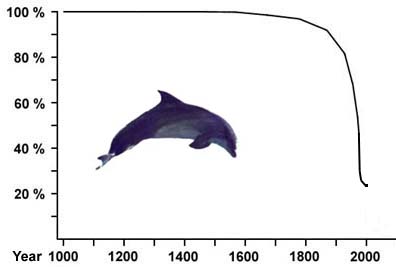
Goldsby is pointing in the direction of evolution, another subject of interest to me, but the main idea for this page is life and living things. Think, for a moment, how marvelous, wonderful and special living things actually are. Plants, insects, mammals, fish - they're all more wonderful and amazing than anything the human mind could ever invent or imagine. I, myself, am swept away with the mystery of it all and can only begin to explain and illustrate how important living things, all living things, really are in this world. Of course as I write this, in 2006, much of life has been destroyed, or is being destroyed, by human greed and indifference.
Nevertheless, as time permits, I'll add bits and pieces that are of biological interest to this page. With a little luck, my effort my help reverse a trend that's wrecking so much havoc on the natural world. And, there are countless other works equal or better to Godlsby's conttribution. I just happened across his book, exactly 30 years after it was first published, and found it an appropriate start for a fascinating subject - life!
- Roger J. Wendell
Golden, Colorado - spring 2006
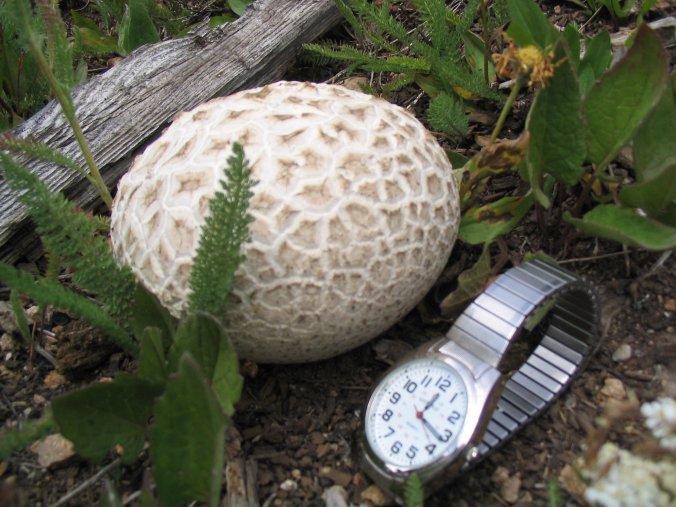 Mushroom I found near Ken Booker's memorial in the Colorado Rockies in August 2004... |
|
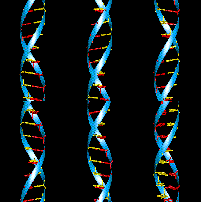
(deoxyribonucleic acid) adenine thymine guanine cytosine |
Life Defined
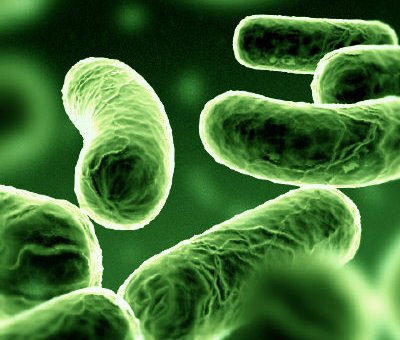
At the time I created this page, there were four biological groups recognized by modern science.
Here's a brief summary of each:
- Archaea - a recently discoved group of oranisms that live in extremely hostile habitats like thermal volcanic vents, saline pools, and hot springs. Archaea are single-celled organisms that are similar in appearance to bacteria are very different biochemically and genetically. They're sometimes referred to as archaebacteria.
- Bacteria - simple single-celled organisms that usually lack chlorophyll (cyanobacteria is an exception) and have a prokaryote (organisms without a cell nucleus) type.
- Eukaryota - organisms in which the cells have their genetic material organized into a membrane-bound nucleus or nuclei. This group of life includes the kingdoms Protista (group of organisms comprising those eukaryotes that are not animals, plants, or fungi - Protists can move independently and feed by absorbing other cells), Fungi (Fungi were originally classified as plants, however have since been separated as they are heterotrophs. This means they do not fix their own carbon through photosynthesis, but use carbon fixed by other organisms for metabolism), Animalia (Animals are multi-cellular, capable of locomotion, responsive to their environment, and feed by consuming other organisms), and Plantae (Plants like trees, flowers, herbs, ferns, and mosses).
- Viruses - fragments of DNA or RNA that depend on the host cells they infect for reproduction. Viruses are not cells and are, at times, metabolically inert and technically non-living. Viruses cause a variety of diseases in Euukaryote organisms - including humans...
|
Population Biology Dr. C.N Slobodchikoff, Prairie Dogs (Communication and Community in an Animal Society), pp. 94-95 |
"Population biology is the study of how populations of organisms change through time. Before we discuss population biology of prairie dogs we need to define some basic guiding principles of the discipline. First and foremost is the definition of a population. A population is simply a group of plants, animals, or other organisms of the same species that live together. In some cases the actual determination of populations is rather challenging, especially in the case of solitary animals like mountain lions and grizzly bears that live in individual territories but interact to reproduce. In this case one must define where the interactions between a group of grizzlies stop and where another interactive group starts and this is often very time consuming and nebulous.""The growth and decline in populations of all species are due to four major factors: births, deaths, emigrations, and immigrations. If births and immigrations exceed deaths and emigrations, the population will grow. If deaths and births and immigrations balance deaths and emigrations, the population will stay static. Thus, because population biology is the study of how populations change, it is essentially the study of births, deaths, emigration, and immigration and the factors that affect these four variables (Wilson and Bossert 1971)."
Miscellaneous Definitions:
|
|
|
Click Here for pronunciation of biological Latin... |
Taxonomy
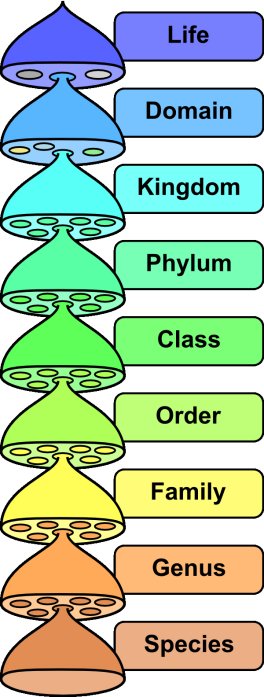
Illustration by Peter HalaszClassification, or taxonomy, is a system of categorizing living things. There are seven divisions in the system: (1) Kingdom; (2) Phylum or Division; (3) Class; (4) Order; (5) Family; (6) Genus; (7) Species. Kingdom is the broadest division. Although scientists aren't in agreement as to exactly how many kingdoms there are, most support a five-kingdom system: Animalia, Plantae, Protista, Monera, and Fungi. The lowest division on the taxonomic or classification scale is species - defined as organisms that are capable of interbreeding to produce fertile offspring. Species are identified by two names (binomial nomenclature). The first name is the genus, the second is the species.
Prokaryotic vs Eukaryotic
All cells are broadly classified as either prokaryotic cells or eukaryotic cells - depending on whether their genetic materials are enclosed in a nucleus or not. *Morphology is a branch of biology dealing with the study of the form and structure of organisms and their specific structural features.
- Prokaryotic cells: From a morphological* point of view, prokaryotic cells are the most primitive. They do not contain a definite nucleus and the chromatin† bodies remain scattered inside the cytoplasm‡. This type of nucleus (without a nuclear membrane) is called a "nucleoid." Examples include bacteria and cyanobacteria (blue green algae).
- Eukaryotic cells: These are believed to have been evolved from the prokaryotes. They contain a definite nucleus with the chromatin† bodies enclosed by a nuclear membrane. Eukaryotic cells are larger than the prokaryotes and show better structural organisation and increased functional efficiency than prokaryotes.
†Chromatin is a complex of DNA and proteins that forms chromosomes within the nucleus of eukaryotic cells. Nuclear DNA does not appear in free linear strands; it is highly condensed and wrapped around nuclear proteins in order to fit inside the nucleus.
‡Cytoplasm is a thick solution that fills each cell and is enclosed by the cell membrane. It is mainly composed of water, salts, and proteins. In eukaryotic cells, the cytoplasm includes all of the material inside the cell and outside of the nucleus.
Links:
|
|
 Back to Roger J. Wendell's Home Page...

Abbey |
About |
Blog |
Contacting
Me |
Copyright |
Disclaimer |
Donate |
Guest
Book |
Home |
Links |
Site
Index |
Solutions |
Terms,
Conditions
and
Fair
Use |
What's
Changed
or
New?
Copyright
© 1955 -