Roger J. Wendell
Defending 3.8 Billion Years of Organic EvolutionSM

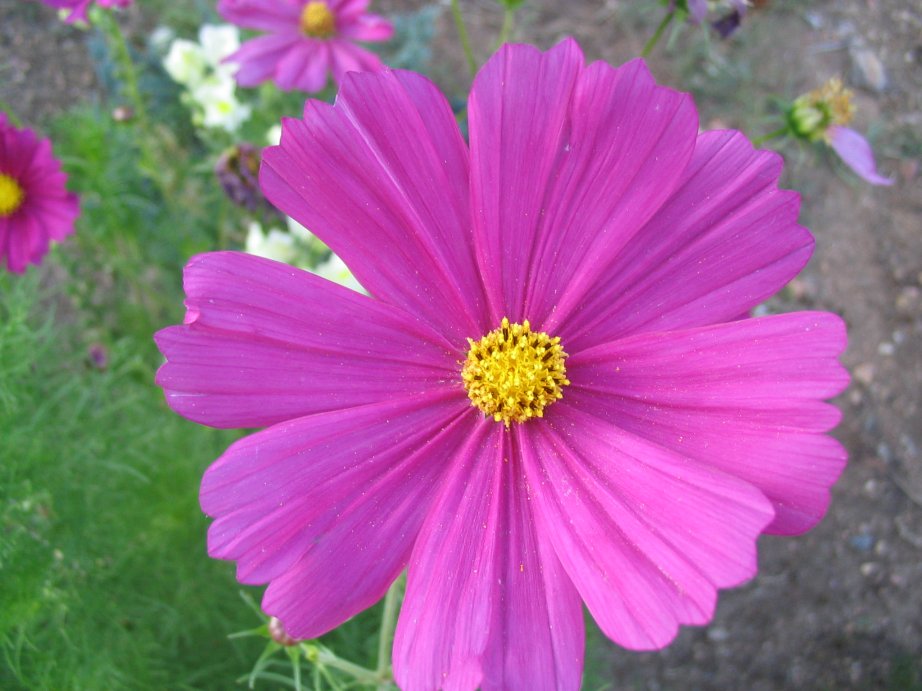 Cosmos bipinnatus(?) photo by me! |
Biodiversity
Definition: The diversity and variety of plants, animals and |
Every living thing in an ecosystem, with maybe the exception of humans, is part of the web of life. Each creature, and each species of vegetation, has a place on Earth and plays a vital role in perpetuating the great circle of life. Plant, animal, and insect species interact and depend upon one another for what each offers, such as food and nutrients, shelter, soil enrichment, biotic pollination, aeration and photosynthesis. The "Tree of Life" also includes, of course, all Archae (prokaryotic microorganisms and single-celled organisms whose cells have no nucleus), Bacteria, and Eukarya (all other life that has a nucleus and membrane-bound organelles). The point being that there's been a huge array and variety of living forms on this planet for nearly 3.8 Billion years. With the exception of a few Extinction periods, life has flourished on this planet until now - now life is on the run in nearly every corner of this planet thanks to human indifference and overpopulation. We can do better than this. We must do better.
- Roger J. Wendell
Summer Solstice, 2014

|
Click Here for my page about plant biology... |
|
|
Click Here for my page about animals... |
|
|
Click Here for my page about insects... |
|
|
Click Here for my page on Evolution... |
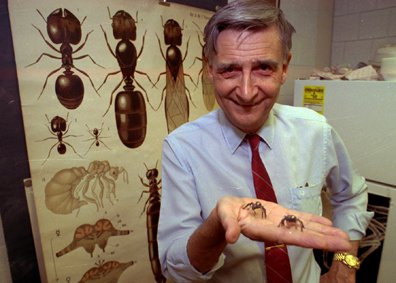 Edward O. Wilson |
New Speices
"WHAT IS THE ORIGIN of biological diversity? This profoundly important problem can be most quickly solved by recognizing that evolution creates two patterns across time and space. Think of a butterfly species with blue wings as it evolves into another species with purple wings. Evolution has occurred but leaves only one kind of butterfly. Now think of another butterfly species, also with blue wings. In the course of its evolution it splits into three species, bearing purple, red, and yellow wings respectively. The two patterns of evolution which is vertical change plus the splitting of the original population into multiple races or species. The first blue butterfly experienced pure vertical change without speciation. The second blue butterfly experienced pure vertical change plus speciation. Speciation requires vertical evolution, but vertical evolution does not require speciation. The origin of most biological diversity, in a phrase, is a side product of evolution." The Diversity of Life, p. 51 |
- Richard E. Leaky in his book, The Sixth Extinction, p. 221
- Captain Paul Watson, Sea Shepherd Conservation Society
Report on the Death of Environmentalism is Merely Wishful Thinking
Lowbagger.org - February, 2005
- Earth First! Biocentric Approach
(from their Biodiversity Project pamphlet circa 1989)
- Russ Finely in his book Poison Darts
(Protecting the biodiversity of our world) p. XVIII
- Richard Klein and Blake Edgar
Dawn of Human Culture, p. 252
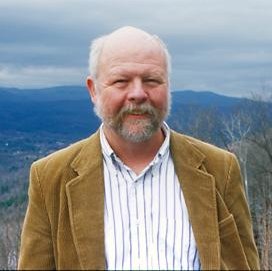 Dave Foreman |
The Pleistocene-Holocene Event: Forty Thousand Years of Extinction Dave Foreman in his book, Rewilding North America (A Vision for Conservation in the 21st Century), pp. 26-27 |
"During these forty millennia, human beings have wrought a slaughter in the diversity of life. Duke University's John Terborgh, who, along with Soulé,* was selected by Audubon magazine as one of the hundred greatest conservationists of the twentieth century, has looked at the loss of big animals in North America and concludes,"*Michael E. Soulé is a U.S. biologist, best known for his work in promoting the idea of conservation biology.'That we should live in a world without megafauna is an extreme aberration. It is a condtion that has not existed for the last 250 million years of evolutionary history."However, even a half-dozen species of large ungulates (hoofed, grazing, or browsing mammals, ranging in size from tiny antelope to elephants) is less than normal. I spent three weeks in southern Africa in 1998. Traveling through an area smaller than the eastern United States, I saw twenty-two species of ungulates out of a total number of forty-two. Eastern North America is truly an empty landscape."
To add perspective to the above, let us reflect on the fact that the entire eastern half of the North American continent south of the North Woods supports only one ungulate, the white-tailed deer . . . eastern North America is unique: all other continental mammal assemblages include a number of ungulates, frequently a half-dozen species or more.'"Even western North America has a pitifully small number of large mammals - there are only nine species of large native ungulates in the western United States and northern Mexico. It has only recently been so barren. Thirteen thousand years ago, what is now the western United States and northern Mexico hosted at least thirty-one species of large ungulates, including five species of mammoths and mastodons. While today this area has five species of large carnivores (if we count the very rare and largely absent grizzly bear, gray wolf, and jaguar), thirteen thousand years ago there were ten large carnivores spread across the landscape. By megafauna and large, paleontologists mean animals weighing 100 pounds (44 kg) or more."
|
Edward O. Wilson
The Diversity of Life, p. 74 "Great biological diversity takes long stretches of geological time and the accumulation of large reservoirs of unique genes. The richest ecosystems build slowly, over millions of years. It is further true that by chance alone only a few new species are poised to move into novel adaptive zones, to create something spectacular and stretch the limits of diversity. A panda or a sequoia represents a magnitude of evolution that comes along only rarely. It takes a stroke of luck and a long period of probing, experimentation, and failure. Such a creation is part of deep history, and the planet does not have the means nor we the time to see it repeated." |

|
"In recent years, scientists have devoted a great deal of effort to studying Earth's biodiversity, the total variety of life. Most often, people talk about biodiversity in terms of ecology and conservation, but there is much more to it. Biodiversity can be quantified. It is a measure of the results of evolution. It is like a master index of all the populations of all the species that have come into existence today and all those that have been lost to extinction." p. 84
"When we look at the fossil record, we see that biodiversity has been generally on the rise since the beginning of life some 3.5 billion years ago: The Tree of Life keeps getting bushier. If indeed we all are descendants of a common ancestor, this is just what we would expect. With every reproduction, there is a chance for a mutation that may or may not prove to be beneficial to the offspring. It it's beneficial, that organism, along with its genes, survives well enough to reproduce, passing its genes forward one more generation. With this happening over and over and over, all day, all the time, around Earth, we end up with species after species distributed everywhere." p. 84 "Biodiversity is a result of the process of evolution, and it is also a safety net that helps keep that process going. In order to pass our own genes into the future and enable our offspring to live long and prosper, we must reverse the current trend and preserve as much biodiversity as possible. If we don't, we will sooner or later join the fossil record of extinction." p. 94 |
How Many Species Are There on Earth and in the Ocean?
by Camilo Mora , Derek P. Tittensor, Sina Adl, Alastair G. B. Simpson, Boris Worm
Published: August 23, 2011 at: http://dx.doi.org/10.1371/journal.pbio.1001127
Abstract
"The diversity of life is one of the most striking aspects of our planet; hence knowing how many species inhabit Earth is among the most fundamental questions in science. Yet the answer to this question remains enigmatic, as efforts to sample the world's biodiversity to date have been limited and thus have precluded direct quantification of global species richness, and because indirect estimates rely on assumptions that have proven highly controversial. Here we show that the higher taxonomic classification of species (i.e., the assignment of species to phylum, class, order, family, and genus) follows a consistent and predictable pattern from which the total number of species in a taxonomic group can be estimated. This approach was validated against well-known taxa, and when applied to all domains of life, it predicts ~8.7 million (+/- 1.3 million SE) eukaryotic species globally, of which ~2.2 million (+/- 0.18 million SE) are marine. In spite of 250 years of taxonomic classification and over 1.2 million species already catalogued in a central database, our results suggest that some 86% of existing species on Earth and 91% of species in the ocean still await description. Renewed interest in further exploration and taxonomy is required if this significant gap in our knowledge of life on Earth is to be closed."

|
Miscellaneous Definitions: |
- Allelopathy - Root secretions that kill other plants.
- Angiosperms - Plants that flower and form fruits (ovary) with seeds (the Earth's most common plant form) - see Gymnosperms below.
- Anhydrobiosis - Life without water - is an adaptation common to many water-hole creatures.
- Biomimicry - Is (from www.BioMimicry.org):
- Is a new science that studies nature's models and then imitates or takes inspiration from these designs and processes to solve human problems, e.g., a solar cell inspired by a leaf.
- Uses an ecological standard to judge the "rightness" of our innovations. After 3.8 billion years of evolution, nature has learned: What works. What is appropriate. What lasts.
- Is a new way of viewing and valuing nature. It introduces an era based not on what we can extract from the natural world, but on what we can learn from it.
- Detritivore - An animal that feeds on animal and plant waste or remains, sequentially reducing the particle sizes so that the true decomposers, bacteria and fungi, can break them down to their constituent chemical parts for recycling in the ecosystem.
- Endophytes - "within plant," from the Greek, fungi and bacteria living inside of leaves and needles.
- Epiphytes - "air plants" that depend on trees or other plants for support, but not nutrients.
- Gymnosperms - Plants whose seeds are not enclosed by a ripened ovary (fruit) - see Angiosperms above. An example would be a typical pine cone.
- Lignin - comprises as much as one fourth of the volume of wood, acting like a cement holding the cellulose, pectin and related polysaccharides together (It is lignin that lends the vanilla odor to fresh sawdust).
- Precautionary Principle - In order to protect the environment, the precautionary approach shall be widely applied by States according to their capabilities. Where there are threats of serious or irreversible damage, lack of full scientific certainty shall not be used as a reason for postponing cost-effective measures to prevent environmental degradation. [Article 15 of the Rio declaration of 1992]
- Punctuated Equilibrium - a term developed by evoluntionary biologists to define nature's patterns of sudden pulses of speciation and extinction, followed by long periods of more subdued evolutionary activity.
- Rhizome - a lateral, underground root system, sending out above-ground shoots to forma vast network.
- Saprotrophs - fungi or bacteria that live on and help decay dead organic matter.
- Trophic cascades - are powerful indirect interactions that can control entire ecosystems, occurring when a trophic level in a food web is suppressed. For example, a top-down cascade will occur if predators are effective enough in predation to reduce the abundance, or alter the behavior, of their prey, thereby releasing the next lower trophic level from predation (or herbivory if the intermediate trophic level is a herbivore).
Links:
|
|
 Back to Roger J. Wendell's Home Page...

Abbey |
About |
Blog |
Contacting
Me |
Copyright |
Disclaimer |
Donate |
Guest
Book |
Home |
Links |
Site
Index |
Solutions |
Terms,
Conditions
and
Fair
Use |
What's
Changed
or
New?
Copyright
© 1955 -