Roger J. Wendell
Defending 3.8 Billion Years of Organic EvolutionSM


|
Genetic Engineering Cloning and Genetically Modified Organisms (GMOs) (Tinkering with Nature and 3.8 billion years of organic evolution) |

|
A little too much time and money on your hands? Not satisfied with the natural world's beauty and diversity? Then why not try your hand at cloning or genetic engineering? Actually, let's hope you'll consider a more honorable avocation or profession - read on and you'll learn why gene-splicing, cloning and transgenic mutations are such rotten ideas! - Roger J. Wendell, April 2002 |

|
Click Here for my page on food... |

|
Three-fourths of the U.S. corn crop is bioengineered to include a gene from the natural toxin Bt to make the plant ressistant to corn rootworms. Corn rootworms are now becoming resistant to Bt. source: Sierra, July/August 2014, p.20 |

|
"So, I think it's today, on the Time Magazine website, that they pointed out that they think that stem cell research will be able to create female sperm and male eggs so that same sex parents can have biologically related children. I don't want to go down the rabbit trail of the two Italian designers' comments* but I think there was some wisdom at what they we're getting at, even if they phrased it ineloquently. And, that's the idea that just because science can do something doesn't mean people should do it. I think we have good examples of this in the history of science. Things that are possible aren't always the best ideas."
- Dr. Ryan Anderson, PhD, during an interview with "Kelly and Company" on Denver radio 710KNUS, Thursday, March 19, 2015 [aprx 1:50 pm] *Domenico Dolce and Stefano Gabbana |
"Biohackers," Hobbyists, and Morons:
In an AP story entitled, "Hobbyists try genetic engineering at home" (12-26-2008 by Marcus Wohlsen), We learn that "amateurs" (just like their professional counterparts) are playing with genetic codes and biology for no other reasons than boredom or the quest for fame and fortune. Here are a couple of quotes from the article:"The Apple computer was invented in a garage. Same with the Google search engine. Now, tinkerers are working at home with the basic building blocks of life itself."
"So far, no major gene-splicing discoveries have come out anybody's kitchen or garage."
"But critics of the movement worry that these amateurs could one day unleash an environmental or medical disaster. Defenders say the future Bill Gates of biotech could be developing a cure for cancer in the garage."
"Many of these amateurs may have studied biology in college but have no advanced degrees and are not earning a living in the biotechnology field. Some proudly call themselves 'biohackers' - innovators who push technological boundaries and put the spread of knowledge before profits."
"We should try to make science more sexy and more fun and more like a game," says Mackenzie Cowell, the 24-year-year-old co-founder of "Do-it-Yourself bio" in Cambridge, Mass.
"Jim Thomas of ETC Group, a biotechnology watchdog organization, warned that synthetic organisms in the hands of amateurs could escape and cause outbreaks of incurable diseases or unpredictable environmental damage."
"Human Cloning - Not Cool"

"If genetic engineering is confounding when applied to crops, it is downright head-spinning when we think about applying it to people. We now have the capability of bypassing natural selection and imposing a very precise form of artificial selection on ourselves. But it goes further than that: Scientists know enough about human DNA that they could, in principle, clone a human being and bypass the entire billion-year evolution of sex. There are a lot of reasons to be excited about these advances, but let me say up front: Human cloning ain't one of them."
- Bill Nye in his book, Undeniable (Evolution, and the Science of Creation), p. 238
Movie documentry, Food, Inc.
(Transcribed by me!)

|
"10,000 Years ago farmers started saving their best seeds and planting again in the following year. That's how seeds have been developed, that's how corn was developed - from a useless grass, for the most part, to the extremely productive plant it is today." - Troy Roush, Vice President, American Corn Growers Association
"The idea that any corporation could own a food crop, you know, is a very new idea. And it wasn't until the 1980s that the Supreme Court said you could patent life. And that opened the flood gates. Efforts to patent the most valuable parts of life, which is to say, the crops on which we depend. - Michael Pollan |
Roush:The idea that any corporation could own a food crop, you know, is a very new idea. And it wasn't until the 1980s that the Supreme Court said you could patent life. And that opened the flood gates. Efforts to patent the most valuable parts of life, which is to say, the crops on which we depend.Pollan: When you genetically modify a crop you own it. We've never had this in agriculture.
Roush: Used to be that your land grant universities they developed what was called "public seed." The vast majority of the plant breeding was actually done in these public institutions.
Pollan: Monsanto is very much like Microsoft. The same way Microsoft owns the intellectual property behind most computers in America, they set out to own the intellectual property behind most of the food in America.
Roush: Public plant breeding is a thing of the past. There virtually are no public seeds anymore.
|
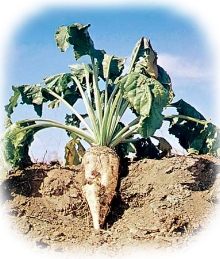
Court Ruling Could Lead to Ban on GMO Sugar Beets By Courtney Lowery, 9-23-09, NewWest Blog "A judge in California has ruled against the U.S. Department of Agriculture in a case that could lead to a ban on genetically modified sugar beet production. " "Federal judge Jeffrey S. White ruled on Monday in favor of the plaintiffs (including the Organic Seed Alliance, Sierra Club, High Mowing Organic Seeds, and the Center for Food Safety), saying that by not doing an environmental impact studey the government failed to 'take a hard look' at the environmental effects of GMO beet production or the possible spread of GMO beet traits to non-GMO beets or to the beet's cousin, swiss chard, before it approved it for production." |
"Commissioner Will Toor tells the Boulder Daily Camera that he's glad they waited. He says: 'I would think that we want to let the courts and federal government sort through this before we make a decision on sugar beets.'"
On Tuesday morning, April 29th (2008) National Public Radio's Morning Edition ran a piece about
"Minty E. Coli and Other Bioengineering Feats." It featured some veiled potty humor, giggles, and a
goofy quote from physicist Freeman Dyson about how just about anybody in the future will be able
to create new forms life. Well, in response I fired off this email that afternoon:

|
Robert Krulwich's piece about MIT students genetically altering intestinal bacteria, to smell like mint or bananas, was both disappointing and frightening. Disappointing in that too much giggling and humor was used to ease us into accepting Frankenstein science. Frightening in that Krulwich and his college friends barley gave transgenic bacteria (bacteria with foreign DNA injected into them) a second thought - simply justifying the creation of new life by assuring us that their job, as engineers, is to "build things."
For over three billion years evolution has been moving along just fine without the genetic manipulations of 20-year-old college students, pharmaceuticals giants or agribusiness. Mr. Krulwich, NPR and MIT could do us all a big favor by not only showing more respect for living systems, but also carefully evaluating the need to inject foreign genes into anything - including bacteria. |
On May 5th NPR sent me a response that basically apologized that their
programming didn't meet my expectations and that my criticism would be
taken into consideration. NPR, Like most other "news" organizations, is
missing the point - it's no trivial matter to be playing with the building
blocks of life for entertainment or profit - they really shouldn't be making
light of such serious matters... - Roger J. Wendell - May, 2008
This page:
|
First off, before we waste each other's time, let me start by telling you where I stand. I believe in the following: |

|
On March 2, 2004 the voters of Mendocino County, Calfifornia approved the nation's first ban on the raising and keeping of genetically engineered crops or animals!! |
|
The intent of this page, and other resources,* is to foster positive change in the way we view and treat all living organisms. - Roger J. Wendell, Colorado (1998)
*
I've conducted live, on-air, interviews on this and |
 Sadly, the government of the European Commission, without the consent of the people,
approved the importation of genetically modified corn in mid-May 2004. Apparantly,
this move was an attempt to appease big business interests - at the detriment of it's
own people. Click Here to see what the BBC had to say about it...
Sadly, the government of the European Commission, without the consent of the people,
approved the importation of genetically modified corn in mid-May 2004. Apparantly,
this move was an attempt to appease big business interests - at the detriment of it's
own people. Click Here to see what the BBC had to say about it...
|
"Recently I saw a BBC television documentary about cloning. Using computer-generated imagery, this film showed a creature scientists were working on, a sort of semi-human being with large eyes and several other recognizably human features lying down in a cage. Of course, at present this is just fantasy, but, they explained, it is possible to foresee a time when it will be possible to create beings like this. They could then be bred and their organs and other parts of their anatomy used in 'spare parts' surgery for the benefit of human beings. I was utterly appalled at this. Oh, terrible. Surely this is taking scientific endeavor to an extreme? The idea that one day we might actually create sentient beings specifically for that purpose horrifies me. I felt the same at this prospect as I do at the idea of experiments involving human fetuses."
- His Holiness The Dalai Lama, in his book Ethics for the New Millennium, pp. 156-157
"The genetic engineering and patenting of animals reduces living beings to the status of manufactured products. A purely reductionist science, biotechnology reduces all life to bits of information (genetic code) that can be arranged and rearranged at whim. Stripped of their integrity and sacred qualities, animals who are merely objects to their "inventors" will be treated as such."
- Organic Consumers Association GE Fact Sheet, 1999
Cloning is wrong and we know better! Whether you base
your opposition to cloning on religious, scientific, environmental,
or moral reasons we can all agree that it must be stopped.
Prince Charles warns GM crops risk causing the biggest-ever environmental disaster
"In his most outspoken intervention on the issue of GM food, the Prince said that multi-national companies were conducting an experiment with nature which had gone 'seriously wrong.'"
"The Prince, in an exclusive interview with the Daily Telegraph, also expressed the fear that food would run out because of the damage being wreaked on the earth's soil by scientists' research."
"He accused firms of conducting a 'gigantic experiment I think with nature and the whole of humanity which has gone seriously wrong.'"
"Why else are we facing all these challenges, climate change and everything?"
"Relying on "gigantic corporations" for food, he said, would result in 'absolute disaster.'"
"'That would be the absolute destruction of everything... and the classic way of ensuring there is no food in the future,' he said."
"What we should be talking about is food security not food production - that is what matters and that is what people will not understand."
"And if they think its somehow going to work because they are going to have one form of clever genetic engineering after another then again count me out, because that will be guaranteed to cause the biggest disaster environmentally of all time."
"Small farmers, in particular, would be the victims of "gigantic corporations" taking over the mass production of food."
"'I think it's heading for real disaster,' he said."
"'If they think this is the way to go....we [will] end up with millions of small farmers all over the world being driven off their land into unsustainable, unmanageable, degraded and dysfunctional conurbations of unmentionable awfulness.'"
by Jeff Randall - www.Telegraph.co.uk
August 12, 2008

"The mass development of genetically modified crops risks causing the world's worst environmental disaster, The Prince of Wales has warned."
"The Prince of Wales: 'If that is the future, count me out'"
"Suppose, in a restaurant, you were served a dish of black mashed potato. Chances are you would reject it. In fact, you would be horrified! Even if it was explained to you that this new black color indicated an extra-nutritious kind of potato, you would probably resist, preferring a traditional mound of whitish yellowish potato. But if you were given a mound of mashed potatoes that had been genetically modified to include pesticides in order to prevent insects eating them, you would tuck into it because you wouldn't know that this was not the traditional potato of your childhood. And restaurants do not tell you if their food is genetically modified. Not because they are hiding it from you; most of the time they can't tell you because they don't know either." p.45"It is because of the known risks and all the uncertainty that some countries have banned the growing and selling of genetically engineered foods. Many residents of these countries are higly suspicious of GMOs and are especially watching American children to see if there are any long-term affects. The children of North America have now become the world's lab animals on whom to sudy the long-term effects of eating GM products." p. 62
- Jane Goodall in her book, Harvest for Hope
GE Defined:
"Genetic engineering (GE) is a most powerful technology. It allows scientists to transfer genes between species which could never naturally breed. Using 'recombinant DNA' techniques, genes from bacteria have been put into corn; spider genes into goats, rat genes into lettuce and human genes into mice, bacteria, and trees, to name just a few 'transformations'."It is an expensive and inefficient process because the GE creature carries, of necessity, mutations wherever foreign genes have been inserted into its DNA. Thus, most engineered organisms die. But when it works, the 'donor' genes (there is never just one gene transferred) are expressed and the 'host' plant or animal acquires remarkable new properties: Food crops make their own pesticides; spider silk can be harvested from goat's milk, mice develop human cancers; bacteria make human insulin, lettuce makes Vitamin A and trees scavenge metals from contaminated soil with human blood proteins.
"With naive enthusiasm, proponents of GE have not considered how creating novel organisms - even useful organisms - might also create health, environmental or social problems. Foods with hidden allergens or toxins; plants which secrete novel chemicals into soil and water; damage to native plants and animals through crossbreeding, loss of consumer choice, interference with the right to practice religious food restrictions, and corporate control of the food supply are just a few of the legitimate issues raised by GE.
"Europeans have debated the pros and cons of GE for a decade and have instituted some controls on its use. But the U.S. government has not fostered discussion of genetic engineering with the American people, and has consistently refused to require labeling of GE foods, even though food has been engineered for almost 10 years, and 70% of processed foods now in supermarkets contain GE ingredients. USDA is encouraging corporations to engineer new fruits and vegetables, and has allowed the planting of food crops engineered to make industrial chemicals and drugs at secret locations around the country."
by Suzanne Wuerthele, Ph.D., (with permission - 05/2005)
Chair, Genetic Engineering Committee
Rocky Mountain Chapter, Sierra Club
Biopiracy:
"Biopiracy is the Columbian 'discovery' 500 years after Columbus. Through patents and genetic engineering, new colonies are being carved out. The land, the forests, the rivers, the oceans, and the atmosphere have all been colonized, eroded, and polluted. Capital now has to look for new colonies to invade and exploit for its further accumulation. These new colonies are, in my view, the interior spaces of the bodies of women, plants, and animals."
- Physicist Vandana Shiva from the introduction to her book Biopiracy
Biopiracy is the illegal appropriation and patenting of life -- plants, animals, soils, humans -- by transnational corporations, universities and governments using indigenous knowledge to facilitate their research. Biopiracy is an often-overlooked violation of the human rights and the autonomy of indigenous peoples all over the world. As a result, underdeveloped countries with indigenous populations and rich environments are now becoming the laboratories for new drugs, seed varieties, chemicals, and cosmetics.
- From Global Exchange 2001
|
|
Jonas Salk, discoverer of the first safe and effective polio vaccine, refused to patent it for his personal profit! He wished to see it disseminated as quickly and as widely as possible and patenting would have hampered this. When asked who owned the patent, Salk replied: "There is no patent. Could you patent the sun?" |
Hazards of Genetically Engineered Foods and Crops:
Why We Need A Global Moratorium
"Gene engineers all over the world are now snipping, inserting, recombining, rearranging, editing, and programming genetic material. Animal genes and even human genes are randomly inserted into the chromosomes of plants, fish, and animals, creating heretofore unimaginable transgenic life forms."- Ronnie Cummins, BioDemocracy Campaign & Organic Consumers Association
The CBS Evening News ran a report about the threat of "Super Salmon" (gene-alatered to grow larger and quicker)
escaping into the wild and genetically polluting a species already near extinction. The CBS report expressed some hope that
our government was scrutinizing the proposed release of such Salmon.- May 08, 2002
Who's Afraid of Frankenfood?
"Americans have seemed indifferent to genetically modified foods, not that they have much choice: half of all soybeans, about a third of the corn crop and substantial quantities of the potatoes grown in the U.S. come from plants that have been genetically altered."- Frederic Golden, TIME Magazine, November 29, 1999, p. 49
Genetic Blueprints Aren't Mere Utilities:
Biotechnology: We can't let a few conglomerates control the codes of life and
trade them as commercial goods;
"The concentration of power is already impressive. The top 10 agrochemical companies control 81% of the global agrochemical market. Ten life science companies control 37% of the global seed market. The world's 10 major pharmaceutical companies control 47% of its market. Topping the life science list are 10 transnational food and drink companies whose sales exceeded $211 billion in 1995."- Jeremy Rifkin, author of The Biotech Century: Harnessing the Gene and Remaking the World, from an LA Times Commentary on Wednesday, July 8, 1998 Home Edition, Metro Section, p. B-7
Definitions:
Links and References:
|
|

 Back to Roger J. Wendell's Home Page...

Abbey |
About |
Blog |
Contacting
Me |
Copyright |
Disclaimer |
Donate |
Guest
Book |
Home |
Links |
Site
Index |
Solutions |
Terms,
Conditions
and
Fair
Use |
What's
Changed
or
New?
Copyright
© 1955 -