Roger J. Wendell
Defending 3.8 Billion Years of Organic EvolutionSM

|
Sustainability |
|
Sustainable: |
A society that balances the environment, other life forms, and human interactions over an indefinite time period. |
|
AMY GOODMAN: Derrick, you've written, "Civilization is not and can never be sustainable."
DERRICK JENSEN: Yeah. Several years ago, I was riding around in a car with a friend of mine, George Draffan, with whom I've written a couple books. And I was just making conversation. I said, "So, George, if you could live at any level of technology that you want to, what would it be?" And he was not in a very good mood that day, and he said, "That's a really stupid question, Derrick, because we can fantasize whatever we want, but the truth is there's only one level of technology that's sustainable. And that's the Stone Age. And we'll be there again some day. And the only question really is, what's left of the world when we get there?" |
It doesn't take a rocket scientist to figure out that any way of living that's based on the use of non-renewable resources won't last. In fact, I would say it takes anybody but a rocket scientist to figure that out. And likewise, it doesn't take someone who's very smart to figure out that if every year there are-fewer salmon return than the year before, that eventually there won't be any left. I mean, there were so many passenger pigeons that they would darken the sky for days at a time. There were six times as many passenger pigeons than all the birds in the northern-in North America. Do we know why there aren't any penguins in the northern hemisphere? The great ox? They were destroyed. And my point is that any way of life that's based on the hyper-exploitation of renewable resources won't last. You have to basically-in the book, What We Leave Behind, what we came to for a definition of "sustainability" is leaving the physical world in a better place than when you were born, that the world is actually a better place because you were born.- Democracy Now, 11-26-2010
(I had the pleasure of interviewing Derrick on my own show in March of '05)
"One wouldn't know from TV news or major newspapers that U.S. energy use, representing a disproportionate one quarter of the world's consumption - warming the globe with fossil fuels emissions - is completely unsustainable."
- Jan Lundberg (Culture Change 10/16/2004)
In their book, The Crowded Greehouse, authors John Firor and Judith Jacobsen suggest that if we (and the planet) are to survive we need "...to strike a new balance in which the scale of human activities is in keeping with the scale of natural systems. In other words, a balance in which human activities on Earth are sustainable."
"In this context 'sustainable' is used in its original meaning. In the late 18th century, the mandate of sustainability was created by the Prussian forest administration to mean 'never take more wood out of a forest than nature can replenish between two harvesting periods.' This rule applies to all interactions between man and nature."
- Dr. Ulf Bossell. of the European Fuel Cell Forum, in his essay;
On the Way to a Sustainable Energy Future (published paper, "Intelec '05" at Berlin)

|
Click Here for info on Voluntary Simplicity... |
|
|
Click Here for simple things You can do for the Earth! |
|
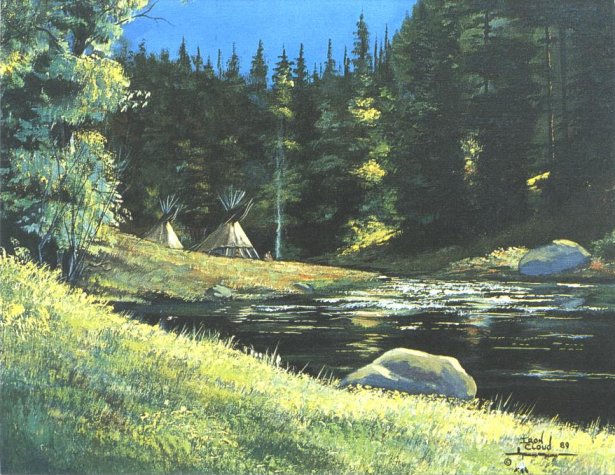
"All that the Lakota needed for living was provided by nature. Over centuries, a simple, economic and environmentally sensitive lifestyle developed. Within a short time, they had all the comforts of home on the hunting trail: a tipi, running water, wood, grass for horses, and plenty of fish, wildlife, fruit and roots of the land."
From the Summer Camp greeting card |
SUSTAINING HOPE"All around the world we find hopeful examples of succesful sustainable farming operations in poor, rural communities. And when we say sustainable, we mean, of course, the deep organic faming we've discussed, where the soil is nurtured through composting, biological pest control, and rotation of crops and livestock without the use of chemical pesticides or fertilizers."
- Jane Goodall in her book,
Harvest for Hope, p. 209
"While primal peoples lived in sustainable communities for tens of thousands of years without impairing the viability of ecosystems, modern technocratic-industrial society threatens every ecosystem on Earth and may even be threatening to drastically change the pattern of weather in the biosphere as a whole."
Okay, the idea here should be pretty plain and simple - we can't go on living like this! Our consumptive, wasteful lifestyle is taking its toll on our environment, the planet, and even our mental well-being. In my short lifetime alone (I was born in 1955) we've devoured countless forests, oil reserves, animal species, river resources and open space. The math is simple, as well - there isn't enough of any resource left, except maybe sand for glassmaking and silicon chips, to allow us this extravagance for another day, week, or generation longer. Not only is there not enough to go around anymore, but we ruined our own quality of life in the process of all this extraction and exploitation. Although it's too late for hundreds of species that can't be recovered, or the vast forests we've flattened for toothpicks and hot tubs, we can still "get right" with nature and the world by becoming careful, mindful stewards of what's left. Here, in America, we have the ability to save what's left and set an example for the rest of the world - we just need to abandon this wild, uncontrolled "me first," "luxury-at-any-cost" attitude that's permeated our culture far too long now. We can do it - I know we can!
- Roger J. Wendell
Golden, Colorado - Summer, 2006
"What do all these wonders have in common? Well, their kindness to the earth and to human health is what qualifies them for a sustainability list. They are accessible to anyone, inexpensive to obtain and maintain. Many of them serve not only practical but also esthetic needs; they satisfy the eye, the palate, or the soul. Most are old in concept, though they may have modern variations. Something like them has evolved in many different cultures. Most are objects you can buy, but usually from a local maker, not a multinational corporation."Maybe that's why we don't much appreciate the humble, sustainable wonders around us. Their value is too obvious to need touting. You only have to spend billions 'marketing' something if its worth is in doubt."
University of Colorado at Boulder
Field Laboratory For Sustainable Building Practices
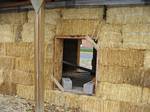
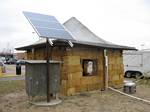
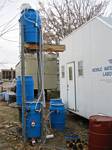
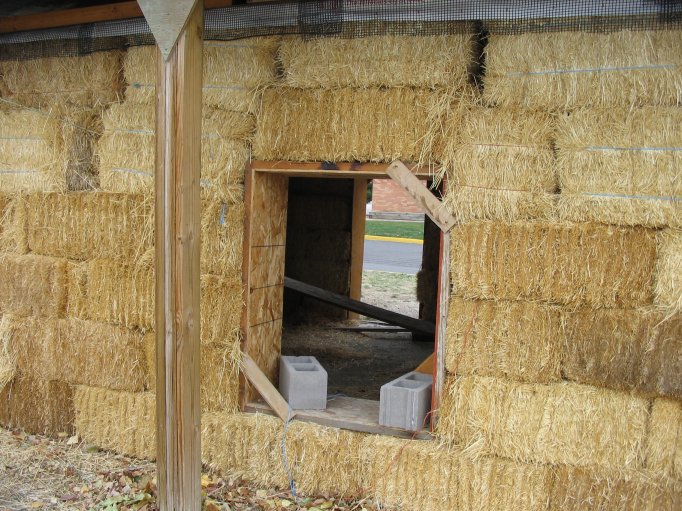
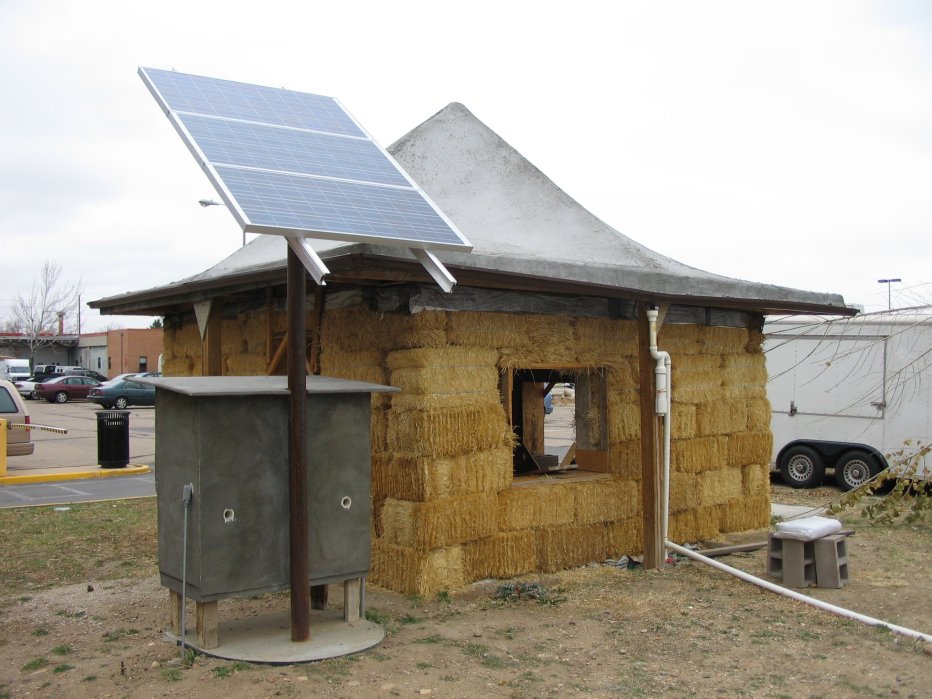
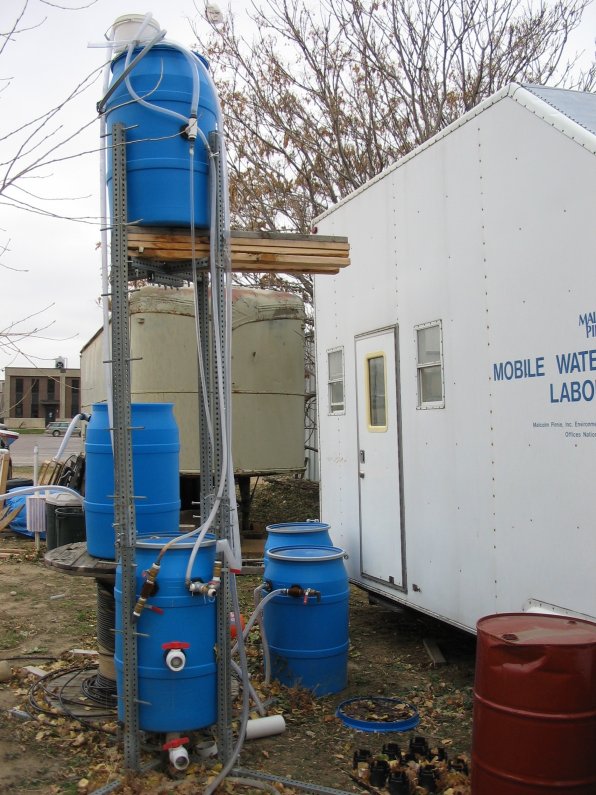
I spend a lot of time in one of my favorite towns, Boulder, Colorado, finding all kinds of neat things related to recycling and sustainable practices. In November, 2006 I stumbled upon the University of Colorado's Boulder Field Laboratory for sustinable building practies. I had no idea the University offered such training so I did a quick search and found this course description on their site; "The university approved the laboratory, which consists of a 400-square-foot straw bale structure with a concrete acrylic roof, as a temporary facility through the end of 2005. The lab has been an integral part of a civil engineering course, Sustainability and the Built Environment, which covers topics such as eco-materials, sustainable water and wastewater systems, renewable energy, waste and waste products, green building, straw bale construction, natural plasters and building with earth and straw."
"The goal of the facility is to be self-sufficient, generating its own power using photovoltaic panels and possibly biodiesel, and collecting and processing enough rainwater to complete all on-site projects."
LOHAS
LOHAS is an acronym for Lifestyles of Health and Sustainability. LOHAS consumers are those who are passionate about the environment, sustainability, social issues, and health. Although there should be less emphasis on consuming anything, I think LOHAS is off to a good start because more thought is given to the purchase of organic, natural food, green building, energy efficient appliances, natural household products and preventive medicine. I'll be curious to see how well this movement grows and matures! - Roger
|
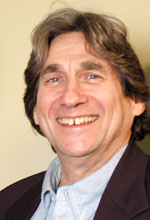
Solartopia Mother Earth can't live without a Solartopian vision The Free Press, July 9, 2007 Harvery Wasserman* |
"'Solartopia' foresees a democratic, green-powered 21st Century civilization. Our economic and ecological survival depend on it."
Technologically, the vision rests on four simple pillars:
*I had the pleasure of interviewing Harvey Wasserman on my radio show in January '08...
"We have to create a sustainable society even tough people do not believe in it. We have to win without them on our side.""If we remember this, perhaps we can avoid framing our strategies for success like this: we could win 'if only everyone understood ecology . . . or believe in the value of other species . . . or gave up the paradigm of domination . . . or gave up greed.' Even though these statements are true, they are largely irrelevant in the short term. We need to succeed without perfection."
|
|
Click Here for a simple vegetarian lifestyle... |
Links:
|
|
 Back to Roger J. Wendell's Home Page...

Abbey |
About |
Blog |
Contacting
Me |
Copyright |
Disclaimer |
Donate |
Guest
Book |
Home |
Links |
Site
Index |
Solutions |
Terms,
Conditions
and
Fair
Use |
What's
Changed
or
New?
Copyright
© 1955 -