Roger J. Wendell
Defending 3.8 Billion Years of Organic EvolutionSM


"Primum non nocere"
(First, do no harm)
"Tomorrow is the most important thing in life. Comes into us at midnight very clean.
It's perfect when it arrives and it puts itself in our hands. It hopes we've learned something from yesterday."
- John Wayne
|
|
Remove Your Shoes!

"This custom of removing your footwear before entering a home has many benefits; First, it makes for a much quieter environment, one without all kinds of footgear clanging around; second, it makes for a much cleaner home because you leave the dirt of the outside world where it belongs - outside; third, it puts everybody at their real height and does away with all this three-inch-heel intimidation; fourth, it provides a sensuality in walking about that the hard soles of a shoe deny you; fifth, it lets your feet breathe; sixth, it gives you a chance to show off your socks, a part of our dresswear that seldom gets seen otherwise; seventh, you can tell who is already in the house by giving the shoes outside a quick once-over, thereby avoiding contact with a person(s) you may want to avoid. I could continue, but I think you get the point."
Bonus Points:
Five Main Buddhist Precepts (PANCA SILA)
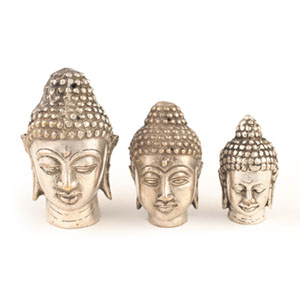
- PANATIPATA VERAMANI SIKKHA-PADAM SAMADIYAMI (Refrain From Killing)
- ADINNADANA VERAMANI SIKKHA-PADAM SAMADIYAMI (Refrain From Stealing)
- MUSAVADA VERAMANI SIKKA-PADAM SAMADIYAMI (Refrain From Lying, Slandering, Gossiping and Spreading Rumours)
- KAMESU MICCHACARA VERAMANI SIKKHA-PADAM SAMADIYAMI (Refrain From Sexual Misconduct)
- SURA-MERAYA-MAJJA-PAMADATTHANA VERAMANI SIKKHA-PADAM SAMADIYAMI (Refrain From Taking Intoxicants)
(Click for larger view)
The five Buddhist precepts can kind of considered to be similar to the Bible's Ten Commandments.
These precepts provide moral guidance for lay Buddhists as well as monks and nuns.
Here I again sum them up as they're so basic yet obviously important:
The injunction against destroying life is known as the First Precept. The fact that this Precept and other teachings forbid killing and hurting is not in question or controversial although there is dispute, sometimes, about whom Buddhists are forbidden to kill or hurt (things like killing during war, or to protect somebody, can be confusing issues...).
He who for the sake of happiness hurts others who also want happiness, shall not hereafter find happiness. (Dhammapada, 131.)
Because not killing and not hurting are so important, Buddha repeatedly asks us not to do either in many places throughout the Dhammapada.
In conclusion, it makes perfect sense to never hurt another being let alone kill them! In Deep Ecology there's been a longstanding "rule" that, We have no right to destroy other living things without sufficient reason. I agree!
Ahimsa is a principle that Jains teach and
practice not only towards human beings but
towards all nature. It is an unequivocal teaching
that is at once ancient and contemporary. The
scriptures tell us (from BODHICITTA.NET):
"All the Arhats (Venerable Ones) of the past, present and future discourse, consuel, proclaim, propound and prescribe
thus in unison: Do not injure, abuse, oppress, enslave, insult, torment, torture, or kill any creature or living being."

|
Tecumseh's Poem
Native American Tecumseh (March 1768 - October 5, 1813) was leader of the Shawnee and |
"So live your life that the fear of death can never enter your heart. Trouble no one about their religion; respect others in their view, and demand that they respect yours. Love your life, perfect your life, beautify all things in your life. Seek to make your life long and its purpose in the service of your people. Prepare a noble death song for the day when you go over the great divide."Always give a word or a sign of salute when meeting or passing a friend, even a stranger, when in a lonely place. Show respect to all people and grovel to none.
"When you arise in the morning give thanks for the food and for the joy of living. If you see no reason for giving thanks, the fault lies only in yourself.
"Abuse no one and no thing, for abuse turns the wise ones to fools and robs the spirit of its vision. When it comes your time to die, be not like those whose hearts are filled with the fear of death, so that when their time comes they weep and pray for a little more time to live their lives over again in a different way. Sing your death song and die like a hero going home."
|
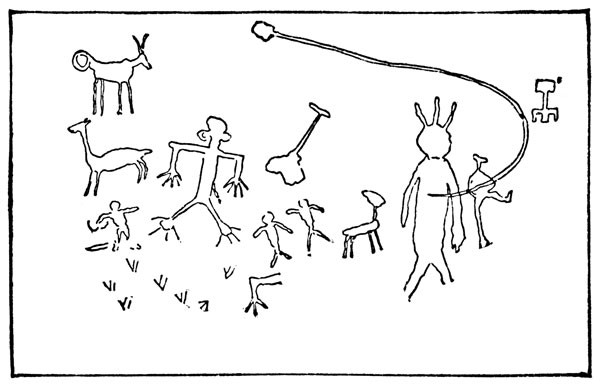
Native American Code of Ethics: |
- Rise with the sun to pray. Pray alone. Pray often. The Great Spirit will listen, if you only speak.
- Be tolerant of those who are lost on their path. Ignorance, conceit, anger, jealousy and greed stem from a lost soul. Pray that they will find guidance.
- Search for yourself, by yourself. Do not allow others to make your path for you. It is your road, and yours alone. Others may walk it with you, but no one can walk it for you.
- Treat the guests in your home with much consideration. Serve them the best food, give them the best bed and treat them with respect and honor.
- Do not take what is not yours whether from a person, a community, the wilderness or from a culture. It was not earned nor given. It is not yours.
- Respect all things that are placed upon this earth-whether it be people, animal or plant. Honor the Spirit in all things.
- Honor other people's thoughts, wishes and words. Never interrupt another or mock or rudely mimic them. Allow each person the right to personal expression.
- Never speak of others in a bad way. The negative energy that you put out into the universe will multiply when it returns to you. All persons make mistakes. And all mistakes can be forgiven. Bad thoughts cause illness of the mind, body and spirit. Practice optimism.
- Nature is not for us, it is a part of us. They are part of your worldly family.
- Children are the seeds of our future. Plant love in their hearts and water them with wisdom and life's lessons. When they are grown, give them space to grow.
- Avoid hurting the hearts of others. The poison of your pain will return to you.
- Be truthful at all times. Honesty is the test of ones will within this universe.
- Keep yourself balanced. Your mental self, spiritual self, emotional self, and physical self-all need to be strong, pure and healthy. Work out the body to strengthen the mind. Grow rich in spirit to cure emotional ails.
- Make conscious decisions as to who you will be and how you will react. Be responsible for your own actions.
- Respect the privacy and personal space of others. Do not touch the personal property of others-especially sacred and religious objects. This is forbidden.
- Be true to yourself first. You cannot nurture and help others if you cannot nurture and help yourself first.
- Respect others religious beliefs. Do not force your belief on others.
- Share your good fortune with others. Participate in charity. Be willing to give back to the people, so that People will live.
Simple Formula for Living
Marriage
Interview with Chris Harris, www.mtv.com. November 1, 2008
Links:
|
 Back to Roger J. Wendell's Home Page...

Abbey |
About |
Blog |
Contacting
Me |
Copyright |
Disclaimer |
Donate |
Guest
Book |
Home |
Links |
Site
Index |
Solutions |
Terms,
Conditions
and
Fair
Use |
What's
Changed
or
New?
Copyright
© 1955 -