Roger J. Wendell
Defending 3.8 Billion Years of Organic EvolutionSM

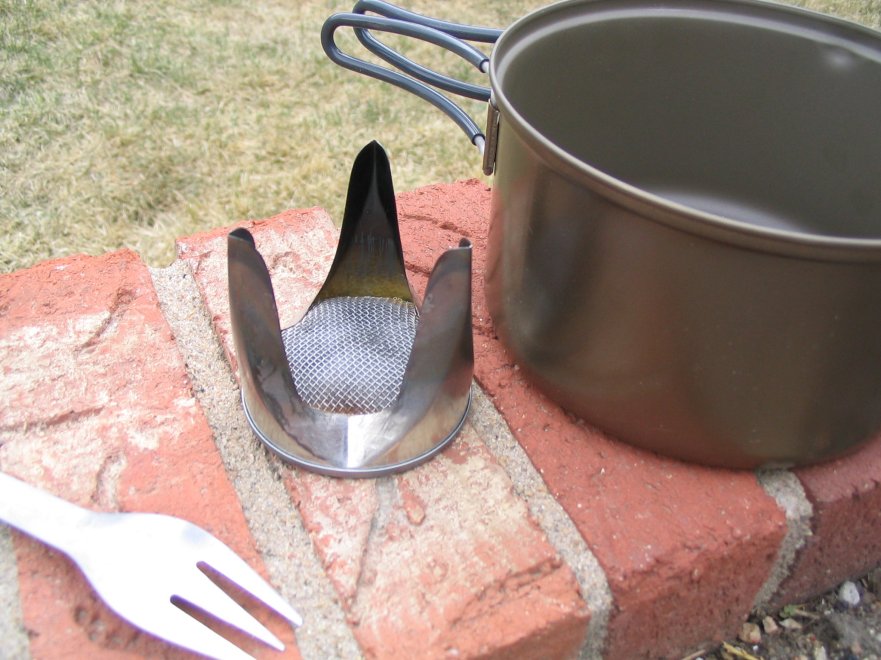
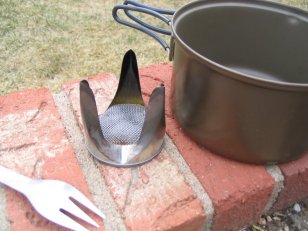
Handmade aluminum can alcohol backpacing stove by Ryan Bozis, 2004 (details below)By age 50, in 2006, I had gained well over 35 years of backcountry experience with all kinds of gear and gadgets. Since it was getting hard to keep track of it all I decided to create this page as a kind of checklist to remind me of things I need to bring along the trail. Please don't rely on this list for your own needs as my requirements may be very different than yours. Also, this list isn't meant to endorse any one particular product or manufacturer - there are suitable substitutes to just about everything, including stuff you can make yourself (like this stove, at left)!!

|
Checklist |
|
Ten Essentials (Click Here for details) - Map, compass, matches/fire starter, headlamp/flashlight, First Aid supplies, utility knife, signaling device, bivy gear, extra clothing (no cotton!) 
First Aid kit with instructions. I've seen some pretty sophisticated First Aid kits out in the backcountry - unfortunately I don't have the skill or knowledge necessary to make use of the various medications and procedures they're capable of. My own First Aid kits usually contains some of the following: Band-aids, moleskin, gauze, Ace bandage wrap(s), duct tape, medical tape, Q-tips, alcohol wipes, latex gloves, antibiotic cream, aspirin/ibuprofen, prescription pain pills, prescription sleeping pills (unfortunately I've been prescribed a lot of that stuff over my lifetime!), Ambien, Tums Cipro, Immodium-AD, vitamins, throat lozenges, tweezers, needles, safety pins, and sometimes Diamox (for high altitude treks).
Water - 4 Litres per day, per person, especially in hot/desert environments (In early '08 I switched over to plastic water bottles that don't contain BPA) Water purifying device or chemicals (also extra stove fuel to melt water in winter environments, or to even boil it in other situations...)
Food - I, myself, average about one pound of food, per day, depending on how strenuous and demanding the physical activity. My guess is that there should be a minimum of 2,000 calories each day but encourage you to study and practice with this further!
Sleeping bag (I also wrap myself in a thin bed sheet to protect the insulating material from accumulating too much of my body oils and moisture - thus lessening the bag's ability to keep me warm. Also, the small bit of extra sheeting provides a small amount of additional warmth and comfort)
Clothing - Avoid cotton or materials that retain moisture. Bring extra socks (I describe 'em in "Footwear," below...) Bring underwear, long-underwear, long pants and long-sleeved shirts as needed. Rain gear, Gore-Tex shells, gloves (and thin liners), mittens, down jacket and other outerwear for severe weather and high altitude exposure. I always carry a warm pull-over ski cap - keeps me warm both during daytime activities but while I'm in my sleeping bag as well - good head cover can really help warm your entire body!
Footwear - sturdy boots, possibly plastic boots (with liners), and even crampons for severe mountaineering environments. Gaiters can be used in rocky, dusty environments as well as cold and wet environments where you want to keep ice, snow and water out of your boots and socks. "Running" shoes for approach (getting to a climb) or around town or camp. Extra socks are always important - I like heavy rag wool socks for just about any season but I know most people are not comfortable with 'em so decide on what works for you but bring at least two pair. At times, but not always, I use thin liner socks - sometimes they help with perspiration by "wicking" away moisture. They can also help reduce friction and the creation of blisters.
Insulating pad/Therm-a-rest/Air mattress - Although needed for comfort, the most important function of a pad is to keep body heat from being "drained-away" by snow or even cold ground... Ground Cloth (I use landscaping plastic that's about 6 mil in thickness)
Tent - Although I normally carry a tent I only use it when absolutely necessary as I enjoy sleeping out in the open on top of my ground cloth and insulating pad, even during (calm) winter conditions. In Colorado it's especially important to use a four season tent as conditions can get really bad...
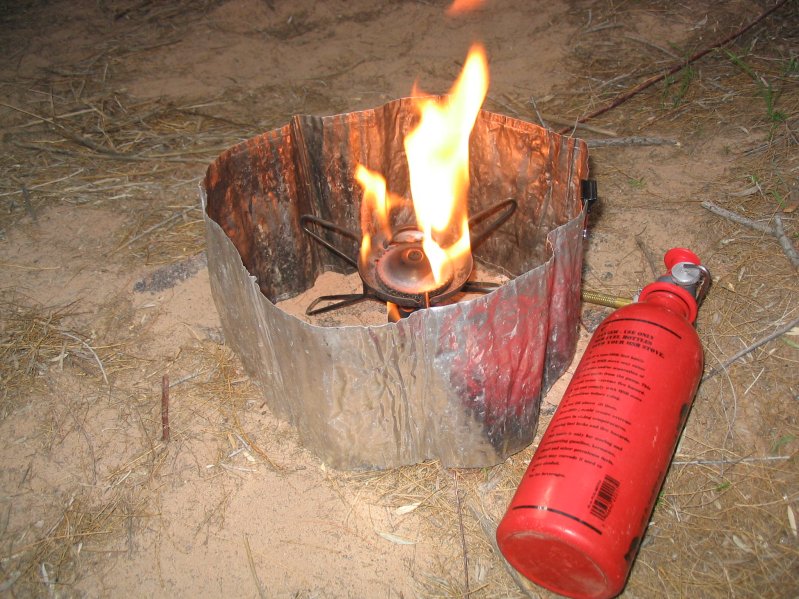
Stove - I have used a Svea 123 and various MSR "WhisperLite" models for many years. They work mostly off of "white gas" and seem to do well in a variety of climates and altitudes. Aluminum windscreens can help save fuel (and increase heat). I also use a small, lightweight panel to keep my stove from sinking into the snow during winter conditions...
Stove fuel - I've seen a very general "rule-of-thumb" that suggests a minimum of 4 ounces of fuel, per person, per day - better you experiment and figure this one out on your own - especially if you have to melt a lot of snow or intend to boil extra water, etc.
Cook Set - I love nested, titanium pots (aluminum worries me as I believe it to be a health hazard but I guess the science isn't in on that one yet...). You may also need a pot hook or handle for certain types of pots. Sizes range from about 1 to 2 litres, depending on your needs.
Insulated Cup - 22 Ounces, or larger is excellent for eating noodles and other freeze-dried foods out of. I pretty much use the cup to eat my entire meal out of - first eating the noodles, and then using it for hot chocolate or whatever comes next... Sun glasses (I sometimes carry an extra pair or even ski goggles) Reading glasses with a protective case (I sometimes carry an extra set of glasses since my eyesight was so poor after age 50!) Medicine and Medications be sure your prescriptions are current and adequate - check with your doctor before leaving!
 |
My personal philosophy, when it comes to carrying gear into the backcountry, has been to be safe and not sorry. So, I've always carried extra supplies (weight) but have also had that satisfying feeling that I could care for myself, and others, if the situation turned ugly. And, unfortunately, I've been in situations where we've run out of water, run out of food (for nearly three days!!), or people have had heat stroke, broke bones or even died near me. |
So, I try to keep a little extra stuff on hand for not only myself but others who may be in need. Luckily I've always had a strong back (and even stronger legs!) so the few extra pounds haven't hurt me. For Mt. Rainier, and some of my ten day Grand Canyon treks, I've had packs that weighed 60+ pounds - over 1/3 of my body weight at the time! I believe a good rule of thumb, for "normal" folks, is somewhere around 35 pounds total pack weight (including water) for a three day warm-weather trek. I've seen Park Service and NGO recommendations of not more than 20 or 25 percent of your body weight for a full pack. Cold weather, technical climbing, and other variations obviously demand more gear and weight. The main thing is that you design a backpack inventory that meets your own needs without sacrificing safety!

|
Click Here for YouTube video of my WhisperLite stove be started with fire... |
Winter Items
I'm especially fond of backcountry skiing
and strongly suggest most of these items for winter preparedness:
Snow shovel Avalanche beacon Probe pole
Some optional winter items:

|
|
Just a list of extra things and ideas to consider for any trip... |
|
|
Click Here for a YouTube video of my bear cannister on Mount Whitney... |
- Bear Cannister
- Spare batteries for flashlight, GPS, etc.
- Spare headlamp (miniature), especially if you plan on night hiking for those alpine starts
- Neoprene booties for river crossings
- Synthetic underwear (cotton is usually discouraged in the backcountry
- Long underwear
- Gore-Tex shell pants or wind pants
- Leg warmers (fleece pants)
- Super-gaiters, insulated for use with or without crampons
- Synthetic T-shirts (usually try to avoid cotton)
- Down jacket
- 100 weight fleece top
- Gore-Tex jacket shell
- Bandannas - four is a good number to bring along as they can be used as washrags, towels, sweatbands, bandages, etc.
- Baseball cap - I like the ones with provocative political statements!
- Ski goggles with protective bag
- Stuff sacks or mesh Laundry bag(s) to hold dirty clothing or to hang food out of the reach of critters
- Ziploc, freezer, and plastic bags to hold stuff, protect things from water and insects, to hold samples, etc.
- Tent repair kit, stove repair kit, and duct tape! (I usually wrap extra duct tape around a ski pole or ice axe so it's easily accessible if needed.
- Bivy (usually an emergency shell that slips over your sleeping bag to protect against rain. A bivy can add extra warmth but also generates condensation since it's a much tighter fit, than a normal tent, and there's less air flow. I have even slept in a bivy, all by itself, when a sleeping bag wasn't available (for a number of reasons!).
- Sleeping bag liner - adds some additional warmth and also keeps your body oils and dirt from lessening the warmth of down.
- Pillow, small
- Pack cover or trash bag (list above) to cover pack during rains or for protected storage from moisture.
- Day pack - used for approach days, side trips, and summit day
- Extra fuel bottle(s)
- Pee bottle (for those high-altitude nights when it's too cold or dangerous to leave the tent...)
- Plastic fork(s) and spoon(s)
- Water bottle insulators
- Plastic trash bags, heavy duty, to carry snow or to leave loads at the next camp, etc.
- Knife
- Feminine hygiene needs and Ziploc bags
- Nail clippers and file
- Mirror
- Baby wipes and Q-tips. Most people like the refreshing feeling of a baby wipe after they've been in the backcountry for a few days. For me, I find the Q-tips especially refreshing (for my ears, especially if I wear earplugs (see earplug entry further below) for any reason (usually to sleep while somebody else is driving our car to the trailhead...) - just a personal quirk!
- Toilet Paper
- Liquid soap for dishes and to wash out fuel bottles for return flight
- Razor and shaving cream
- Airline tickets
- Travel guide (Lonely Planet?), trail/mountain guidebook, climbing guidebook, maps (topo), and route descriptions
- Book(s) and other recreational reading
- Journal or small notebook with extra pen/pencil (I usually carry one of the CMC's new/blank summit register to swap on top 14ers)
- Ear plugs (see Q-tip note further up)
- Duffel bag(s)
- Locks and Zip-ties for duffel and hut storage
- Walkie-talkie set for communications
- Trekking poles (I don't use 'em but others seem to find them valuable...)
- Rope
- Belay/rappel device
- Locking carabineer(s)
- Prussik cords
- Runners
- Watch/Altimeter
- Travel alarm clock
- Small thermometer
- Whistle
- Small diameter cord
- Cash, credit cards, phone card, Health Insurance card (photocopies of these items also buried deep in my pack/luggage incase I lose the real thing and need to cancel stuff, etc.)
- List of addresses, phone numbers, and email addresses for anyone I may need to contact
- Ear plugs
- Condoms
Food and Drink Ideas:
I've run into many folks who recommend two pounds of food per person per day. I usually do okay on about one pound per day depending on what it is I brought along and the environment I'm in. Some folks bring meat - I, myself, avoid meat at almost all costs since I've been a vegetarian since the early 80s - if I can go without meat you certainly can as well! Plus, meat can be heavy, hard to keep, and very questionable for you health. Liquids, especially water, ar always important. Again, depending on conditions you should probably figure on an average one gallon of water per day, per person.
- Dehydrated food cups/meals
- Dried noodles
- Recovery drink powder, Accelerade
- Gatorade powder
- Energy gel (doesn't do much for me but I know people swear by this stuff!)
- Energy bars (I've never liked them much. Sometimes I simply take a Snickers Bar but they melt too easy...)
- Granola bars/fruit bars
- Pop tarts
- Candy/candy bars - I'm especially fond of M&Ms with peanuts - they seem to hold up pretty well, even in hot temperatures...
- Candy Orange Slices - what could be more unhealthy? Packed with sugar and never a consistent recipe, I love these things!
- Dried fruit
- Cookies
- Crackers/pretzels
- Nuts
- Pringles, Chex Mix, Wheat Thins, Triscuits
- Hot chocolate mix
- Instant Oatmeal (although not as healthy, my preference is for the mixes that have raisins or some kind of sweetness mixed in)
- Tea and sugar
- Cup of soup
- Bagels
- Cheese (doesn't keep very long...)
- Fresh Fruit (heavy, doesn't keep very long, either, but can be very refreshing after hard day of climbing/hiking)
- Fresh, whole onions (another personal quirk! I love onion in my noodles, on my peanut butter and Jelly sandwiches, in my peanut butter tortillas [see next entry], in soups, etc.)
- Fresh Tortillas and peanut butter with onions (see entry above)
- Bread (doesn't keep long and is easily smashed)
- Juice (heavy)
Things to do before leaving:
- Update Passport
- Update will
- Stop U.S. mail or arrange some kind of pick-up or forwarding (www.USPS.com)
- Turn on your email's "Out of Office" responder
- Leave copy of itinerary, Passport, hotel info with someone at home.
- Call credit card companies to allow for out-of-state and foreign charges.
- Make arrangements for pet care (I'm not too keen on pets but understand most folks have 'em!
- Pre-pay household bills or make sure automatic withdrawals are in effect:
- Mortgage
- Home equity line
- Homeowners' Association dues
- Car payment
- Credit card bills
- Electricity/gas bill
- Telephone/cell phone bill
- Cable TV
- Water/Sewer
- Home insurance
- Car insurance
- Health insurance
- Physical examination
- Dental examination
- Vaccinations up-to-date, especially for foreign travel?
- Prescriptions up-to-date and appropriate for what you'll be doing? Check with your doctor!
- Reconfirm with airlines 72 hours prior to leaving
- Hotel and outfitter reservations
- Set house timer for lights
- Set furnace thermostat as low as possible while away
- Turn off water and water heater (unless hard freeze is expected)
- Train like crazy! Being in proper physical shape is extremely important for any trek, climb or hike!
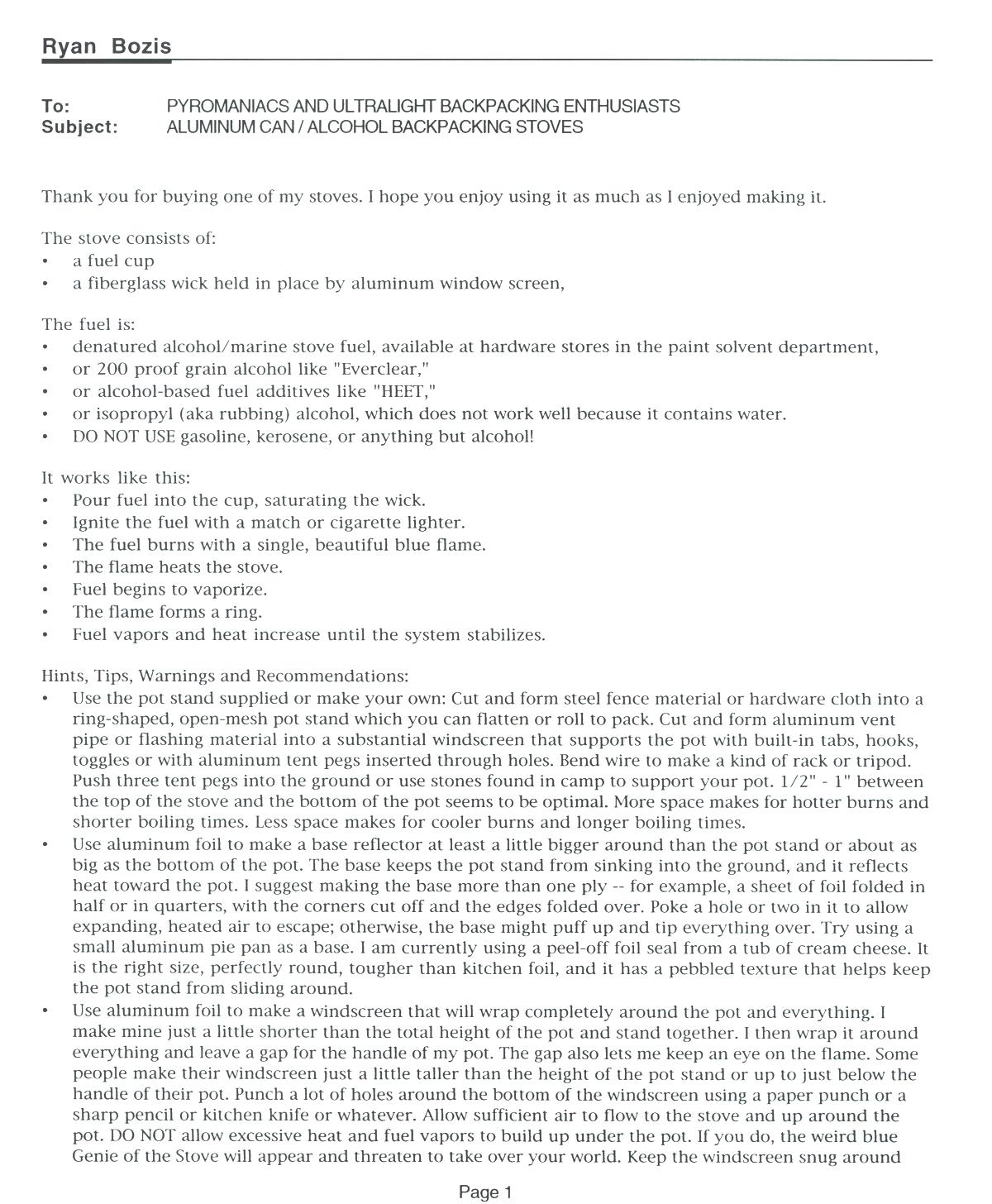
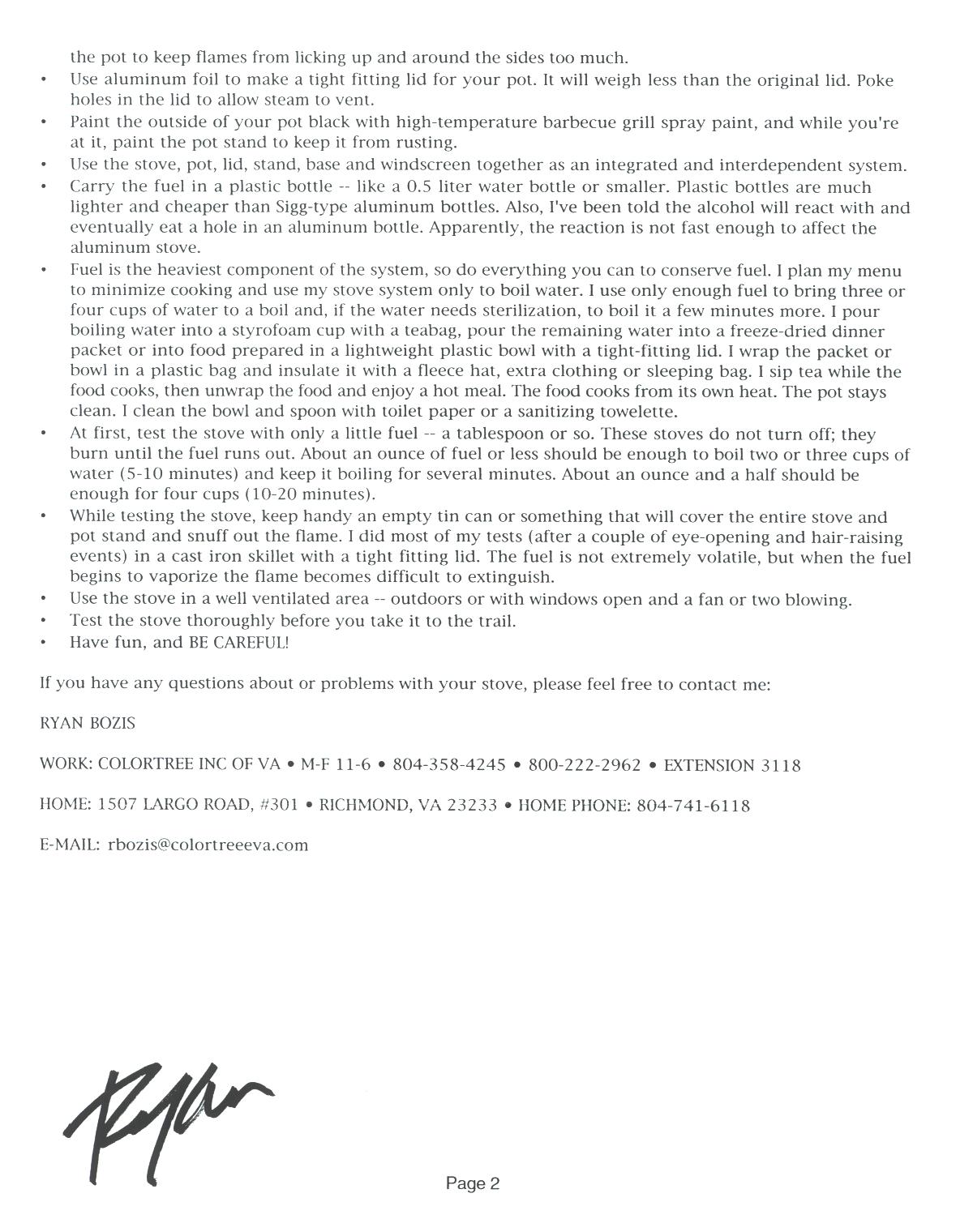
Ryan Bozis
Aluminum Can/Alcohol Backpacking Stove
Instructions Page 1
Instructions Page 2In the picture at the top of this page (and at far left) is the Ryan Bozis' handmade backpacking stove my brother Randy gave me in 2004. Its simplicity, efficiency, and reuse of materials (constructed out of a can) really captivated me! Although I don't have a lot of experience with it I think it's a good idea for simple trips where altitude and weather extremes won't take a big toll. Since I, myself, usually find I'm in really high and extreme climates, inside and outside of Colorado, I normally rely on commercial stoves more suitable to those environments. Nevertheless, I think you'll find stoves similar to Ryan's to be a lot of fun and a great idea! Click on the two "thumbnail" images, at left, for Ryan's own detailed instructions on how to properly use the stove he created...
Water Treatment:
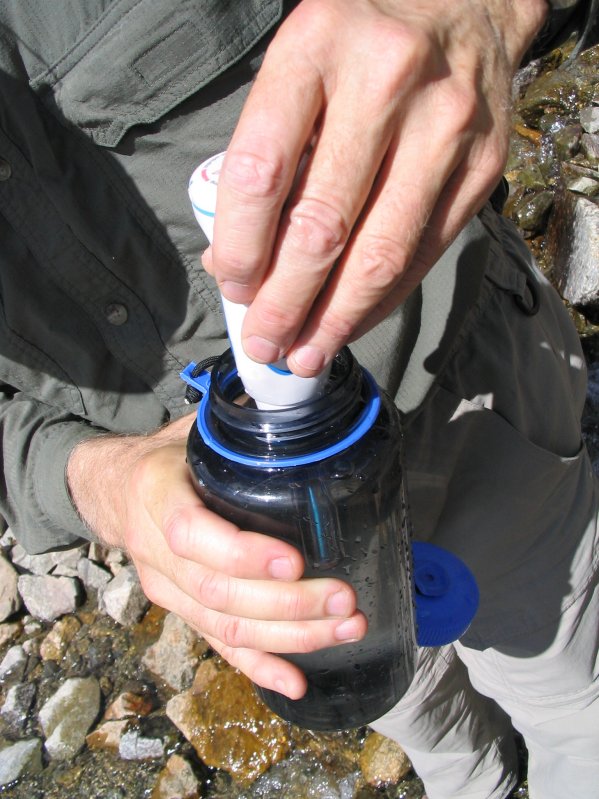
Over the years I've used all kinds of tablets, strainers, filters, pumps, stoves, and other gadgets to keep Giardia and other nasties out of my canteen water and intestines. Strangely, when I was a young kid hiking in the 60s and 70s, I never thought of purifying water and seemed to have survived just find. Nevertheless, my recommendation in these modern times when dogs, livestock, and humans are doing all kinds of unthinkable things in our streams and rivers I recommend you purify your drinking water!!On August 26, 2007 friend John Aldag and I were climbing a couple of 14ers when he whipped-out this fancy Ultraviolet water purifying device. After turning it on John simply swirled the device around in the water, as though he were stirring coffee, and a little light came on to say the job had been done! I don't know how effective these UV purifying devices are but can say I've heard that the disease rate for water-borne infections, in "third world" countries, can be reduced by 50% just by exposing drinking water to direct sunlight!
Anyway, I'm not endorsing any particular uv device nor the concept in general. It just looked like a nifty gadget, something I had never seen before, so I'm posting it here in hopes that it will do some good! Until I'm completely convinced, I'll probably continue either boiling my backcountry water or using one of those little portable purifying pumps - there are dozens of models and manufacturers out there!
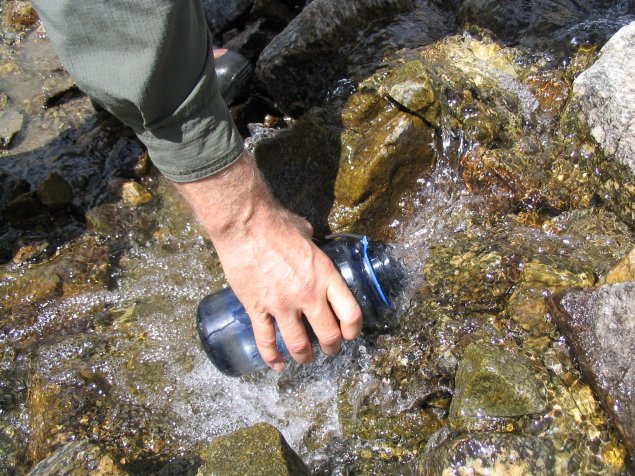 Collecting the water |
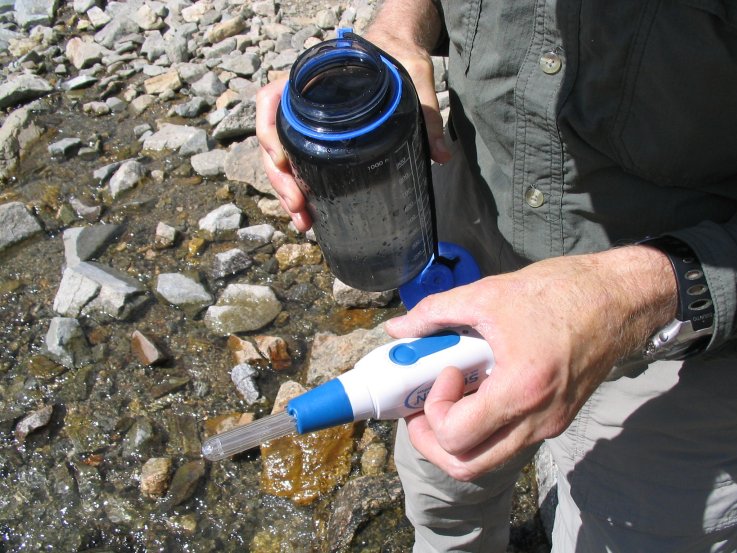 Displaying the device |
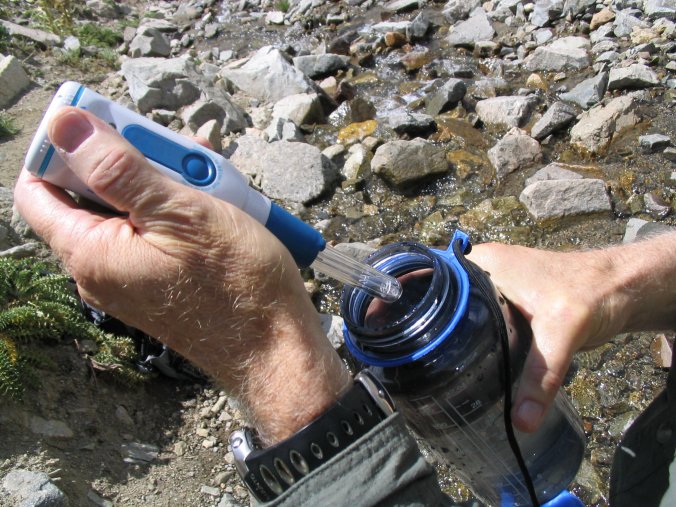 Inserting the device |
 See the blue glow! |
Links:
|
|
| Warning! Climbing, mountaineering, and backcountry skiing are dangerous and can seriously injure or kill you. By further exploring this website you acknowledge that the information presented here may be out of date or incorrect, and you agree not to hold the author responsible for any damages, injuries, or death arising from any use of this resource. Please thoroughly investigate any mountain before attempting to climb it, and do not substitute this website for experience, training, and recognizing your limitations! |
 Back to Roger J. Wendell's Home Page...

Abbey |
About |
Blog |
Contacting
Me |
Copyright |
Disclaimer |
Donate |
Guest
Book |
Home |
Links |
Site
Index |
Solutions |
Terms,
Conditions
and
Fair
Use |
What's
Changed
or
New?
Copyright
© 1955 -